


According to this report, CQ/Roll Call has laid off between 20 and 30 people, mostly from editorial. It’s not clear to me from the report whether this is all from Roll Call proper, in which case it would be as much as half the staff or if it is across the various niche publication that CQ Roll Call publishes, which is a substantially larger group. Either way it is yet another big round of layoffs which appear to be spurred or are at least coinciding with the COVID-19 crisis.
An important note from TPM Reader JR …
I worked 40 years in healthcare. I am a Registered Respiratory Therapist. I am retired and live in a rural county with zero Covid-19 at this time. I practiced in the Chicago area. This means that my friends and former co-workers are risking their lives treating patients infected with Covid-19. I think (actually, know for sure) that Doctors are some of the most wonderful people in the world. What they go through in their training and education is superhuman. Their heads are the same size as everyone else, but somehow they carry multi-volume encyclopedias in there. I also absolutely love Nurses (so much so that I have been married to one for 39 years last Saturday) as a group they are intelligent, compassionate and caring – also wonderful. To hear these two groups lauded as the heroes that they are every day in the media lately is great.

I wrote last week about how the economic relief package known as the CARES Act is severely lacking. One particularly troubling aspect is that the Small Business Administration is tasked with overseeing a $350 billion dollar fund designed to provide cash for small businesses so they can avoid laying people off. This is problematic because it’s something like 10 times the volume of emergency loans they usually deal with on an annual basis.
The devil is in the details, but the gist of that fund, known as the Paycheck Protection Program, is that businesses with fewer than 500 employees can apply for a loan. At the end of the set period of time, if the employer has not laid anyone off, the loan is completely forgiven. There are of course a host of details about how much money a business can receive and some other things but they are irrelevant for the purposes of this post.

The President’s son-in-law has quietly taken on a crucial role in the White House’s efforts to combat the spread of the coronavirus in the U.S.
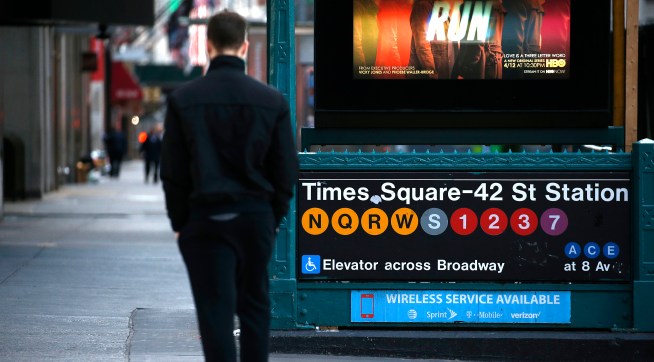
The national COVID-19 crisis is still dominated by events inside the state of New York. Until a couple days ago roughly comparable numbers of Americans were dying in New York each day as every other state in the country combined. Because of this, one way I find helpful to make sense of the situation is to look at New York state and compare it not to the national numbers but the numbers from the rest of the country outside New York state. This helps understand the dynamics in other parts of the country separate from the situation in New York and see how they compare.
Here are three graphs that give us that snapshot of the situation unfolding in the country.

I’ve been working on collecting different bits of information pointing to dramatically higher COVID-19 mortality than is showing up in official statistics. (Josh Kovensky is beginning to report the story in the US.) We discussed the evidence out of Italy suggesting official COVID fatality numbers were only capturing a fraction of the “excess mortality” showing up in particular towns. (This involves comparing the average number of deaths from all causes in a specific town or region during a particular date range to the number of deaths in the same date range during the COVID pandemic.)
Now TPM Reader ND passed along to me this article from the Spanish daily El Pais, which reports a similar study in Spain. The numbers show a discrepancy very similar to those from northern Italy.

Something very, very bad is happening today in Florida with the Holland America Zaandam cruise ship. Many terrible things are happening around us now. But here I am talking about a sort of willful malice or abandonment that is a deliberate decision, something that I think may haunt the decision-makers even if the loss of life is only a tiny fraction of what is unfolding across the country.
The Zaandam is approaching Florida and appears to be in the midst of another ship-wide outbreak like ships that came to port in Japan and Oakland, California. The current report is that 190 guests and crew have flu-like symptoms; eight have tested positive for COVID-19; four guests have died since the ship left Buenos Aires on March 7th.
In response to that data out of Italy suggesting the official COVID-19 death toll may dramatically understate the loss of life in the country, we’ve begun looking at the same data in the US. One challenge is that this data is collected much more rapidly in Europe than in the United States. I picked that up in my reporting. And what Josh Kovensky has found has confirmed that. A lot of this data won’t be available for a while. In some cases the people you would need to ask to pull data from earlier years are currently swamped dealing with the new data. In this first report we just published, Josh talks to some experts in the field and looks at the how this work will eventually be done. The studies out of Puerto Rico after Hurricane Maria will be a guide. Check out this piece. Very important part of the story.
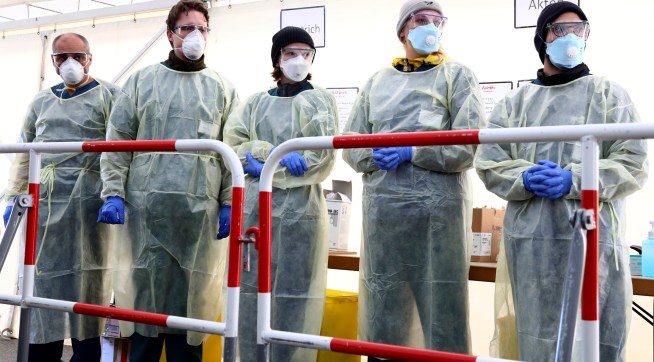
Most of you reading this probably rightly think that Donald Trump and his top advisors catastrophically mismanaged the country’s COVID-19 response. But we also know that the disease has had a shattering impact on countries around the world. So how do we measure the real world impact of the failure to do early testing or start planning to deploy medical resources in January or February? One potential comparison is Germany – another wealthy, industrialized democracy with a world-class capacity in the sciences. Germany got moving early on testing and they have a lot of ICU beds. They also moved rapidly toward aggressive social distancing, at least compared to countries like Italy. You can read more details about it here.

For a variety of reasons, I pay close attention to the manufacturing sector. I think it’s partly because I grew up in Cleveland and still have a lot of friends who work in shops and factories — many who are already out of work. Although we’ve more or less transitioned to a services-based economy, making stuff is still a core aspect of the American identity. We all know the service sector is taking a massive blow. We can see the stores closed, we can’t go to our favorite bar. But the manufacturing economy is less visible — except to those in it. The rest of us will feel the impact down the road when this loss of productivity manifests in myriad ways.
This morning the Institute of Supply Management released its March manufacturing report. As expected, it was pretty bad: Reduced demand, a slowing supply chain, reduced employment. But I want to highlight a couple specific data points. Read More