


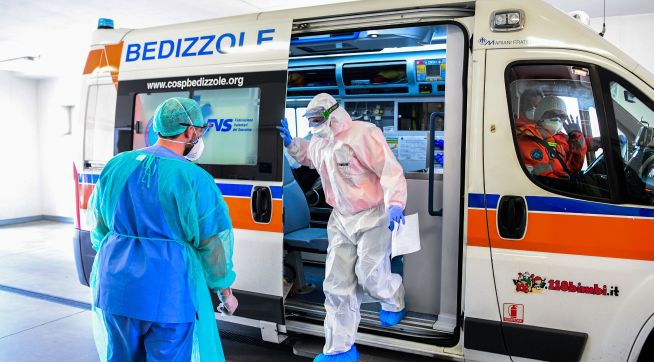
In a time of uncertainty and fear I’m reluctant to pass on startling information based on first pass looks at statistics. But this seems sufficiently compelling and concrete to merit our attention. Here is an article from the Italian daily Corriere Della Sera. It’s written by the mayor of Nembro, a town in the northern hot zone, and health care entrepreneur, both of whom are physicists.
Here are the relevant statistics.
As the US enters the full force of the COVID-19 pandemic there are multiple levels of failure we are collectively having to confront. The most obvious stem from leadership at the top, the costs of a President who has run the country as a plaything for his own uses and sees the unfolding catastrophe through the prism of his own needs. Just today we see a new report about how the federal response at all levels has been marred by inexperienced and unqualified appointees and numerous positions that remain unfilled. The NSC devised a literal ‘playbook’ for how to handle just this sort of event in 2016. You can read it here. But the administration simply ignored it and has made many of the mistakes that manual sought to avert.
But it is also clear that certain levels of unpreparedness predate anything tied to the Trump administration. Relatedly, why is it that a series of country’s on China’s borders or nearby over the sea have managed it so much better?
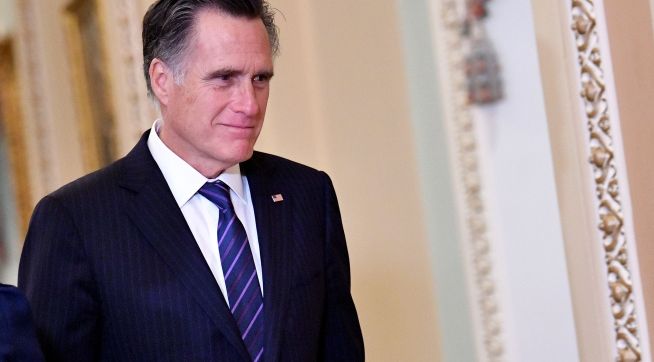
The fact that a Senate, that just months ago held a contentious impeachment trial, was able to pass any sort of spending bill — let alone a $2 trillion one — by unanimous consent is jaw-dropping enough.
It’s just unbelievable what medical practices across the country are going through as an indirect result of the pandemic. The upheaval is extraordinary. Again, this isn’t to treat COVID per se, but to maintain existing health services despite the virus. Tierney Sneed explains.
As we track the scale of outbreaks in countries around the world and look for insights into what will happen in the United States, one key metric has been the number of days between a full lockdown and when new infections and deaths peaked. For that I’ve been trying to make sense of just when New York City – the center of the outbreak in the US – locked down. There’s no simple answer since the city slowly hunkered down in phases. During the second week of March the city government began encouraging businesses to start work from home for employees who were able to do so. On Sunday, March 15th, Mayor Bill DiBlasio announced that the public schools would close the following day. On March 20th, Governor Andrew Cuomo ordered a statewide “pause”, which is New York’s version of what in other states is being called a “shelter in place”.
But how much impact did these different suggestions and orders have on reducing mobility, density and spread in the city?
It’s too soon to state anything definitively. But today’s extremely grim numbers out of Italy do suggest that the outbreak is at least stabilizing. New numbers just released show that Wednesday was the fourth consecutive day when the numbers of new cases and new fatalities were below the peak on March 21st. I stress: this is not enough data to say the trend is down or even stabilizing. But they point in the direction of stabilization.
Graph after the jump.
I’ve been swimming in numbers over the last couple days. I find numbers, create charts, all to try to make sense of the emerging story. One thing that is very clear in all of this is that there is as yet no US outbreak; even the nationwide numbers are misleading. What you have is a New York state and especially New York City outbreak and then a series of much smaller regional ones, most of which are running significantly behind what is happening in New York. One way to capture this: 68% of the hospitalizations in the country are in New York State.
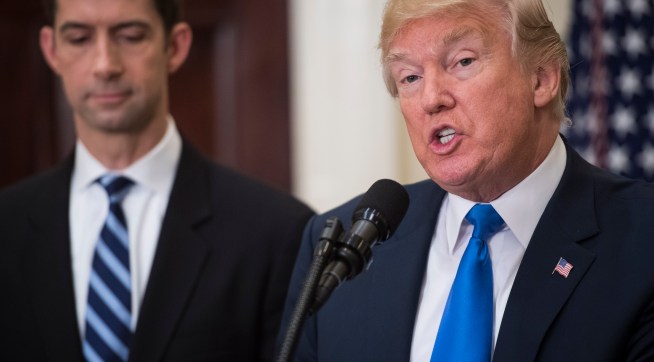
Earlier this week, President Trump attempted to make up for his use of the term “China virus” to describe COVID-19 by defending the Asian American community, which has faced xenophobia and racist attacks in the wake of the coronavirus outbreak.
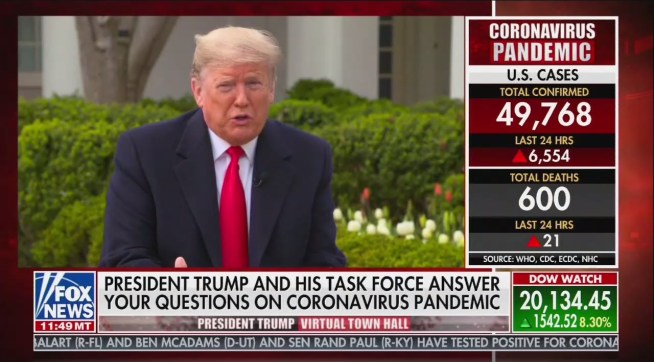
In his Fox News town hall this afternoon President Trump said he needs good treatment or favors in return if states want the federal governments assistance as hospitals are overwhelmed with COVID-19 patients. Read the words and then watch them.
“Usually we’ll have 50 governors that will call it the same time. I think we are doing very well. But it’s a two-way street. They have to treat us well, also. They can’t say, “Oh, gee, we should get this, we should get that.” We’re doing a great job. Like in New York where we’re building, as I said, four hospitals, four medical centers. We’re literally building hospitals and medical centers. And then I hear that there’s a problem with ventilators. Well we sent them ventilators. And they could have had 15,000 or 16,000 – all they had to do was order them two years ago. But they decided not to do it. They can’t blame us for that.”
Here’s the video.
I grew up in the oil patch, so this email from TPM Reader DB resonated:
I wanted to write in with a different perspective than the one I’m seeing take hold among progressives. I work in oil and gas (yes; yes; I know. I’m sorry) and, as such, I interact with conservatives all the time. It’s interesting watching the conservative id coalesce as it does.