


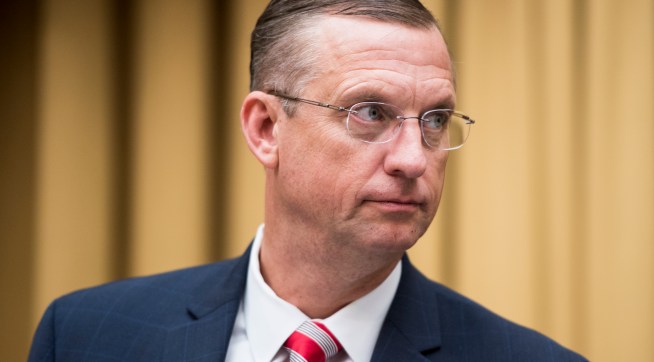
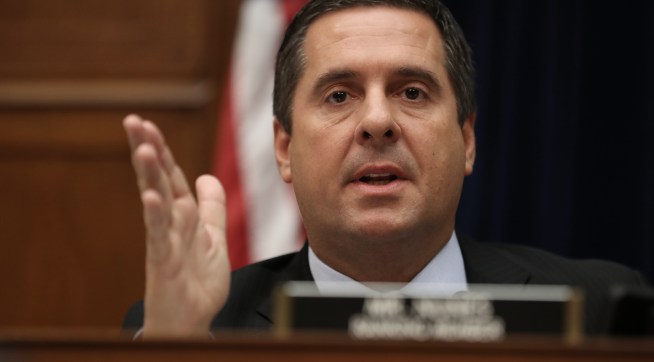
Happy Tuesday, December 3. Republicans on the House Judiciary Committee plan to try out new tactics in the next phase of the impeachment inquiry, disposing of Rep. Devin Nunes’ (R-CA) conspiracy-theory fixation. Here’s more on that and the other stories we’re watching.
JoinThe impeachment inquiry is moving into its next phase after weeks of public testimony. The Iowa caucuses are two months away. We’re watching the polls closely, and they’ll be the subject of this week’s Inside briefing, which will take place on Wednesday at noon Eastern Time.
What should we make of the churn in the Democratic primary? Are Americans changing their opinions about impeachment? We will discuss these questions and more with Michael McDonald, a professor of political science at the University of Florida and a prolific analyst of America’s voting trends.
Here’s a helpful article by Philip Bump in the Post.
Bump takes the GOP claims of Ukraine election interference at face value and looks at what they amount to. As he shows pretty clearly, even taken on their face the alleged evidence is basically absurd. It amounts to information coming out of Ukraine – not by the government – about Paul Manafort’s criminal activities and the fact that a few government officials said negative things about Trump on social media, largely in reaction to Trump’s saying Russia was entitled to annex Crimea.
Join
In the House’s fast-moving impeachment inquiry, the House Intelligence Committee will be passing the baton to the House Judiciary Committee this week.
Join
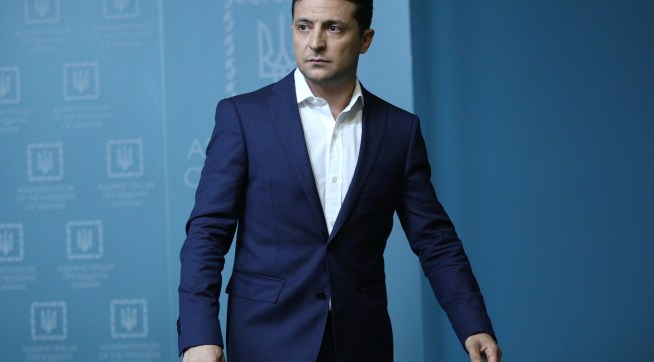
Everything we’re discussing about President Trump’s pressure campaign against Ukraine and President Vladimir Zelensky is framed as events in the past, ones that ended in early September when President Trump released held-up military aid to the country. That is wrong.
Join

Happy Monday, December 2. White House counsel Pat Cipollone officially notified the House Judiciary Committee on Sunday that it has no plan to participate in the House’s impeachment inquiry, citing poor planning on behalf of Democrats and an unfair process. Here’s more on that and other stories we’re following:
Join
TPM Reader JEB follows up with some thoughts on Trumpism, strongman rule and extreme wealth …
As it’s a slow Thanksgiving weekend Friday I re-read your “Brittle Grip” series of posts. You spoke today about the global rise of extreme wealth and strongman rule, though you had previously written mostly about the United States only. This prompts a few thoughts.
The first is the most obvious. Strongman rule has been around for a long time. In one form or another it long characterized the government of nations in several regions of the world. Most of those nations were not especially wealthy; your typical local strongman held political power but not a great deal of economic power, certainly not compared to the United States or the European countries. This has changed somewhat in recent years, more in some countries than in others.
Join
TPM Reader DK has a good point. Leaving these to one-off decisions by the Chief Justice as presiding officer has the additional possible advantage of avoiding some damaging precedents …
I have read your discussion of a Senate impeachment trial with John Roberts in the role of presiding officer. The take away being that the Democrats don’t need to wait for a Supreme Court decision to subpoena witnesses (Mulvaney, et.al.) with direct knowledge of White House actions. Instead a witness could be called during a Senate trial, and if Roberts were to overrule objections, they would have to testify.
Join
A bit uncharacteristically and somewhat uncomfortably I’ve been mulling over a series of issues and commonalities connecting the global rise of strongman rule, Trumpism and extreme wealth but without feeling I’d pulled my thoughts together sufficiently to write about it. So absent any new posts, I thought I’d share the list of earlier posts I’ve been reading through to focus my thoughts.