



A few points on the effect rather than the wisdom or possible fall-out of these attacks.
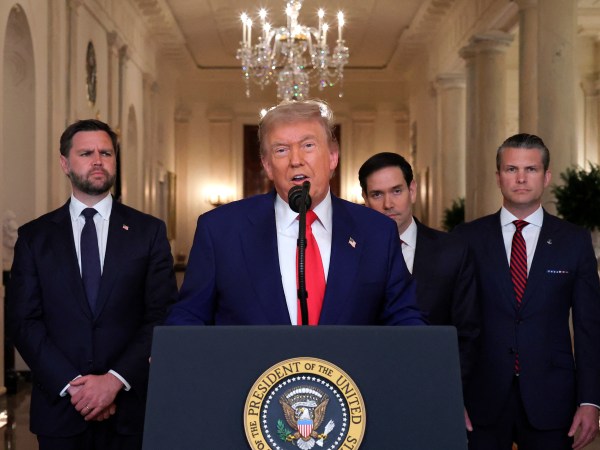
The President has repeatedly said the Fordow nuclear facility was “obliterated”. Clearly that is a party slogan rather than any kind of factual analysis. We’re now getting the first after-action reports out of the Pentagon and Israel which speak of the Fordow facility appearing to have sustained “severe damage” but not being destroyed. One thing that struck me last night was the US assessment that helped prompt this attack which, reportedly, was that the entirety of the Israeli assault had pushed Iran’s program back roughly six months. That’s pretty paltry in terms of any great change in the strategic outlook. I note that because we should wait a significant period of time before we conclude – if the evidence ever merits it – that the US has somehow put the Iranians back to square one in their ability to build nuclear warheads.
Read MoreA few quick thoughts on Trump’s military strike on the Iranian nuclear facilities, in no particular order.
Trump has referred to this as very successful and — if I’m understanding his statement — essentially done. I don’t think that’s how it works. My understanding is that there’s real uncertainty about how many strikes it would take to destroy especially the Fordow facility, which is buried deep in a mountainside. So I think we should be skeptical about how we know how successful this was. You need after action reports to have any sense of what actually happened. The geography here, the composition of the mountainside, how it interacts with these particular munitions. These are incredibly complicated and make outcomes uncertain. (I’m going from memory since we’re reacting to breaking news. So keep that in mind.) The U.S. has conducted extensive testing on these “bunker buster” bombs. And there has been extensive planning going back a number of years on how this attack specifically would be carried out. The Pentagon produces and maintains war plans on almost everything. But this specifically has been planned out in great detail and over many years.
Read More



I wanted to flag your attention to a story bubbling up in the MAGA world that may amount to something or may be merely entertaining. It turns on a guy named Sergio Gor, a 38-year-old who is in charge of the Presidential Personnel Office. He’s in charge of vetting presidential appointees, but with an apparently very Trumpian emphasis on evidences of political loyalty as opposed to more conventional kind of reviews. But it turns out that Gor himself has yet to submit what is called an SF-86, the standard form for appointees who need a high level security clearance. So the guy in charge of vetting political appointees has yet to submit his own materials to be vetted himself. Not great, but the kind of mix of incompetence and probable sleaze that’s pretty standard in Trumpland.
But now there’s a bit more.
Read MoreKate and Josh discuss the Supreme Court decision upholding a trans care ban, Trump’s potential war and the shooting of Democratic Minnesota lawmakers and their spouses.
Read More
Our Executive Editor John Light discussed these hires already. But I wanted to share with you what we’re doing and how you fit into it. I don’t have to tell you that we are in the midst of a protracted national crisis. By some measures we’ve been in one for a decade. But I’m talking about the one that kicked off on January 20th and has continued, unabated and even accelerating, in various forms ever since. From the start of this we’ve been committed to upping and expanding our game, even within our limited resources, because the moment requires it. You’ve made that possible through your memberships and through your contributions to The TPM Journalism Fund. This week we added two new positions to our roster and two new members of our team. Allegra Kirkland, a TPM alum, has returned to TPM as a deputy editor. Layla A. Jones has joined us a reporter.
Read More