
Hello, and welcome back to The Franchise!
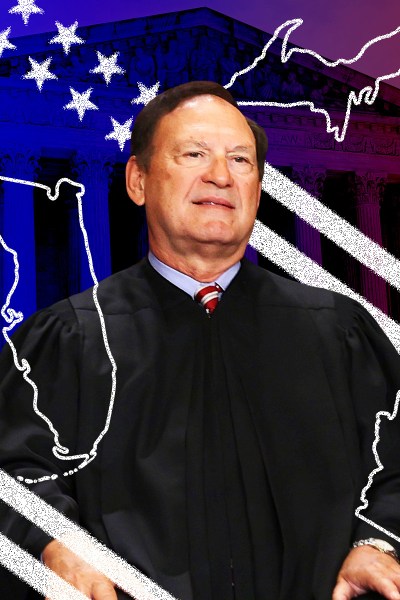
By now you’ve heard about the Supreme Court ruling on Wednesday that struck down Louisiana’s second Black-majority congressional district in Louisiana v. Callais, dealing a major blow to the Voting Rights Act and making it almost impossible to prove that racial discrimination has taken place in future redistricting efforts.
During a press briefing on Wednesday, David Becker, executive director and founder of the nonpartisan Center for Election Innovation and Research described the decision as a “radical rebalancing of the balance of power between the three branches of government” that greatly limits the use of consideration of race in future maps.
At this point, there are really only a few states that have filing deadlines late enough in the game to allow for the redrawing of congressional district lines ahead of the midterms. But red states officials across the nation are already calling for changes to congressional maps to be made as soon as possible — meaning the decision can and likely will still have an impact on President Trump’s push to predetermine the results of the midterms.
Of particular interest is, of course, Florida, whose legislature had already convened a special session on redistricting this week and on Wednesday approved new gerrymandered maps that are poised to give Republicans four additional congressional seats.
We’re also keeping a close eye on Georgia, Missouri, Tennessee and South Carolina where election administration deadline schedules might still allow for some wiggle room for maps to be redrawn ahead of primaries. Republicans in those states have already put out calls for new maps in light of the SCOTUS ruling.
But it might not stop there. The governor of the state of Louisiana, whose second majority Black district was the subject of Wednesday’s ruling, has already told Republican House candidates in the state that he plans to suspend the upcoming May 16 primaries while maps are redrawn.
We will get into all of this and more below. Let’s dig in.
The Callais Decision and the Latest in Redistricting
Against the backdrop of the Louisiana v. Callais decision, the future of the redistricting war that Trump started last year remains to be seen.
But here’s what’s currently happening.
Only hours after the Supreme Court announced its decision, Florida’s Republican-controlled legislature passed a new gerrymandered congressional map that could give Republicans as many as four additional seats in the U.S. House. The new map will primarily impact Democratic-leaning districts in areas near Tampa Bay and Orlando, and the new lines were drawn even before the ruling on Wednesday. Florida Gov. Ron DeSantis admitted in the wake of the decision that he had redrawn lines with the potential implications of such a SCOTUS ruling in mind.
The new map could give Republicans 24 seats in the state, leaving only four for Democrats. Some experts and even some Republicans, though, have noted that attempts to further gerrymander congressional lines, especially in the southern half of that state, could actually backfire.
A Florida special session on redistricting began on Tuesday, just a day after DeSantis revealed the new map. The session started off a little rough, though, as a strategist for DeSantis and author of the map, Jason Poreda, admitted that he used partisan data to draw the map, even though in 2010, Florida voters banned partisan gerrymandering when voters approved new Fair Districts amendments to the state constitution.
“Partisan or electoral performance data was considered, but certainly not at the exclusion of all of the other standards,” Poreda said during this week’s special session, prompting Democrats and advocates to vow to bring legal challenges once that map passed.
But an attorney for DeSantis, David Axelman, argued on Wednesday that the Callais decision actually nullifies the Fair Districts amendments, according to reporting from the Florida Phoenix.
It’s all part of a bigger gerrymandering battle that Trump has been waging for months, pressuring red states across the country to engage in the once-unprecedented practice of mid-cycle redistricting, as a way to ensure that Republicans maintain control of the U.S. House this year.
The push for Florida to adopt new maps followed a significant Democratic win in Virginia last week, after voters approved a Dem-endorsed redistricting proposal that is poised to give Democrats four additional congressional seats in the state, though it has been aggressively challenged by Republicans in court. Virginia’s initiative was introduced as a way to offset the damage of Trump’s gerrymandering overreach.
Up until yesterday, pressuring Florida to adopt new maps for the midterms was seen as Trump’s last hope to gain a few more seats and, at least, in part, save Trump’s floundering campaign. Now, things are different.
Antrim County is Embroiled in Another Election Denial Saga
Antrim County, Michigan, which was ground zero for election conspiracy theories following the 2020 election, is once again embroiled in more possible election denial activity as the county clerk reportedly tries to cancel voter registrations — something she is not entitled to do.
Here’s the backstory.
Antrim County Clerk Victoria Bishop — a Republican who is very closely associated with the 2020 election denialism crowd and has herself spread lies about the 2020 election — was elected county clerk in 2025 and ran on the following slogan: “Restore election integrity in Antrim County.”
Bishop’s husband, Randy Bishop, is a conservative talk radio host who was also Bishop’s campaign manager, has also previously said he had evidence that the 2020 election was stolen, per reporting from Votebeat. During her campaign, Votebeat noted, Bishop repeated a classic MAGA election lie: that “we still have dead people and people who no longer live in Antrim County” on the voter rolls.
So, the Michigan Bureau of Elections sent a letter to Bishop earlier this month saying it received information that indicated that she was changing and canceling registrations for voters in the county. Municipal clerks are the only ones with this authority.
“The Bureau of Elections has received information indicating you may be taking actions related to voter registration and voter record maintenance that fall outside the scope of your statutory authority and fail to comply with the law,” the letter said. “Under the Michigan Election Law, responsibility for updating voter registration records and issuing related notices rests with the city or township clerk.”
The letter requested that Bishop give a “detailed explanation” of how and why she canceled or changed people’s voter registrations, including offering a “legal basis” for doing so, as well as a comprehensive list of every voter who received a notice from the county this past year.
The letter, which was sent on April 14, demanded a response from Bishop by April 23 — a deadline that has come and gone with no formal response.
In a statement on April 19, Bishop said that both the Help America Vote Act and the National Voter Registration Act give her the authority to conduct what she calls a “corrective audit to identify ineligible registrants.”
A spokesperson for the Michigan Department of State told Votebeat that the statement didn’t count as a response to the state’s letter.
While this is a minor and bizarre episode in an already chaotic midterms cycle, wonkiness in Antrim County is notable because it was one of a handful of conspiracy theory hotbeds in 2020.
Back in 2020 there was an accidental reporting error in Antrim County on election night. It was not a software error, but an honest human mistake that led to a brief misreporting of votes in the county, leading to an inaccuracy in the unofficial election results being reported. The error was spotted and quickly corrected and in no way impacted tabulation.
Despite the fact that it was corrected, the error became fodder for Trump and his allies who referenced it repeatedly as a way to prove that the voting machines were hacked and the election was stolen.
Stay tuned for more on this.
The DOJ is Now O for 7 in Its Failing Voter Seizure Campaign
Another day, another defeat for the DOJ’s flailing campaign to seize sensitive voter data from the states.
For many many months now, the Trump administration has been trying to force 48 states and Washington D.C. to hand over sensitive voter information, including Social Security numbers and driver license numbers, to the federal government, a move widely considered an overreach.
Few states have complied, so, in response, the DOJ has sued 30 states and D.C. And so far, the DOJ has lost every single case that has gone to court. The latest loss is in Arizona.
This week, a Trump-appointed judge, district judge Susan Brnovich, dismissed the DOJ’s lawsuit against Arizona with prejudice (so that the DOJ cannot refile), saying that the Trump administration has no right to Arizona’s voter data, marking the administration’s seventh loss thus far.
“The Court will dismiss the Attorney General’s claim with prejudice because amendment would be legally futile,” the order reads.
In its request for Arizona’s statewide voter registration list, the DOJ relies heavily on the Civil Rights Act of 1960, the National Voter Registration Act, and the Help America Vote Act.
In her order, Brnovich noted that these statues do not give the DOJ the right to this information. More specifically, she noted that even if the Civil Rights Act of 1960 is “sweeping,” it is not “limitless.”
Arizona Attorney General Kris Mayes and Arizona Secretary of State Adrian Fontes, both Democrats, released a joint statement on Tuesday praising the decision.
“This is now the sixth federal court to reach the same conclusion,” they wrote in a statement. “Arizona acted correctly in refusing this request, and today’s ruling vindicates that decision. Our offices will continue to defend the privacy of Arizona voters against federal overreach.”
The DOJ has lost similar lawsuits in Oregon, California, Michigan, Massachusetts, and Rhode Island. A federal judge also dismissed a case in Georgia because the DOJ filed the lawsuit in the wrong city.
In Other Election News:
Reuters: How Trump is moving to control U.S. elections, one state at a time
CNN: Indiana GOP lawmakers defied Trump on redistricting. Now GOP voters may thwart his push for revenge
Democracy Docket: Fulton County again turns Harmeet Dhillon’s comments against DOJ in ballot seizure case