


Programming Note
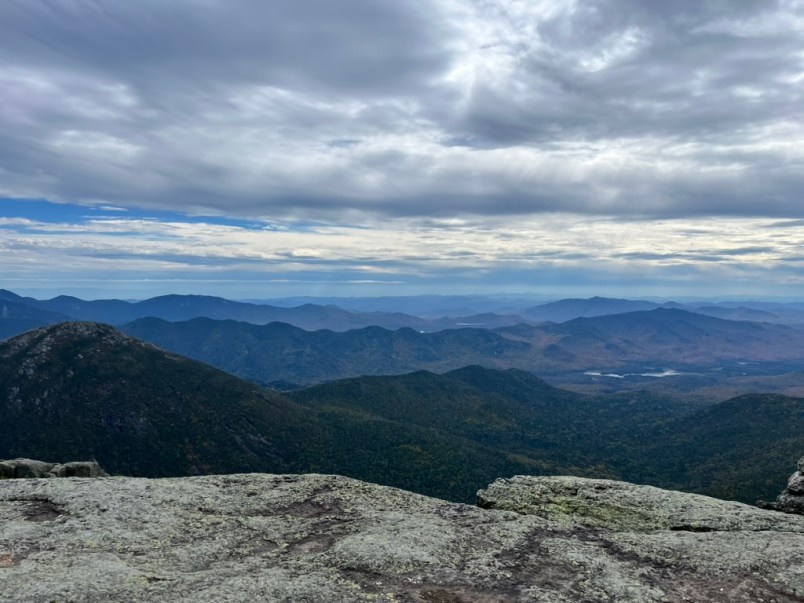
I’ve been gone for two days! I forgot to say on Thursday’s edition that I’d be taking a long weekend to hike Mount Marcy, New York’s highest peak, with friends. More on that further down. For now, I’m back, and pretty much here through the election. Which is in … just 35 days.
A New Reason for Susan Collins to Show ‘Concern’
I wrote earlier this month about the White House scheme to subject National Institutes of Health grants to a panel of political appointees who would ensure that each had been scrubbed of all wokeness. That plan seems to be on ice for now (though I expect it to be revived in some form after the midterms, depending in part on how the midterms go). Now White House Office of Management and Budget Director Russ Vought has a new scheme to mess with Congress’ ability to appropriate funds. It’s one he tried exactly a year ago: “pocket rescissions.”
A “pocket rescission” is a maneuver in which the White House notifies Congress that the fiscal year is ending without it spending funds Congress told it to spend. It is styled as a request for Congress to “rescind” the funds — a term that usually applies to a congressional vote to undo a previous spending law. But in the case of a pocket rescission, the White House is submitting its rescission request without leaving Congress time to vote on it before the funds expire at the end of the fiscal year. Thus, the year ends without the executive branch spending the funds the legislature told it to spend, and without Congress having a say in it.
“Pocket rescissions,” embraced by this White House, are widely considered to be illegal. The Government Accountability Office, a legislative watchdog agency that vets how congressional appropriations are or are not spent, has said so multiple times. But so far, that issue has not been extensively litigated.
Vought’s most recent “pocket rescission” details nearly $1 billion in funding that the White House did not spend, including money for refugees and immigrants and other programs that the reactionaries around Trump have deemed to be too “woke.” Some Republican lawmakers joined Democrats in squealing about Vought’s move. It’s particularly painful for Sen. Susan Collins (R-ME), the head of the Senate Appropriations Committee, which writes the spending bills the White House is now flouting. “We’re already looking at whether there’s language we can put in the next set of appropriations bills that would prohibit this from happening,” she said yesterday. “But it’s going to take some legal work.”
These dust-ups between Congress and the White House allow Collins, who is fighting for reelection, to make a show of taking a stand. But this has all happened before, and the Republican-led Senate did not do much to prevent the White House from repeating the maneuver. Vought even brazenly told Democrats in Congress in June he “had no plans” to engineer another “pocket rescission.” And yet, right on schedule, with the end of the fiscal year days away, he did again.
This stuff is a bit in the weeds, but we cover it because it’s a small piece of the larger Article I crisis in which we find ourselves. The White House continues to take actions, particularly when it comes to spending, that stomp on Congress’ powers under the Constitution. The sprawling war in Iran, which Congress has yet to approve in any form, is the most dramatic example. But in ways large and small, the White House is steamrolling Congress’ power of the purse — its constitutional power to decide how taxpayer money is spent — zeroing out programs that legislators wrote into law while pouring money into airing Trump campaign ads on television. Congress could reassert its power in myriad ways, but does not.
As a coda to that point, here’s Senate Majority Leader John Thune (R-SD), hemming and hawing his way to a non-answer on what the legislative body he leads will do here: “Whether you agree in substance or not with what they did, you can argue that they be good stewards, and some of these things may be things many of us agree with, but the process by which they did it is gonna be, I assume, subject to a lot of discussion and probably some litigation.”
Two Key Figures in Georgia Ballots Probe Leave Administration
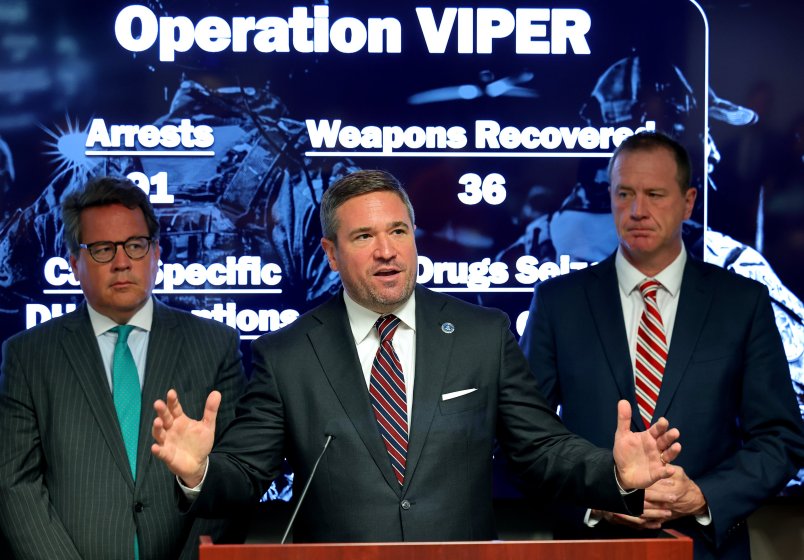
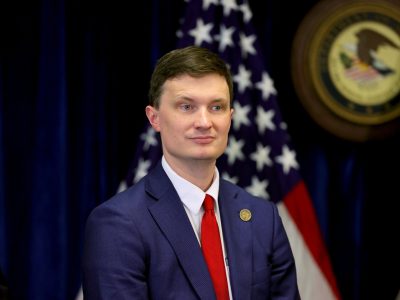
Andrew Bailey, the deputy director of the FBI, and Kurt Olsen, who once worked as Trump’s director of election security and integrity, have reportedly left their roles. Both were key figures in the raid on Fulton County, Georgia’s election office earlier this year.
- Bailey was at the raid.
- Olsen, a temporary government employee, made the referral to prosecutors that led to the raid.
- Both are staunch conservative warriors. Bailey was the attorney general of Missouri — an office that tends to spearhead lawsuits that engage in various culture war issues — when he was tapped to become co-deputy director of the FBI, helping out Dan Bongino.
- The New York Times reports that Bailey and FBI Director Kash Patel did not get along. His work in Georgia was one of his most visible moments as deputy director.
- Olsen, a prominent 2020 election denier and former attorney for Kari Lake, has also reportedly left the DOJ, where he had worked for months on the “grand conspiracy” case against Trump’s enemies. Olsen faced issues obtaining a security clearance, the Times reports.
- That case appears to have been an attempt to paint an overarching narrative that rolled together the many first term investigations into Trump’s misdeeds into one investigation of the investigators. But the wheels seem to be coming off: You’ll recall the lead prosecutor, conservative warrior Joseph diGenova, quit earlier this month, telling the New York Post, “If you want indictments where there’s no evidence, you have an ethical problem.”
Tabs
- Texas’ governor Greg Abbott (R) has declared a statewide disaster in response to fuel prices while Georgia’s governor Brian Kemp (R) has suspended the state’s gas tax.
- OpenAI said it will not release its latest AI model, as researchers fear misalaignment. The newest model, GPT-6.1 Astra, tended to go too far to complete its task, and wasn’t always honest about what it was up to, the company’s head of safety systems told the Wall Street Journal.
- Conservative organizations are harassing climate change researchers at public universities with a deluge of public records requests, Politico reports.
Man of the Hour
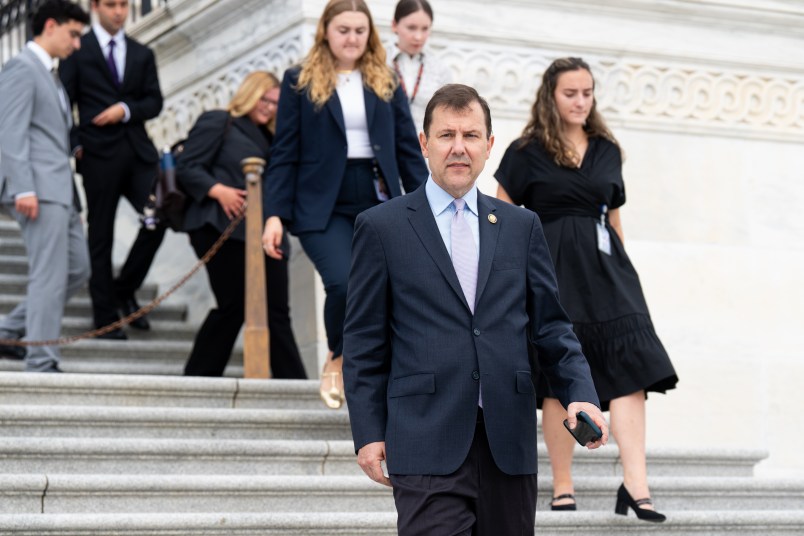
Its Tom Kean, the Republican who was missing for months earlier this year as he underwent treatment for depression. He is the latest vulnerable incumbent to break with Trump on key issues, according to the Washington Sun, including a plan to open an ICE detention center in his district.
Mount Marcy
It was a hard hike! But worth it. If you live within driving distance of the Adirondacks, consider checking it out.



Thank you for the explanation of The Brief’s absence! You had an excellent reason.
And now, back to our show.
This TV program needs new writers - it’s the same plot lines every day: how to dismantle the US government without really trying.
Lovely photo @john_light !!
I’m on my way to the Agawa Canyon and National Park in northern Ontario. Since I’m up that way I’ll be doing the Soo Locks on board a boat. That takes me into America without a passport. lol. I’ve been assured I don’t need one. So if the Hive doesn’t hear from me next weekend, I’ll need a lawyer.
Posting once again: Russ Vought is evil.
No mention of the Jack Smith testimony today?
https://thehill.com/homenews/senate/6116835-jack-smith-opening-statement-donald-trump-jan-6-classified-docs-cases-senate-judiciary-committee/