



I haven’t had a lot to say about Israel and Iran because I haven’t had a lot to add. But I want to suggest something about the possible entry of the United States into the war. These aren’t conclusions, more questions I’ve had and questions that help me frame how I’ve looked at what’s happening.
In the first couple days of this hot conflict, the conventional wisdom and reporting went from Israel doing this more or less entirely on its own, perhaps even interfering in U.S. diplomacy, to the idea that the apparent rush of diplomacy between the U.S. and Iran was actually a ruse concocted by Israel and United States to lull the Iranians into letting their guard down. At first this seemed to be what they call in the online world right wing “cope,” shoving Donald Trump back into the center of the story as He-Man hero when he had actually seemed marginal to the action. But then it started showing up in news reports. And from what I can tell at this point, it’s almost treated as a given, just part of the reported story.
This certainly may be accurate. But I’m not sure that it is. I think it’s also possible that the initial attack was fabulously successful in tactical terms (no one would deny that) and Trump basically wanted in on it. Because he likes success. In a normal administration, reporters might get a clearer read on what was real or what wasn’t. But this isn’t a normal administration. Much of “what the plan is” is an unknowable thing in Donald Trump’s head and a feature of the Trumpian personality cult is that once there’s an approved story, that is the story. Period. I could be right or wrong on my supposition here. But I’m not even sure if the people inside the administration actually know. In any case, I think there’s a pretty good chance the whole ‘we were secretly working together to lull Tehran into complacency’ is a complete fiction, an online MAGA speculation that the White House and Trump glommed onto and made real because it was convenient and helpful.
Read More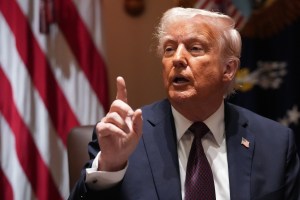
The idea that Trump or MAGA is in any sense “anti-war” is something between an absurdity and a misunderstanding. Kate and I had a good discussion of it in this week’s podcast. At one level it’s a simple fraud. Trump claimed he’d always been against the Iraq War at a time when the U.S. had been bogged down in Iraq and Afghanistan for years. It was a helpful attack line and it was completely false. Trump wasn’t in politics in 2002 or 2003 and to the extent he said anything, like a lot of people, he was for it when it was popular and against it when it wasn’t.
During his presidency he signed off on the assassination/targeted attack that killed Qasem Soleimani; he heavily involved the U.S. in the Saudi war in Yemen; he maintained or expanded the U.S. fight against ISIS in Iraq/Syria. Those are at least a continuity with the Obama years and in key respects an expansion of it. The one arguable exception is the deal Trump made with the Taliban to leave Afghanistan — a bad deal which Joe Biden was saddled with and followed through on and was endlessly criticized for, by Trump more than anyone else. Afghanistan captures Trump perfectly — his one notionally “anti-war” position was continuity by definition. And he turned against it as soon as he was unpopular. Trump has gotten “anti-war” mileage out of his opposition to Ukraine aid. But that’s pro-Russia rather than anti-war.
Read More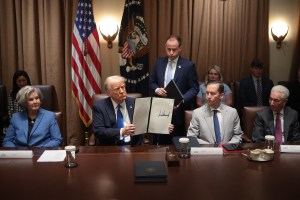
I wanted to flag your attention to a story bubbling up in the MAGA world that may amount to something or may be merely entertaining. It turns on a guy named Sergio Gor, a 38-year-old who is in charge of the Presidential Personnel Office. He’s in charge of vetting presidential appointees, but with an apparently very Trumpian emphasis on evidences of political loyalty as opposed to more conventional kind of reviews. But it turns out that Gor himself has yet to submit what is called an SF-86, the standard form for appointees who need a high level security clearance. So the guy in charge of vetting political appointees has yet to submit his own materials to be vetted himself. Not great, but the kind of mix of incompetence and probable sleaze that’s pretty standard in Trumpland.
But now there’s a bit more.
Read More
Donald Trump’s latest meltdown in response to “ceasefire” violations by both Iran and Israel but especially Israel brings out the uncanny quality of everything that has happened over the last week — the simultaneous existence of a very real hot war with what amounts to a social media campaign. They’re both happening. They’re clearly interacting with each other. But the dynamics of the two are so separate, distinct, operating according to totally different rules that watching the two together looks deeply unreal.
Subsequent reporting by The New York Times and other publications seems to confirm my initial assumption, which was that the entire U.S. involvement in this conflict was driven by especially Fox News’s reporting of Israel’s onslaught against Iran’s military infrastructure and nuclear program. Israel was “winning” and Trump wanted in on that winning. And that was really the entirety of it. But Trump’s decision to escalate the crisis to a level of destruction of underground facilities that only the U.S. is capable of had a very real result. And it’s not just whatever level of destruction those bunker buster bombs created — which appears substantial but not total.
Read More
With the President’s “Big Beautiful Bill,” there’s been a general assumption. It’s super, super unpopular. And, also, it doesn’t matter. It’s going to pass anyway. That assumption is very likely true. Perhaps they’ll hit some speed bumps that prevent the bill from passing in time for July 4th, as Trump wants and has demanded. But these kinds of bills tend to be “failure is not an option” type affairs. You have obstacles but they get crumpled like things that go under a steam roller or mashed up in an industrial trash compactor. That’s particularly the case in Trump’s second term, where hints of the old ungovernable GOP caucus get flattened when word comes from Trump that it’s over. But here we see again the central tension point of the Trump presidency: he owns, dominates and controls everything but public opinion.
That much of it is almost conventional wisdom at this point. The bill thing is really, really unpopular. Even the inside-DC sheets say as much. So Republicans are starting to do something we’re used to seeing Democrats do with some of their more aspirational policies. Which is basically this: You think it’s unpopular. But that’s just because you’re not polling it right.
Famous last words.
Read More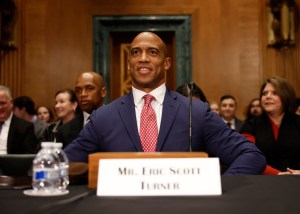
I wanted to update you on the story I flagged yesterday in which the Secretary of Housing and Urban Development (HUD), Scott Turner, decided to bogart the offices of the Trump-beleaguered National Science Foundation (NSF) at least in part to build a Sky Mansion for himself on the building’s top floors. Stories like this have always had a special fascination for me. You can’t say it’s a bigger story than the US going to war with Iran or the US military low-fi occupying a major American city. But in addition to its immediate impact on three or four thousand people — the employees of HUD and NSF — it captures so much of what 2025 Trump-era Washington is about. As probably goes without saying, there appears to have been no formal process behind this at all. There’s a very Sopranos feel to the whole caper: ‘Nice place you got here. It’s mine now.’
Read More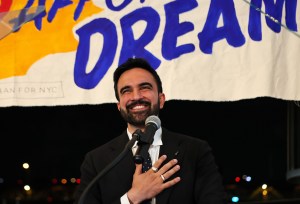
Since I haven’t written about this here, I wanted to share a few thoughts about Zohran Mamdani’s big Democratic mayoral primary win in New York. If you’ve been saturated by coverage of this race, these won’t strike you as terribly original points. I’m just sharing my perspective.
First, I see three reasons why Mamdani won.
The first is the simple fact that Democratic voters are angry and dissatisfied with the incumbent Democratic political class. We see this everywhere. It’s much less about ideology than it is often portrayed. We live in an angry, distrustful, populist age. Since the greatest expression of this mood has come from the right, Democrats have often been in the uncomfortable position of leveraging against this tendency, holding the line for institutional continuity, preservation over destruction and many other situationally understandable impulses. But the twin effects of Trump’s comeback victory and the often fractured and feeble response to it by the Democratic leadership in Washington has washed all of that away.
Read More
Last week, I read an article about the special primary election to replace the late Rep. Gerry Connolly (D-VA). The Post said the race was “animated by growing frustrations with the party establishment” and called the race “an early test of antiestablishment sentiment at the ballot box as the Democratic Party is caught in a tailspin over its approach to Trump.” (Emphasis added.) As it happens, I hadn’t known this primary was being held last weekend. (No excuses, just so much else going on and it was run as a so-called “firehouse primary” on an expedited basis.) The first I heard about it was from a handful of TPM Readers who wrote in to tell me about the surprising levels of energy and turnout they’d seen when they showed up to vote. This contrast caught my attention because it’s one that keeps showing up, paradoxically unremarked upon in almost all the election coverage we see.
On the one hand, the Democratic Party is “floundering,” “directionless,” “lost.” It’s approval numbers are bleak. And then, often in the same articles, you have all this evidence of voter intensity. Turnout. New activism. Lots of new people running for office. What seems like an apparent contradiction resolves itself if you get your terms right. I don’t think the Democratic Party is in a tailspin or floundering at all. In many cases, the elected leadership of the party is. But the elected leadership is not the Democratic Party. The Democratic Party is its voters. Especially it’s primary voters. This is just a signal understanding of what a party is and what constitutes its health or disfunction. I saw a headline a few days ago that was roughly, The Dems’ Latest Nightmare: Primaries As Far As The Eye Can See.
Read More
Bill Moyers died last week at the age of 91. TPM Executive Editor John Light worked for Bill for a number of years and has written this remembrance of him which I recommend to you. I wanted to share some additional thoughts about Bill and how his life affected my own and the life of this site.
The first thing I want to mention is two documentaries Bill produced in the late 80s. Joseph Campbell and the Power of Myth is a series of six one-hour interviews with Campbell, who died shortly after the interviews were completed. The second is Amazing Grace, his documentary about the history and life of this song, so embedded into the cultural and spiritual life of the Anglophone world. College is a time of promise, adventure and challenge for many people. And I encountered the first of these at a moment of particular challenge in the summer of 1988. Amazing Grace debuted in 1990. I haven’t watched either in many years, though I own a copy of Amazing Grace. They explore common themes from very different directions. Both showcased Bill’s ability to bring fascinating, human issues to life in ways that are both sophisticated and accessible to a mass audience.
Read More
I want to focus your attention on this new piece by Josh Kovensky on the DOJ appearing to open the door to denaturalizing citizens based on political activity or belief. I doubt I need to convince anyone reading this that this is a bad thing. But I want to underscore what is implicit in what is bad about it but needs to be as front and center as possible. The only cases in which denaturalization should ever be used are in the most extremes cases of egregious acts which, had they been disclosed prior to naturalization, would have barred citizenship in the first place. Even in most of those cases, the downsides usually outweigh the upsides. Because outside of the most extreme and unusual cases denaturalization is a stark threat to the equality of all American citizens.
I was born in the United States. Depending on what I do, the state can send me to war, imprison me, even execute me. But I can never stop being an American citizen unless I affirmatively renounce that citizenship. As long as that threat exists in any meaningful sense, no naturalized citizen is really my equal. Their membership in the club is contingent, contingent on behavior, which is to say not equal at all.
Read More