


For years there’s been a running conversation in the United States about whether the country is heading towards a second Civil War. That conversation often stumbles on the fact that America’s profound divides today don’t line up on any clear regional lines, despite what the maps of presidential election results might seem to show. Divisions are at best intra-regional. So any kind of replay of the 1860s is highly unlikely. But of course plenty of civil wars either had no clear regional breakdown or at least don’t start with one — the Spanish Civil War, the Russian Civil War, the Chinese Civil War, the Syrian Civil War. Before going further I should note that as a general matter I’m a “no” on this question of “are we headed to a second American civil war?” But events yesterday and those of last month suggest the possibility of something more realistic and still ominous.
Let’s quickly review the details: yesterday in New Orleans we had what appears to be an ISIS-inspired lone wolf terrorist attack. The FBI is now discounting initial suspicions that others might be involved. Events like these happened with some frequency in the U.S. for a number of years. But there’s been some respite, more or less since the Pandemic. Then a Tesla Cybertruck exploded in front of a Trump building in Las Vegas. The driver was killed and the car appeared to be filled with high-powered fireworks and gas canisters. It’s still not clear what this incident was about. That’s not remotely how you’d build a car bomb if you wanted to injure anyone. But it certainly doesn’t seem like an accident either.
Read More
Sometimes I will write a post that somewhere midway through the writing starts to feel bloated and overwritten and then, in a pique of writerly nausea, I decide several sentences can and should — no, must, yuck! — do the work of a stable of paragraphs. This post began as one of those posts.
2024 was a deeply disappointing year. It capped two or three years that all had the feeling of playing out bad hands — a presidency defined by the jagged aftermath of COVID (a first-in-half-a-century inflation shock being the jaggedest), an increasingly frail president who couldn’t easily be replaced without doing even more damage than having him run for reelection. This doesn’t address decisions that should have been and could have been made differently. I focus on these because they were based on earlier decisions or events which were either right at the time or very difficult to avoid. Again, that steely but trapped feeling of playing out bad hands.
In 2025 we all face the consequences of those failures. But we are equally liberated from much of that history. Everybody is being dealt a new hand. We can make decisions differently, with more clarity, with less paralyzing concern over sunk costs. If there’s a message of the Biden years, it’s that there’s no simply going back to whatever we thought was the system that more or less worked before Trump arrived on the scene. You have to go forward on the basis of all we’ve seen over the last decade.
My takeaway is what I alluded to in this November piece about being the party of institutions in an era of distrust: Less reflexive protectiveness of institutions and norms and none for ones that can’t concretely justify their necessity in the future rather than the past. Enough valorizing process over results. This isn’t always obvious and doesn’t always come without real risks. But everything involves risk. Caution carries risks. The Trumpists control everything. They are the status quo. They were in many ways already the status quo but they are now in such a way that there is just no murkenizing or hiding it. All the billionaires have arrayed themselves on Trump’s side of the playground and said they’re on his team. We can see who is in charge and who’s powerful and who is the establishment. I find this liberating.
I wanted to flag this article to you. It’s a fascinating look at right-wing South Korean YouTubers and President Yoon’s recent attempt to impose martial law in the country, which ended with Yoon being impeached and removed from power. It matches with bits and pieces of what I’ve been able to pick up in the English language press in South Korea as well as from various commentators who write in English on social media.
One big takeaway is that South Korea is similarly awash in right-wing and left-wing YouTubers who have similarly either destabilized trust in traditional media or taken advantage of that lack of trust, depending on whether you’re on Team Chicken or Team Egg. The trajectory there seems more recent. A lot of it is over just the last two or three years, while in the U.S. these trends date back significantly further. But the most interesting detail is that this world seems to be a big part of the answer to a question that still looms over the whole attempted coup, which is: “what was President Yoon thinking?”
This isn’t the Cold War where you could either be fearing a communist takeover or exploit those fears as a justification for a coup. While South Korea’s democratic era only goes back to the late 1980s, it’s deeply entrenched. And while there was a protracted political crisis of sorts in the country, it really wasn’t one that anyone imagined leading to a replay of things that happened in the country in the 1960s of 1970s. And this isn’t some statement of naiveté: how the whole thing played out vindicates this perspective. The country’s reaction to the attempt can best be described as a widespread “What the fuck?” Like not even, “this won’t stand!” or “we’ll defend our democracy!”, though those were there too. The immediate reaction to Yoon’s move was as much bafflement as fear or anger. The whole thing was so crazy and out of left field that people struggled to understand what Yoon had even been thinking. That’s why the attempted coup played out as it did and why Yoon is currently out of power and looking at likely treason charges.
Read More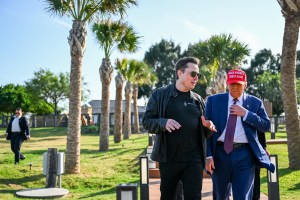
I admit I’ve been saying mostly the same thing in my last few posts on events on Capitol Hill. I must think that if I keep writing it it will finally be clear. Oh well. I just noticed someone say they were surprised that almost 40 House Republicans defied not only Trump but Elon Musk as well.
I don’t think that’s what happened. Was Musk for this Trump/Johnson clean up effort that went down to defeat last night? That doesn’t seem clear at all. It’s way over-literal, over-determined. He wasn’t really for it or against it. He blew the deal up and then just moved on to something else.
Here’s the chain of events I see.
Read More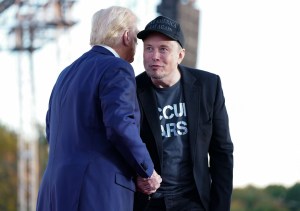
As you’ve likely seen, things kind of went off the rails on Capitol Hill. Speaker Mike Johnson had assembled one of those big spending packages to avoid a government shutdown. Then Elon Musk went off on the bill and started a stampede for the exits among House Republicans. Then Trump turned against it too. Then JD Vance. By the end of the day, it was clear not only that the bill was dead, there was a real question about whether Johnson’s speakership will survive the vote for speaker coming up on January 3rd.
But none of those points are the critical ones. This is about Elon Musk.
Read More
I got the opportunity to see the new Dylan movie at an advance screening a couple nights ago. And I wanted to share a few thoughts about it. I don’t know how to write a movie review. And I don’t know enough about movies to write one anyway. These are just some of my reactions.
First, for a tl;dr: I liked it. I recommend it. Especially if you’re at all a fan of Bob Dylan.
I’m a difficult audience for this kind of film. I know every detail and anecdote from the history the movie chronicles — each meeting, plot point, verbal exchange, performance. That’s not bragging. It’s an admission. I’m way too deep into this stuff. What that means is that it’s really hard for a biopic to recreate or dramatize these events in a way that does not seem, at least for me, sentimental, cliched, overdone. Even if you don’t know all the details as an obsessive, this material has been discussed and mythologized endlessly. How can it possibly be fresh? Biopics such as these often have a stations-of-the-cross air to them, with the hero floating from one iconic moment to the next. So there’s like a Sword of Damocles of cliché and treacleiness hanging over a project like this.
But for me, Like a Complete Unknown managed to avoid this pitfall, which surprised me. The sword doesn’t come down.
Read More
In the wake of Donald Trump’s election victory and promised revenge tour, a number of individuals have proposed the creation of an organization or fund which would take on the job of defending the various lawsuits, prosecutions and generalized legal harassment Trump will bring to the table in the next four years. It’s a very good idea. It’s a necessary one. Over the last six weeks I’ve had a number of people reach out to me and ask who is doing this. Where should they send money to fund this effort? This includes people who are in the small-donor category and also very wealthy people who could give in larger sums. So a few days ago I started reaching out to some people in the legal world and anti-Trump world to find out what’s going on, whether any efforts are afoot and who is doing what.
What I found out is that there are at least a couple groups working toward doing something like this. But the efforts seem embryonic. Or at least I wasn’t able to find out too much. And to be clear, I wasn’t reaching out as a journalist per se. I was explicitly clear about this. I was doing so as a concerned citizen, not to report anything as a news story but as someone who wants such an entity to come into existence. The overnight news that Trump is now suing Ann Selzer and the Des Moines Register over her final election poll for “election interference” makes me think that these efforts aren’t coming together soon enough or can’t come together soon enough. (If you’re not familiar with the details, Selzer is a pollster of almost legendary status and in what turned out to be her final public poll, dramatically missed not only the result of the election but the whole direction of it.) So what I’m going to write here is simply my take on why such an effort is important and what shape it should take.
Let’s start with the practicalities.
Read More
In a clearly choreographed series of announcements over the course of late last week, one tech CEO after another announced they were contributing $1 million to the Trump inaugural committee. This comes after the earlier endorsement controversies at The Washington Post and The Los Angeles Times. Then over the weekend ABC News agreed to give Trump $16 million and issue him a personal apology to settle his ongoing defamation suit. The critical factor here is that the suit — over George Stephanopoulos’ use of the term “rape” to describe the E. Jean Carroll jury’s finding against Trump — is not only almost impossible to win under current First Amendment law but over claims that are affirmatively accurate, as no less than the judge in the case confirmed.
Someone asked me over the weekend why I thought ABC settled the case on such adverse terms. Were they trying to prevent embarrassing facts coming out in discovery? I told this person that while I didn’t know specifically and couldn’t categorically rule that out, I was nearly certain that wasn’t true. The story here is basically identical to the $1 million initiation fees from the tech executives. Trump makes clear that he’ll make trouble for anyone who doesn’t make nice and let him wet his beak. For a comparatively small sum, you can make a start at being part of his club. Yes, ABC paid a bit more. But these are still small sums for a big diversified national or international corporation. (Disney’s market cap is just over $200 billion.) The answer, I am almost certain, is that the specifics of the lawsuit became irrelevant. Given Disney’s specific situation, the price of the initiation fee was $16 million. So they paid it. No big corporation wants to start Trump 2.0 on Trump’s bad side. It’s as simple as that.
Read More
I’ve written a few times recently about Donald Trump’s ability to stake out and hold territory in the public mind, the public attention span, with threats that he likely (though not certainly) can’t make good on or won’t even have the attention span or care enough to focus on. So he’ll end birthright citizenship or he’ll jail his opponents. Or maybe not. It’s part of his ability to always be taking the initiative on that mutable and uncanny territory where media narratives and old fashioned reality become a common fabric. He acts and keeps acting and his opponents react and keep reacting.
Read More
Today President Joe Biden commuted the sentences of roughly 1,500 Americans and issued pardons for 39 persons convicted of non-violent crimes. For the remainder of Biden’s term, any use of the pardon power will be shadowed or seen through the prism of his pardon of his son, Hunter Biden. But I wanted to take this opportunity to say something broader about the pardon power. And I want to be clear that this isn’t an opinion that is downstream of or related to the Hunter Biden pardon. I’ve made similar arguments a number of times going back probably 20 years.
Put simply, we don’t have anywhere near enough pardons: both at the federal and the state level.
In fact, much of what passes for pardons or clemency today aren’t really pardons at all. They’re basically fake clemency. Set aside the controversial pardons of recent years. Most presidents at the end of their terms issue pardons to a range of meritorious individuals. They each come with a backstory of bad choices later redeemed by selfless altruism, service or other exemplary conduct. Or they simply turned around their life against the odds. But in almost every one of these cases the recipients have already done their time! They took responsibility; did their time; expressed remorse and then went on to live an exemplary life. What they get is an almost entirely symbolic record wiped clean. That’s not nothing. It’s a nice recognition. It’s also entirely different from an innocent person having a wrongful conviction overturned — a vindication of factual innocence. That remains a big deal even for someone who has already served a lengthy sentence. But it doesn’t free any one from jail.
It is at best a thin, thin clemency.
Read More