


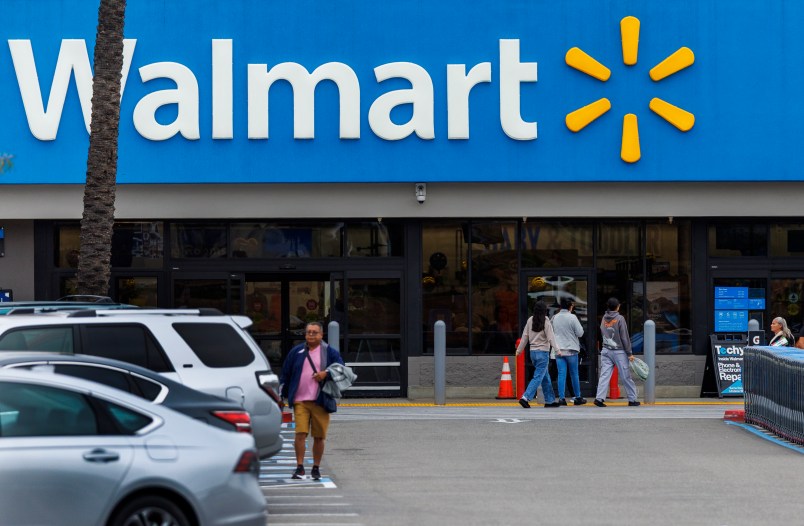
This week saw some of the country’s largest retailers report their quarterly earnings and the impact of some several billion dollars in tariff refunds on their bottom lines.
After the Supreme Court struck down tariffs President Donald Trump levied under the International Emergency Economic Powers Act, or IEEPA, Trump’s administration was ordered to repay, with interest, tariff revenue collected under that statute. After all was calculated, 330,000 importers were owed $166 billion via a process that’s being facilitated by U.S. Customs and Border Protection. Some $100 billion of that had been repaid as of July 31, while an additional $29 billion has been approved to be liquidated and refunded, according to an August 4 declaration from CBP official Brandon Lord.
For the most part, American consumers are unlikely to see much benefit from the billions big corporations are getting back. And according to a report from the New York Federal Reserve Bank, companies aren’t done hiking prices in response to Trump’s trade policies.
Target, Walmart, Home Depot, Lowe’s and TJX, which houses brands TJMaxx, Marshalls and HomeGoods, reported earnings between Tuesday and Thursday. The bulk of repayments began during the quarter the big box stores reported on throughout the week, offering a look into how much corporations were repaid and what they spent that windfall on.
How Much Did the Biggest Corporations Get?
In total, the five brands reporting as of Thursday received just over $5 billion in IEEPA tariff refunds. That amounts to 5% of all the tariffs that have been repaid so far.
Home Depot got $730 million. Target got $994 million. Lowe’s recorded a modest $80 million refund, which its executives said is a small share of what the company ultimately expects to receive. TJX reported $331 million in tariff refunds. And Walmart netted $2.9 billion from the U.S. government, more than the other four companies combined.
Did Shoppers Get Any of That Money?
Sen. Elizabeth Warren sent a letter in early August urging Walmart, Target, and some major tech companies to translate tariff refunds into lower prices for shoppers, championing the Democratic populist call for tariff refunds to trickle down to consumers.
Executives at Walmart openly said during their earnings call that the chain was using at least some of their tariff boost to reduce prices. That’s notable, since when Walmart publicly announced it would raise prices in response to Trump’s tariffs in May 2025, the president lashed out at the retailer. Target executives highlighted price cuts but didn’t explicitly connect those to their refund.
Home Depot, Lowe’s, Target and TJX did not report lowering prices as a result of the one-time influxes of cash. Instead, each of those brands represented the ways they used the money to boost their gross profits by reducing the cost of sales. Since gross profit is the amount of revenue a company takes in minus the cost of earning that revenue, diverting tariff cash into decreasing the cost of goods sold decreases the amount companies have to subtract from their revenue and bumps their gross profit. Walmart also used some of its refund to do that.
TJX took $112 million of its $331 million tariff refund to pay out employee incentives and bonuses, the company reported.
U.S. consumers are paying about $1,100 more annually because of tariffs, according to an August analysis from Yale Budget Lab. Last September, the Yale Budget lab projected the average household would lose $2,400 because of tariffs.
One-Time Boost Masks Weakening Sales
Lowe’s reported the lowest tariff refund gain and also had to revise down its projections for the remainder of the year.
At Target, a 4.7% increase in the percentage of revenue left after the cost of sales would’ve dropped down to just 1% without the benefit of the tariff refunds, the company reported.
And while at Home Depot the amount of the average transaction increased, the number of transactions in general decreased. Home Depot, Walmart and Lowe’s highlighted the impacts of higher fuel costs on these quarterly results and future projections, all backing up the tangible, negative effects of Trump’s Iran War on energy prices that are whacking the everyday driver, major retail companies, and airlines alike.
Consumer confidence and consumer perceptions of current economic conditions dropped in July, according to data from The Conference Board’s Consumer Confidence Index. A preliminary look at Republican sentiment about the economy for August is the lowest it’s been since the 2024 presidential election, the University of Michigan’s Survey of Consumers found, while data from the Census Bureau showed retail sales in July down from the previous month. Those figures were up, though, from July 2025, when Trump’s tariff regime was taking shape.



I don’t think anyone is surprised.
It’s difficult to see this whole tariffs thing as nothing but a combination of T***p channeling is narcissistic need to “dominate” what he perceives as insufficiently prostrate countries for his greater glory and, probably more so: to deliver unearned profits to corporations and his friends at the (literal) expense of US citizens. You can almost hear Bessent et al. laughing about all of this from the start.
We the consumers paid the MFin tariffs and the rich get the refunds. They got our money twice, and we get dick.
Remember, shareholder value is all that matters! GOP and Uncle Milton. (The other one)
Share buybacks and one time dividends!