First Major Second Amendment Case Before Supreme Court In Over A Decade Could Topple Gun Restrictions

This article is part of TPM Cafe, TPM’s home for opinion and news analysis. It first appeared at The Conversation.

The stakes in one of the most significant Second Amendment cases in U.S. history are high.

The Supreme Court’s ruling in New York State Rifle & Pistol Association v. Bruen, expected by mid-2022, could declare a New York state restriction on carrying concealed handguns in public places unconstitutional.

Such a ruling in favor of the plaintiffs, which include a National Rifle Association affiliate, could loosen gun regulations in many parts of the country.

In my view as a Second Amendment scholar, this case is also noteworthy in that how the court reaches its conclusion could affect the Second Amendment analysis of all weapons laws in the future.

The court is set to hear oral arguments on Nov. 3.

Long on the books

In 1911, after an increase in homicides, New York instituted a handgun permitting system. In 1913, the permitting system was amended to address concealed carrying.

For more than a century, someone seeking to carry a concealed handgun for self-defense in the state has needed to file a permit application showing that they have what the law calls “proper cause.”

To obtain an unrestricted permit, applicants must “demonstrate a special need for self-protection distinguishable from that of the general community,” such as by showing they are being stalked.

New York’s attorneys defend this restrictive approach to issuing concealed carry permits as an effective means to reduce gun violence. In 2020, there were 43,592 gun deaths in the United States, including suicides and homicides. There are also over 80,000 non-fatal firearm injuries each year.

New York has some of the strictest gun laws in the country, and its homicide rate is below the national average.

The plaintiffs

Robert Nash and Brandon Koch were denied unrestricted concealed carry permits because a judge determined that they did not satisfy New York’s proper-cause standard.

Instead, Koch was issued a license to carry a concealed handgun for self-defense while traveling to and from work. Both plaintiffs’ licenses also permit them to carry concealed handguns for hunting and target practice, and for self-defense in areas not “frequented by the general public.”

Along with the NRA’s New York affiliate, Nash and Koch contend that these limitations on their ability to carry a concealed handgun violate their right to bear arms. They assert a broad view of the right to carry a handgun, one that extends virtually “whenever and wherever” the need for self-defense might arise.

New York’s law defies that conception of the Second Amendment.

The Heller ruling’s muted effects

In considering Bruen, the Supreme Court will focus on the meaning of an important precedent: District of Columbia v. Heller.

When the Supreme Court issued its Heller ruling in 2008, a 5-4 majority struck down Washington, D.C.‘s ban on the possession of handguns in the home. The court held for the first time that the Second Amendment protects an individual’s right to keep and bear arms.

Writing for the majority, the late Justice Antonin Scalia declared that the “central component” of the Second Amendment was not a “well regulated Militia,” but rather “the inherent right of self-defense.”

But the majority’s decision included cautionary language that lower-court judges have since relied on to uphold gun laws.

“The right secured by the Second Amendment is not unlimited” and is “not a right to keep and carry any weapon whatsoever in any manner whatsoever and for whatever purpose,” Scalia wrote. His opinion even contained a list of “presumptively lawful regulatory measures,” such as restrictions on the possession of firearms by felons or bans on carrying them in sensitive places like schools and government buildings.

The NRA and other gun rights supporters have bristled at the general acceptance by judges of the constitutionality of laws restricting firearm use.

That discontent culminated in Bruen.

More and more states have allowed concealed handguns

In 1980, most Americans lived in places that either banned concealed carry or had a New York-style “proper cause” permitting regime. An NRA push beginning in the late 1980s loosened public carry laws around the country.

In states where gun rights advocates possess relatively little clout, gun rights supporters hope that Bruen will accomplish through the courts what they have failed to accomplish through the political process.

Today, New York is one of eight states requiring that people seeking to carry concealed handguns have a “proper” or “good” cause. California, Delaware, Hawaii, Maryland, Massachusetts, New Jersey and Rhode Island have similar laws on the books.

If the court strikes down New York’s law, Americans in those states could expect an increase in the number of people legally carrying handguns in their communities. Anyone who wants to carry a concealed handgun would have an easier time doing so.

A ‘text, history and tradition test’

Bruen could also be a turning point for how judges evaluate all Second Amendment cases – whether they’re about assault weapons, tasers or felon-in-possession offenses.

Until now, judges have generally assessed whether such restrictions are justified by current public safety concerns.

Many gun rights advocates are asking the Supreme Court to reject that approach. Instead, they want judges to decide cases on the sole basis of history and tradition unless the judiciary’s interpretation of the text of the Second Amendment resolves the issue. This is known as the “text, history and tradition” test.

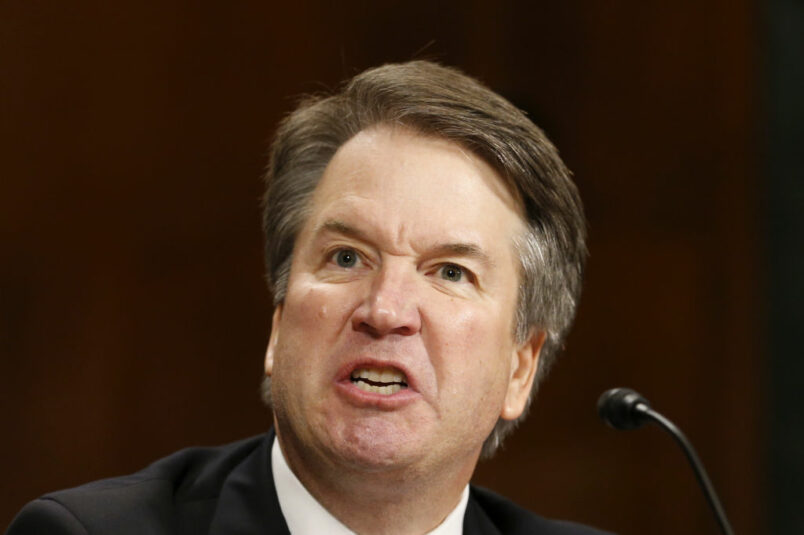
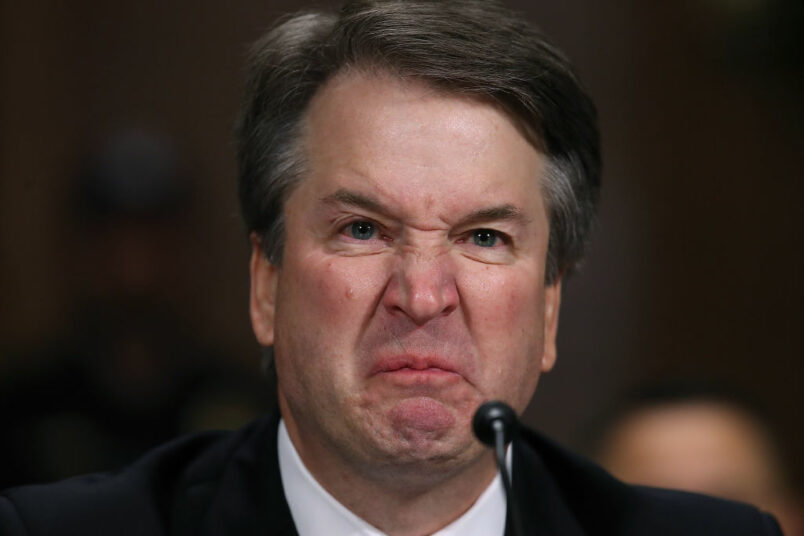
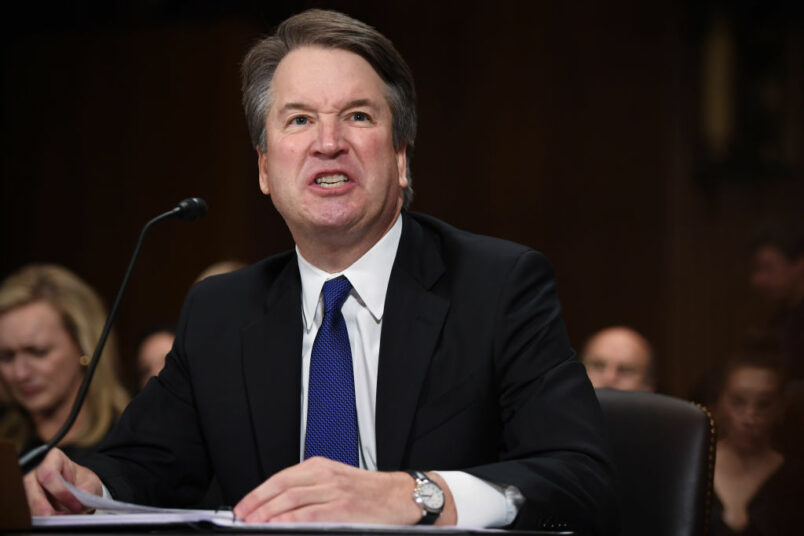
Justice Brett Kavanaugh is credited with first articulating this test in a dissent he issued prior to his rise to the Supreme Court.

Justices Clarence Thomas, Neil Gorsuch and Amy Coney Barrett all have embraced similar judicial philosophies to some degree.

But there’s a catch: Guns have always been regulated in America.

New York’s regulation has been on the books for over a century and had a legacy that extended back even further.

If the justices abandon a conventional approach for the text, history and tradition test, I would expect a new round of lawsuits over weapons laws that have already survived prior court challenges. Gun rights advocates would likely, for example, sue over restrictions on large-capacity magazines or safe storage requirements in places where those issues have already been resolved.

This litigation would call on judges to rule on the sole basis of a difficult historical exercise: comparing modern laws addressing modern guns and contemporary gun violence to the laws, practices and weapons of a bygone era.

Trump’s justices may tip the scales

The court has three main options.

It could uphold New York’s law. It could strike it down. Or it could find a middle ground, such as issuing a narrow ruling that punts big questions about gun restrictions down the road.

Chief Justice John Roberts has steered his colleagues toward narrow rulings before. But he will hold little sway if the three justices former President Donald Trump appointed team up with Samuel Alito and Clarence Thomas, the court’s two other conservatives, on a far-reaching majority opinion.

Trump conferred with the NRA before nominating Gorsuch, Kavanaugh and Coney Barrett – all of whom received the gun group’s blessing.

The ruling will underscore the significance of their presence on the court.

Eric Ruben is an assistant professor of law at Southern Methodist University.

This article is republished from The Conversation under a Creative Commons license. Read the original article.

Here’s Why McConnell Blinked

Why is Mitch McConnell blinking? Let’s be clear: this is a blink, not a cave. There’s a lot to play out. But here is the gist. Democrats refusal to budge on using reconciliation to beat Republicans’ repeated filibusters is moving quickly toward a situation where there will literally be only two options: filibuster carve-out or debt default. Those are both very bad options to McConnell. As I noted yesterday, this isn’t a matter of saying “Oh Democrats are tougher. They won’t cave.” It’s that the mechanics of reconciliation will mean there’s no more time. They’ll have no way to cave. That calendar reality creates a very bad situation for McConnell.

Continue reading “Here’s Why McConnell Blinked”

Negotiating with the Cable Nets

TPM Reader TD is 100% on the mark here …

I think you’re on the right track about ATT and OAN, but I think you’re overthinking it. Might there be some ideology influencing the ATT decision to suggest the formation of OAN? Sure, but that’s secondary.

What is corporate ideology? Money. Profit.

Fox had little to no competition as a conservative network. With no competition, Fox could back cable systems into a corner, basically demanding they be carried as the only “conservative” viewpoint, and demanding the very best terms available to them.

Continue reading “Negotiating with the Cable Nets”

Idaho Lt. Guv Keeps Cosplaying As The Guv When The Real One’s Away

Idaho Lt. Gov. Janice McGeachin (R) has taken to pretending to be the state’s regular governor when Gov. Brad Little (R) is away.

McGeachin – who is is herself running for governor – has used the opportunity of Little’s out-of-state travels to throw red meat to the conservative base. Anti-vaccine posturing? Check. Immigration bashing? Check.

Continue reading “Idaho Lt. Guv Keeps Cosplaying As The Guv When The Real One’s Away”

Right-Wing Pols, Pundits Sell Outrage Over Garland Focus On Threats Against Educators

In his primetime opinion hour Tuesday night, Fox News’ Tucker Carlson told his millions of viewers to prepare for a crackdown from federal law enforcement on parents’ complaints at school board meetings. 

Continue reading “Right-Wing Pols, Pundits Sell Outrage Over Garland Focus On Threats Against Educators”

Democrats Face Bitter Pills To Lower Reconciliation Topline. This May Be Their Best Option.

Though it’s a galling reality to the vast majority of the Democratic caucus, Sens. Joe Manchin (D-WV) and Kyrsten Sinema (D-AZ) will force the $3.5 trillion dollar reconciliation price tag to come down significantly. 

Continue reading “Democrats Face Bitter Pills To Lower Reconciliation Topline. This May Be Their Best Option.”

AT&T and the Demon Spawn of OAN

Reuters just published a fascinating special report about the role AT&T played in creating OAN, the far-right cable news network which has basically operated as a propaganda mill for Trumpite conspiracy theories. Just yesterday we learned that one of its lead “reporters,” Christina Bobb, worked for the Trump campaign while simultaneously working for OAN. That’s the kind of operation.

So is AT&T a far-right company trying to push Trumpism?

Well, we don’t know for sure. Reuters was able to piece together the story mostly from depositions in unrelated or tangentially related lawsuits. So we appear to have pretty solid confirmation of certain facts but we have to infer the different players’ motivations.

Here are the basics. I will try to fill in some of the blanks from my own understanding of the telecommunications world.

Continue reading “AT&T and the Demon Spawn of OAN”

Terry McAuliffe Zeroes In On GOP Rival’s Bad Blood With Taylor Swift

A lot of things happened. Here are some of the things.

I Knew You Were Trouble

In a crossover that you never would’ve imagined in your wildest dreams, Terry McAuliffe is looking to tap into the Taylor Swift stan voting bloc to regain the Virginia governorship.

  • Through a fearless new ad blitz on Facebook and Instagram that aims to make GOP rival Glenn Youngkin see red, McAuliffe’s campaign is highlighting Youngkin’s role in music executive Scooter Braun’s infamous fight with Swift over the ownership of her master recordings in 2019.
  • Youngkin’s history with the pop star, or at least the rights to her music, isn’t exactly a love story. He was the CEO of the private equity firm that helped Braun acquire the recordings, a controversial business dealing to which Youngkin should have said “no,” McAuliffe’s campaign argues.
Terry For Virginia
  • Youngkin’s campaign is trying to shake it off. “Terry McAuliffe has reached the stage of desperation in his campaign where he’s rolling out the most baseless attacks to see what sticks,” campaign spokesperson Christian Martinez told Axios, making it clear that the Republican won’t be shedding any teardrops on his guitar over the ads.
  • Look what you made me do, McAuliffe. I had to spend more than 22 minutes trying to come up with as many Taylor Swift songs to shoehorn into this post as possible.

Youngkin Swan Dives Into GOP’s Bogus Election Audit Gambit

Virginia’s GOP gubernatorial hopeful on Monday called for an “audit” of the state’s voting machines during a virtual forum, marking him as yet another Republican candidate to push for a bogus review of election materials to boost Trump’s fake narrative about voter fraud.

  • The audit is necessary to “make sure that people trust these voting machines,” Youngkin argued. There is no evidence that voting machines have interfered with election results, contrary to Trumpland’s conspiracy theories.
  • Youngkin, a former CEO, tried to spin his suggestion as just standard business practice. “I grew up in a world where you have an audit every year, in businesses you have an audit,” he said.

Biden Says Loosening The Filibuster To Dodge Debt Crisis Is A ‘Real Possibility’

The President, who’s been reluctant to call for any kind of filibuster reform up until now, is warming up to the idea of adjusting the filibuster as Republican senators weaponize it to prevent Democrats from raising the debt limit and avoid a financial calamity.

  • There are “not many options” if Republicans are “going to be that irresponsible,” Biden told reporters on Tuesday night. “There’s not much time left to do it by reconciliation.”
  • “I think that’s a real possibility,” the President replied when asked if Democrats were considering tweaking the filibuster specifically for the debt ceiling crisis.
  • But Sen. Joe Manchin (D-WV) continues to bearhug the filibuster, even during this incredibly high-stakes standoff. The senator argued on Monday that the filibuster “has nothing to do with debt ceiling” and that “we have other tools that we can use, and if we have to use them we should use them.”

Graham Doesn’t Want To Be A ‘Complete Asshole’ About The Debt Crisis He’s Enabling

Sen. Lindsey Graham (R-SC) told Politico that he’s “not going to be a complete asshole” about Democrats’ efforts to stave off a national economic collapse as Graham’s fellow Republicans repeatedly thwart them.

  • “But I’m going to make them take some tough votes,” the GOP senator added.
  • Senate Majority Leader Chuck Schumer (D-NY) is putting a debt ceiling suspension measure to a vote today. It will fail, thanks to the filibuster.

A Trump Goon Goes AWOL Amid Jan. 6 Committee’s Subpoena Efforts

The House Jan. 6 select committee can’t find Dan Scavino, Trump’s social media chief, to physically serve him their subpoena, according to CNN.

A Bombastic Police Union Chief Resigns After FBI Raids His Home

Ed Mullins, the president of New York’s Sergeants Benevolent Association (SBA), agreed to resign at the SBA executive board’s request yesterday after the feds executed a search warrant at his Long Island home and the SBA headquarters, the board said.

  • A New York Post reporter tweeted a video of the feds carrying boxes of evidence they seized from the SBA’s HQ:
  • It is unknown what exactly the FBI was after or even what the probe is about, only that it’s an “ongoing investigation,” according to FBI spokesperson Martin Feely. The SBA board claimed not to know either, saying in its announcement that the “nature and scope of this criminal investigation has yet to be determined.”
  • Mullins is currently facing disciplinary proceedings after tweeting NYPD a document on New York City Mayor Bill de Blasio’s daughter’s arrest during the George Floyd protests last year. The SBA chief has also attacked Rep. Ritchie Torres (D-NY), who is gay, as a “first-class whore” and then-Health Commissioner Dr. Oxiris Barbot as a “bitch” on Twitter.

Must Read

“Border Officials Seize Ivermectin Pills and Fake Vaccine Cards” – The Daily Beast

Do you like Morning Memo? Let us know!

Can McConnell Derail Biden With Bad-Faith Debt Limit Chaos?

Democrats are ready to tear their hair out as Senate Minority Leader Mitch McConnell (R-KY) staunchly refuses to let them raise the debt ceiling in a blatantly political ploy to sow chaos in their efforts to pass both the bipartisan infrastructure bill (BIF) and the $3.5 trillion reconciliation bill containing Biden’s sweeping agenda for social benefit expansions.

At the same time, President Joe Biden and Democratic leaders are grappling with Sens. Joe Manchin (D-WV) and Kyrsten Sinema’s (D-AZ) opposition to reconciliation, and negotiations are ongoing.

Follow our live coverage below: