

U.S. District Judge Mary McElroy, a Trump appointee, on Friday referred Justice Department lawyers for disciplinary proceedings after writing that the attorneys’ “reckless disregard for the duty of candor owed to a federal court is appalling.”
Continue reading “Trump Judge Refers DOJ Lawyers for Discipline in Trans Hospital Subpoena Case”Main Justice Fingerprints on Grand Jury Corruption
In recent posts I’ve been explaining how corrupt leadership of the Justice Department has been seeping down into U.S. Attorneys Offices across the country, sometimes through direct interventions, other times through the general message from the top that using U.S. Attorneys Offices to settle personal vendettas is fine. Our new information comes from a new filing out of the Broadview Six case — specifically, from attorneys for the final four defendants who are now seeking leave of the court to do discovery to get to the bottom of the corruption behind the case and seek sanctions or compensation for legal fees.
First, a little context.
3 Takeaways From GOP’s Marathon Vote Dumping Money on ICE and Giving a Pass to Trump Slush Fund
Senate Republicans passed their reconciliation bill early Friday morning funding Immigration and Customs Enforcement (ICE) and Border Patrol until the end of fiscal year 2029.
The, 52-47, largely party line final vote followed an all day vote-a-rama that stretched into the early hours of Friday. In the end, Sen. Lisa Murkowski (R-AK) was the only Republican to break with her caucus and vote against the bill. Sen. Michael Bennet (D-CO), who is currently running to become the next governor of Colorado, did not vote as he was back in his state to participate in a gubernatorial debate.
Throughout the roughly 18-hour-long vote-a-rama, senators from both sides of the aisle proposed many amendments focused on various priorities. Among them were efforts to rein in President Donald Trump’s so-called “Anti-Weaponization” slush fund, to insert language blocking the construction of Trump’s ballroom, to target acting Director of National Intelligence Bill Pulte and even a Republican attempt to include part of the SAVE America Act, a sweeping voter suppression initiative, in the reconciliation bill. All of those proposed amendments failed.
The bill is now headed to the House. House GOP leadership initially indicated they would take up the bill on Friday as soon as Senate passed it. But on Thursday, as the Senate vote-a-rama continued, Speaker Mike Johnson (R-LA) and House GOP leadership cancelled votes and made the decision to send the House home early. The House is expected to take up the reconciliation package next week.
Here are three takeaways from the marathon:
The Trump slush fund lives on
Trump and the Justice Department’s overtly corrupt “Anti-Weaponization Fund” caused weeks of chaos on Capitol Hill, slowing down Republicans from moving forward with their own party-line reconciliation bill and passing their own priorities.
But in the end, all that chaos — including Republican senators feigning that they had finally put their feet down and were standing up to Trump — ended up being all for show. The reconciliation bill Senate Republicans passed does not include any guardrails stopping Trump and the DOJ from creating their slush fund, which could use taxpayer money to pay Jan. 6 rioters and other Trump allies.
Senate Republicans are instead largely choosing to take acting Attorney General Todd Blanche’s word that the slush fund is dead, even after Trump said he loved the idea of a $1.8 billion fund to pay his allies who claim they have been politically persecuted.
During the vote-a-rama, Senate Minority Leader Chuck Schumer (D-NY) addressed just that, accusing the Senate GOP of “taking the great values of America on our 250th year and flushing them down the toilet because you’re afraid of Donald Trump.”
“Are Republicans really going to take Todd Blanche, a known liar, at his word?” he asked on the Senate floor.
Meanwhile, Senate Majority Leader John Thune (R-SD) was working overtime all through the day to convince Republicans that may still be wavering that there was no “Anti-Weaponization Fund.”
“This would have been done several hours ago if we weren’t having to deal with some of the issues around the fund, which doesn’t exist — which is the point we’re making,” Thune said, per Punchbowl.
Cover for vulnerable Republicans in reelection fights
Several attempts throughout the day to rein in or make changes to the “Anti-Weaponization Fund” failed. But it did provide an opportunity for some vulnerable Republicans, who are facing tough reelection campaigns, to get some cover for themselves.
The first attempt was an amendment from Schumer to send the reconciliation bill back to committee and add a provision to the text barring Trump’s slush fund. That was effectively an attempt from the Democrats to kill the bill by starting the process all over again.
The vote on that amendment was open for hours as Senate Republicans huddled with their own members who wanted some kind of language in the bill to shut down the fund.
Sen. Susan Collins (R-ME) was the first Republican to vote in favor of the amendment.
Sens. Bill Cassidy (R-LA), Dan Sullivan (R-AK) and Jon Husted (R-OH) did not cast their vote for hours. After almost three hours and a lot of convincing from GOP leadership, Cassidy voted “no” on the amendment. That set the amendment up to fail, giving Sullivan and Husted the cover to support the amendment knowing that Republicans defeated it.
Next, Cassidy and his team reportedly spent hours trying to craft an amendment on the slush fund that would be allowed on a 50-vote threshold.
Those efforts largely came up short and in the end Cassidy, alongside Sen. Chris Van Hollen (D-MD), offered an amendment — which failed to clear the 60-vote hurdle — that would have redirected the money in the fund to law enforcement officers injured during the Jan. 6 attack.
Sen. Thom Tillis (R-NC) also offered an amendment of his own, proposing to redirect the fund towards fraud enforcement within the DOJ. That received bipartisan opposition as many Democrats were not happy with the language of the amendment.
A ‘very bad precedent’
Big picture, experts told TPM, using the party-line reconciliation process and undercutting the annual appropriations process to fund these controversial agencies sets “a very bad precedent.”
It’s another example of congressional Republicans weakening their own power of the purse. It also threatens future appropriations negotiations and undermines congressional oversight.
It “sets a precedent where, in the future, if there are sticking points that are partisan, what might happen is that they agree on all the bipartisan stuff and then let the partisan piece go to a follow-on reconciliation bill,” Michael Linden, senior policy fellow at the Washington Center for Equitable Growth, told TPM Thursday.
The reconciliation bill does not include the report, the directions and the guidance that an appropriations bill would typically include. That means it gives the administration and the agencies receiving the money much more flexibility to use the money however they may want.
“It’s almost like a blank check for those agencies, because there’s no guidance,” William Hoagland, senior vice president for the Bipartisan Policy Center, told TPM.
And some appropriators are feeling uneasy about those same concerns.
Murkowski, a member of the Senate Appropriations Committee and the only Republican to vote against the reconciliation bill, previously raised concerns about it circumventing the appropriations process.
“I believe very strongly that we needed to fund ICE and CBP, but to completely bypass regular order and the appropriations process by funding for three and a half years, to me … it takes it out of the process that we have always looked to for funding our agencies,” Murkowski said, according to NBC News.
She had also expressed similar concerns in the earlier stages of the reconciliation process.
“I absolutely support funding for those who provide security for our nation, but Congress cannot abdicate its core oversight and appropriations responsibilities in the process,” Murkowski said in an April statement, following the passage of the budget resolution.
“Nobody wants to go down that slippery slope,” Sen. Brian Schatz (D-HI), another member of the Senate Appropriations committee, told TPM on Tuesday when asked about the three-year funding. “If we want to save the appropriations process, we can’t use this as a back door.”
Senate GOP Gives Trump Green Light on Slush Fund
Fealty to Trump Wins Out Again
In an early morning vote, the GOP-controlled Senate passed the reconciliation bill funding immigration enforcement — but without any language in it barring President Trump’s $1.776 billion “anti-weaponization” slush fund.
Hours earlier in the marathon session, Republicans had defeated an attempt by Senate Minority Leader Chuck Schumer (D-NY) to explicitly ban the slush fund. But Republicans had votes to spare, allowing vulnerable GOP Sens. Susan Collins (ME), Dan Sullivan (AK), and Jon Husted (R-OH) to vote for Schumer’s measure and campaign on opposing the slush fund even though all three senators ultimately voted in favor of the final bill.
Sen. Lisa Murkowski (R-AK) was the only GOP senator to cross the aisle and oppose the final bill.
Two GOP senators who were loudly opposed to the slush fund — Thom Tillis (NC), who is not seeking re-election, and Bill Cassidy (LA), who lost in the GOP primary — ended up voting for the final bill. “I’m taking the cue from my colleagues that are in cycle,” said Tillis. “Whatever suits their purposes.”
The Trump administration has been playing a nod-and-wink game on the slush fund all week long.
In Senate testimony Tuesday, acting Attorney General Todd Blanche declared the slush fund dead but refused to commit to it in writing. On Wednesday, President Trump publicly declared his “love” for the slush fund and claimed to be unsure whether it was in fact dead.
On Tuesday, Sen. Lindsey Graham (R-SC) tweeted that the purported victims of Biden DOJ “weaponization” could still press their claims under the Federal Tort Claims Act, even if the slush fund were dead.
In response to Graham, Associate Attorney General Stanley Woodward, who signed the settlement agreement that resolved Trump’s lawsuit against the IRS by creating the slush fund, tweeted: “We’re on it.”
Woodward’s tweet was deleted Wednesday morning.
“Republicans are trusting the word of Todd Blanche, who built a career on lying, that the administration will just drop this slush fund,” Schumer warned on the Senate floor before last night’s final vote.
It appears likely that the Senate GOP’s failure to ban the slush fund will at the very least encourage the Trump administration to make abusive use of the Federal Tort Claims Act to reach sweetheart settlements with Jan. 6 rioters and plotters, along with other purported weaponization victims.
The Trump DOJ has already shown itself more than capable of friendly, non-adverse settlements of weak cases it could have defended, not just in Trump’s lawsuit against the IRS, but in million-dollar paydays for former Trump advisers Michael Flynn and Carter Page.
Voter Fraud Bamboozlement Alert
Main Justice is pressuring U.S. attorneys offices nationwide to pursue criminal cases against noncitizens who have illegally voted — an exceedingly rare occurrence that Trump has falsely claimed for years turns the results of elections.
During a May 13 conference call, Associate Deputy Attorney General Aakash Singh complained that DOJ’s 90 open investigations of illegal voting were languishing and urged prosecutors to “get creative,” the NYT reports.
Jan. 6 Rioters Are Notorious Recidivists
A new Lawfare study reveals that at least 97 of the 1,500 people granted clemency by President Trump for their roles in the attack on the Capitol have been arrested for, charged with, or convicted of separate crimes since Jan. 6.
Jan. 6 Never Ends
After the Arizona Supreme Court yesterday declined to revive the original indictment in her fake electors case, state Attorney General Kris Mayes (D) said she would seek a new indictment against allies of President Trump who tried to subvert the state’s 2020 election.
For Your Radar: ICE Shooting Edition
There are growing signs that Texas Gov. Greg Abbott (R) may refuse to extradite to Minnesota the ICE agent charged with shooting an undocumented immigrant through a closed door during Operation Metro Surge — then lying about it.
The agent declined to waive extradition yesterday in state court in South Texas, where he is being held on $200,000 bail. Earlier this week, Minnesota Gov. Tim Walz (D) formally asked Abbott to extradite the agent.
Abbott’s office is not commenting on whether he will comply with the routine request from Walz.
John Bolton Expected to Plead Guilty
Former Trump national security adviser John Bolton is expected to plead guilty later this month to one felony count of unlawful retention of national defense information. The circumstances of the Bolton prosecution set it apart from the prominent vindictive prosecution cases under Trump II.
Other Shoe Drops In Maine Senate Race
Even before the revelation last week that Democratic Senate candidate Graham Platner had been sexting with women who were not his wife, the NYT had spent two months interviewing women with whom he had been romantically involved previously. After the publication of the NYT story yesterday, Platner did an extended live interview with Chris Hayes in which he conceded to “not exactly acting with the best behavior” but denied the account by one woman that he had physically harmed her.
FDA Moves to Restrict Abortion Pill Access
In an ominous move, the FDA — under pressure from antiabortion groups and GOP members of Congress — has launched a new safety study of mifepristone that is a thinly veiled move to restrict mail and telehealth access to the abortion pill.
“The administration is aiming for a robust study that will withstand legal criticism,” administration officials told the WSJ, previewing the intended outcome.
Boat Strike Death Toll: 207
Two people were killed Wednesday in the eastern Pacific in the Trump administration’s lawless campaign against alleged drug-smuggling boats, bring the overall death toll to at least 207.
‘Woke’ Quotes Removed at Bunker Hill
After a visitor to the Bunker Hill monument complained that a quote on display related to women’s suffrage represented “woke” feminist ideology, the Park Service removed three other quotes on display:
- “We find, upon reflection, that our duty to our country has not ended … We as Vietnam Veterans, strongly feel that the United States should cease to build memorials to death and begin to glorify life.”—from a 1971 anti-war editorial by Vietnam War veterans
- “As we drew near to Boston, there stood Bunker Hill Monument, towering up towards the heavens, as if in silent, bitter mockery of the millions of slaves guarded by the professed lovers of Liberty, who reared it’s lofty column.”—from a 1846 letter to the abolitionist newspaper the Liberator
- “Now that a public orator has declared that foreign-born men have no association with the men of the Revolution, it is our duty to show that in love of freedom and loyalty to the republic, the citizens of foreign birth take no second place.”—from a Boston newspaper in 1875
The quote that prompted the complaint was allowed to remain.
See Ya Back Here Monday
Hot tips? Juicy scuttlebutt? Keen insights? Let me know. For sensitive information, use the encrypted methods here.
TPM VIDEO: How Big is the Platner Problem Going to Get?
Graham Platner’s scandals just keep piling up. This week, news emerged that the likely Democratic nominee to face off against Susan Collins in the Maine Senate race had sexted with several women who were not his wife shortly before he launched his campaign. The New York Times followed up with a piece talking to several women who alleged that had volatile and “toxic” relationships with Platner. This is, of course, after reports emerged that he has a Nazi symbol tattoo. (Platner denied knowing about the tattoo’s significance when he got it as a Marine years ago, and got it covered up during the campaign).
TPM executive editor John Light, publisher Joe Ragazzo and reporter Kate Riga got together to talk it all through. Check it out below.
Republicans Weigh Whether Pulte Is a Hill Worth Dying On
President Trump is livid with the members of the House Republican conference who voted with Democrats to restrain him from launching new attacks in Iran, calling those who broke with the party on the matter “unpatriotic” and accusing them of “grandstanding.”
“It’s a meaningless, unpatriotic waste of time, very unpatriotic to do, but that’s okay — it means nothing,” he told The Independent in an interview Thursday.
But he also told the publication that he was “not concerned” about the Senate, specifically Senate Republicans, joining members of the House Republican conference to invoke the War Powers Act against him.
Though a growing number of senators have taken votes to oppose the war in recent weeks, Trump’s confidence may be because, just earlier today, the senators showed their defiant moods can be brief and fleeting. They dodged an opportunity to make sure another issue on which they profess to oppose him — his fantastically corrupt $1.8 billion slush fund to reward his allies — does not again rear its head.
Continue reading “Republicans Weigh Whether Pulte Is a Hill Worth Dying On”US Attorney Corruption — Let’s Take It National!!
I’ve been bringing you updates on the U.S. Attorney’s office in Chicago, the current U.S. Attorney Andrew Boutros and the expanding grand jury misconduct corruption scandal enveloping the office. Of course, this is not limited to Chicago. It’s highly likely, though defense attorneys haven’t yet been able to pry free evidence, that the Broadview Six indictment came down under pressure from Washington, whether that was from the White House, Justice Department or the Department of Homeland Security. The deeper corruption of the DOJ is a story me and my colleagues have been reporting on for the last year and a half — cover-ups, retaliation against political adversaries, various flavors of corrupt and criminal conduct.
So it’s everywhere. It’s starts at the top and it trickles down everywhere. But in most cases we’re talking about corruption and misconduct directed from above, from Trump and his top fluffers. But the DOJ is a big, big institution. Lots of people. There are 93 U.S. Attorneys Offices. So there are many flavors of corruption. And I wanted to share with you a slightly different kind. This is courtesy of TPM Reader LS who shared this article from Bloomberg Law (which David also flagged in Morning Memo today). It’s about Sigal Chattah, the acting U.S. Attorney in Nevada’s single U.S. Attorney’s office. It’s a wild, wild article. Totally bonkers stuff I was surprised I hadn’t heard about before. But it kind of makes sense since it’s hard to get attention for wild levels of corruption and misconduct and simply absurd behavior in a semi-out-of-the-way U.S. Attorneys office when we’re seeing examples of the same every day at Main Justice.
Anyway, here’s the story.
Lindell Is Really Optimistic for Someone Who Just Lost the GOP Gubernatorial Endorsement: A ‘Perfect Scenario’
Hello, and welcome back to The Franchise!
The biggest voting rights news this week is, of course, another series of devastating developments in the battle to redistrict away minority and Democratic voting power in the South. But there’s lots more to unpack today, including an exclusive convo with Franchise readers’ favorite conspiracy theorist Mike Lindell, who has some delusional spin to share on why it’s actually good news that he didn’t receive the Republican endorsement in the Minnesota gubernatorial race. We’ll get into that a bit more below, but first:
On Tuesday, in a win for Republicans, the Supreme Court green lit the use of Alabama’s racially gerrymandered 2023 map, which removes one of the state’s two majority-Black congressional districts.
The justices, in a 6-3 vote split along ideological lines, granted an emergency request from Alabama’s GOP state officials and lifted a lower court order that had previously blocked the 2023 map, finding that the map intentionally discriminated against Black voters in violation of the Voting Rights Act.
But in the aftermath of Louisiana v. Callais, which gutted the Voting Rights Act and cleared a path for red states to reshape majority-Black congressional districts, the Supreme Court has now paved the way for the map to be used in the 2026 midterms elections.
“While federal courts should not impose changes close to an election,” this week’s ruling reads, “states are free to decide for themselves whether last minute changes to an election are in their best interests.”
Justices Sonya Sotomayor, Elena Kagan and Ketanji Brown Jackson dissented.
“Before the Court are two paths. Down one lies an orderly election, held under a tried-and-tested congressional map that protects Black Alabamians’ right to vote and with which all voters, elections officials, and candidates alike are familiar,” the dissent reads. “Down the other lies a chaotic election, held under a never-before-used congressional map that intentionally discriminates against Black Alabamians.”
My colleague Kate Riga unpacks the ruling, and what it (ominously) foreshadows for SCOTUS holding red states accountable for gerrymandering away Black electoral power moving forward, more here.
Meanwhile, in Louisiana, Republican Gov. Jeff Landry signed the state’s new gerrymandered map into existence after the state Senate approved the proposal in a 28-10 vote on Friday. The new map eliminates one of the state’s two majority-Black districts, and gives Republicans five of the state’s six congressional seats.
In New York, Democrats are pushing forward a 2028 redistricting proposal, which could potentially allow them to flip up to four Republican congressional seats.
As always, there’s a lot more to unpack this week. Let’s dig in.
A Check-In With Mike Lindell
Although pillow maven and election conspiracy theorist Mike Lindell lost the GOP endorsement in the Minnesota gubernatorial race this week, he is continuing his bid for governor, with his trademark confidence and spells of conspiracy theorizing. In fact, he told me, he’s not at all worried about losing the nomination because he is “polling number one with the people of Minnesota.” Hmm.
Last week, the state’s two main political parties, the Democratic-Farmer-Labor Party and the Republican Party held conventions for members to vote for the endorsement of a single candidate. A candidate can lose the endorsement, but still run in the state’s August 11 primary. Although he lost the endorsement after coming in third place, Lindell will continue his race and remain on the primary ballot.
At the Minnesota GOP state convention this week, Kendall Qualls, former health care executive and army veteran, secured the Republican Party endorsement for governor.
“This GOP nomination, they’ve been doing this since 1994, and that person typically always wins,” Lindell told me. “They do always win, but that’s just, they picked them. But the problem is they lose to the Democrats for 24 years now.”
“It’s disgusting,” he added.
Alongside Lindell, state House Speaker Lisa Demuth is also choosing to continue her race for the Republican nomination for governor, despite also losing the GOP endorsement, which according to Lindell, actually helps his cause.
“This is the perfect scenario for me though, because these two are gonna go out and split the vote,” he said, “I’m number one.”
David Paleologos, the director of the Suffolk University Political Research Center, told TPM that at the moment Lindell is “enjoying a trajectory that places him in the top tier of Republican candidates vying for the GOP nomination.”
Demuth, Paleologos added, now becomes “Lindell’s MyPillow.”
“He believes he sleeps better at night between now and August with the cushion of knowing that his 40 percent wins in a three-way, but loses in a two-way,” he continued.
Lindell says his focus now is campaigning against Amy Klobuchar, who secured the official Democratic-Farmer-Labor Party endorsement for governor. Paleologos also noted that Lindell is trailing Klobuchar by 20 points in general election polling.
“I’m focusing on campaigning against Amy Klobuchar, and these numbers should take care of itself when the people vote in August,” Lindell said.
Tina Peters Is Out of Prison. She Wasted No Time Returning to Her Old Antics
Tina Peters, former election administrator of Mesa County, Colorado who was convicted for breaching her own office’s voting equipment in an effort to find nonexistent 2020 voter fraud, was released from prison this week, thanks to Democratic Colorado Gov. Jared Polis (he caved to pressure from President Trump to commute her nine-year prison sentence).
Only hours after her release, Peters appeared on MAGA fav Steve Bannon’s podcast to spread even more baseless conspiracy theories about voting machines magically flipping votes on behalf of Democrats.
“I know that the Democrats are going to cheat, and no one is really addressing the problem that I spent my time in prison as retribution for,” she told Bannon, “and that was exposing the election machines that allow the votes to be flipped.”
In a statement on Monday, following Peters’s release, Democratic Colorado Secretary of State Jena Griswold called Polis’s decision to commute the sentence of Peters “an affront to our democracy, the people of Colorado, and election officials across the country.”
“It sends a dangerous message about accountability for those who would attack elections,” she added. “Peters’ release also will embolden the election denial movement; since the grant of clemency, she has continued to spread election falsehoods and conspiracies.”
Newsom Moved to Get Out Ahead of Conspiracy Theorists, Potential Election Ratfuckery
Ahead of California’s June 2 primary this week, California Democratic Gov. Gavin Newsom signed a bill into law to protect the state’s election from conspiracy theorists as well as federal meddling and overreach.
The legislation, known as Senate Bill 73 takes effect against the backdrop of gubernatorial candidate and Riverside County Sheriff Chad Bianco seizing hundreds of thousands of ballots last month in an election interference campaign both against Newsom and in furtherance of Trumpian election conspiracy theories. Bianco claimed he seized the ballots from the special election that cleared the path for California Dems to redistrict before the midterms as a way to protect against voter fraud, for which there was no evidence.
Newsom has not mentioned Bianco by name, but has alluded to Bianco’s actions being the motivation to expedite the measure.
“You had a guy who’s desperate for attention and wants me to use his name today, I won’t,” Newsom said last week, per NBC4 Los Angeles, “that took 650,000 (ballots). That happened.”
Senate Bill 73, which takes effect immediately, restricts law enforcement officers from gaining access to voter rolls and voting technology, and also limits the presence of federal law enforcement near polling places. According to the language of the legislation, it specifically prohibits, among other things, a “peace officer from interfering with the administration of an election.”
“California will not allow our elections to be commandeered by political intimidation, abuse of power, or chaotic interference from extremists chasing conspiracy theories,” Newsom said in a statement. “This law protects voters, election workers, and the integrity of the democratic process from election-deniers who want to undermine democracy.”
Newsom told reporters last week that the legislation is a way to respond to the “legitimate anxiety” created by Trump’s continued efforts to interfere in the election administration process.
“I expect the worst with Trump because he’s done the worst,” he added.
In Other Election News
AJC: Georgia Election Board hires election skeptic as investigator
New Hampshire Bulletin: Ahead of midterms, federal court strikes down NH proof-of-citizenship voter registration law
CBS News: DOJ seeks judge’s recusal in Georgia election records fight tied to Fani Willis controversy
Senate GOP’s Reconciliation Bill Sets a ‘Very Bad Precedent’
Senate Republicans’ reconciliation package in its current form includes billions of dollars for Immigration and Customs Enforcement (ICE) and Customs and Border Protection (CBP), effectively providing funding for those agencies until the end of fiscal year 2029.
If the reconciliation package becomes law, the funding — combined with the money from last year’s One Big Beautiful Bill (OBBB) — will be enough for ICE to operate at quadruple capacity for the next three and a half years. And the funding for Border Patrol, again combined with OBBB, will be more than enough to run it for the next three and a half years.
Using the party-line reconciliation process to fund these controversial agencies sets “a very bad precedent,” experts tell TPM, threatening future appropriations negotiations and undermining congressional oversight. It is yet another example of congressional Republicans weakening their own power by trampling on Congress’ power of the purse.
Continue reading “Senate GOP’s Reconciliation Bill Sets a ‘Very Bad Precedent’”Cue Up the Mother of All Confirmation Battles
Blanche Audition for AG Succeeds
Acting Attorney General Todd Blanche’s elaborate audition to out-degenerate Pam Bondi has apparently won him President Trump’s nomination for the permanent position.
In his short time as acting AG, Blanche has re-indicted James Comey, indicted the Southern Poverty Law Center, and turbocharged the South Florida investigation into a supposed “grand conspiracy” against Trump. Under his watch, the DOJ has targeted Fani Willis, Cassidy Hutchinson, E. Jean Carroll (where Blanche did recuse himself), and reporters in leak cases.
But that’s not even the worst of it.
In the course of unwinding the Jan. 6 seditious conspiracy prosecutions, Blanche created a $1.776 billion “anti-weaponization” slush fund to be dispensed at Trump’s discretion with no transparency of accountability while improbably settling Trump’s lawsuit against the IRS by releasing Trump from some $100 million in potential IRS claims for unpaid taxes.
It’s a helluva track record for the two months since Bondi was fired as attorney general.
Blanche’s nomination sets up a potentially epic confirmation battle in an election year. Democratic senators are highly incentivized not just to block Blanche but to make the confirmation hearings a bloodbath for the Trump DOJ and White House. They’re further bolstered by a trio of GOP senators who may be out for blood after trump torpedoed their reelections.
Buckle up.
Zombie Slush Fund Not Dead Yet
While official Washington rushed to treat as credible the assurances from the White House and DOJ that the slush fund is dead, President Trump said he wasn’t sure that it’s gone for good: “I love it,” he said. “I think it’s so important.”
The Senate is considering the reconciliation bill on immigration funding today, and a small number of GOP senators want to insert language in the bill barring the slush fund, especially after Blanche declined to commit to put it in writing that the slush fund is being permanently abandoned.
Stay tuned.
MUST READ
Most of Morning Memo’s focus on the politicization of the Justice Department has been concerned with the big-picture problems like loss of independence from the White House, defiance of court orders, and purges of DOJ personnel for political reasons.
But there’s another super important dynamic that Bloomberg’s Ben Penn captures in an extraordinarily well-reported piece on Sigal Chattah, the top federal prosecutor in Nevada: The ways in which unqualified partisan prosecutors can run amok, allegedly pursuing their own vendettas, doing favors for preferred former clients and friends, and blowing off ethics concerns flagged even by the low-bar Trump DOJ.
Chattah is one of the acting U.S. attorneys whom the Justice Department has tried to install on a semi-permanent basis, bypassing Senate confirmation:
The first-time prosecutor frequently sought status updates on cases despite warnings that she was disregarding recusals signed by the deputy attorney general’s office in Washington that barred her involvement in matters where she had conflicts of interest, said several individuals.
Chattah also took calls from outside attorney acquaintances and intervened in their pending matters opposite her office—seeking favorable outcomes for their clients. …
Unlike in other offices, the Nevada disruptions are frequently disconnected from Trump’s priorities and are instead largely of Chattah’s own making, added many lawyers familiar with the office—most of whom spoke anonymously to avoid retaliation or share sensitive deliberations.
Really worth a read.
Trump DOJ Watch: Only the Best People
Lindsey Halligan was the first or at least the most prominent example of Trump inserting White House political aides directly into prosecutor roles within DOJ that are connected to his desired retributive prosecutions. It hasn’t stopped:
- On Monday, Kurt Olsen, the White House election security czar who aided Trump’s attempt to overturn the 2020 election, joined the U.S. Attorney’s Office for the Southern District of Florida, where the mother of all retributive investigations is being conducted into a “grand conspiracy” against Trump, Reuters reports. While it’s not confirmed that Olsen, who has no prosecutorial experience, is on the “grand conspiracy” team, he appeared in a photo of that team posted last month by Miami U.S. Attorney Jason Reding Quinones, according to Reuters.
- In a little-noticed report last month, CBS News confirmed that Trump ally and conservative firebrand Victoria Toensing was sworn in as a federal prosecutor in the Southern District of Florida. Toensing, a former federal prosecutor, is the wife of Joseph diGenova, who is leading the “grand conspiracy” investigation. “DiGenova declined to say whether she is working on the Brennan and grand conspiracy cases, but a source with direct knowledge confirmed she is,” CBS News reported.
- With the prospect of judicial sanctions, several prosecutors who played a role in the Broadview Six case have hired attorneys of their own, the Chicago Tribune‘s Jason Meisner reports.
The Retribution: SPLC Edition
The Trump DOJ obtained a superseding indictment of the Southern Poverty Law Center that keeps the same counts and defendants as the original indictment but tightens up some of its loose and problematic language.
The SPLC immediately asked the judge to investigate how it came to be that a MS Word draft of the superseding indictment was distributed by Main Justice to reporters on Tuesday evening before the superseding indictment was docketed on Wednesday:
In decades of collective practice, including serving as prosecutors at DOJ, none of the SPLC’s counsel has ever seen anything remotely like what DOJ did last night—distributing what turned out not to be the actual superseding indictment returned by the grand jury and docketed today, but one that has no indication of its finality, in native Word that could be edited and reposted, and before the actual returned charges were unsealed, to a group of journalists.
The SPLC wants the judge to issue a show cause order requiring Main Justice and the U.S. Attorney’s Office in the Middle District of Alabama to explain their conduct and why they should not be sanctioned.
Picking Through the SCOTUS Carnage
The Supreme Court’s historically bad decision to allow Alabama to eliminate one of its two majority-Black congressional districts in time for the midterms, turning the 14th Amendment on its ear, continued to reverberate:
- Former Alabama U.S. Attorney Joyce Vance: “The Roberts Court’s derogation of Americans’ voting rights, starting with Shelby County v. Holder, working its way up to Callais, and now, putting the final nail in the coffin in Milligan, will go down in history as a shameful failure.”
- Dahlia Lithwick and Mark Joseph Stern: “It is not a mere aftershock from Callais but a separate earthquake of the same or perhaps even greater magnitude.”
- Chris Geidner: “This is truly one of the worst things the court has done — both in terms of legitimacy and in terms of the law — since I have been covering the court.”
Mullin Puts His Foot in It
In an exchange during his Senate testimony Tuesday that didn’t immediately garner much attention, DHS Secretary Markwayne Mullin seemed to inadvertently open the door to sending Kilmar Abrego Garcia to his preferred destination of Costa Rica rather than to Liberia or to one of the other African countries that the administration has sought to deport him to.
“Great, if he’s willing to do that, we’ll be happy to send him,” Mullin said under questioning from Sen. Chris Van Hollen (D-MD).
Abrego Garcia’s lawyers didn’t miss the exchange and immediately notified the court in his habeas case.
It appears to be an inadvertent misstep by Mullin because he also testified that he was not aware that Abrego Garcia had agreed to be removed to Costa Rica or that Costa Rica has agreed to accept him.
4 House GOPers Break With Trump on Iran
The House voted 215-208 to curtail President Trump’s military adventurism in Iran. Four Republicans crossed the aisle to form a majority with Democrats: Reps. Tom Barrett (MI), Warren Davidson (OH), Brian Fitzpatrick (PA), and Thomas Massie (KY)
IMPORTANT
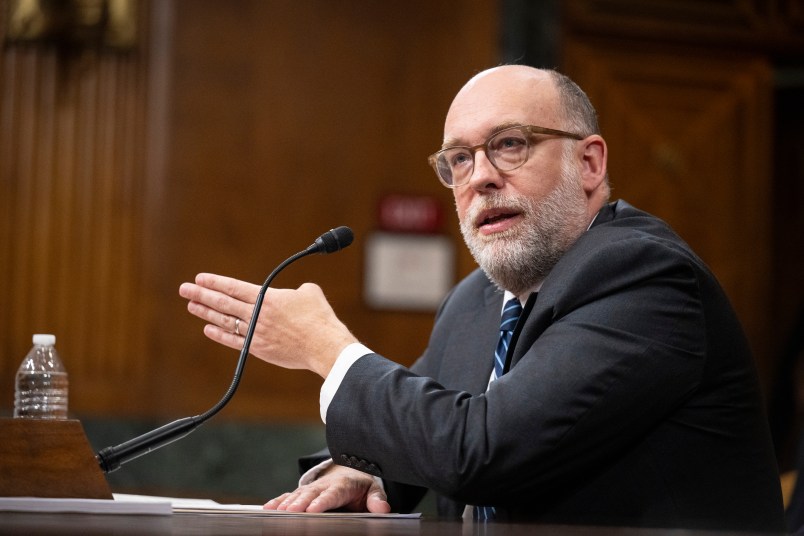
Last Friday, the Trump administration unveiled new proposed regulations that would require the approval of political appointees for all discretionary federal grants based on tight far-right political criteria.
The proposed regs would interject political appointees into scientific and health research, limiting “the subjects that they can explore, the foreign labs with which they may collaborate and even the conferences at which they can appear,” the NYT reports.
Scientist Chanda Prescod-Weinstein called it “the end of American science as we know it.”
To catch yourself up, I’d recommend Don Moynihan’s wide-ranging piece on the proposed regs and their intended impact: “The bottom line is that Russ Vought, the Director of the Office of Management and Budget, wants to move scientific decisions away from the scientists and into the hands of political appointees. I don’t mean the big picture, strategic decisions of American science, which should be political, but the micro-decisions about what is and is not good research.”
The Purges: Schedule F Edition
In a culmination of the Schedule F push that began in his first term, President Trump has removed civil service protections for some 8,000 senior federal workers and made them at-will employees.
A Sea Change in Public Monuments
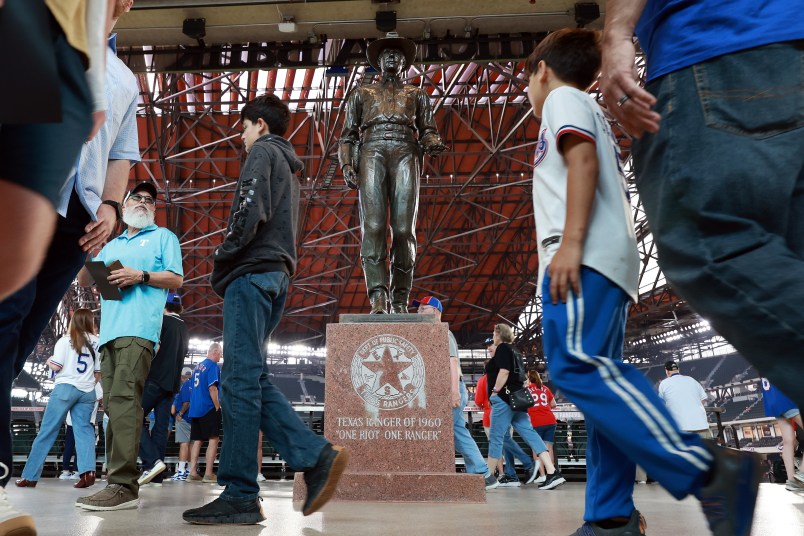
In retrospect, 2020 was the high water mark for removing public memorials to racists, traitors, European explorers, and other right-wing shibboleths. Since Trump’s reelection, the pendulum has swung in the other direction, with wink-wink re-namings of military bases, resurrected Confederate memorials, and, as the WSJ reports, the restoration of statutes that had been gathering dust in storage for the past six years.
Hot tips? Juicy scuttlebutt? Keen insights? Let me know. For sensitive information, use the encrypted methods here.