

Former President Donald Trump said during an interview that aired Sunday it was his decision to describe the 2020 presidential election as “rigged.”
Continue reading “Trump Says It Was His Decision To Describe The 2020 Elections As ‘Rigged’”Trump Celebrates Rosh Hashanah With Anti-Semitic Warning To ‘Liberal Jews’
Former President Donald Trump marked Rosh Hashanah — the start of the Jewish High Holy days and the celebration of the New Year — on Sunday by blaming “liberal Jews” for voting to “destroy America and Israel.”
Continue reading “Trump Celebrates Rosh Hashanah With Anti-Semitic Warning To ‘Liberal Jews’”Jack Smith Is Steadily Boxing Donald Trump In At Every Turn
A lot of things happened. Here are some of the things. This is TPM’s Morning Memo. Sign up for the email version.
Jack Smith Is Going Hard After Trump, Part I
In a redacted motion unsealed Friday by order of U.S. District Judge Tanya Chutkan, Special Counsel Jack Smith is seeking to impose additional restrictions on Donald Trump’s out-of-court statements to prevent him from continuing to attack the legitimacy of the criminal proceedings against him and from tainting the jury pool in DC.
Of the various filings referred to in today’s Morning Memo, this is probably the one worth reading yourself. It’s a blistering takedown of Trump’s conduct since his indictment, comparing it to his efforts to spread anger and misinformation in the aftermath of the 2020 election (editor’s note: citations removed):
As set forth in the indictment, after election day in 2020, the defendant launched a disinformation campaign in which he publicly and widely broadcast knowingly false claims that there had been outcome-determinative fraud in the presidential election, and that he had actually won. In service of his criminal conspiracies, through false public statements, the defendant sought to erode public faith in the administration of the election and intimidate individuals who refuted his lies. The defendant is now attempting to do the same thing in this criminal case—to undermine confidence in the criminal justice system and prejudice the jury pool through disparaging and inflammatory attacks on the citizens of this District, the Court, prosecutors, and prospective witnesses.
Stay tuned for rulings as early as this week from Judge Chutkan on this motion from Smith and on Trump’s motion for her to recuse herself.
Jack Smith Is Going Hard After Trump, Part II
A series of court documents were unsealed Friday in the effort by Elon Musk’s Twitter to alert Donald Trump that Special Counsel Jack Smith had a search warrant for his account. In pushing to keep Twitter from tipping off Trump, Smith argued that the disclosure “could precipitate violence as occurred following the public disclosure of the search warrant executed at Mar-a-Lago.” In that instance, a man tried to launch an attack on the FBI field office in Cincinnati before he was later shot and killed while fleeing law enforcement.
Stand Back And Stand By
Big Day Ahead For Jeff Clark
A federal judge in Atlanta will hold a hearing at 9:30 a.m. today on former Trump DOJ lackey Jeff Clark’s motion to remove his Georgia RICO prosecution from state court. Unfortunately, no electronic devices are allowed in court so we won’t have real-time coverage of the hearing.
It’s shaping up to be a doozy, for a couple of reasons:
- District Attorney Fani Willis has subpoenaed Jody Hunt to testify at the hearing. Hunt, a longtime DOJ hand who became chief of staff to Attorney General Jeff Sessions, served as head of the Civil Division before Clark held that position on an acting basis. The guess is Hunt will testify that Clark’s actions were outside the bounds of his role as Civil Division honcho. Fun twist: Hunt was the new lawyer retained by Cassidy Hutchinson right before her bombshell testimony to the Jan. 6 committee.
- Clark has obtained a sworn statement from that paragon of rectitude and civic virtue, the nonagenarian former Reagan Attorney General Ed Meese, for use in the hearing. It’s unclear if the judge will consider it since it doesn’t appear Meese will be called to testify and subjected to cross examination. I’ve wanted to see Ed Meese cross examined since I was in high school. Alas …
Hate To See It
NYT: Mark Meadows’s Testimony in Georgia Case May Have Done Him No Favors
Hmmm …
Federalist Society co-founder Steven Calabresi does a quick flip-flop on whether the Disqualification Clause renders Trump ineligible for the presidency.
Delaware Is An Open Carry State
An armed protestor was spotted Sunday near President Biden’s Delaware home:
Paxton Acquitted In Impeachment Trial
Even though the case against Texas Attorney General Ken Paxton was spearheaded by Republicans in the state House and prosecuted by Republicans in the Senate trial, the Senate vote fell along party lines, with only two GOP senators joining Democrats in voting to convict him. Paxton was acquitted on all counts. An unbelievable sanctioning of brazen corruption by his fellow Republicans, but also very representative of the modern GOP.
First, They Come For The Librarians
The venerable American Library Association (you know how librarians are: just a band of radicals) has become the target of a right-wing smear campaign.
Moss Grows Fat On A Rollin’ Stone
Rolling Stone co-founder Jann Wenner, 77, has been booted from the board of the Rock & Roll Hall of Fame after making a fool of himself in a NYT interview.
Hunter Biden’s New More Aggressive Pushback
- Hunter Biden sues the IRS, alleging it violated taxpayer privacy rights with its public disclosures about him.
- Former Trump White House staffer Garrett Ziegler, sued last week by Hunter Biden, is profiled by the WaPo as a “scorched-earth activist.”
Government Shutdown Still Looms
The House Freedom Caucus and the Main Street Caucus unveiled a continuing resolution Sunday that is a nonstarter with the Senate and White House. It also met immediate headwinds from some conservative House members, but it is expected to get a floor vote this week. It would extend government funding through the end of October but with draconian budget cuts that make it a dealbreaker.
For Readers In The Eastern Time Zone
Seeking your feedback on how early in the morning you’d ideally like to have Morning Memo. Focused on readers in the Eastern time zone since it’s the earliest with a significant chunk of readers. No promises on being able to crank it out before dawn! But looking for more information to refine Morning Memo. You can click on the link immediately below to offer feedback. Thanks!
Do you like Morning Memo? Let us know!
Trump Got Few Jewish Votes In 2016 And 2020. He’ll Get Even Fewer In 2024.
This article is part of TPM Cafe, TPM’s home for opinion and news analysis.
Despite his efforts to cultivate them, American Jews have never liked Donald Trump.
In 2016, Hillary Clinton won the popular vote against Trump by 48% to 46%. Only 37% of white voters favored Clinton, but of those, Jews did so by 71% to 23%. Four years later, Joe Biden beat Trump 51% to 49%. Only 41% of white voters picked Biden, but among Jewish voters, almost all of whom are white, Biden received 77% of their votes.
Continue reading “Trump Got Few Jewish Votes In 2016 And 2020. He’ll Get Even Fewer In 2024.”Democrats Brace For The Biggest Abortion Supreme Court Case Since Dobbs
It’s very likely that the Supreme Court will take up a major mifepristone case this term after the Biden administration and a manufacturer of the drug asked the justices to hear it late last week.
Continue reading “Democrats Brace For The Biggest Abortion Supreme Court Case Since Dobbs”There’s Videotape! Annals of Feral Lauren Boebert …
Ever since she managed to get reelected last year by only a few hundred votes, words been out that she’d have to put some time into securing her seat if she wanted to remain in Congress. Indeed, I know that when her team was looking for someone to run her next campaign they had to promise that Boebert would stop acting like such a weirdo in the lead up to the 2024 campaign. Indeed, just days ago Politico ran a piece about how for all her Trumpy antics in D.C., back in her far flung Colorado district she’s taken a newfound interest in constituent service. Sorta Trumpy in the streets, normie in the sheets, if you will. But then this week news broke that Boebert and a new boyfriend had been kicked out of a performance of the musical Beetlejuice in Denver for “causing a disturbance.” Apparently Boebert had been singing along and rocking out like some 70s-era female metalhead cheering on Ozzy at a Black Sabbath concert back in the day.
Continue reading “There’s Videotape! Annals of Feral Lauren Boebert …”PHOTO GALLERY: Morocco Earthquake Kills Thousands
The Sept. 9 earthquake that devastated Morocco has killed nearly 3,000 people and left many more homeless, according to the Associated Press. The United Nations estimates that 300,000 people were affected by the temblor. The epicenter of the 6.8-magnitude quake was in the High Atlas Mountains but felt nearly 45 miles north in Marrakesh. Moroccan authorities announced a three-day mourning period, and neighboring Algeria offered to allow humanitarian aid through its airspace – a significant move since Algeria severed ties with Morocco in 2021 over a number of disputes
A Brother and Sister Survey The Remains Of Her Home

Abdelhamid Aouzal In His Family Home

People Carrying Food And Water

A Man Inside His Heavily Damaged Home

Abdelhamid Aouzal Surveys The Destruction

People Gather By A Damaged Mosque

Women Embrace

A Woman Holds A Sleeping Baby

Men Amidst The Rubble Of Collapsed Buildings

Man Takes In The Remains Of His Home

Man Makes His Way Through The Rubble

Injured Man Placed In Ambulance

A Woman Peers Into Rubble Of A Collapsed Building

Aid Is Distributed To Quake Survivors

Man Next To Ruined Building

Man Picks His Way Through The Rubble

People Shelter In A Park

Man Carries Blanket Past Buildings Left Akimbo

Rescuers Search For The Body Of A 3-Year-Old Boy

Emergency Workers Carry The Body Of A Woman

Rubble Strewn On The Road

A Car Damaged By Fallen Rubble

A Woman Sleeps On Open Ground
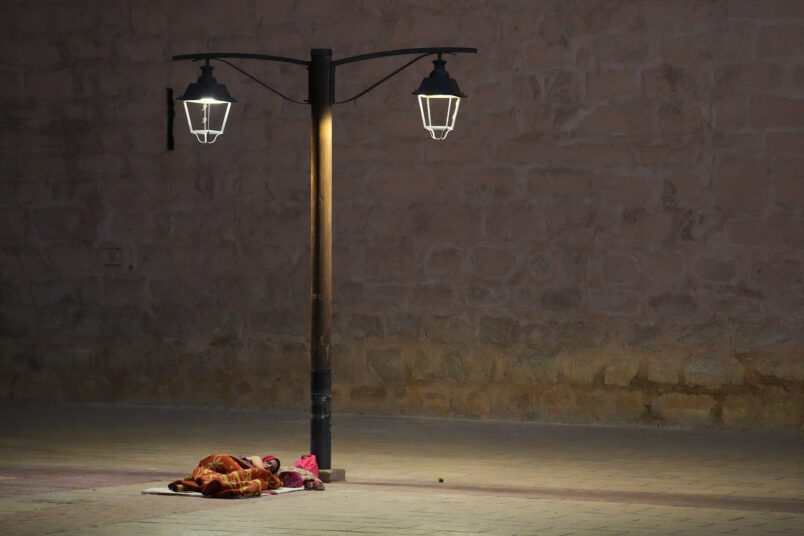
Food Is Distributed To Displaced Children

A Woman Walks Past The Rubble

Man Carries Cat Through The Rubble

A Woman Surrounded By The Rubble Of Her Home

Blankets Are Distributed To Displaced People

A Woman Sits Amongst The Rubble Of Her Village

A Woman Is Comforted

The Body Of 30-Year-Old Man Is Taken From The Rubble

A Man Pulls A Donkey From A Ruined Building

Khadija Oubleaid Lost Her Son In The Quake

A Family Photo Hangs Beneath A Photo Of King Mohammed VI

A Man Is Overcome With Grief

Displaced Women and Children Wait In A Tent

A Displaced Woman Checks Her Phone In A Tent

The Body Of A 30-Year-Old Man Is Placed In a Grave

A Spanish Search And Rescue Team Looks For Bodies

A Man Grieves The Loss Of His Brother

Ahmed Alahiane Breaks Down In Tears

Men Work To Salvage Goods

A 5-Year-Old Boy Lost Both Parents

People Salvage Items From The Ruins Of Their Home

The Ruins Of Houses In A Village

Relief Supplies Are Unloaded From A Truck

A 3-Year-Old Girl Orphaned In The Earthquake

A Man Amongst The Rubble

A Donkey Laden With Relief Supplies

Displaced Women Make Soup Outside A Tent

A Crying Boy Is Treated For A Hand Wound

A Woman Grieves The Loss Of Her Husband

The Body Of A 30-Year-Old Man Is Buried

Official PhD-Grade Smart Person Explanation of the Biden Age Freak Out
Last night I wrote this bit of tough love for those of us who are perhaps understanding that Joe Biden definitely positively will be the Democratic nominee in 2024 and yet still want to agonize over his age and perseverate over the potential electoral consequences. Now I’d like to shift gear and discuss why it is exactly that there has been such a freak out about this now. After all Biden has been as old as he is … well, forever. Literally, forever. Think about it. Not long ago social media was filled with Dark Brandon memes. His campaign was actually making big money selling Dark Brandon merch. So what happened exactly? Why now rather than in the Spring or last winter?
Continue reading “Official PhD-Grade Smart Person Explanation of the Biden Age Freak Out”Riiight: Trump Says It’s ‘Very Unlikely’ He Would Pardon Himself If Elected President
Former President Donald Trump made the highly believable claim Thursday that it’s “very unlikely” he would pardon himself if he wins a second term in the White House.
Continue reading “Riiight: Trump Says It’s ‘Very Unlikely’ He Would Pardon Himself If Elected President”A Consequential Day In The Georgia RICO Case
A lot of things happened. Here are some of the things. This is TPM’s Morning Memo. Sign up for the email version.
No Georgia Trial For Trump Next Month
The state judge handling the big RICO case made official yesterday what he had signaled the week before: Ken Chesebro and Sidney Powell and any other defendant who invokes their right to a speedy trial will go to trial next month, and the remaining defendants will be tried separately down the road. That means Trump avoids an October trial in Atlanta.
Perhaps we’ll look back on this later as some kind of setback, but I don’t thinks it’s obvious now. In fact, as the judge noted, trying to force all the defendants into a speedy trial would inevitability provide a basis to appeal on due process grounds. A Trump conviction delayed is much better than a Trump conviction overturned.
In the order, state Judge Scott McAfee raised the possibility of eventually severing some of the other defendants as well. So we could be looking at more than two different RICO trials in Georgia. That does create challenges for prosecutors: multiple trials give later defendants a chance to see prosecutors put on their evidence multiple times, a distinct advantage; witnesses may not be 100% each time they testify, giving defense counsel openings to challenge the credibility; and prosecutors now have to win over multiple jury panels over many months, rather than giving it their best shot one time.
Mark Meadows Is Off The Hook For Now
McAfee’s order severing Chesebro and Powell also removed the urgency from Mark Meadows’ attempt to get his case removed to federal court.
The 11th Circuit was scheduled to hear oral arguments this morning on Meadows’ request to stay the lower court decision denying removal from state court. But after McAfee ruled, Meadows quickly alerted the appeals court to the changed circumstances and asked to withdraw his motion for an emergency stay. The appeals court granted the request and cancelled today’s oral argument.
Meadows’ appeal will still proceed on an expedited basis, but without the threat of an October trial date, it won’t proceed on an emergency basis.
The Atlanta Judge Is A Keeper
State Judge Scott McAfee is a good one. You see it in his earnest but not self-serious demeanor, his confident but humble style, and the briskness with which he dispenses with nonsense:
Just Keep On Talking, Bub
I cannot imagine trying to represent Donald Trump in a criminal case as he runs around making admission after admission that go to the core of the prosecution:
Trump’s Recusal Motion Gave Prosecutors An Opening
Donald Trump’s motion to recuse U.S. District Judge Tanya Chutkan from his Jan. 6 case is highly unlikely to go anywhere, but Special Counsel Jack Smith’s team didn’t let a good opportunity go by. They used their formal response opposing the motion to show how central Trump was to the Jan. 6 attack, in the words of so many of the Jan. 6 defendants.
NY AG’s Civil Trial Against Trump Hits A Road Bump
I confess I’m not sure yet of the implications here and I don’t think we’ll know until later, but stick a pin in this: An appeals court intervened in the civil lawsuit by New York Attorney General Letitia James against the Trump Org, Trump, and his two adult sons in a way that could delay the start of next month’s trial.
McCarthy Dares Detractors to Dump Him
In a closed door meeting of the House GOP, Speaker of the Hot Seat Kevin McCarthy dared his in-house critics to “file the fucking motion” to remove him from the top spot.
The Hunter Biden Indictment
The indictment of a sitting president’s child is unusual.
The indictment of a sitting president’s son after an investigation launched under the supervision of his predecessor, who was then and is now along with his own political party publicly agitating for criminal charges is even more unusual.
The fact that it’s all part of a larger scheme, ongoing for more than four years, that led to Trump’s first impeachment continues to be lost on the public because it’s lost on so many reporters. But here we are.
Give Them An Emmy
Yesterday’s Morning Memo included a montage of surveillance video of Rep. Lauren Boebert (R-CO) making a spectacle of herself at a performance of the Beetlejuice musical in Denver – but you really need to watch it with this voiceover:
UAW Goes On Strike Against The Big 3
The United Auto Workers struck last night after contract talks broke down. The initial work stoppage involves about 12,700 workers at three plants.
Keep Your Eye On Wisconsin
TPM: “Wisconsin Republicans voted to fire the state’s election chief Thursday, a lingering outgrowth of Donald Trump’s 2020 big lie campaign.”
SCOTUS Will Weigh In On Crazy Social Media Ruling
The high court issued a short, administrative stay to consider the government’s request for a longer stay while it appeals that batshit crazy federal court ruling that hamstrung the government from communicating with social media companies about misinformation on their platforms.
Let Me Send You Into The Weekend In Style
Morning Memo, as the name might suggest, doesn’t spend much time out on weeknights. But it made an exception this week when Sonny Landreth rolled through DC. In a performance at The Hamilton, he was fine-tuning a set to use at Eric Clapton’s Crossroads Guitar Festival in Los Angeles later this month.
I’m practically a musical illiterate, so writing about music carries the high risk of looking like a fool. But Sonny Landreth is so accomplished, such a virtuoso, a craftsman at the top of game, that I feel safe in, however ineptly, drawing your attention to him.
You can dissect Landreth’s South Louisiana musical influences, particularly blues and zydeco, but since the 1980s he’s created his own distinct sonic world. Imagine someone creating an entire new color palette and spending a few decades creating his art in his new medium. When you hear him, you know it’s him, whether he’s backing John Hiatt, recording with Mark Knopfler, or performing here with Clapton. Enjoy your weekend:
Do you like Morning Memo? Let us know!