Trump’s Iowa Political Organizing This Year Is Nothing Like His Scattershot 2016 Campaign

This article is part of TPM Cafe, TPM’s home for opinion and news analysis. It was originally published at The Conversation.

Donald Trump is doing something new in Iowa.

The state is home to the first-in-the-nation GOP nomination event, the Iowa caucus, which takes place on Jan. 15, 2024, at 7 p.m. Trump, the former president, holds a resounding lead over his rivals.

What’s new for Trump in this campaign is actually old stuff — a throwback to traditional caucus campaigning. I’ve observed Iowa caucus campaigns over eight cycles, and my 2022 book, “Inside the Bubble,” offers a close-up of the 2020 Democratic contest. Against that backdrop, it’s clear that the former president is taking cues from those who’ve come before him.

The widely accepted path to caucus success — first paved in 1976 by then-unknown Jimmy Carter on his way to the Democratic nomination and eventually the White House – is to “organize, organize, organize,” as many campaign staff will tell you. Since then, it’s been the mantra for candidates of both parties — and this year, that includes Trump.

But such attention to organizing is a shift for the Trump campaign. Today, it looks nothing like the scattershot campaign from 2016, the only other time Trump has waged a nomination battle in the state.

A card with printing on it that asks people to sign up to work on the Trump campaign.
‘Commit to caucus’ cards on a table before the start of a campaign event hosted by Republican presidential candidate Donald Trump on Dec. 13, 2023, in Coralville, Iowa. Scott Olson/Getty Images

Car rides, phone calls

A caucus in Iowa is a first step in a series of events that will ultimately select delegates to the national convention that formally nominates the presidential candidate. Unlike a primary, in which voters go to a polling place and cast a ballot, a caucus is a political party meeting at which people discuss the candidates and then vote.

Caucuses are held in each of the approximately 1,700 precincts in Iowa. Registered party members can participate in the caucuses, and attendees will signal their support by writing a candidate’s name on a piece of paper.

Organizing isn’t unique to Iowa caucus politics, and it means different things depending on the context. In electoral politics across the U.S., campaigns organize by doling out responsibilities to field staff positioned across a state or electoral district. These staff, then, amass volunteers to get-out-the-vote, either on election day or — in some states — in an early voting window before the election.

A typical organizing effort in caucus politics identifies early supporters of a candidate and asks them to be the foundation for a larger volunteer structure. These volunteers engage in outreach to other potential supporters — sometimes in-person, via door-to-door canvassing or on the phone, and increasingly by sending text messages. They’ll make sure that known supporters get assistance they might need to get to the caucus, such as a car ride.

The personal element of organizing is well-suited to caucus politics, which poses unique challenges to campaigns. Like primaries, caucuses are within political parties, so voters can’t rely on cues like party labels to pick a candidate. Instead, a friend or family member volunteering for a candidate just might be persuasive.

Caucus organizers can help voters navigate a byzantine process.

Unlike primaries, which involve a daylong window for voting, caucuses are scheduled for a specific day at sometimes obscure locations; this year’s Jan. 15 date coincides with Martin Luther King Day. Caucuses always start at 7 p.m., and they last as long as it takes to conclude business, which is likely an hour. This process can be intimidating, and effective organization can educate supporters and help ensure they show up.

Campaign bling

Trump’s nod to organizing is noteworthy and is at odds with his brand, which is more focused on stirring the pot and agitating, rather than painstakingly building an infrastructure.

Back in 2016, reluctant Trump volunteers, unfamiliar with caucus procedures, courted Iowa supporters. And while the headquarters of rival candidates were abuzz with activity, Trump’s was deserted. Trump came in second in that year’s caucus.

Now, Trump’s 2024 field army of some 2,000 caucus captains, many of whom have already gone through formal training, are the front-line recruiters in the lead-up to this year’s caucus. They carry out tasks on behalf of the campaign at events themselves. Lest this all seem overly staid, there’s bling, too — a limited edition white and gold variant of the distinctive MAGA cap for the captains.

Of Trump’s GOP rivals, it’s Vivek Ramaswamy, the young biotech entrepreneur new to politics, who’s working the hardest to meet Republican activists face to face. With a schedule packed with “town hall” appearances, as many as eight or nine daily, Ramaswamy is on the Pizza Ranch circuit, taking advantage of the community rooms in the Iowa-based restaurant chain with a Christian conservative corporate vision.

Caucus 101 lessons

Trump’s caucus events are different. They’re large rallies with hundreds in attendance — and since mid-October, most of them are billed as “Commit to Caucus” events. The events have considerable time devoted to instructing the crowd about how to caucus, which is an unusual use of time at campaign events. It’s also a little perplexing, but potentially conveys some meaning.

The typical rally requires attendees to register and be in place well before the event begins, perhaps 1-2 hours early. Attendees are primed with a playlist and some B-list endorsers. They have included a losing congressional candidate, Trump’s former acting attorney general after he fired Jeff Sessions, and the Iowa attorney general.

Despite Trump’s commanding lead in the polls, local GOP stars — like Iowa Governor Kim Reynolds and prominent Iowa evangelical leader Bob Vander Plaats — are on Team (Ron) DeSantis.

But early in these Trump rallies, the program pivots to a Caucus 101-like presentation — how to find out where to caucus, what to do in advance and what to expect at the caucuses.

The other GOP candidates do this at their events to a much lesser extent, if at all. And in a heavily reported gaffe, Casey DeSantis, the spouse of the Florida governor, actually conveyed incorrect instructions, saying that non-Iowans can participate in the Iowa caucuses.

The how-to-caucus component of Trump campaign events could be nothing more than filler, something to occupy the attention of a confined crowd forced to be in place for hours. It might even be ill-advised, patently naïve because it’s instructing not only Trump supporters, but also Republicans in other candidates’ camps. When Democratic candidates have offered such instruction in the past, it’s been behind closed doors, reserved for known supporters and closer to caucus time.

It’s just possible that there’s more to this, some deeper meaning in the former president signing off on an effort to build an organization. Perhaps he recognizes that celebrity will only take him so far, and that attention to the traditional tools of politics might be in his best interests.

In that spirit, last summer Trump’s campaign scored a big win in California, where it successfully pushed for Trump-friendly processes in that state’s winner-take-all presidential primary. Whether simply finding ways to modify rules to his advantage — or flat-out rigging the system — this new Trump approach is time-honored.

And it just might give Democrats even more cause for concern. A second term might be fueled with a little more political know-how to advance the Trump agenda.

The Conversation

This article is republished from The Conversation under a Creative Commons license. Read the original article.
School Board Members Could Soon Be Blocked From Blocking People On Social Media

This article is part of TPM Cafe, TPM’s home for opinion and news analysis. It was originally published at The Conversation.

If a school board member has a social media account, would it be wrong for them to block someone and delete their comments? That’s a question the Supreme Court has decided to take up after public officials, including two school board members, blocked constituents from seeing their accounts or removed critical comments.

At stake is what constitutes state action — or action taken in an official governmental capacity — on social media. Under the First Amendment, officials engaging in state action cannot restrict individuals’ freedom of speech and expression.

A ruling in the case, likely to come in spring or early summer 2024, could have broad implications for American society, where nearly three-fourths of the population use social media in their daily lives. The ruling could also establish whether social media accounts of public officials should be treated as personal or governmental.

In a joint oral argument, the Supreme Court heard two separate cases on the matter, including the one involving school board members, in late October 2023. Interestingly, lower courts reached opposite outcomes, prompting the question of whether a post on a personal social media page can be considered state action.

The school board case

Beginning around 2014, two school board candidates in the Poway Unified School District in San Diego created Facebook and Twitter, now X, pages as part of their campaigns for office. They continued to use them after they were elected to communicate with residents and seek their input.

In 2017, the school board members blocked a couple with children in the district from commenting on their pages. Christopher and Kimberly Garnier repeatedly posted criticism on those pages over such issues as the board members’ handling of race relations in the district and alleged financial wrongdoing by the then-superintendent. The Garniers responded to being blocked by filing a lawsuit.

In the resulting case, O’Connor-Ratcliff v. Garnier, the U.S. Court of Appeals for the 9th Circuit affirmed that the two school board members violated the Garniers’ First Amendment rights to free speech and expression. The court rejected the board members’ claims that their accounts were private because they were not controlled by their boards and their posts were not directly related to their official duties.

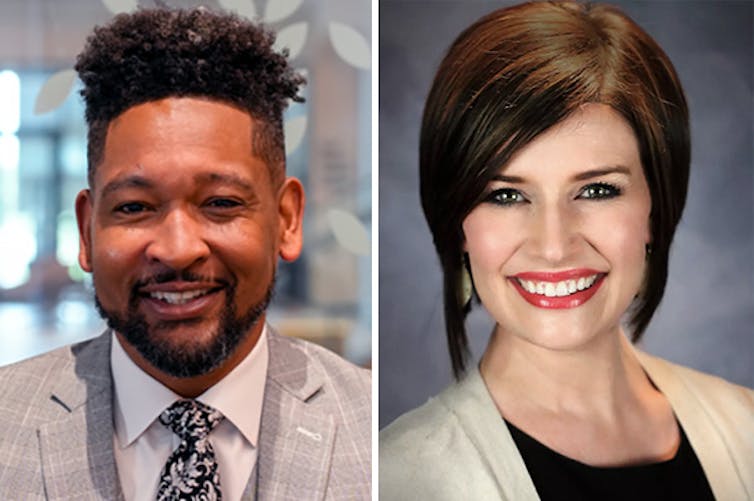
Christopher and Kimberly Garnier. Courtesy of Cory Briggs

The 9th Circuit judges made three points in ruling that the board members violated the First Amendment. First, the pages identified the board members as government officials and displayed their titles prominently. Second, the social media accounts provided information about school activities. And third, the board members solicited constituent input about school matters on the social media pages in question.

However, the court concluded that the board members were not liable for monetary damages. This is because at the time the school board members blocked the Garniers, no court had yet established whether the First Amendment applies to public officials’ speech in the context of social media. It was — and remains — a new frontier in the law.

Critical comments over COVID-19

Conversely, in a similar case in Port Huron, Michigan, the 6th Circuit made the opposite ruling.

Years before he was appointed city manager in 2014, a man named James Freed created a personal Facebook page that he eventually made public when he reached the limit of “friends” allowed on Facebook. Once in office, he used the page for both personal and professional reasons, posting updates about his family as well as policies he was working to implement. During the pandemic, constituent Kevin Lindke posted on Freed’s page, criticizing his handling of the public health crisis. Freed deleted Lindke’s comments and blocked him from the page. Lindke sued.

In Lindke v. Freed, the 6th Circuit affirmed that Freed did not violate the First Amendment in deleting and blocking Lindke’s comments. And like the 9th Circuit in O’Connor-Ratcliff v. Garnier, the court concluded that people’s First Amendment rights to comment on public officials’ social media pages had not yet been established.

The 6th Circuit ruled that Freed posted on his social media page as a private citizen, rather than as a governmental official. The court determined this for three reasons. First, no state law required him to run a social media page. Second, state funds and resources were not used to run the page. And third, the page belonged to Freed as an individual, rather than to the office of city manager — unlike the @POTUS page on X, for example. Therefore, the court concluded that the postings did not constitute state action subject to the First Amendment.

In April 2023, the Supreme Court agreed to intervene in both cases.

The future of the cases

Both cases not only have consequences for citizens’ First Amendment rights but also for social media companies and users. The Court may decide whether social media platforms such as Facebook and X can be liable for allowing a public official to block private citizens from commenting on their accounts.

These cases might also establish rules and standards about how public officials can control their social media accounts and the role of the courts in these disputes.

In a brief supporting the city manager in Lindke v. Freed, the U.S. Department of Justice basically argued that if the government neither owns nor controls the personal social media accounts of public officials, their behavior on the platforms “will rarely be found to be state action.”

The DOJ added that preventing public officials from blocking some messages might make them less willing to speak out about important issues. They warned that this could reduce, rather than enhance, free speech and discourse on matters of public interest, whether in schools or other agencies.

On the other hand, organizations such as the ACLU argue that allowing public officials to restrict comments on social media would be detrimental to democracy by limiting free speech.

“The upshot of the government officials’ argument is that they should have a constitutional blank check to silence or retaliate against their constituents for expressing disfavored viewpoints on social media,” the ACLU wrote about the two cases. “This would give officials a way to short-circuit our most fundamental First Amendment protections.”

Depending on how the court rules, social media may be headed into a new era of who can access and comment on the accounts of public officials.

The Conversation

This article is republished from The Conversation under a Creative Commons license. Read the original article.
Why January 6th is More Important Now Than It’s Ever Been

It’s become fashionable for some to say that we shouldn’t be hung up on January 6th, that it is, after all, time to move on. And it’s not just the Trump supporters who led the insurrection. The thinking is that it is a bit lazy somehow, holding on to the familiar. You’re stuck in some relevance-affirming cocoon. And it’s time to get outside. It’s an attitude that most especially prevalent among those who judge their seriousness about politics and the validity of their perspectives precisely in inverse proportion to their personal engagement and investment in the big questions of political life. Let’s call them the supercilious center. The attitude is pervasive among elite political reporters and editorialists.

In fact, January 6th remains at the center of our politics. It’s as important as it’s ever been. We often say that it’s not just what happened on January 6th but the criminal conduct leading up to it. That’s true, as far as it grows. But what’s more true is this: It’s not so much what happened on January 6th or even in the weeks leading up to it. What’s truly important is what came after January 6th.

Continue reading “Why January 6th is More Important Now Than It’s Ever Been”

How Trump Brought ‘Networked Incitement’ To The Capitol

This article is part of TPM Cafe, TPM’s home for opinion and news analysis. It was originally published at The Conversation.

The shocking events of Jan. 6, 2021, signaled a major break from the nonviolent rallies that categorized most major protests over the past few decades.

What set Jan. 6 apart was the president of the United States using his cellphone to direct an attack on the Capitol, and those who stormed the Capitol being wired and ready for insurrection.

My co-authors and I, a media and disinformation scholar, call this networked incitement: influential figures inciting large-scale political violence via social media. Networked incitement involves insurgents communicating across multiple platforms to command and coordinate mobilized social movements in the moment of action.

The reason there was not more bloodshed on Jan. 6 emerged through investigation into the Oath Keepers, a vigilante organization composed mostly of former military and police. During their trials for seditious conspiracy, members of the Oath Keepers testified about weapons caches in hotels and vans, stashed near Washington, D.C. As one member described it, “I had not seen that many weapons in one location since I was in the military.”

The Oath Keepers were following Washington law by not carrying the weapons in the district, while waiting for Trump to invoke the Insurrection Act, which gives the president the authority to deploy the military domestically for law enforcement.

The militia was waiting for orders from Trump. That was all that kept U.S. democracy safe from armed warfare that day.

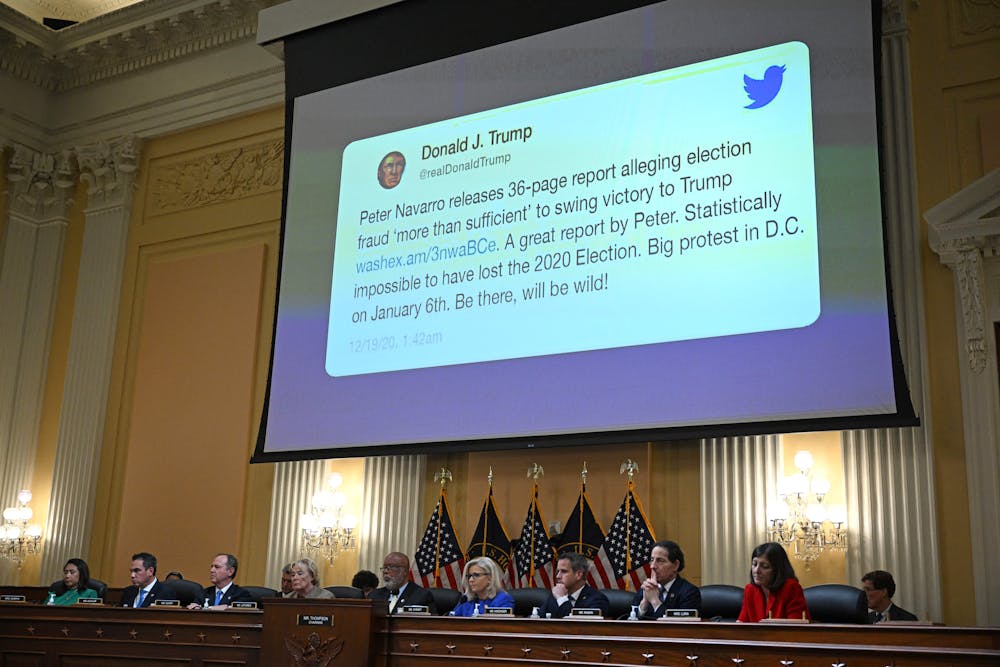
A projection of text on a large screen above a row of seated people
The House Select Committee hearings on the Jan. 6 attack highlighted the role of President Trump’s tweets. Mandel Ngan/AFP via Getty Images

Social media as command and control

What happened in D.C. on Jan. 6, 2021, does not easily fit into typical social movement frameworks for describing mobilization. The insurrectionists behaved akin to a networked social movement, with online platforms forming the infrastructure to organize action, but its leaders were politicians and political operatives as opposed to charismatic community leaders. On that day in particular, the insurrectionists, who are closely aligned with MAGA Republicans more broadly, functioned like Trump’s volunteer army rather than a populist movement.

Even with the availability of social media, networked social movements still need mainstream media coverage to legitimize their cause. Typically, community organizers push a particular issue — for example Black Lives Matter and #MeToo — into the media spotlight to get the public to care about their issue. Social movements tend to struggle for exposure and to frame favorable narratives.

The insurrectionists had the advantage of betting on mainstream media coverage for Jan. 6, so they focused on gathering resources and coordinating attendance. As a result, Trump’s supporters did not need to expend much effort to bring attention to the event and, instead, concentrated on organizing ride-shares and splitting hotel costs. As in prior social movements, the networking capacity of social media proved to be an important conduit to bring strangers together for the occasion. What the insurrectionists failed to do was convince key stakeholders, such as mainstream media, Vice President Mike Pence and the U.S. Capitol Police, to join their fight.

Networked incitement is different from the legalistic understanding of incitement, where an inflammatory statement immediately precedes unlawful acts or creates a dangerous situation. The call to action for Jan. 6 came from the president himself in a series of social media posts enticing supporters to come to D.C. for a “wild” time.

Tweets like these from a prominent figure became social media’s equivalent of shouting fire in a crowded theater.

Mobilizing for violence

My colleagues and I sought data to better understand what motivated everyday folks to storm the Capitol that day under great personal risk. Using the method of qualitative content analysis, we assembled 469 charging and sentencing documents for 417 defendants and coded them for the stated reasons for attending the event. We chose these court documents because they represented the fullest narrative accounts available. The purpose of these documents was to explain the rationales and mental states of the accused, while also offering a defense or explanation for their actions.

We analyzed the documents, looking at the multiple motivations for the insurrectionist mobilization. Overwhelmingly, insurrectionists said they were motivated by a desire to support Trump, which was equally split with a rationale to stop a rigged election. In sum, we concluded that disinformation mobilizes and incites political violence under specific conditions, such as a popular public figure calling for help.

For example, the court documents also directly reference social media posts of the accused. On Dec. 22, 2020, Kelly Meggs, an Oath Keeper who was later convicted of seditious conspiracy and sentenced to 12 years in prison, wrote on Facebook:

“Trump said It’s gonna be wild!!!!!!! It’s gonna be wild!!!!!!! He wants us to make it WILD that’s what he’s saying. He called us all to the Capitol and wants us to make it wild!!! Sir Yes Sir!!! Gentlemen we are heading to DC pack your shit!!”

The reference to “it’s gonna be wild” was a rejoinder to the now infamous tweet Trump sent after a reportedly difficult six-hour meeting the president had with staff about how to proceed with the fraud inquiry and undo the election results. Oath Keeper Meggs’ tweet illustrates that even before Jan. 6, militia groups were looking for signs from Trump about how to proceed. An investigation by NPR also illustrated how Trump’s messages emboldened participants and ignited the events of that day.

A dark future

No sitting president before Trump had exploited the capacity of social media to directly reach citizens to command specific actions.

The use of social media for networked incitement foreshadows a dark future for democracies. Rulers could well come to power by manipulating mass social movements via social media, directing a movement’s members to serve as the leaders’ shock troops, online and off.

Clear regulations preventing the malicious weaponization of social media by politicians who use disinformation to incite violence is one way to keep that future at bay.

The Conversation

This article is republished from The Conversation under a Creative Commons license. Read the original article.

In Ominous Sign, Supreme Court Takes Up Emergency Room Abortion Case

The Supreme Court announced Friday that it would take up a case centered on abortion care in emergency medical situations, leapfrogging the 9th Circuit Court of Appeals, which was scheduled to hear arguments later this month. 

Continue reading “In Ominous Sign, Supreme Court Takes Up Emergency Room Abortion Case”

Supreme Court Will Hear Trump Disqualification Clause Case In February

The Supreme Court announced Friday afternoon that it will hear oral arguments February 8 on the Colorado Supreme Court’s ruling that Donald Trump is ineligible to run under the Constitution’s disqualification clause due to his role in the Jan. 6 insurrection.

The Court was near certain to take up the case after both parties requested that it do so, and because similar cases are brewing in other states. 

The case is on an expedited timeline, though a slightly slower one than the voters who triumphed in Colorado state court had requested. They wanted oral arguments on January 19, “so that the Court may issue a ruling before in-state Colorado voters begin receiving their ballots on February 12 and well before Super Tuesday.”

Leading up to the Court’s February oral arguments, initial briefs will be due January 18, with respondents’ reply due January 31. Any further reply brief is due February 5.  

The Court did not specify which questions it would hear in the Friday order, a major point of contention between the parties that might have indicated where the case is headed. Questions suggested by the parties range from whether Congress needs to pass legislation to make the disqualification clause enforceable to whether Trump engaged in insurrection.

Since the Court accepted Trump’s petition to take up the case, it may suggest that they’ll also request briefing on the questions he raised in his brief. Technically, he asked only one — “Did the Colorado Supreme Court err in ordering President Trump excluded from the 2024 presidential primary ballot?” — though in the briefing itself, he seems to ask several separate questions, including urging the Court to review the Colorado courts’ interpretation of state law, a request that is seemingly outside the U.S. Supreme Court’s jurisdiction.

There are many paths the Supreme Court could take in the case, including more procedural off-ramps that would let it avoid the most hot button arguments. Team Trump argues, for one, that the disqualification clause never applies to presidents — an argument that, if the justices accepted it, would seem to zero out the multi-state effort to disqualify Trump without touching on the former president’s specific behavior. 

That nationwide push has had varying levels of success, with Colorado as the first state to block Trump from the ballot and Maine close behind. In the latter state, the secretary of state made an administrative ruling barring Trump from the ballot, which he has appealed to state superior court. A ruling there is expected in mid-January, with the final word from the state Supreme Court by the end of the month. 

The Supreme Court is expected to end up involved in another high-profile Trump dispute, as he fights to prove that sweeping presidential immunity protects him from special counsel Jack Smith’s Jan. 6 prosecution. The Court — without explanation or any noted dissents — declined Smith’s request for the justices to take up the question on an expedited basis, instead sending it back down to the D.C. Circuit. 

Still, Friday’s order in the disqualification case may concern the former president in terms of the Court’s willingness to expedite briefings and arguments; Trump is trying to drag Jack Smith’s case out past 2024, so he can make the Justice Department drop it if he’s reelected.

Read the order here:

Beholding the SCOTUS Disqualification Unicorn

I wanted to respond to a few questions and comments about my disqualification post. It’s a complicated issue that a number of you have raised. In so many words, I said that in the very unlikely case that the Court found that Trump had participated in an insurrection and allowed the Colorado decision to stand, it would still be up to individual states to remove him from the ballot. Clearly no red state is going to do that. And it seems unlikely that any purple states would do it.

TPM Reader BS writes: “I think you’re underestimating the impact of the (admittedly slight) possibility of SCOTUS affirming the removal of Trump from the Colorado ballot. However the majority phrases it, this will be seen and interpreted as the GOP-dominated SCOTUS, the highest court in the land, finding Trump GUILTY of insurrection.” (Don’t hold BS‘s initials against him.)

As BS goes on to argue, this would unleash a tidal wave of recriminations within the GOP and open the door to swing states removing Trump from the ballot.

Continue reading “Beholding the SCOTUS Disqualification Unicorn”

The Gradual Release Of Jan. 6 Footage Has The Far Right Raging At House Republicans And Speaker Mike Johnson

On one of the internet’s main QAnon forums, Speaker Mike Johnson’s November decision to unveil tens of thousands of hours of security footage from the Jan. 6 attack was greeted with great fanfare. Johnson committed to publicly release the security tapes, which have been something of a holy grail for Capitol attack conspiracy theorists, soon after he took office. At the time, the new speaker framed it as the fulfillment of a “promise to the American people.” 

Continue reading “The Gradual Release Of Jan. 6 Footage Has The Far Right Raging At House Republicans And Speaker Mike Johnson”

Trump Disqualification and Setting Your Expectations

We’re now waiting to see when — almost certainly when — the Supreme Court will take up ex-President Trump’s appeal of Colorado’s decision to strike his name from the presidential ballot. As we’ve noted, there are many unknowns about just how the Court might respond, though it seems almost inconceivable that the Court won’t make a decision which forces Trump’s name back on the ballot.

But let’s at least consider the possibility that it doesn’t, that the Court allows Colorado and presumably Maine to keep Trump off the ballot. What then? Does this really have practical significance for the 2024 election?

Continue reading “Trump Disqualification and Setting Your Expectations”

Trump’s Latest Gambit In Jan. 6 Case Already Kinda Worked

A lot of things happened. Here are some of the things. This is TPM’s Morning Memo. Sign up for the email version.

C-O-N-T-E-M-P-T

I’ve mentioned before that Special Counsel Jack Smith’s move of continuing to make some filings in the Jan. 6 case even while it’s on hold is a little stunt-ish. But leave it to Donald Trump to out-stunt anyone.

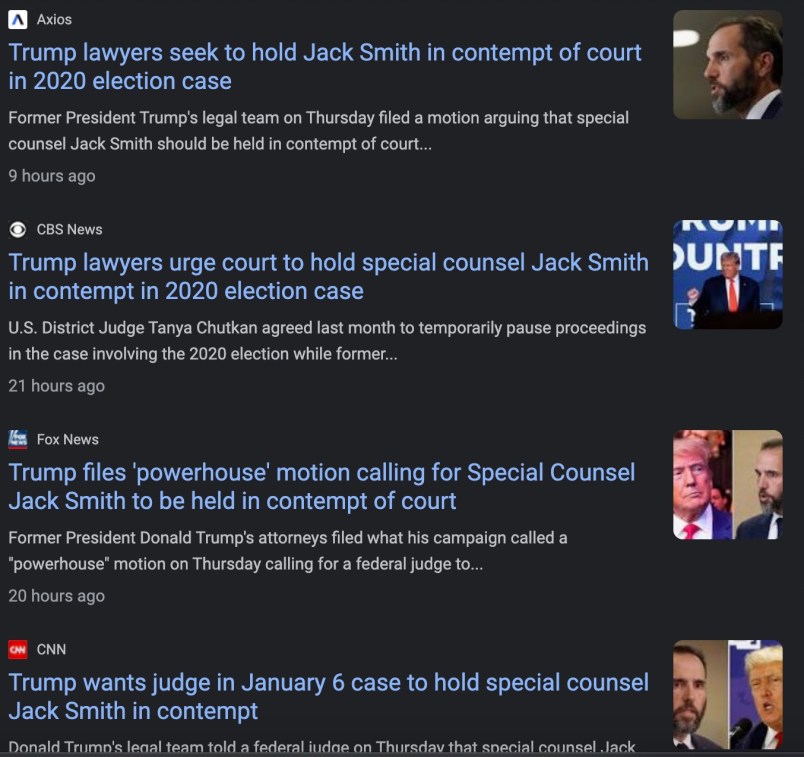
The latest gambit from Trump asks U.S. District Judge Tanya Chutkan to hold Smith and his team in contempt of court, arguing that the filings are an “outrageous” end-run around Chutkan’s order staying the case. It should be noted here that Smith has been open in previous filings to the court about what he planned to do, and Chutkan didn’t attempt to head it off.

Most legal observers think this motion is going nowhere, but that’s probably not the point of this exercise. As Ryan Reilly noted, the Trump motion “appears intended to get ‘Jack Smith’ and ‘contempt’ in a bunch of headlines.” It worked:

Headline Fail Of The Week

The worst headline of the week belongs to … [drum roll] … the Associated Press:

One attack, two interpretations: Biden and Trump both make the Jan. 6 riot a political rallying cry

Congratulations!

The Pounding Was Brutal

Keep An Eye On SCOTUS Today

The Supreme Court could decided as early as today whether to take up the Colorado Disqualification Clause case. A good rundown from Roger Parloff on what to look for.

What Will SCOTUS Do With The DQ Case?

More Disqualification Clause Cases In the Pipeline

Free Speech For People, one of the groups spearheading the movement to use the Disqualification Clause to keep Donald Trump off the 2024 ballot, has initiated proceedings in two new states:

Video Of Trump Co-Defendant’s Earlier Arrest

Before Trump co-defendant Harrison Floyd was indicted in the Georgia RICO case, he had already been arrested in Maryland for allegedly assaulting two FBI agents who tried to served a subpoena on him as part of Special Counsel Jack Smith investigation. Politico has obtained the body cam footage of that arrest:

The Emoluments That Keep On Giving

Democrats on the House Oversight Committee put out a new report showing that Donald Trump’s businesses received nearly $8 million from foreign governments while he was in office. If you enjoy irony, this is for you.

Merit Is Code For Power

The always-essential Tressie McMillan Cottom, on Claudine Gay and the debacle at Harvard:

Academicians and practitioners know that you cannot operationalize merit. But historians know that there is powerful evidence about merit in the archives of our nation’s elite institutions. Whenever politicians, activists and investors agree that there is a merit crisis at Harvard, it signals that a battle rages, not over rigor, but over power.

What The Most Right-Wing Appeals Court Hath Wrought

TPM’s Kate Riga: The 5th Circuit Will Not Have The Last Word On Abortion In Emergency Rooms

Florida May Be Next Abortion Battleground

Florida advocates are on the verge of securing enough signatures to get a proposed constitutional amendment protecting abortion rights on the 2024 general election ballot.

‘We Should Not Ignore It’

Rep. Jasmine Crockett (D-TX) on a roll:

Do you like Morning Memo? Let us know!