Trump Takes Sledge Hammer To Rule Of Law Today In Historic Case

A lot of things happened. Here are some of the things. This is TPM’s Morning Memo. Sign up for the email version.

What To Watch For Today

Oral arguments on Donald Trump’s claim of presidential immunity from criminal prosecution are scheduled for 9:30 a.m. ET before the DC Circuit Court of Appeals.

We’ve set up our liveblog so that you can listen to the audio and follow our running updates at the same time. Join us!

Reminder: This is NOT the Disqualification Clause case. It emerges instead from the Jan. 6 case in DC charging Trump with conspiring to overturn the results of the 2020 presidential election. Trump is arguing that he can’t be prosecuted because the president is immune from criminal prosecution for official acts.

There is no precedent for such immunity, and Trump is widely expected to lose that argument at the appeals court and later at the Supreme Court. But how he loses (i.e., the legal rationales) and whether the courts recognize any kind of presidential immunity is worth watching.

But don’t lose track of the main story line here: Trump is using the immunity argument to buy time. It’s part of his larger delay strategy. So we’ll be especially focused on timing issues: How quickly will the appeals court rule? How quickly will the Supreme Court take up and dispense with the case? Will either court permit U.S. District Judge Tanya Chutkan to resume the trial-level proceedings that are currently on hold?

Trump says he will personally appear in court for the oral arguments today. We’ll see. He can be fickle, and the weather in DC today is atrocious.

Want To Go A Little Deeper?

If you’re way into the immunity arguments, a few additional notes:

  1. The appeals court does seem interested in addressing whether the immunity argument can be appealed now or whether it is premature. If the appeal is premature, the appeals court lacks jurisdiction to hear it and the case gets kicked back to Chutkan. If I were a betting man, I wouldn’t put my money on that happening, but it’s worth keeping an eye on this argument. I wouldn’t be surprised to see it be among the first questions asked of Trump’s lawyers.
  2. If the appeals court determines it has jurisdiction, then it must decide if there is presidential immunity from prosecution.
  3. If the appeals court determines there is such a thing as presidential immunity in the criminal context, then it must articulate a standard for qualifying for that immunity.
  4. Once it articulates that standard, then the appeals court must determine if Trump meets the standard.
  5. Finally, if Trump loses on all the above, he has a last-ditch double jeopardy argument that since the Senate acquitted him in the second impeachment, he can’t be prosecuted again for the same underlying conduct.

Trump Deploys The Immunity Argument In Georgia, Too

In a new filing Monday in the Georgia RICO Case, Donald Trump is seeking to have the state charges against him dismissed on grounds of presidential immunity, mirroring the argument he is making in the Jan. 6 case in DC.

A Dramatic Twist In The Georgia RICO Case?

In the Georgia RICO case, a surprise filing by Trump co-defendant Mike Roman claiming – without presenting much in the way of hard evidence – that Atlanta District Attorney Fani Willis is or was engaged in a romantic relationship with the man she hired as special prosecutor in the case.

Willis’ office said she will respond formally via court filings, and I’m going to wait to say much more about this until she files a response. But for practical purposes Roman’s gambit here is to disqualify the entire DA’s office from handling the prosecution and then hope a more Trump-friendly prosecutor is appointed to take over.

The Swatting Menace

Still Unpacking That Stefanik Interview On MTP

  • NBC News: The reality of Trump and Stefanik’s Jan. 6 ‘hostages’
  • Philip Bump: The GOP’s post-Trump lesson: Power isn’t dependent on voting

Ziegler Booted As Florida GOP Chair

Facing rape allegations involving a woman who previously engaged in a ménage à trois with him and his wife, Florida GOP Chair Christian Ziegler was removed from his party leadership role during a closed-door emergency vote Monday.

Congrats To An Old TPM Friend
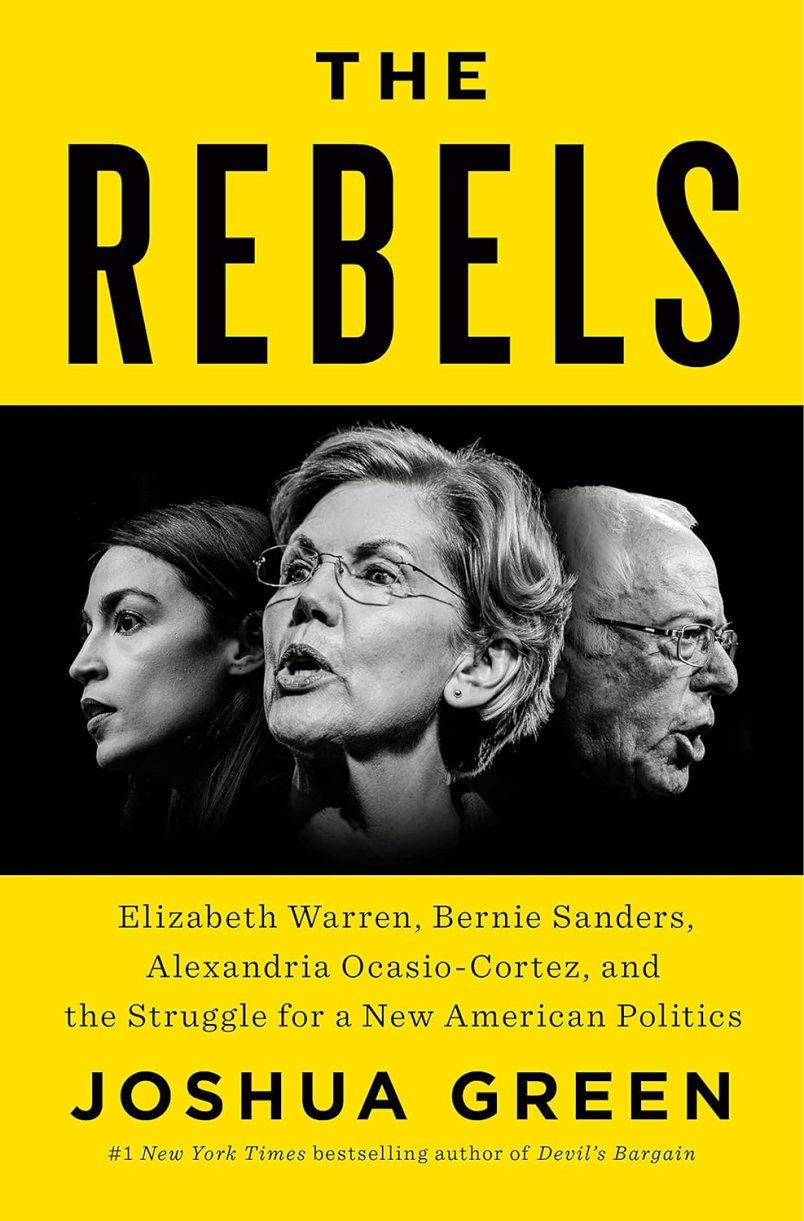
Joshua Green has a new book out today: The Rebels: Elizabeth Warren, Bernie Sanders, Alexandria Ocasio-Cortez, and the Struggle for a New American Politics. He sent me an advanced copy late last week, and I’m looking forward to digging into it.

In his previous book, Josh wrote the definitive account of the rise of Trump viewed through the prism of Trump whisperer Steve Bannon. His latest effort is in a very different but parallel vein, tracing the arc of the progressive economic movement from the tatters of the Carter presidency through the wilderness of the Reagan and Clinton eras until the Great Recession gave voice to the likes of Elizabeth Warren, Bernie Sanders, and AOC.

Josh worked for Josh Marshall way back before TPM, shared office space with TPM in DC for a time, and has been at work on this book for going on five years now. It’s good to see it reach the finish line.

Say It Out Loud

The Big Picture

It’s official: 2023 was the hottest year in recorded history.

I continue to wonder if the global lurch toward right-wing authoritarianism isn’t inextricably connected with climate change. More on that in future Morning Memo installments.

Do you like Morning Memo? Let us know!
Haley Main Target At Last Scheduled Republican Debate

The Republican 2024 candidates not named Donald Trump descended on Tuscaloosa, Alabama Wednesday at 8:00 p.m. ET for their final scheduled debate.

Florida Gov. Ron DeSantis, former South Carolina Gov. Nikki Haley, former New Jersey Gov. Chris Christie and tech businessman Vivek Ramaswamy duked it out for second place as Trump skipped again.

With some tense moments — and perhaps the most memorable stretch when Christie defended Haley against Ramaswamy — the debate covered some new terrain, including on Trump’s call to replace the Affordable Care Act. Catch up with our coverage below:

Freak Flag Lowered to Half Staff Over Florida GOP

Nicole Lafond has stolen a bit of my thunder here. But I feel obliged to let you know that Christian Ziegler, threesomer and erstwhile chairman of the Florida Republican Party, was finally given the boot today by the state party. The state party executive committee named Evan Power as his successor. No word was available as we went to press on whether Power and his wife will be inviting anyone else to play. I had explained in one of my earlier posts that the state party was in a jam because the state party bylaws provided no mechanism for firing a state party chairman. What happened? As near as I can tell the state party committee decided that that didn’t matter. They all wanted him to go. So they fired him. Bada bing bada boom.

Continue reading “Freak Flag Lowered to Half Staff Over Florida GOP”

Um What?

Let me flag this piece to your attention. I’m not sure what to make of it yet. The gist is that one of Donald Trump’s codefendants in the state coup prosecution in Georgia has filed a motion to remove Fani Willis as prosecutor. Michael Roman claims that Willis hired a romantic partner (he alleges), Nathan Wade, to serve as special prosecutor in the case. In essence, she hired him as an outside lawyer since it’s a big case and something bigger than the office might normally handle. Roman then goes on to claim that since Willis and Wade vacationed together (he alleges) and since Wade paid for some of those vacations (he alleges), Willis illegally profited from Wade’s work for the DA’s office. He further argues that Willis had no authority to hire Wade in the first place; so basically the whole prosecution falls apart.

Continue reading “Um What?”

Christian Ziegler Officially Booted From Florida GOP As Police Expand Investigation

During a closed-door emergency voice vote on Monday, Christian Ziegler was formally booted from his role as the chairman of the Florida Republican Party, just a few weeks after the party voted to strip the accused rapist of his salary and diminished his authority as chairman.

At the time, the Florida GOP urged Ziegler to resign but the body couldn’t officially oust him because state bylaws don’t allow it. Florida Republicans did in early December set in motion a maneuver that would allow them to use the state party constitution to potentially expel Ziegler within 30 days. That may be what materialized today, though it is not entirely clear as the meeting was held behind closed doors.

Continue reading “Christian Ziegler Officially Booted From Florida GOP As Police Expand Investigation”

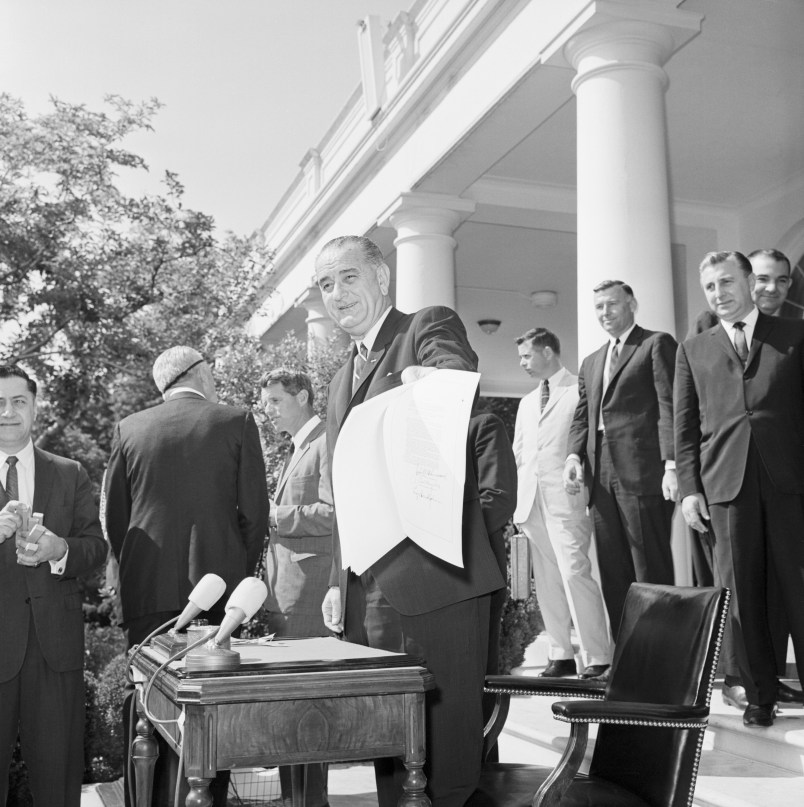
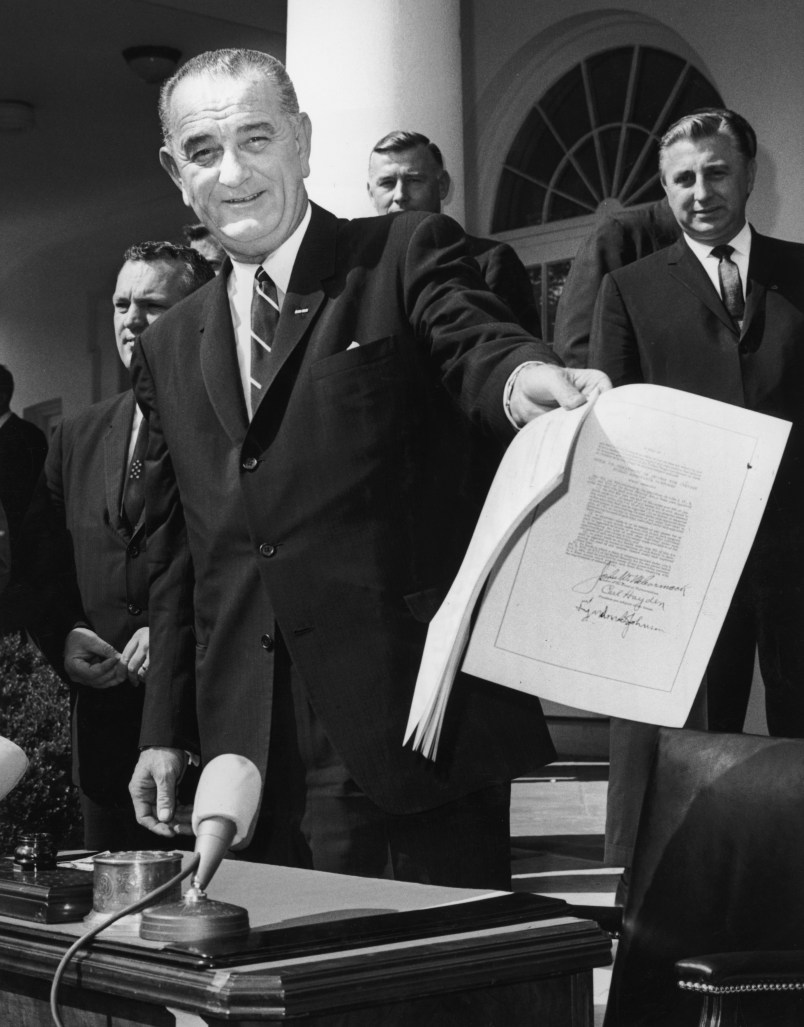
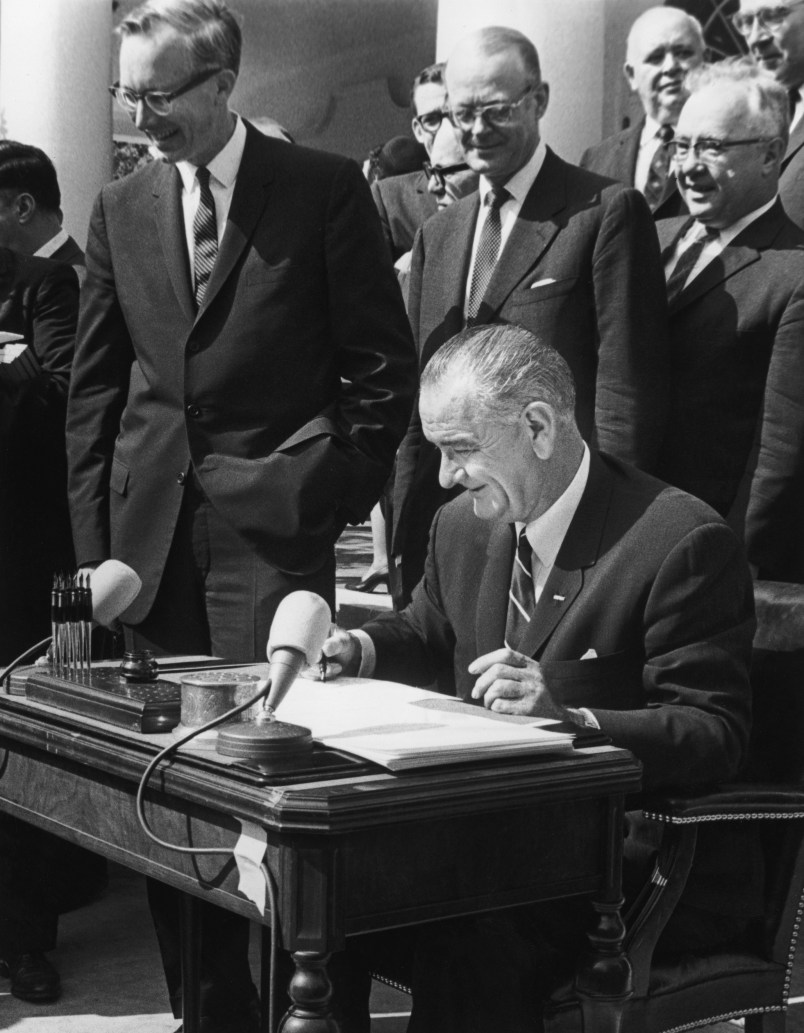
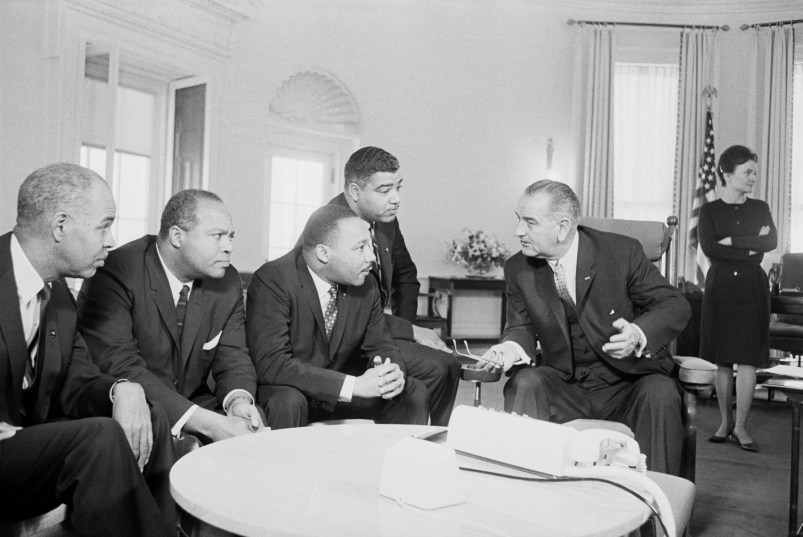
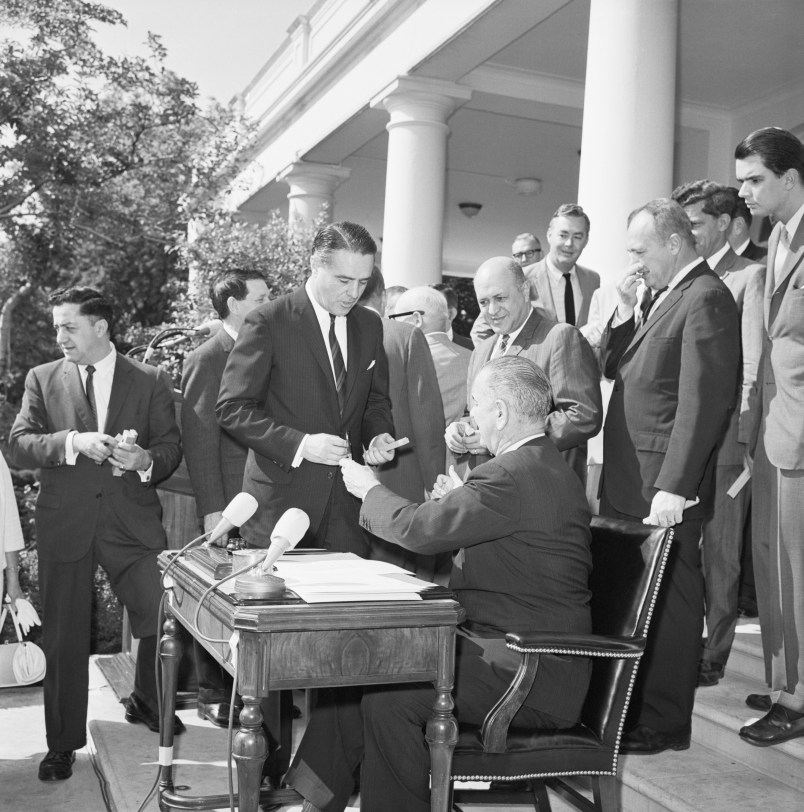
Today In History: LBJ Declares A “War On Poverty”

Sixty years ago today, President Lyndon B. Johnson delivered his first state of the union address, only weeks after assuming the presidency following the national trauma of President John F. Kennedy’s assassination. He used the speech to announce a sweeping legislative agenda, which he dubbed the “War on Poverty.”

At the time, nearly 20% of Americans lived below the poverty line.

The speech marked the initiation of Great Society agenda items that would go on to transform American life and endure today despite decades of attempts — some successful — by Congress to winnow them down. They include the Food Stamps Act and legislation creating the Peace Corps, both signed into law in August 1964, and the Social Security Act, which was signed in 1965 and put in place both Medicare and Medicaid.

Some Further Thoughts on Jan 6th; The Merrick Garland Question

I wrote this post over the weekend about the continuing importance of the January 6th insurrection and the attempted coup it was a part of. I wanted to follow up on that post with some additional thoughts. One TPM Reader wrote in to tell me that, while she agreed with all the points I made, it was still a major error that the Department of Justice took so long to really get the bit in its teeth over January 6th. This can seem a bit out of whack today since Jack Smith is clearly all in on both Trump prosecutions. But that reader is right.

Continue reading “Some Further Thoughts on Jan 6th; The Merrick Garland Question”

The Worst Dereliction Of Duty Ever By An American President

A lot of things happened. Here are some of the things. This is TPM’s Morning Memo. Sign up for the email version.

‘So What?’

Since the Trump indictments came down in DC and Georgia, the pace of revealing new details about Jan. 6 has slowed somewhat. But coinciding with the three-year anniversary of the attack, ABC News provided new reporting on what Donald Trump allegedly did – and failed to do – the afternoon of Jan. 6 while the Capitol remained under siege.

The ABC News report, citing unnamed sources, rests largely on what Trump aides Dan Scavino and Nick Luna told federal investigators about their recollections of Jan. 6. The revelations are damning, such as this from Luna:

Sources also said former Trump aide Nick Luna told federal investigators that when Trump was informed that then-Vice President Mike Pence had to be rushed to a secure location, Trump responded, “So what?” — which sources said Luna saw as an unexpected willingness by Trump to let potential harm come to a longtime loyalist.

The new reporting fills in additional details on what was already largely known: that President Trump didn’t just sit idly by and let the attack continue, he egged it on directly himself via Twitter:

After unsuccessfully trying for up to 20 minutes to persuade Trump to release some sort of calming statement, Scavino and others walked out of the dining room, leaving Trump alone, sources said. That’s when, according to sources, Trump posted a message on his Twitter account saying that Pence “didn’t have the courage to do what should have been done.”

Scavino, who was the only Trump aide with access to the the Twitter account, denied he had posted the Pence tweet, leaving Trump as prime suspect and perhaps explaining why Special Counsel Jack Smith has endeavored to learn through technical means who was tweeting on the account and from which device.

The entire ABC News report is worth your time.

‘You Can’t Love Your Country Only When You Win’

The full speech by President Biden commemorating the third anniversary of the Jan. 6 attack (it’s only the first 30 minutes of this video):

For highlights of the speech, Aaron Rupar has you covered. For analysis of the speech, let me refer you to Brian Beutler.

Exactly Who He Is

… HOSTAGES …

To no one’s surprise, Donald Trump and his supporters used the Jan. 6 anniversary to celebrate the failed coup. Perhaps the peak example was a shift in the rhetoric from calling the Jan. 6 defendants “political prisoners” to “hostages”:

Supreme Court Takes Colorado DQ Case

The big news from Friday: The Supreme Court agreed to review the Colorado Supreme Court decision that Donald Trump is ineligible for the presidency under the Constitution’s Disqualification Clause.

Big Day Tomorrow

The DC Circuit Court of Appeals will hear oral arguments tomorrow on Donald Trump’s claim that presidents enjoy immunity from criminal prosecution. Stay tuned.

Jack Smith Scoffs At Trump’s Contempt Of Court Claim

In a filing over the weekend, Special Counsel Jack Smith derisively rebutted Donald Trump’s claim that the prosecution team should be held in contempt for providing discovery and voluntarily meeting deadlines that have been paused while Trump’s immunity claim is on appeal.

Judge Chutkan Swatted?

It appears U.S. District Judge Tanya Chutkan, who is presiding over Donald Trump’s Jan. 6 case, may have been the victim of a swatting last night at her home in DC.

No Criminal Charges Against Fake Electors In New Mexico

New Mexico’s attorney general announced Friday that the Trump fake electors in his state can’t be prosecuted primarily because the certificates they signed contained contingent language rather than falsely asserting that they were the legitimate electors.

Jan. 6 Miscellany

  • TPM’s Hunter Walker: The Gradual Release Of Jan. 6 Footage Has The Far Right Raging At House Republicans And Speaker Mike Johnson
  • The family of Ashli Babbitt, the Jan. 6 rioter shot and killed outside the House chamber, is suing the federal government for wrongful death, assault, and negligence.
  • NYT: How Hillsdale Got Mixed Up in the 2020 Election Plot
  • WBEZ: Trump did not sign Illinois’ loyalty oath that says he won’t advocate for overthrowing the government
  • Georgia judge skewers Rudy Giuliani’s request for an extension of today’s deadline for pretrial motions in the RICO case.
  • Rep. Elise Stefanik (R-NY) declined to commit to accepting the 2024 election results.

NY AG Wants $370M Penalty For Trump

When she first brought the civil fraud suit against Donald Trump and his business empire, New York Attorney General Letitia James estimated that the penalties for the alleged misconduct would total $250 million. Now with the trial mostly over and closing arguments expected this week, James has formally asked the judge to ding Trump for a whopping $370 million.

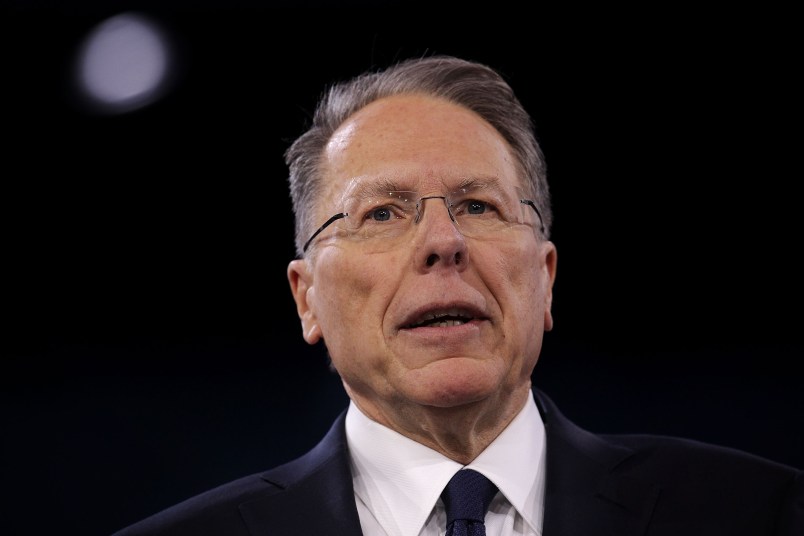
Wayne LaPierre Out At NRA

<<enter caption here>> on March 3, 2016 in Washington, DC.
NATIONAL HARBOR, MD – MARCH 03: Executive Vice President of the National Rifle Association Wayne LaPierre speaks during the Conservative Political Action Conference (CPAC) March 3, 2016 in National Harbor, Maryland. The American Conservative Union hosted its annual Conservative Political Action Conference to discuss conservative issues. (Photo by Alex Wong/Getty Images)

The man who notoriously converted the NRA into a right-wing, pro-Republican political powerhouse and effectively made gun control a third rail of American politics even in the midst of a decades-long surge in gun violence unparalleled in the developed world has resigned from the organization just as the civil fraud trial against him in New York is getting underway.

Deal Struck To Avoid Gov’t Shutdown

The framework for a deal to fund the government for this fiscal year has been reached by Senate Majority Leader Chuck Schumer (D-NY) and Speaker Mike Johnson (R-LA). It doesn’t contain the types of right-wing bonbons that have larded previous spending proposals, meaning Johnson is going to have to get this through the House with Democratic votes, jeopardizing his position with the right-wing crazies in the Freedom Caucus.

SCOTUS To Take Up Abortion Again

TPM’s Kate Riga: In Ominous Sign, Supreme Court Takes Up Emergency Room Abortion Case

Boebert’s Ex Claims She Punched Him

The ex-husband of Rep. Lauren Boebert (R-CO) called police over the weekend claiming she punched him in the face during a altercation at a restaurant in her district. No one was arrested, and he later told the Denver Post he would not be pressing charges. Boebert denies the allegation.

Erratic

The WSJ on Elon Musk’s alleged drug use:

The world’s wealthiest person has used LSD, cocaine, ecstasy and psychedelic mushrooms, often at private parties around the world, where attendees sign nondisclosure agreements or give up their phones to enter, according to people who have witnessed his drug use and others with knowledge of it. Musk has previously smoked marijuana in public and has said he has a prescription for the psychedelic-like ketamine. …

People close to Musk, who is now 52, said his drug use is ongoing, especially his consumption of ketamine, and that they are concerned it could cause a health crisis. Even if it doesn’t, it could damage his businesses.

A Dark Brandon Cameo

Do you like Morning Memo? Let us know!

Trump’s Iowa Political Organizing This Year Is Nothing Like His Scattershot 2016 Campaign

This article is part of TPM Cafe, TPM’s home for opinion and news analysis. It was originally published at The Conversation.

Donald Trump is doing something new in Iowa.

The state is home to the first-in-the-nation GOP nomination event, the Iowa caucus, which takes place on Jan. 15, 2024, at 7 p.m. Trump, the former president, holds a resounding lead over his rivals.

What’s new for Trump in this campaign is actually old stuff — a throwback to traditional caucus campaigning. I’ve observed Iowa caucus campaigns over eight cycles, and my 2022 book, “Inside the Bubble,” offers a close-up of the 2020 Democratic contest. Against that backdrop, it’s clear that the former president is taking cues from those who’ve come before him.

The widely accepted path to caucus success — first paved in 1976 by then-unknown Jimmy Carter on his way to the Democratic nomination and eventually the White House – is to “organize, organize, organize,” as many campaign staff will tell you. Since then, it’s been the mantra for candidates of both parties — and this year, that includes Trump.

But such attention to organizing is a shift for the Trump campaign. Today, it looks nothing like the scattershot campaign from 2016, the only other time Trump has waged a nomination battle in the state.

A card with printing on it that asks people to sign up to work on the Trump campaign.
‘Commit to caucus’ cards on a table before the start of a campaign event hosted by Republican presidential candidate Donald Trump on Dec. 13, 2023, in Coralville, Iowa. Scott Olson/Getty Images

Car rides, phone calls

A caucus in Iowa is a first step in a series of events that will ultimately select delegates to the national convention that formally nominates the presidential candidate. Unlike a primary, in which voters go to a polling place and cast a ballot, a caucus is a political party meeting at which people discuss the candidates and then vote.

Caucuses are held in each of the approximately 1,700 precincts in Iowa. Registered party members can participate in the caucuses, and attendees will signal their support by writing a candidate’s name on a piece of paper.

Organizing isn’t unique to Iowa caucus politics, and it means different things depending on the context. In electoral politics across the U.S., campaigns organize by doling out responsibilities to field staff positioned across a state or electoral district. These staff, then, amass volunteers to get-out-the-vote, either on election day or — in some states — in an early voting window before the election.

A typical organizing effort in caucus politics identifies early supporters of a candidate and asks them to be the foundation for a larger volunteer structure. These volunteers engage in outreach to other potential supporters — sometimes in-person, via door-to-door canvassing or on the phone, and increasingly by sending text messages. They’ll make sure that known supporters get assistance they might need to get to the caucus, such as a car ride.

The personal element of organizing is well-suited to caucus politics, which poses unique challenges to campaigns. Like primaries, caucuses are within political parties, so voters can’t rely on cues like party labels to pick a candidate. Instead, a friend or family member volunteering for a candidate just might be persuasive.

Caucus organizers can help voters navigate a byzantine process.

Unlike primaries, which involve a daylong window for voting, caucuses are scheduled for a specific day at sometimes obscure locations; this year’s Jan. 15 date coincides with Martin Luther King Day. Caucuses always start at 7 p.m., and they last as long as it takes to conclude business, which is likely an hour. This process can be intimidating, and effective organization can educate supporters and help ensure they show up.

Campaign bling

Trump’s nod to organizing is noteworthy and is at odds with his brand, which is more focused on stirring the pot and agitating, rather than painstakingly building an infrastructure.

Back in 2016, reluctant Trump volunteers, unfamiliar with caucus procedures, courted Iowa supporters. And while the headquarters of rival candidates were abuzz with activity, Trump’s was deserted. Trump came in second in that year’s caucus.

Now, Trump’s 2024 field army of some 2,000 caucus captains, many of whom have already gone through formal training, are the front-line recruiters in the lead-up to this year’s caucus. They carry out tasks on behalf of the campaign at events themselves. Lest this all seem overly staid, there’s bling, too — a limited edition white and gold variant of the distinctive MAGA cap for the captains.

Of Trump’s GOP rivals, it’s Vivek Ramaswamy, the young biotech entrepreneur new to politics, who’s working the hardest to meet Republican activists face to face. With a schedule packed with “town hall” appearances, as many as eight or nine daily, Ramaswamy is on the Pizza Ranch circuit, taking advantage of the community rooms in the Iowa-based restaurant chain with a Christian conservative corporate vision.

Caucus 101 lessons

Trump’s caucus events are different. They’re large rallies with hundreds in attendance — and since mid-October, most of them are billed as “Commit to Caucus” events. The events have considerable time devoted to instructing the crowd about how to caucus, which is an unusual use of time at campaign events. It’s also a little perplexing, but potentially conveys some meaning.

The typical rally requires attendees to register and be in place well before the event begins, perhaps 1-2 hours early. Attendees are primed with a playlist and some B-list endorsers. They have included a losing congressional candidate, Trump’s former acting attorney general after he fired Jeff Sessions, and the Iowa attorney general.

Despite Trump’s commanding lead in the polls, local GOP stars — like Iowa Governor Kim Reynolds and prominent Iowa evangelical leader Bob Vander Plaats — are on Team (Ron) DeSantis.

But early in these Trump rallies, the program pivots to a Caucus 101-like presentation — how to find out where to caucus, what to do in advance and what to expect at the caucuses.

The other GOP candidates do this at their events to a much lesser extent, if at all. And in a heavily reported gaffe, Casey DeSantis, the spouse of the Florida governor, actually conveyed incorrect instructions, saying that non-Iowans can participate in the Iowa caucuses.

The how-to-caucus component of Trump campaign events could be nothing more than filler, something to occupy the attention of a confined crowd forced to be in place for hours. It might even be ill-advised, patently naïve because it’s instructing not only Trump supporters, but also Republicans in other candidates’ camps. When Democratic candidates have offered such instruction in the past, it’s been behind closed doors, reserved for known supporters and closer to caucus time.

It’s just possible that there’s more to this, some deeper meaning in the former president signing off on an effort to build an organization. Perhaps he recognizes that celebrity will only take him so far, and that attention to the traditional tools of politics might be in his best interests.

In that spirit, last summer Trump’s campaign scored a big win in California, where it successfully pushed for Trump-friendly processes in that state’s winner-take-all presidential primary. Whether simply finding ways to modify rules to his advantage — or flat-out rigging the system — this new Trump approach is time-honored.

And it just might give Democrats even more cause for concern. A second term might be fueled with a little more political know-how to advance the Trump agenda.

The Conversation

This article is republished from The Conversation under a Creative Commons license. Read the original article.

School Board Members Could Soon Be Blocked From Blocking People On Social Media

This article is part of TPM Cafe, TPM’s home for opinion and news analysis. It was originally published at The Conversation.

If a school board member has a social media account, would it be wrong for them to block someone and delete their comments? That’s a question the Supreme Court has decided to take up after public officials, including two school board members, blocked constituents from seeing their accounts or removed critical comments.

At stake is what constitutes state action — or action taken in an official governmental capacity — on social media. Under the First Amendment, officials engaging in state action cannot restrict individuals’ freedom of speech and expression.

A ruling in the case, likely to come in spring or early summer 2024, could have broad implications for American society, where nearly three-fourths of the population use social media in their daily lives. The ruling could also establish whether social media accounts of public officials should be treated as personal or governmental.

In a joint oral argument, the Supreme Court heard two separate cases on the matter, including the one involving school board members, in late October 2023. Interestingly, lower courts reached opposite outcomes, prompting the question of whether a post on a personal social media page can be considered state action.

The school board case

Beginning around 2014, two school board candidates in the Poway Unified School District in San Diego created Facebook and Twitter, now X, pages as part of their campaigns for office. They continued to use them after they were elected to communicate with residents and seek their input.

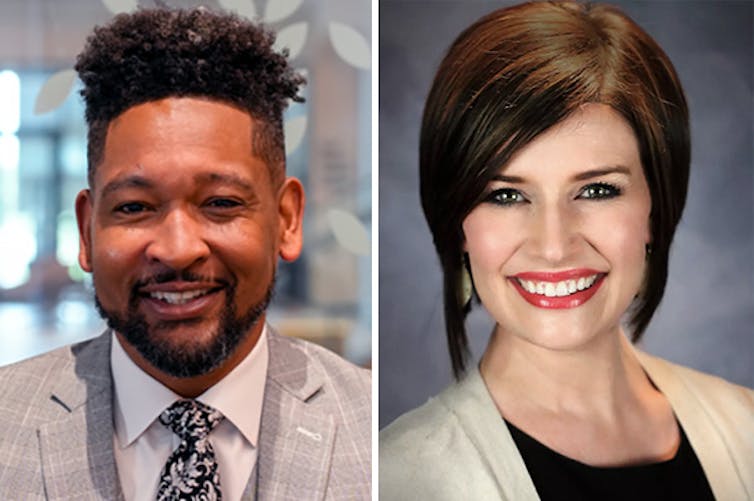
In 2017, the school board members blocked a couple with children in the district from commenting on their pages. Christopher and Kimberly Garnier repeatedly posted criticism on those pages over such issues as the board members’ handling of race relations in the district and alleged financial wrongdoing by the then-superintendent. The Garniers responded to being blocked by filing a lawsuit.

In the resulting case, O’Connor-Ratcliff v. Garnier, the U.S. Court of Appeals for the 9th Circuit affirmed that the two school board members violated the Garniers’ First Amendment rights to free speech and expression. The court rejected the board members’ claims that their accounts were private because they were not controlled by their boards and their posts were not directly related to their official duties.

Christopher and Kimberly Garnier. Courtesy of Cory Briggs

The 9th Circuit judges made three points in ruling that the board members violated the First Amendment. First, the pages identified the board members as government officials and displayed their titles prominently. Second, the social media accounts provided information about school activities. And third, the board members solicited constituent input about school matters on the social media pages in question.

However, the court concluded that the board members were not liable for monetary damages. This is because at the time the school board members blocked the Garniers, no court had yet established whether the First Amendment applies to public officials’ speech in the context of social media. It was — and remains — a new frontier in the law.

Critical comments over COVID-19

Conversely, in a similar case in Port Huron, Michigan, the 6th Circuit made the opposite ruling.

Years before he was appointed city manager in 2014, a man named James Freed created a personal Facebook page that he eventually made public when he reached the limit of “friends” allowed on Facebook. Once in office, he used the page for both personal and professional reasons, posting updates about his family as well as policies he was working to implement. During the pandemic, constituent Kevin Lindke posted on Freed’s page, criticizing his handling of the public health crisis. Freed deleted Lindke’s comments and blocked him from the page. Lindke sued.

In Lindke v. Freed, the 6th Circuit affirmed that Freed did not violate the First Amendment in deleting and blocking Lindke’s comments. And like the 9th Circuit in O’Connor-Ratcliff v. Garnier, the court concluded that people’s First Amendment rights to comment on public officials’ social media pages had not yet been established.

The 6th Circuit ruled that Freed posted on his social media page as a private citizen, rather than as a governmental official. The court determined this for three reasons. First, no state law required him to run a social media page. Second, state funds and resources were not used to run the page. And third, the page belonged to Freed as an individual, rather than to the office of city manager — unlike the @POTUS page on X, for example. Therefore, the court concluded that the postings did not constitute state action subject to the First Amendment.

In April 2023, the Supreme Court agreed to intervene in both cases.

The future of the cases

Both cases not only have consequences for citizens’ First Amendment rights but also for social media companies and users. The Court may decide whether social media platforms such as Facebook and X can be liable for allowing a public official to block private citizens from commenting on their accounts.

These cases might also establish rules and standards about how public officials can control their social media accounts and the role of the courts in these disputes.

In a brief supporting the city manager in Lindke v. Freed, the U.S. Department of Justice basically argued that if the government neither owns nor controls the personal social media accounts of public officials, their behavior on the platforms “will rarely be found to be state action.”

The DOJ added that preventing public officials from blocking some messages might make them less willing to speak out about important issues. They warned that this could reduce, rather than enhance, free speech and discourse on matters of public interest, whether in schools or other agencies.

On the other hand, organizations such as the ACLU argue that allowing public officials to restrict comments on social media would be detrimental to democracy by limiting free speech.

“The upshot of the government officials’ argument is that they should have a constitutional blank check to silence or retaliate against their constituents for expressing disfavored viewpoints on social media,” the ACLU wrote about the two cases. “This would give officials a way to short-circuit our most fundamental First Amendment protections.”

Depending on how the court rules, social media may be headed into a new era of who can access and comment on the accounts of public officials.

The Conversation

This article is republished from The Conversation under a Creative Commons license. Read the original article.