I wanted to update you on an important development in Israel and the Israel-Hamas war. There have been a few of these blow-ups in the far-right Netanyahu coalition. But they’ve all gotten hashed out and patched up eventually because, as we’ve discussed, the government’s very unpopularity is, paradoxically, its greatest adhesive in holding on to power. Since October, coalition members have known they’d lose power in a new election. So no one has really been willing to trigger new elections — the recent polls have shown some limited recovery of Netanyahu’s fortunes.
Mere hours after President Joe Biden announced his demands, designed to switch up the dated, late-in-the-fall debate schedule run by the presidential commission on debates, Donald Trump leapt to it and agreed to Biden’s proposal — to set debates before early voting starts, in June and September.
The Republican National Committee is bringing Donald Trump’s Non-Citizen voting myth—a baseless narrative and an increasingly rabid area of fixation for Republicans headed into 2024—to the Arizona courts.
Last week, the RNC and Arizona Republican legislators filed a notice of appeal to a case challenging two voter suppression laws. The appeal however, is far more about messaging than substance. It’s merely a way to keep the lie — that non-citizens vote en masse in federal elections — alive and well ahead of 2024.
“The Republican Party seems to believe that it’s in their interest to keep controversies about immigration in the news, manufactured or real,” Justin Levitt, a professor of law at Loyola Law School, told TPM. “There’s a real nativist push to characterize immigrants as scary. And the appeal here seems to be very much in that flavor.”
The case centers around two 2022 Arizona proof of citizenship laws, which voting rights activists argued in a 2022 complaint, severely burdens the right to vote and has the potential to disenfranchise Arizona voters by, in part, requiring voters who register to vote using federal forms to provide proof of citizenship documentation or residency documentation to vote in a presidential election or vote by mail. A federal judge, however, blocked a portion of the provision in September 2023.
The 2022 legal challenge to H.B. 2492 was consolidated with another challenge to another state voting law, H.B. 2243, which among other things, required county recorders to cancel voter registrations when they have “reason to believe” a voter is not a citizen. It’s worth noting that there have been eight different groups of plaintiffs, primarily focused on the threats they present to voting rights, that filed complaints against these two laws collectively, that were then consolidated.
In response to the RNC’s appeal, a spokesperson for Mi Familia Vota, one of the groups that challenged the voter laws, said in a statement via email to TPM: “It should be no surprise to anyone paying attention that the Republican National Committee would appeal the case challenging Arizona’s proof of citizenship law. MAGA Republicans are anti-democracy and have made a concerted effort to make it as hard as possible for Latinos to vote not just in Arizona but across the country.”
In September 2022, as reported by Democracy Docket, a federal district court, while keeping certain provisions in place, temporarily blocked the implementation of the voter registration cancellation law. And then in 2023, the court struck down proof of citizenship provisions in H.B. 2492, including a provision that required registrants to list their birthplaces, which, as Mark Kokanovich, former federal prosecutor and attorney at Ballard Spahr noted to TPM, is not germane to whether or not a voter is a citizen as people can be naturalized citizens and be born outside the U.S.
“The effort to scare people who aren’t born in this country away from voting, even though they’re citizens and allowed to vote, is, I think, one of the concerns of the plaintiffs in the case,” he said.
Brent Ferguson, senior legal counsel at the nonpartisan Campaign Legal Center, similarly said that the RNC making a big show of their appeal in Arizona can be understood as a way to perpetuate this false myth and intimidate potential legal voters.
“Cases like this certainly are one attempt to push that [non-citizens voting] narrative, even when the trial court has pretty clearly found that most of the laws here are meritless and unneeded,” Brent Ferguson, senior legal counsel at the nonpartisan Campaign Legal Center, noted.
These types of laws focused on proof of citizenship, which Arizona Republicans have attempted to pass since 2004, are being pushed forward against the backdrop of no evidence to suggest that non-citizens vote in elections in Arizona or otherwise.
“In Arizona and elsewhere, there is a big problem with election misinformation and disinformation intimidation at drop boxes and things like that,” he added. “And this just shows that 2492 and 2243 are focusing on an essentially non-existent problem.”
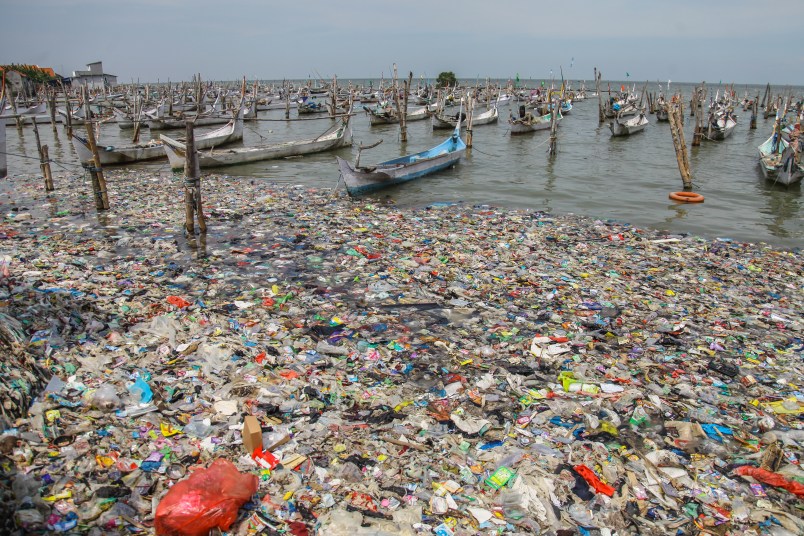
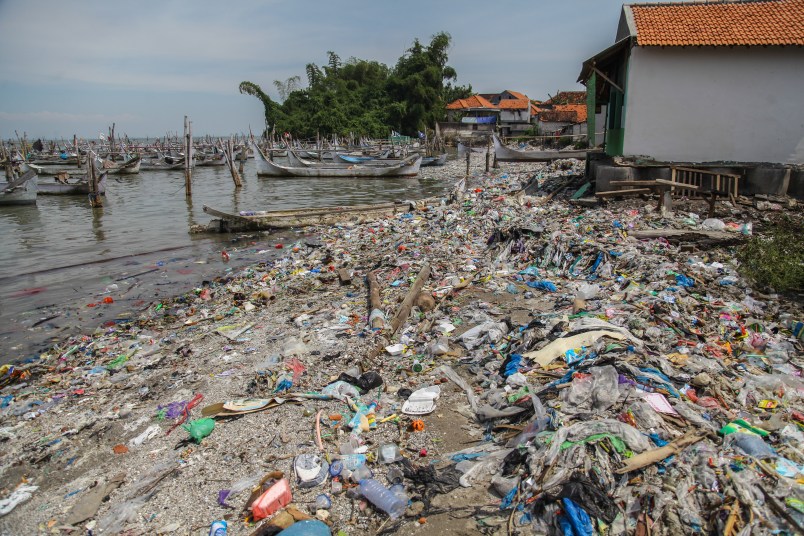
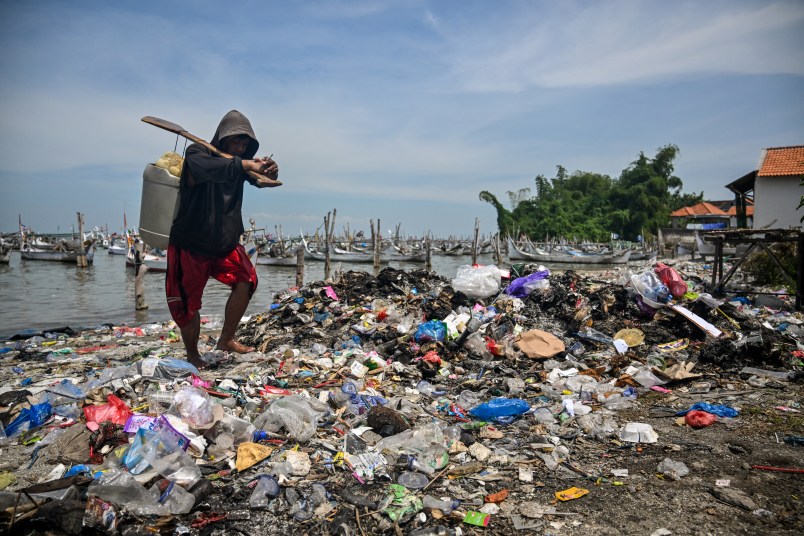
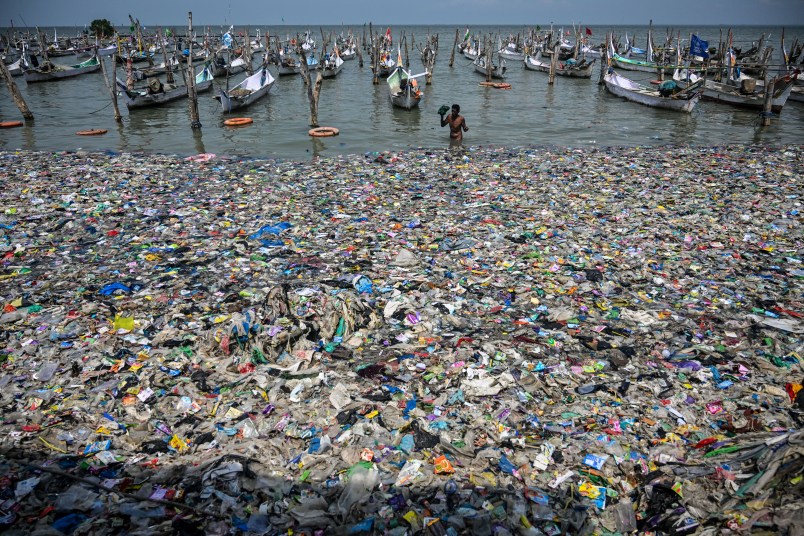
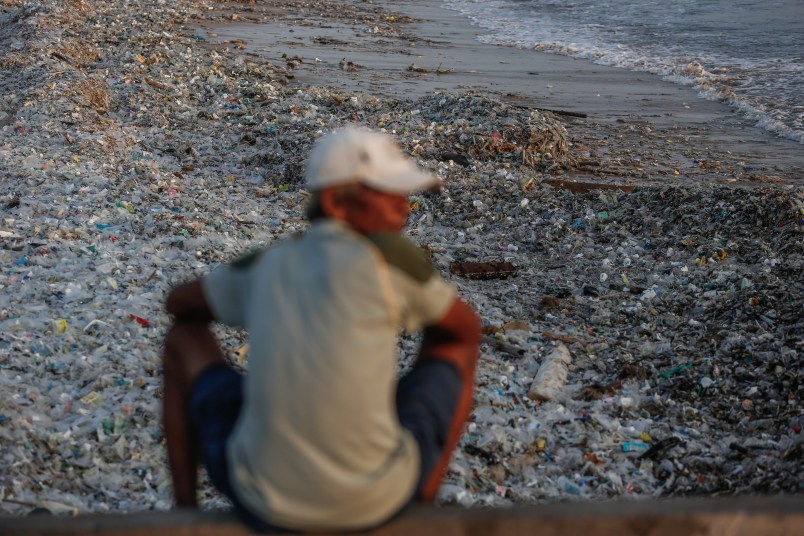
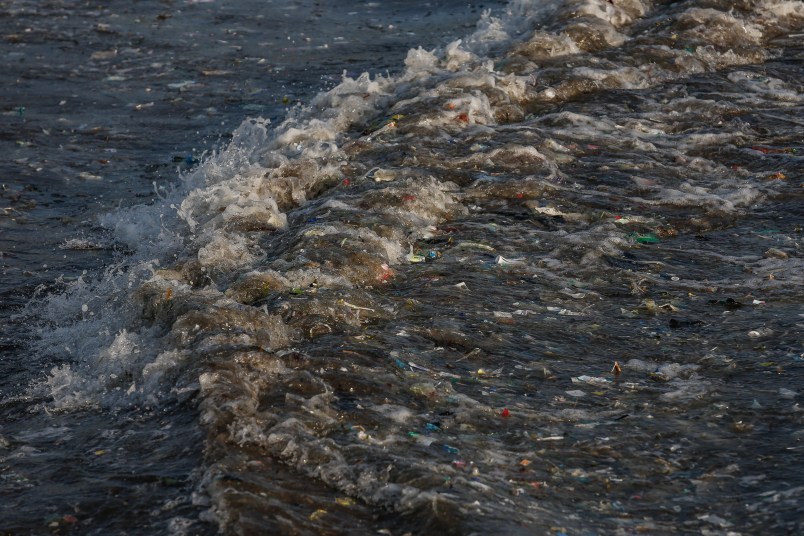
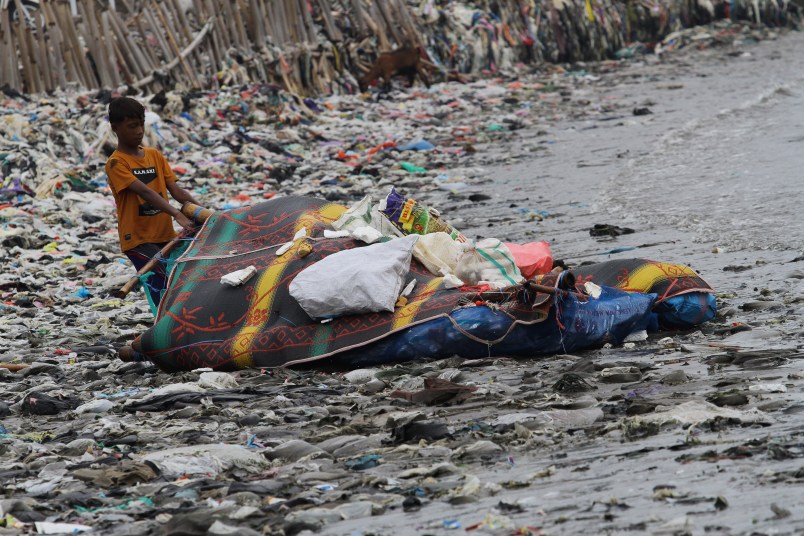
Indonesia has 61,567 miles of coastline and is usually famous for its picturesque beaches and impressive flora and fauna. But recent years have seen large amounts of trash, mostly plastic, showing up on beaches around the country. The source of the garbage is both illegal dumping and ocean currents that wash items in from other areas. This has resulted in ecosystem damage and a decline in the fish catches of local fishermen.
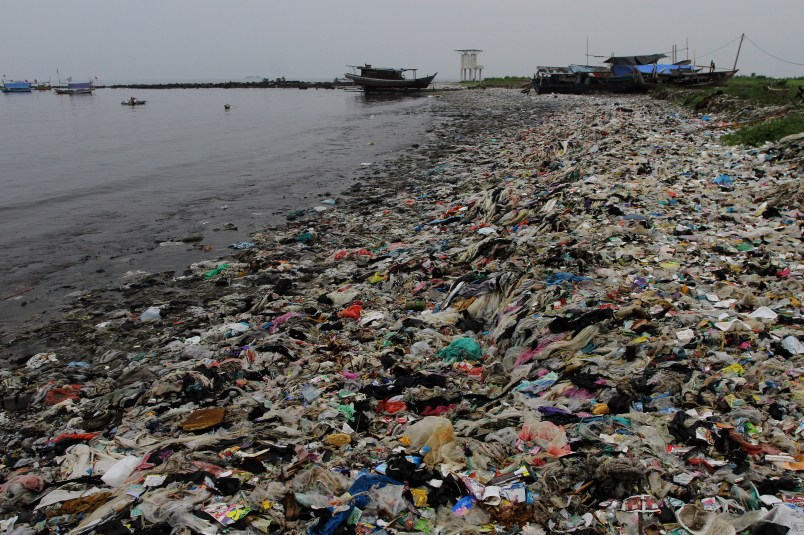
Boats docked at a beach full of trash
A number of fishing boats are docked off of a beach full of rubbish, mostly plastic, in the Kwanyar District, Bangkalan, Madura Island, Indonesia, on May 13, 2024. The rubbish, which comes not only from local residents but also from other areas due to sea currents, reflects a lack of awareness among residents who dispose of waste in rivers and seas. This has led to ecosystem damage and a decline in the fish catches of local fishermen. (Photo by Suryanto Putramudji/NurPhoto via Getty Images)
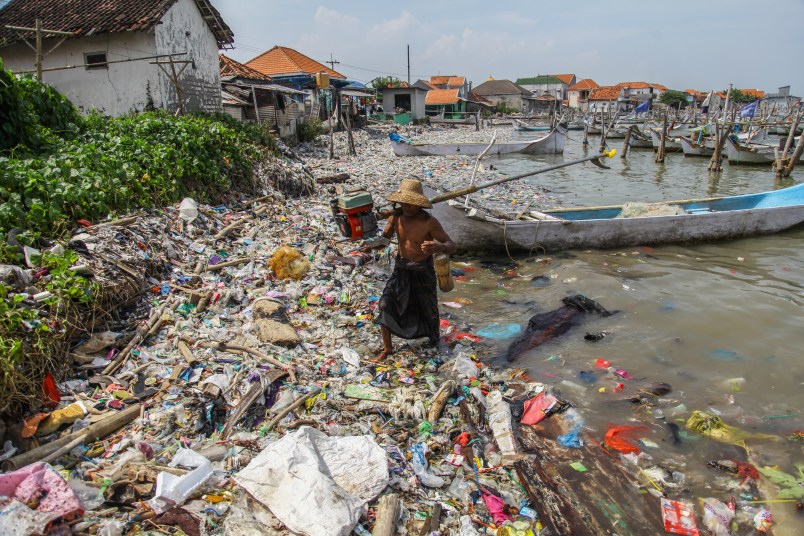
A fisherman walks over trash
(Photo by Suryanto Putramudji/NurPhoto via Getty Images)
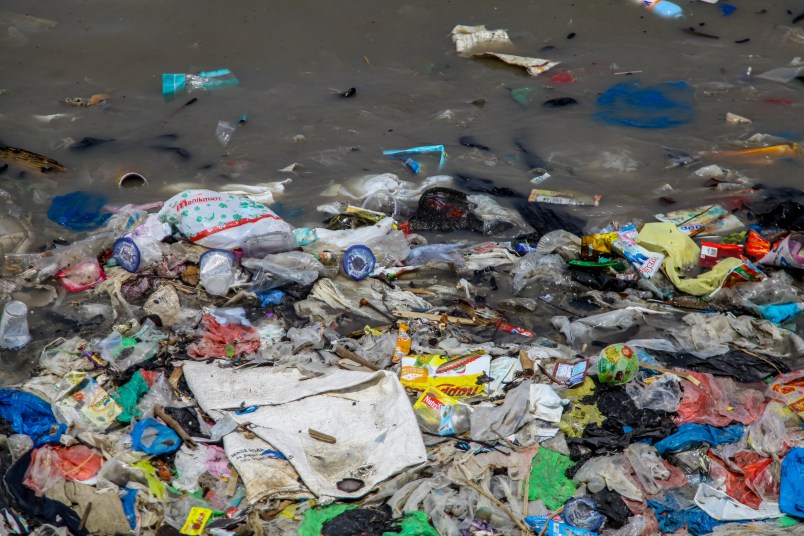
The trash consists of mostly discarded plastic
(Photo by Suryanto Putramudji/NurPhoto via Getty Images)
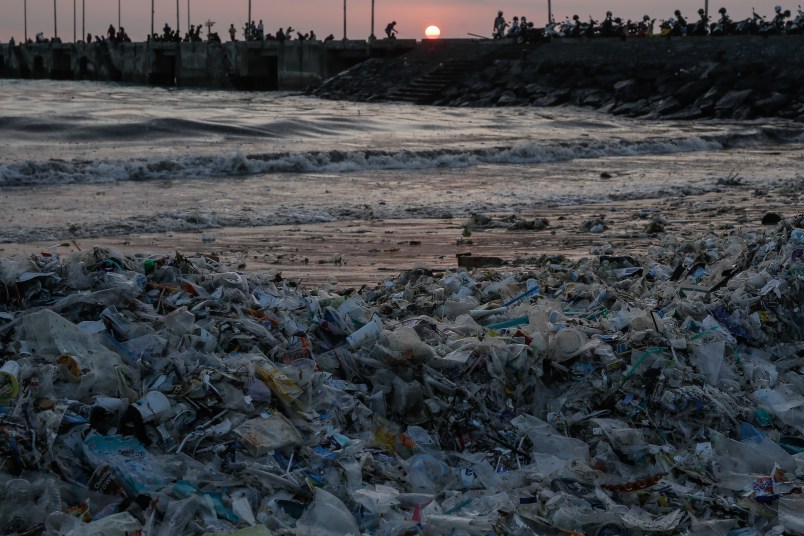
Trash washes ashore
(Photo by Suryanto Putramudji/NurPhoto via Getty Images)
A fisherman walks past trash on the beach
A fisherman walks past trash on the beach in Bangkalan, Madura Island, East Java province on May 13, 2024. (Photo by JUNI KRISWANTO/AFP PHOTO/AFP via Getty Images)
Local fishermen return to a beach full of trash
A fisherman returns to the shore amid trash on the beach in Bangkalan, Madura Island, East Java province on May 13, 2024. (Photo by JUNI KRISWANTO/AFP PHOTO/AFP via Getty Images)
Plastic waste on a beach during monsoon season
A view of a polluted beach which is filled with plastic waste during monsoon season in Kedonganan Beach, Badung, Bali, Indonesia on March 19, 2024. During the rainy season, large amount of plastic trash and debris tend to wash up on shorelines, due to illegal dumping in rivers and coastal areas, thereby worsening marine pollution. Indonesia is one of the world’s largest contributors to marine plastic pollution. (Photo by Johannes Panji Christo/Anadolu via Getty Images)
A man looks through plastic trash on the beach
A man looks through the plastic trash on a polluted shore during monsoon season in Kedonganan Beach, Badung, Bali, Indonesia on March 19, 2024. (Photo by Johannes Panji Christo/Anadolu via Getty Images)
Monsoon season brings plastic trash to the shores of Bali
(Photo by Johannes Panji Christo/Anadolu via Getty Images)
Waves of trash
(Photo by Johannes Panji Christo/Anadolu via Getty Images)
Someone tries to collect plastic trash to be recycled
(Photo by Johannes Panji Christo/Anadolu via Getty Images)
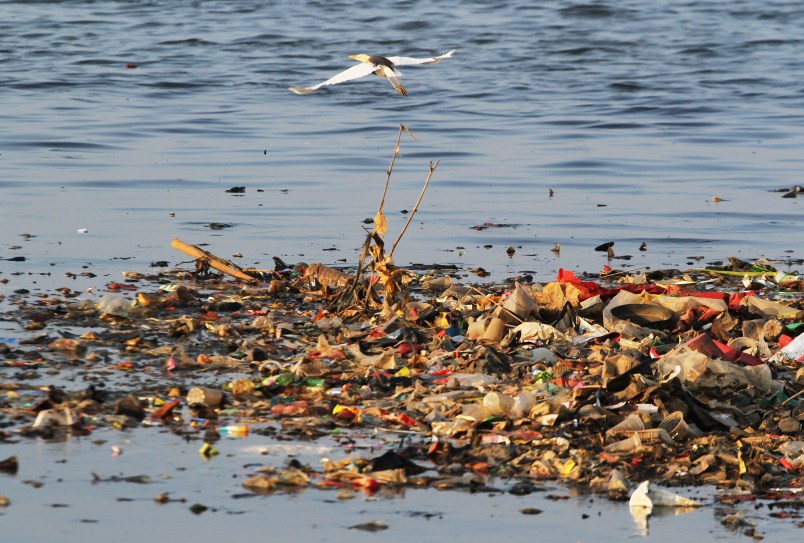
A bird flies over a beach covered in garbage
A bird flies over a beach that is full of garbage at Muara Angke Port, on the coast of Jakarta, Indonesia on July 11, 2023. According to data from the World Population Review, around 4.8 to 12.7 million metric tons of plastic enter the ocean each year. Based on the 2021 report, Indonesia is the fifth country with a contribution of 56,333 tons of marine waste each year. (Photo by Eko Siswono Toyudho/Anadolu Agency via Getty Images)
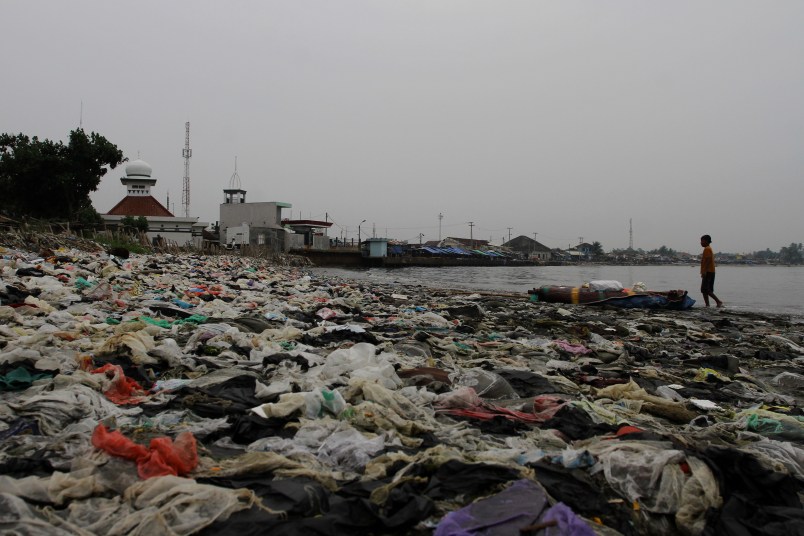
Trash piles up on a beach
A general view of Labuan Beach, showing pollution from rubbish in Teluk Village, Labuan District, Pandeglang Regency, Banten, Indonesia, on December 29, 2023. (Photo by Angga Budhiyanto/NurPhoto via Getty Images)
A child pulls refuse across a polluted beach
A child is pulling rubbish across a polluted Labuan Beach in Teluk Village, Labuan District, Pandeglang Regency, Banten, Indonesia, on December 29, 2023. (Photo by Angga Budhiyanto/NurPhoto via Getty Images)
Plastic bags can be seen in the piles of trash
(Photo by Angga Budhiyanto/NurPhoto via Getty Images)
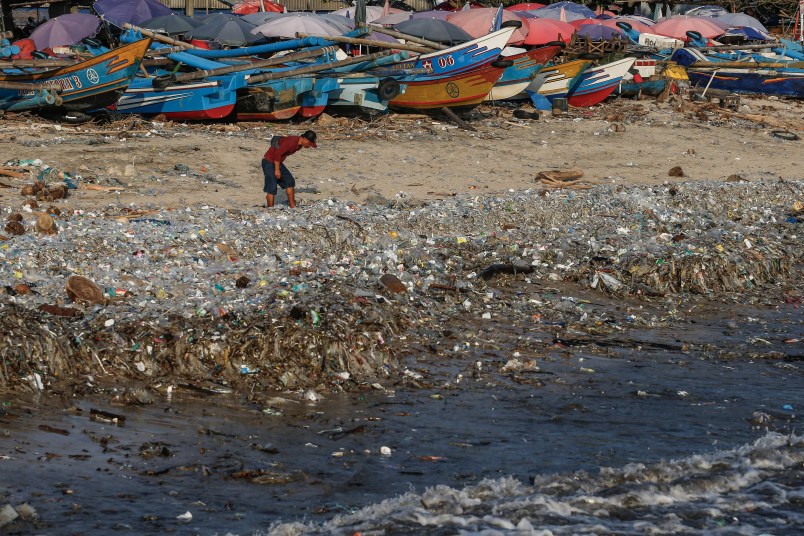
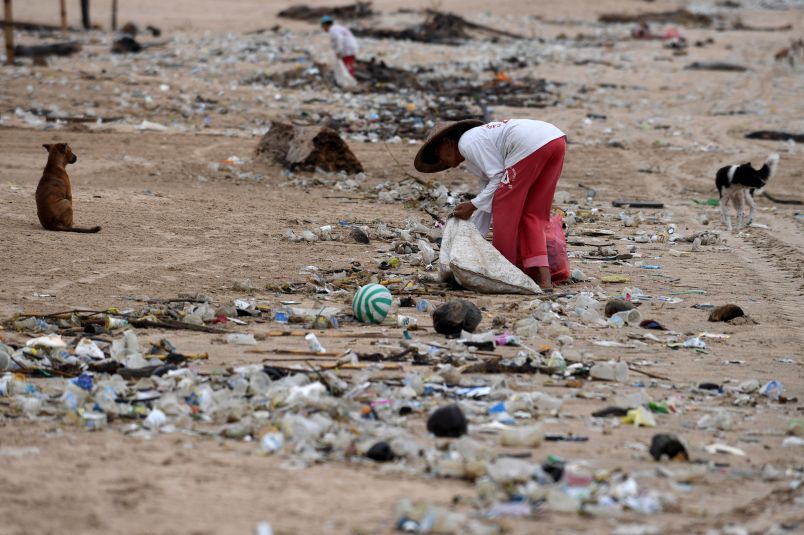
A trash collector removes plastic and other debris that have washed ashore
A trash collector removes plastic and other debris washed ashore at Kedonganan Beach, Badung regency, on Indonesia’s resort island of Bali on April 12, 2023. (Photo by SONNY TUMBELAKA/AFP via Getty Images)
Goats search for food amongst the plastic
Goats are looking for food in a pile of rubbish that litters Labuan Beach, Teluk Village, Labuan District, Pandeglang Regency, Banten, Indonesia, on December 29, 2023. (Photo by Angga Budhiyanto/NurPhoto via Getty Images)
A lot going on with the chess move by President Biden this morning to try to outflank Donald Trump on the whole presidential debate dance thing.
I should show my cards right off the bat: I don’t think made-for-TV debates are anything close to sacrosanct; the made-for-TV debates of the past several cycles have strayed far from the public service ethos they may have been originally grounded in; and I would dearly love to retire the faulty notion that “being good on TV” is an adequate proxy for being a good president.
With that out of the way, here’s what happened. Biden launched an organized strike this morning against the existing presidential commission on debates and against Donald Trump. He proposed:
(1) Two debates: One in June and one in September (plus a VP debate in July between the two party conventions)
(2) Ditching the presidential commission on debates: The two campaigns would negotiate the terms of the debates between themselves, including which networks would host them and who would moderate them.
(3) First strike: Biden’s proposal and public launch came in the form of a letter to the debate commission and this video trolling Trump:
The two most striking things about Biden’s move are (i) how self-consciously aggressive it is; and (ii) his willingness to ditch the existing presidential commission of debates.
On the first point, the aggression serves a few purposes. It’s clearly designed to take the initiative, throw Trump off balance, and keep the pressure on even as Trump is dealing with his criminal trial in Manhattan. But probably more importantly it serves as Biden’s opening bid in what will be a fairly high-stakes negotiation over the debates, so he came out strong with a list of demands and conditions about which networks can be considered, the pool of potential moderators, and the staging and setup of the debates themselves. Makes sense.
On the second point, it’s been Republicans for a long time who have most chafed against the presidential debates commission so there’s some irony in a Democratic president being the first (I think?) to part ways entirely with the existing system. In a world in which the commission had handled things well and produced debates that consistently served the broader civic good, I’d deplore the move. But no one is going to miss the compromised and TV-driven system that we’ve known for so long.
The nonpartisan Commission on Presidential Debates announced its debate schedule and venue lineup way back in November. It has bragged that it scheduled this year’s debates earlier than ever before – a nod to the dramatic changes in early and mail-in voting that have turned “Election Day” into a rolling months-long undertaking. But its first debate still wouldn’t happen until Sept. 16, the first day of voting in Pennsylvania. Biden’s proposal more fully takes into account the new election calendar, with the debates all done by the end of September.
One final point for you to consider: There’s a decent chance that the upshot of all of this is no Biden-Trump debates at all. More likely than not that they arrive at some agreement, but I’d put the odds at just barely better than 50-50. Both candidates have served as president and are known commodities. Both candidates are advanced in years, and each faces real risks of debate gaffes that only reinforce concerns about their ages. When it comes right down to it, neither is running on the premise that they need to knock the other guy off a pedestal in order to win. They’re running completely independent, self-contained campaigns in parallel with each other. All of that adds up to the debates representing an opportunity with more real risk than potential gain, so I wouldn’t be surprised if they don’t happen at all.
Would that be bad for democracy? It wouldn’t be great, but I don’t think the alternative would be some civically pure old-school debate hosted by the likes of the League of Women Voters. It would be the highly produced, carefully choreographed, ratings-driven theater that we’ve become accustomed to – and those have very little real value.
Michael Cohen Cross-Examination Begins With A Whimper
A surprisingly subdued first half of the cross-examination of Michael Cohen by Trump attorney Todd Blanche. I wish I could make more sense of it for you, but I was surprised, too, and I don’t fully understand the strategy, to the extent I even detect one.
Everyone noticed:
TPM’s Josh Kovensky: Trump Attorney Starts Off Cohen Cross With Limp Exam
Politico: Trump’s lawyer confronted Michael Cohen with a bang (and an expletive). Then things fizzled.
Rachel Maddow: Trump lawyers ‘didn’t bring it’ for Cohen cross-examination
No Trial Today
Thursday will be the only remaining day of trial this week.
Key points:
(1) Trump attorney Todd Blanche expects to take most of the day to finish cross examination.
(3) Blanche told the judge that Trump still hasn’t decided whether to testify himself (unlikely) or put on any defense. But if Trump does put on a defense, it would be Trump and a single as-yet-unidentified expert witness, Blanche said.
At this rate, I think we’re looking at closing arguments early next week, after which the jury gets the case.
Keep An Eye On This
I mentioned the other day that it looks an awful lot like Trump is coordinating surrogates to come to his defense as a workaround to the gag order but in a way that is itself a violation of the gag order. He can’t coordinate, direct or otherwise involve himself in their outside activity. Yesterday, he all but gave the game away, as Judd Legum notes, calling them his “surrogates,” praising them, and all but locking arms with them. And then there was this:
Wow. Andrew Rice says on MSNBC that yesterday during the trial he personally witnessed Trump "editing" and "making notations" to quotes his Republican allies made to the press. pic.twitter.com/99643vJkxN
Lisa Needham: Trump’s run-out-the-clock legal strategy worked
Where In The World Is Rudy Giuliani?
CNN: Arizona officials say they can’t find Rudy Giuliani to serve him with indictment notice
Politico: Giuliani bankruptcy judge rebuffs attempt to challenge $148 million judgment
2024 Ephemera
It was primary day yesterday:
MD-Sen: Rep. David Trone (D-MD) spent $60-some-odd million on the Democratic primary and was thoroughly trounced by Prince George’s County executive Angela Alsobrooks, who had the support of party leaders. She will face former Gov. Larry Hogan (R) in what will be, to Democrats’ chagrin, a closely watched general election matchup.
NE-02: Rep. Don Bacon (R) easily fended off a primary challenge from a far-right candidate who had the backing of the state GOP.
WV-01: Derrick Evans (R), who served time for the Jan. 6 attack, failed to knock off incumbent Rep. Carol Miller (R). (Rimshot, please.)
Never Forget
In an interview with ABC News, former WH Situation Room officer Mike Stiegler reveals that Jan. rioters “Came that close” to murdering Mike Pence:
“It’s important to me that we don’t forget that it did come that close. And that we did have discussions. If we lose the VP, if the… pic.twitter.com/iEfQn7jVNq
— Republicans against Trump (@RpsAgainstTrump) May 14, 2024
Justice Department prosecutors on Tuesday asked the judge who presided over former Trump White House strategist and far-right conspiracy theorist Steve Bannon’s contempt of Congress case to order Bannon to begin serving his prison sentence.
Conservatives on the 5th Circuit Court of Appeals occasionally sounded like Fox News talking heads Tuesday as they weighed whether coalitions composed of multiple minority groups are protected under the Voting Rights Act.
Axios has a new piece out today with the headline: Biden’s Polling Denial. It’s not spin, the article says. The President and his top advisors actually don’t believe his bad poll numbers. “That bedrock belief has informed Biden’s largely steady-as-she-goes campaign,” says Axios. The article notes yesterday’s NYT-Siena poll of swing states and another recent Bloomberg set of swing state polls as examples of bad polling numbers the White House refuses to believe, before then shifting gears to note that other polls actually show him doing significantly better.
The factual questions here aren’t terribly complicated and they’re not really the reason I note this article or write this post. Most polls currently show Biden just behind Trump in a tight race. Others show him either tied or just ahead. And there is a theory of the election that those polls, with a greater emphasis on high propensity voters and the concentrating effect of the final months of the campaign, will put Biden on top in November. I’ve tried to air these different arguments here in the Editors’ Blog. You can believe one or the other.
I note the article because of what it says about the group psychology of each party and the related and intertwined factor of how the political press treats those parties.
GOP Electeds Prostrate Themselves At The Altar Of Trump
Speaker Mike Johnson (R-LA) is expected to pay his respects to Donald Trump this morning by showing up at the courthouse where the former president is on criminal trial, joining a steady line of GOP electeds who have seen it as in their own political interest to make the pilgrimage to Manhattan.
The pathetic display of slavish devotion has a third world tinpot dictator feel to it – which is of course in keeping with Trump’s bogus casting of his own fate in terms of political repression by the current ruling regime.
While the GOP pols who see fit to kiss the ring are themselves a dubious collection of easily mocked figures – Sens. Tommy Tuberville (R-AL) and J.D. Vance (R-OH) among them – watching the “law and order” and “faith-based” party kneel before a criminal defendant in a case involving a porn star no less is another marker of how far things have fallen.
But when your party has unified around insurrections past and still to come, anything is possible.
Michael Cohen Cross-Examination Could Start Today
TPM’s Josh Kovensky arrived at the courthouse this morning just after 5 a.m. ET to make sure he snares a seat for Day 2 of Michael Cohen’s testimony.
Prosecutors moved swiftly through the bulk of his direct testimony Monday, and the highly anticipated cross-examination of Cohen by Trump attorney Todd Blanche could begin as early as today.
A great thread by Lawfare’s Roger Parloff on what U.S. District Judge Aileen Cannon is up to in the classified documents case.
I Missed This
Late last week, Politico published an unusual inside account of the work of the Arizona grand jury that brought indictments in the fake electors probe there:
The Arizona grand jury that recently indicted 18 people for their roles in former President Donald Trump’s scheme to subvert the 2020 election cast a far wider net than state prosecutors had publicly foreshadowed.
The panel of 16 Arizonans displayed unusual independence from the prosecutors supervising the investigation, according to a rare inside look at the secret proceedings based on interviews with eight people familiar with the probe and documents signed by a top prosecutor.
The upshot is that at least one person told my prosecutors they weren’t a target of the investigation ended up indicted within days by this very independent grand jury.
Ratfuckery, 2024 Style
TPM’s Khaya Himmelman: Far-Right Group Recruits Followers To Overwhelm Election Offices With Voter Roll Challenges
Quote Of The Day
If you threaten to harm or kill an election worker, volunteer or official, the Justice Department will find you and we will hold you accountable. The public servants who administer our elections must be able to do their jobs without fearing for their safety or their families. We will aggressively investigate and prosecute those who threaten election workers.
Attorney General Merrick Garland, at a meeting of DOJ’s Election Threats Task Force
On SACR And Extremist Ideology
Drawing in part on TPM’s work, researcher Beth Daviess takes a closer look at the Society for American Civic Renewal, focusing on its gender ideology and accelerationism.
Abortion Watch
Louisiana: Legislators are considering designating the abortion pills mifepristone and misoprostol as “controlled dangerous substances.”
Arizona: The state Supreme Court delayed until August enforcement of the Civil War-era abortion ban it revived, which may give the legislature’s repeal of the ban enough time to kick in without the ban ever being enforced.
2024 Ephemera
Primary elections are being held today in Maryland, West Virginia, and Nebraska.
MD-Sen: The most closely watched race is the Senate Democratic primary, where Rep. David Trone and Prince George’s County Executive Angela Alsobrooks will face off for the right to take on former Gov. Larry Hogan (R) in the general election. Trone, with his Total Wine & More fortune, has outspent Alsobrooks by something in the neighborhood of 10-1, an enormous $60 million in a primary. But Alsobrooks has the support of many major Democratic figures.
Democratic super PAC launches a $25 million ad buy in Wisconsin, Michigan and Pennsylvania featuring abortion rights testimonials.
Wisconsin Supreme Court signals it will overturn a 2022 decision and reinstate ballot drop boxes for absentee voting.
Where Are Senate Democrats?
House Democrats – who wield no subpoena power but understand the messaging value of hard-hitting investigations – have launched a probe of Donald Trump’s meeting last month with oil executives at Mar-a-Lago, where he implored them to funnel $1 billion to his campaign and touted it as a good investment.
More Of This, Please
An important rules change by the Federal Energy Regulatory Commission (so sexy) that is intended to ease the approval process for the massive expansion of the electrical grid necessary for the transition to a non-carbon energy economy.
We’re Still Not Talking About This The Right Way
A lot of focus in recent weeks on what is being dubbed the “insurance crisis” but which is really the climate crisis coming home to roost. Insurers, especially property insurers, are the canary in the coal mine that real estate values are artificially inflated because they don’t take into account heightened risks from climate change. Obviously that has profound implications on the real estate market, and it is deeply frustrating to homeowners, for example, not to have access to affordable property insurance. But I get the sense the public conversation is focused on building a head of steam to address the insurance piece of this complicated problem and continue to ignore the underlying causes.
David Sanborn, 1945-2024
The saxophone great has died after a long bout with prostate cancer: