This article is part of TPM Cafe, TPM’s home for opinion and news analysis. It was originally published at The Conversation.
How well can ordinary citizens exercise a political function traditionally assigned to elected legislators?
Michigan is finding out. The state has assigned the job of drawing election districts to a group of citizens with no special qualifications. Selecting government officials by lot is a procedure first employed in Athens 2,500 years ago. This experiment has produced dramatic results – as well as a court challenge.
Then as now, the 5th Circuit has had a complicated relationship with a Supreme Court that was ideologically sympathetic with the lower court. At times, the 5th Circuit was willing to go further than the Supreme Court on some issues. But the high court hesitated to rebuke the 5th Circuit.
Understanding the 5th Circuit’s work therefore can provide important insights into broader legal trends in the U.S.
If a 5th Circuit decision on the availability of the abortion drug mifepristone is upheld by the Supreme Court, it could severely curtail the ability to get an abortion. Anna Moneymaker/Getty Images
Undercutting federal agency power
The Supreme Court can handle only a limited number of cases each year, so it tries to establish general principles that lower courts can apply.
Federal appellate courts oversee the work of federal district courts that apply those general principles. Because the devil is in the details, an appellate court can interpret those principles broadly or narrowly, and in so doing can support or undermine Supreme Court rulings on a day-to-day basis.
Several recent 5th Circuit decisions threaten to undercut the power of federal agencies.
One notable example is the case of the abortion-inducing drug mifepristone. The 5th Circuit in August 2023 rejected the Food and Drug Administration’s relaxation of the conditions under which that drug can be used. That decision, if upheld by the Supreme Court, could severely curtail the ability of a woman to get an abortion. It could also portend widespread challenges to FDA decisions about the safety and effectiveness of drugs and medical devices.
The 5th Circuit suggested an alternative basis for restricting access to mifepristone. It expressed some sympathy for the plaintiffs’ broad reading of the 1873 Comstock Act, an anti-vice law, as forbidding the shipment of any “drug, medicine, article, or thing designed, adapted, or intended for producing abortion.” But that interpretation might effectively outlaw all abortions, because not only pills but virtually everything used in surgical abortions gets shipped across state lines.
Other 5th Circuit rulings that went against the federal government are also pending before the Supreme Court this term.
Among those, one notable case could eviscerate the ability of agencies to enforce regulatory laws through traditional in-house hearings. The 5th Circuit ruled that the Securities and Exchange Commission must use jury trials in federal court instead of those in-house hearings, that the statute giving the SEC discretion about using agency hearings was unconstitutional, and that the administrative law judges who preside at agency hearings were unlawfully appointed. That ruling, if it stands, could hamstring numerous agencies that enforce federal regulations via in-house hearings.
In a second case now before the U.S. Supreme Court, the 5th Circuit ruled that the Consumer Financial Protection Bureau’s funding mechanism was unconstitutional, because this agency gets its money from the Federal Reserve rather than from Congress.
These rulings are part of a striking pattern of restricting federal authority that makes the 5th Circuit distinctive among federal appeals courts across the nation.
But this isn’t the first time the 5th Circuit has stood out.
Furthering desegregation
In the wake of the Supreme Court’s landmark 1954 ruling in Brown v. Board of Education, which barred racial segregation in public schools, the old 5th Circuit compiled a courageous record in promoting civil rights.
Those judges invalidated the segregation ordinance that was a key target of the 1955-56 Montgomery bus boycott, which propelled Dr. Martin Luther King Jr. to prominence and helped to galvanize the Civil Rights Movement. The 5th Circuit even held the governor and lieutenant governor of Mississippi in contempt of court for defying desegregation orders in 1962.
The current 5th Circuit, in short, looks very different from its predecessor. That is no small irony, as the 5th Circuit sits in a courthouse named for John Minor Wisdom, one of the heroic judges of the civil rights era.
Limiting federal power
But it’s not only the 5th Circuit that has changed. So has the Supreme Court, which is now dominated by conservative justices.
The Supreme Court that decided Brown v. Board of Education wanted public schools desegregated, but the justices left implementation to federal district judges, whose knowledge of local circumstances could make the process go more smoothly. That approach too often encouraged foot-dragging and massive resistance. Still, the 5th Circuit’s persistence furthered the Supreme Court’s ultimate goal of breaking down segregation.
Today’s Supreme Court has very different priorities. Now, the justices are more interested in limiting federal power than in promoting civil rights.
Through its “major questions” doctrine, which requires clear congressional authorization for agencies to address problems that have a significant economic impact, the court has made it harder for agencies to undertake new initiatives.
The 5th Circuit these days is still promoting larger Supreme Court goals. Sometimes the 5th Circuit has gotten ahead of the justices, which might explain why the Supreme Court has reversed or limited some of the appellate court’s decisions and might do so again this year.
Then, as now, the 5th Circuit has had a symbiotic relationship with the Supreme Court. This term’s rulings will further clarify the workings of that relationship.
Rudy Giuliani opened up his finances to a bankruptcy court — and the world — for examination on Friday, revealing that among his assets are three New York Yankees World Series rings, dozens of watches, and a potential claim against Donald Trump.
After deliberating for less than three hours, the jury in the E. Jean Carroll civil trial against Donald Trump has determined that the former president must pay the writer $83.3 million in damages for defaming her in 2019 when she came forward accusing him of sexually assaulting her in the 1990s.
Kate and TPM’s Josh Kovensky chat with professor Gerard Magliocca, an expert on the disqualification clause, about what to expect in upcoming Supreme Court arguments on booting Donald Trump from the ballot.
Belaboring The Point is now on YouTube! Check out the latest video episode of the podcast here.
In the lead up to the 2022 midterm, I tried in vain to argue that Democrats needed to frame the election around a concrete promise to pass a law codifying Roe v Wade. Keep the House and the Senate and Democrats would pass a Roe law on a simple majority vote in the Senate. One of my takeaways from the 2022 election ended up being that voters to a great extent didn’t need politicians to spell it out for them. Voters understood the stakes well enough on their own and saw that abortion bans and presidential coups were all part of the same story of MAGA Republican extremism. But I have little question that making the promise more concrete and specific would have had an additional impact.
Yesterday President Biden on Twitter (and presumably via other channels) came pretty close to making that promise for the 2024 election.
This should absolutely be a centerpiece of the 2024 campaign.
In retrospect, I came into the Trump era with way too much confidence that the legal system was up to the task. The last eight years have been humbling in that regard.
As a lawyer-turned-editor, I cautioned my reporting team not to be impatient with the pace and deliberation of legal processes. These things take time. Don’t be hot-headed about it. Chill out. Let things run their course.
The sometimes plodding pace of the system is by design, more a feature than a bug. There’s an entire vernacular around the downsides of too-swift justice: “rough justice,” “lynch mob,” “show trial,” “railroaded.” The list is long.
In the early days of the Trump presidency, efforts to obtain his tax returns or enforce the Emoluments Clause were slow, clumsy, and sometimes reluctantly undertaken by Democrats in Congress. I was inclined to excuse that slowness. But as the threat mounted and become more obvious and the reaction to it failed to rise to the challenge, my own sense of urgency began to change.
When the travesties of the Trump presidency accumulated and potential accountability shifted from the political to legal realms, especially after the Jan. 6 attack, I feared that the legal system was more inclined to sweep it all under the rug than confront it. A lot of our coverage was focused on framing the Jan. 6 attack as merely the culmination of a broad, months-long conspiracy to subvert the election. While the attack on the Capitol did historic damage and finally started to stir law enforcement into action, over-focusing on the physical attack would miss the myriad other ways the election had been subverted using the powers of the executive branch.
In the years since, it has become obvious that the slowness of the legal system isn’t merely the result of a careful, deliberative adherence to the rule of law and the procedural protections necessary to do proper justice. It is also a product of a wariness in confronting Trump and his legions of supporters, an unreasonable tendency to give him the benefit of the doubt, the judiciary’s own overweening sense that it is above politics, and a fundamental failure to appreciate that a strongman who attempted to seize power unlawfully once is a threat to the very existence of the legal system itself.
When the legal system itself is under threat, it must respond with extraordinary measures that continue to protect the procedural and substantive rights of the individual defendant but girds the system against attack, prioritizes institutional self-preservation, and is self-conscious of its role as a bulwark of democracy.
Some individual jurists, like U.S. District Judge Tanya Chutkan, who only got the Trump Jan. 6 case last August, have performed admirably. The legal system as a whole has not. The former chief judge in DC warned last fall that we are “at a crossroads teetering on the brink of authoritarianism.” During the sentencing yesterday of Trump White House official Peter Navarro, U.S. District Judge Amit Mehta called bullshit on it being a “political prosecution.” Also yesterday, in the sentencing of a Jan. 6 rioter, U.S. District Judge Royce Lamberth, a long-serving Reagan appointee, let it rip:
The Court is accustomed to defendants who refuse to accept that they did anything wrong. But in my thirty-seven years on the bench, I cannot recall a time when such meritless justifications of criminal activity have gone mainstream. I have been dismayed to see distortions and outright falsehoods seep into the public consciousness. I have been shocked to watch some public figures try to rewrite history, claiming rioters behaved “in an orderly fashion” like ordinary tourists, or martyrizing convicted January 6 defendants as “political prisoners” or even, incredibly, “hostages.” That is all preposterous. But the Court fears that such destructive, misguided rhetoric could presage further danger to our country.
Six months ago, it looked like the first weeks of the new year would be dominated not by the GOP primary but by pretrial preparations for a whopping four criminal trials of Trump. The race was finally on to hold Trump to account for his cheating in the last two elections before he cheated in a third one. As we sit here at the end of January, the landscape is not what we anticipated.
The Mar-a-Lago case is almost guaranteed to happen after the election. So is the Georgia RICO case. The Jan. 6 case is stuck on pretrial appeals, with the DC Circuit and Supreme Court failing to push things along. The lesser of the four cases – the hush money case in New York – may be the only one tried before the election. Meanwhile, there’s a chance Trump will be brought down by the Disqualification Clause but no one is confident the courts will enforce that against him either.
I’ve gone from annoyed about the repeated complaints about the slowness of the system to sharing those sentiments myself to having my hair on fire that the gravity of the moment calls for so much more than the legal system is prepared to offer. In a way this a mea culpa for urging my staff over the last few years to chill out. Things have not been this urgent since the 1860s. And we’re failing.
Editor’s Note
I dispensed with the usual rundown of the day’s news to focus on the alarming lack of responsiveness from the legal system to the current threat it faces. Normal programming will resume Monday.
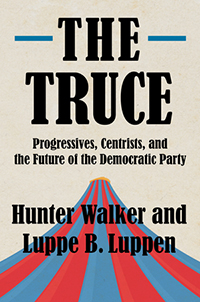
[Sponsored] An Inside Story Of The Democratic Party At A Moment Of Great Peril
The Truce, from journalists Hunter Walker (of Talking Points Memo) and Luppe B. Luppen, explores the major fault lines that define Democratic politics today and asks big questions about the future of the party. An engrossing page-turner, The Truce grapples with the dangers that threaten American democracy and the complicated cast of characters who are trying to save it.
This article is part of TPM Cafe, TPM’s home for opinion and news analysis.
Threats to our humanity, and to our democracy, come in many forms. The possibility of nuclear destruction, the natural or non-natural spread of biological toxins, and environmental threats to our planet are all existential threats to our country’s future. Now we must put the extreme radical right in the same category. Americans are increasingly turning on one another, a serious problem I have often discussed in the classroom with my graduate students and in public writing. No one understands this reality better than the communities who have been targeted by the resurgent right, which has, especially in recent years, focused its ire on LGBTQ+ Americans.
The anniversary of January 6 just passed us. It will be remembered as a clarifying moment, when the right’s most violent extremists joined together with MAGA die-hards to storm the Capitol to achieve a political end through violence. They were unsuccessful, but make no mistake: This movement did not leave with Trump’s unwilling departure from office, and the interplay between violence and politics continues to hang over our democracy. While January 6 occurred over the course of one day, every day someone in the LGBTQ+ community faces discrimination, protests, or, increasingly, violence.
In 2022, the number of anti-LGBTQ+ protests tripled, according to data from the Armed Conflict Location and Event Data Project. The rise accounted for much of the increase in U.S. far-right activity measured by the group that year. Such protests did not abate throughout 2023, either, or in these first weeks of 2024. NPR reported in June that Los Angeles-area school board meetings on inclusivity issues had prompted protests that at times turned violent; the New York Times reported in November that a far-right hate group intended to protest the Macy’s Thanksgiving Day parade because of the inclusion of nonbinary Broadway performers. These public displays of hate attract attention, but they are the tip of an iceberg: More than 36,000 people signed, at the urging of an extremist group, a petition to protest the Macy’s parade because “it will expose tens of millions of viewers at home to the liberal LGBTQ+ agenda.” While protests and petitions are forms of free speech and are protected by the 1st Amendment, the intent behind these types of activities are to stifle the freedoms of the LGBTQ+ community. The intent, simply put, is to force the LGBTQ+ community into hiding.
Protesters gather outside the Glendale Unified School District headquarters in Glendale, California, on June 20, 2023. Over 300 people gathered outside the Glendale Unified School District headquarters, as protests continued over the issue of teaching children about same-sex parents and queer issues. (Photo by DAVID SWANSON / AFP) (Photo by DAVID SWANSON/AFP via Getty Images)
The same sort of us-versus-them, anti-LGBTQ+ rhetoric has increasingly saturated Republican politics, and become common among members of Congress — including the recently elevated Speaker of the House, Mike Johnson. Johnson’s views on the LGBTQ+ community are menacing, and go back decades. In 2005, Johnson said, “if someone’s trapped in a homosexual lifestyle, it’s dangerous.” Simply put, Johnson’s rhetoric encourages his audience to see LGBTQ+ individuals as a threat, and can have the unintended effect of normalizing violence. Johnson’s op-eds have gone so far as to cast LGBTQ+ individuals as an existential threat to America, saying that “homosexuality will destroy the democratic system.” This is the language of othering — designed to stoke fears and foster behavior that motivates people to action. Johnson has never disavowed his antiquated and dangerous views, despite his new job in the presidential line of succession.
Data behind the rising tide of anti-LGBTQ+ hate in America shows it’s not just exemplified by protests and political rhetoric. Violent acts against LGBTQ+ people have also significantly increased. Last year, in California, a woman was shot and killed because she displayed a gay pride flag. Nearly one year prior, on November 19, 2022, an individual, using an AR-15 style assault rifle, opened fire on people at an LGBTQ+ nightclub in Colorado Springs, killing five and injuring 17. These incidents are not outliers. Indeed, reports released by the Institute for Strategic Dialogue and the Anti-Defamation League (ADL) found that there has been a significant rise in violence against the LGBTQ+ community in 2023.
The ADL reported that there were 350 incidents of harassment against the LGBTQ+ community between June 2022 and April 2023, and further explained that the uptick coincided with an increase in rhetoric and legislation aimed at demonizing the LGBTQ+ community. For example, failed Republican presidential candidate and Florida Governor Ron DeSantis spearheaded an initiative to revoke special business privileges to Disney because it would not comply with DeSantis’s “Don’s Say Gay” law that is aimed at prohibiting discussion on sexual orientation and gender identity. At the same time, we’ve seen extremist groups like Moms for Liberty vilify the LGBTQ+ community, taking the fight full throttle at public schools throughout the country. In Oklahoma, the recent appointment to an Education Department advisory committee of a right-wing firebrand and LGBTQ+ hating book banner, Chaya Raichik of “Libs of TikTok,” is a case study of the GOP’s efforts to exert control over education. These politicians and activists, either explicitly or tacitly, through true belief or cynical political calculation, normalize the wrongdoing of violent right-wing actors who are trying to dehumanize and erase LGBTQ+ Americans, our neighbors and friends, from our streets, schools, stores, and country.
A message reading “Thank you for standing up for what’s right” is seen among flowers at a makeshift memorial outside the Mag.Pi clothing store in Cedar Glen, near Lake Arrowhead, California, on August 21, 2023. The owner of the store, Laura Ann Carleton, was fatally shot on August 18 by a man who “made several disparaging remarks about a rainbow flag” displayed outside her store, according to the San Bernardino County Sheriff’s department. The suspect was later killed during an encounter with deputies. (Photo by Robyn Beck / AFP) (Photo by ROBYN BECK/AFP via Getty Images)
Like many right-wing causes, the growing movement against LGBTQ+ people in the U.S. isn’t really a coherent one. But there is a synergy between anti-LGBTQ+ politicians, activist groups, and fringe, violent extremists that is intensifying and may become a movement that will be difficult to confront and stop. The forthcoming 2024 election cycle and recent developments at the House of Representatives, such as the rise of a little-known political figure, Johnson, to the position of speaker of the house, are combustible ingredients that will raise threat-levels for all of us in this country, especially those in the LGBTQ+ community.
Very simply, the very extreme right in America poses an existential threat to the LGBTQ+ community, and to our democracy. Threats to the LGTBQ+ community are diffuse and varied, but they are united in one thing — blinded hatred. Politicians who traffic in the same rhetoric are playing with fire. Lawmakers at every level — federal, state, and local — need to recognize this and finally push back against the ugly tide of othering that truly threatens the tapestry of free expression and individuality, a right that every citizen should be able to peacefully enjoy.
Some threats we have no control over, like natural disasters; however, some, like voting for candidates who can make change to protect our humanity, we can control. Whatever hurts our LGBTQ+ communities hurts all of us. The 2024 elections can be the start of making positive changes to the leadership in Congress where we can replace othering with belonging while respecting and supporting our differences.
A couple tantalizing data points have made the Senate seat currently held by Sen. Kyrsten Sinema (I-AZ) look like an increasingly bright spot for Democrats amid an unquestionably tough cycle.
Texas Governor Greg Abbott (R) has done nearly everything except what his supporters on the right are praising him for: defy the Supreme Court and the Biden administration.