Battle Over Ballot Drop Boxes Rages On in Wisconsin as Officials Put Them at Center of Election Integrity Debate

This story first appeared at ProPublica. ProPublica is a Pulitzer Prize-winning investigative newsroom. Sign up for The Big Story newsletter to receive stories like this one in your inbox.

They are squat, stationary and seemingly innocuous. But ever since the high drama of the 2020 presidential election, humble drop boxes have been more than a receptacle of absentee ballots; they’ve morphed into a vessel for emotion, suspicion and even conspiracy theories.

In the battleground state of Wisconsin, especially, the mere presence of these sidewalk containers has inspired political activists and community leaders to plot against them, to call on people to watch them around the clock and even to hijack them.

They’ve been the subject of two state Supreme Court decisions, as well as legal memos, local council deliberations, press conferences and much hand-wringing.

Wausau Mayor Doug Diny was so leery of the box outside City Hall that he absconded with it on a Sunday in September, isolating it in his office. It had not yet been secured to the ground, he said, and so he wanted to keep it safe. The escapade was met with a backlash but also won the mayor some admirers online before he returned it.

“COURAGE IS CONTAGIOUS! WELL DONE SIR!” one person wrote on the conservative social media site Gettr.

As early voting for the November election begins and Wisconsinites receive their absentee ballots, they have choices on how to return them. Mail them. Deliver them in person to the municipal clerk. Or, in some communities, deposit them in a drop box, typically located outside a municipal building, library, community center or fire station.

Though election experts say the choices are designed to make voting a simple act, the use of drop boxes has been anything but uncomplicated since the 2020 election, when receptacles in Wisconsin and around the country became flash points for baseless conspiracy theories of election fraud. A discredited, but popular, documentary — “2000 Mules” — linked them to ballot stuffing, while a backlash grew over nonprofit funding that helped clerks make voting easier through a variety of measures, including drop boxes.

Residents drop mail-in ballots in an official ballot box outside of the Tippecanoe branch library on October 20, 2020 in Milwaukee, Wisconsin. (Photo by Scott Olson/Getty Images)

The movie’s distributor, Salem Media Group Inc., removed it from circulation in May and, in response to a lawsuit, issued a public apology to a Georgia voter for falsely depicting him as having voted illegally. A federal judge dismissed Salem Media Group as a defendant, but the litigation is proceeding against the filmmaker and others.

With all that fuss in the background, Wisconsin’s conservative-leaning Supreme Court outlawed the boxes in 2022. But then this summer, with the court now controlled by liberals, justices ruled them lawful, determining that municipal clerks could offer secure drop boxes in their communities if they wished.

The court’s latest ruling made clear it’s up to each municipal clerk’s discretion whether to offer drop boxes for voters. But the decision has done little to change minds about the boxes or end any confusion about whether they’re a boon to democracy or a tool for chicanery.

This year, four of Wisconsin’s largest cities are using drop boxes — Milwaukee, Madison, Green Bay and Racine. But numerous locales that offered drop boxes in 2020, including Kenosha, the fourth-largest city in the state, have determined they will not this year.

Voters have been getting mixed messages from right-wing activists and politicians about whether to use drop boxes, as the GOP continues to sow distrust in elections while, at the same time, urging supporters to vote early — by any means.

“Look, I’m not a fan of drop boxes, as is no great surprise, but if you have to have them, this is not a bad situation,” Catherine Engelbrecht, founder of True the Vote, which has fostered doubt about election integrity and helped inspire “2000 Mules,” said on a video posted to social media on Sept. 30. It showed her giving a brief tour of a drop box in Madison, Wisconsin’s capital and a bastion of Democrats.

With the camera trained on one of the boxes, Engelbrecht extolled that “the slot is really small, so that’s a good thing,” and that “most of these drop boxes appear to be close to fire stations,” which she also declared a good thing. About a week later, she wrote in a newsletter that True the Vote had collected exact drop box locations statewide and was working to arrange livestream video feeds of them.

Unlike in 2020 when Trump warned against the use of absentee ballots, this year he is urging supporters to “swamp the vote.” And the Wisconsin Republican Party is not discouraging voters from using ballot drop boxes if they are available in their community and are secure.

Still, Wisconsin’s GOP candidate for the U.S. Senate, Eric Hovde, has urged citizen surveillance brigades to watch the boxes. “Who’s watching to see how many illegal ballots are being stuffed?” Hovde told supporters in July, according to a recording of his remarks obtained by The Washington Post. “Look, we’re probably going to have to have — make sure that there’s somebody standing by a drop box everywhere.”

Most boxes have security cameras trained on them. Those surveillance tapes could be used as purported evidence in legal cases if Trump loses on Nov. 5.

Already, Engelbrecht has filed a public records request with the Dane County Clerk’s Office for “copies of video recordings from security cameras used to surveil all exterior and interior ballot drop boxes in Dane County for the November 2024 Election.” The county, whose seat is Madison, does not have access to camera footage, which is kept by municipalities, the county clerk told ProPublica.

After this year’s state Supreme Court ruling allowing the drop boxes, the Wisconsin Elections Commission issued guidance to the state’s roughly 1,800 municipal clerks recommending more than a dozen security practices related to the boxes.

The instructions include that they be “affixed to the ground or the side of the building,” “sturdy enough to withstand the elements,” “located in a well-lit area,” “equipped with unique locks or seals” and “emptied often.”

The commission recommended that clerks keep a record of the times and dates of retrieval, number of ballots retrieved and the names of the people doing the retrieving.

It also referred clerks to federal guidelines.

But even with updated guidelines in place and ballot harvesting prohibited in Wisconsin (individuals can only submit their own ballot, unless helping a disabled person), concerns persist.

Wausau Mayor Doug Diny removed the ballot box outside City Hall and brought it to his office. (via Doug Diny)

In August in Dodge County, some 60 miles northwest of Milwaukee, the sheriff, Dale Schmidt, emailed three town clerks, telling them he had “serious concerns” about drop boxes, according to records obtained by the news site WisPolitics. “I strongly encourage you to avoid using a drop box,” he wrote. The sheriff asked the clerks numerous questions about the boxes, explaining that: “Even if set up the best way possible to avoid the potential for fraudulent activity, criminal activity many times finds ways to subvert even the best plans.”

Two of the clerks — from the towns of Ashippun and Beaver Dam — replied to the sheriff that they would not use them and the clerk from Hustisford told Wisconsin Public Radio that, while she received Schmidt’s email, the town board had already decided against using a drop box out of security concerns. In an email to ProPublica, Schmidt said, “No one was intimidated into choosing not to use the boxes and none of them had heartburn over not using them.”

Brittany Vulich, Wisconsin campaign manager for the nonpartisan voting rights group All Voting is Local, is bothered by how mayors, council members and other officials are seeking to influence these decisions. She notes that municipal clerks — the vast majority of whom are women — are the top election officials in each municipality.

“It’s the undermining of their authority. It’s the undermining of their office,” she said. “It’s the undermining of their autonomy to do their job and to make that decision on whether to use drop boxes or not. And that is what is very alarming.”

Other towns have also balked.

In the city of Brookfield, the Common Council took up a resolution Aug. 20 and voted 10-4 not to have a drop box after reviewing a memo by City Attorney Jenna Merten who found the recommended precautions burdensome.

“The guidance states that for unstaffed 24-hour ballot drop boxes, the City would need a video surveillance camera and storage of the video footage, as well as decals, extra keys and security seals,” she wrote. “Removing the ballots from the drop box would require at least two people and the completion of chain of custody logs.”

During the debate, Alderman Gary Mahkorn, an opponent of drop boxes, argued that they served a purpose during the COVID-19 pandemic but then “became a hugely political issue, and that’s what makes me want to, you know, puke in a way.” He worried that “the further we get away from people trusting our elections, the more our democracy is at stake.”

Instead of having drop boxes, the city will have extended voting hours, 7 a.m. to 6 p.m., most weekdays during in-person absentee voting for the two weeks prior to the election.

In Wausau, the box that Diny took to his office is back, bolted to the ground and being used for early voting.

At first, Diny resisted pressure from the city clerk and members of the City Council to return it. The clerk, Kaitlyn Bernarde, reported the matter to the Marathon County District Attorney’s Office and the state elections commission. And Diny arranged to have the clerk reclaim it.

The Wisconsin Department of Justice is investigating. There have been no charges. Diny told ProPublica he believes he did nothing wrong, saying: “None of this was done in a nefarious, secret way.”

At a City Council meeting on Tuesday night, Diny attempted to force a vote on allocating additional funds for drop-box security. But the council showed no interest.

During the public comment period, residents both praised and lambasted the mayor. One local resident rose to say, “Arguing about a box is dumb.”

Jackson Steps Back Into Her Lonely Role And Breaks The Fourth Wall

Hello, it’s the weekend, this is The Weekender ☕

Justice Ketanji Brown Jackson, since she joined the Court, has taken on a singular, likely uncomfortable mantle. She’s often the only one willing to relitigate fights already lost to the conservative supermajority. Often, she does this alone, either out loud or in writing. 

Continue reading “Jackson Steps Back Into Her Lonely Role And Breaks The Fourth Wall”

A Short Note on Political Betting Markets

Recently a reader asked me why I focus on polls rather than political betting markets for insights into the race and whether I thought polls were more reliable. I was honestly baffled by the question. To me this was like asking whether I thought a scale was a better way to measure weight than dead reckoning. And I’m not trying to be critical of the reader, who is probably reading this. I gave him my answer and we had a good exchange. But I thought it was worth sharing my thoughts on this question.

My analogy about scales is certainly imperfect in a number of ways, just as polls are imperfect. Indeed, it isn’t even really a question of which is better. The most important thing to understand about the relationship between polls and political betting markets is that the latter is largely downstream of the former. Most bets in political betting markets are driven by people looking at polls and betting accordingly. So by definition they can’t be better. Because the bets are derived from the polls.

But there are a few other points that are worth noting and which are worth considering in a broader context.

Continue reading “A Short Note on Political Betting Markets”

Yes. Political Journalism Remains Wired for the GOP.

I heard from a reader yesterday who saw one of the country’s top political journalists give a public presentation about the race. The run-down I got of that event crystallized something I’ve been giving a lot of thought to over the last few months and writing about here and there. At the elite level, political journalists have a basic contempt for Democrats. It’s not even very concealed because in a way it’s hardly even recognized as such. This continues to be the case despite the fact that most of the people I’m talking about, if they vote, probably vote for Democrats. They are socio-economically and culturally, if not always ideologically, the peers of Democrats. We often confuse cosmopolitan social values for liberalism. If anything, this basic pattern has become more the case over the last decade. These people are highly educated. They are affluent. They are the creatures of the major cities.

Are they secretly rooting for Donald Trump? Hardly. Or at least not in the great majority of the cases. Trump is a tiger on the savanna, dangerous but also fascinating and above all alien. That’s why the notorious rustbelt diner interview stories were and are such a staple. They’re safaris. It defines the coverage, and in ways seldom helpful for Democrats in electoral political terms.

Continue reading “Yes. Political Journalism Remains Wired for the GOP.”

How Republicans Thwarted An Attempt To Streamline A Crucial State’s Vote Count

Late into election night 2020, Donald Trump emerged with a message.

He was ahead in Pennsylvania, he said, declaring that it was “not close,” and that “with 64 percent of the vote in, it’s going to be almost impossible to catch.” There was one solution, Trump assured the country, and everyone, he said, agreed on it: “We all want voting to stop.”

“We don’t want them to find any ballots at four o’clock in the morning and add them to the list,” he proclaimed. 

Contra the then-President’s wishes, Pennsylvania duly completed the rest of its vote count. Biden emerged as the winner by more than 80,000 votes.

But that multi-day period of delay in confirming the final result gave Trump a critical opportunity to lob his farcical claims of voter fraud at the public, seizing on a “red mirage” in which early results trended more Republican when compared to later-arriving Democratic results. 

Next month, the country’s largest and most important swing state will likely repeat that delay. Pennsylvania Republicans have for the past four years blocked an easy fix that could allow the state to complete the count in as fast as a day, holding it hostage with a demand for strict voter ID requirements.  

The fix comes down to pre-canvassing, the obscure but necessary process that allows election workers to verify the outside envelope of mail-in and absentee ballots before an election. In Pennsylvania, unlike many other states, officials are not allowed to begin that process until 7 a.m. on Election Day. In a state which, since 2019, has had expansive mail-in voting it’s a recipe for long delays and a prolonged lack of clarity around the result. And while that manifests in anxiety for most of the country, for Trump, it’s an opportunity: he can use the time, as he did in 2020, to claim any loss is illegitimate. 

Delays, Conspiracy Theories and a Legislative Stalemate

Experts, politicians and local voting officials agree on the solution to this: Other states give poll workers more time — weeks, in some cases — to pre-canvass the surge of mail-in ballots. A simple legislative fix could see Pennsylvania provide a result hours, not days, after polls close. Florida and other GOP-leaning states have adopted similar solutions.

But instead, state Republicans have held legislation to make the fix hostage with a demand of their own: requiring voter ID for elections. It’s a significant stalemate amid a year-long volley of lawsuits asking courts to shape the playing field of the 2024 election, with the Republican National Committee joining in a lawsuit that seeks to deprive voters of the ability to fix errors in the information placed on the outside envelope of a mail-in ballot. 

That GOP stonewalling has left Pennsylvania’s canvassing procedures unchanged, with the same 2020 delay likely to repeat itself in November. 

Donald Trump speaks on election night in the East Room of the White House. (Photo by MANDEL NGAN/AFP via Getty Images)

Yet the state legislature has succeeded in making another post-2020 fix: banning “Zuckerbucks,” a component of a 2020 Stop the Steal conspiracy theory which laid Trump’s defeat at the feet of Facebook founder Mark Zuckerberg. Per the conspiracy theory, which is byzantine — but relatively more grounded than fellow-traveling 2020 fantasies like ItalyGate — Zuckerberg rigged the election by contributing to a nonprofit, which then provided grants to help county election offices cope with administering the 2020 election. Per the new law, passed in 2022, it’s a crime for any non-governmental entity to fund Pennsylvania election operations. 

“There are a lot of people who just focus on the conspiratorial allegations about how elections are run without knowing anything about how things actually happen,” Bob Harvie, a Democratic commissioner for Bucks County, Pennsylvania, told TPM. “I would not put it past some people who are elected officials in Harrisburg to just want this system to fail, or to at least look like it’s failing, or at least allow them to point at it and say it’s failing.”

After the 2020 election, Pennsylvania legislators did what many law-making bodies do to address a problem: They created a bipartisan commission to review questions around the election, and make recommendations. In a 2022 report, the commission recommended that the state speed up its vote-counting by passing a law that would give county offices two weeks to conduct a pre-canvass.

In 2020, the delay caused by the lack of a pre-canvass helped set the stage for Trump to muddy the waters around the election result. After unofficial results took days to come in in several counties in Pennsylvania, Trump used the delay to say that Democrats were taking the time to tamper with the results. It was an obvious lie, but it provided early fodder for Trump’s attempt to stay in power and to overturn his 2020 defeat. 

“We could be getting ballots ready today to be scanned and input and counted on Election Day, but because the law doesn’t allow us to do anything, everything waits until Election Day,” Lisa Deeley, a city commissioner for Philadelphia who helps oversee voting, told TPM. “It’s unfortunate that the voters are caught in the middle because what it’s doing is it’s having a really negative impact on people’s perception and feelings about the integrity of elections — because the longer they have to wait, it just brings worry and wonder into people’s minds.”

Still, the 2024 count will likely take less time than 2020. The COVID pandemic contributed to around half of Pennsylvania’s voters avoiding in-person voting that year; election officials estimate only a third will avail themselves of voting by mail in 2024. Poll workers can, this election, use an electronic poll book to check voters, and the length of determining any winner will depend on how close the result is. 

Both parties have proposed bills that would allow pre-canvassing to begin earlier. Republicans have met Democratic bills with no votes, calling for voter ID; former Gov. Tom Wolf (D) in 2021 vetoed a GOP voter ID bill that included a five-day pre-canvassing period.

“You can get votes to do that from the right, but only if you mandate voter IDs,” Harvie, the Bucks County commissioner, told TPM. 

And so, with weeks to go before Election Day, the most significant legislative change to elections in Pennsylvania is one rooted in years of conspiracy-mongering from the GOP: Pennsylvania election offices can no longer accept outside money. 

Election workers count ballots on November 04, 2020 in Philadelphia, Pennsylvania. Photo by Spencer Platt/Getty Images)

It’s an odd shift, and one that came almost entirely in response to the Zuckerbucks theory. Since 2020, Trump and other Republicans have said that a $400 million contribution that Zuckerberg made to keep election offices running during the COVID pandemic was, in fact, a stalking horse for its true purpose: a Democratic get-out-the vote operation, run by Zuckerberg-funded election officials themselves.

GOP legislators pushed a law to criminalize outside funding of election operations in the state; Democrats signed on to the bill with a proviso that state government provide counties with optional election grants. 

“Nobody should want a private, partisan arms race to underwrite government-led get-out-the-vote drives in heavily Democratic or Republican towns. Mr. Zuckerberg says he doesn’t intend to reprise his Covid largesse, but lawmakers are reasonably acting to ban it because other billionaires are likely to try,” thundered the Wall Street Journal after the law’s passage. “The bad news begins with the fact that Pennsylvania still won’t let officials preprocess mail votes before Election Day.”

Just Throw Out The (Mostly) Democratic Votes

Meanwhile, another set of related fights has played out in the courts. Republicans have had mixed results in their other attempts to make voting — particularly voting by mail, which skews Democratic in Pennsylvania — more difficult. 

For years, voting groups — often joined or opposed by the national Democratic and Republican committees, respectively — have wrestled with Pennsylvania’s election administrators over the exterior envelope of absentee ballots. Voters must date the envelope, despite the fact that the date is useless; administrators don’t use it for anything, including determining whether the ballot was sent on time. 

This spring, the Third Circuit Court of Appeals ruled that ballots missing the date, or having an incorrect one, must not be counted. The panel reversed a district court, which had found that the requirement violated the Materiality Provision, a section of the Civil Rights Act meant to protect voters from having their ballots being tossed out for small, technical reasons. The full Third Circuit declined to hear the case en banc.

(Photo by GEORGE FREY, KENA BETANCUR, JASON REDMOND, JEFF KOWALSKY/AFP via Getty Images)

The plaintiffs sought help at both the U.S. and state Supreme Court. The PA Supreme Court, dominated by Democrats, declined to change voting laws so close to the election (absentee ballots had already been sent out to Pennsylvania voters). The U.S. Supreme Court, with its inconsistent notions about when is too soon to intervene in election administration, has yet to act on the plaintiffs’ petition for certiorari. 

Under the status quo, thousands of timely sent ballots will near-certainly be thrown out.

“In the 2022 general election, county boards of elections in Pennsylvania refused to count at least 10,500 timely-received mail ballots based solely on missing or purportedly ‘incorrect’ handwritten dates on the outer return envelope,” the plaintiffs wrote in their petition to the Supreme Court.

There’s a reason the Republican National Committee, National Republican Congressional Committee and Republican Party of Pennsylvania joined this case on the side of the election administrators: In Pennsylvania about three-fourths of mail-in ballots are typically cast by Democrats.

Republicans will be less thrilled with another decision the state Supreme Court made the same day earlier this month: It will not take up the Republicans’ challenge to the “notice-and-cure” process, where voters are informed of disqualifying mistakes on their ballots and given the chance to fix them. There is a patchwork of those policies across the commonwealth; some counties let voters cure their ballots, others don’t even notify them about disqualifying mistakes.

A similar challenge to the curing process is wending its way up through state courts, though the court expressed disinclination to change the rules so close to the election in its recent orders. 

The overall picture is a level of delay likely to mimic that which the country experienced in 2020, for largely the same reasons. It’s the result of conscious policy choices, both aimed at making voting more difficult and at keeping the window in which one of the largest swing states does not report its results open for as long as possible. 

Lisa Schaefer, executive director of the county commissioners association of Pennsylvania, told TPM that it all manifests in tremendous pressure on individual officials. 

“We’re going to be running not only the in-person election, but also processing those mail-in ballots on Election Day,” she said. “And that takes time and that takes resources.” 

How Mainstream Climate Science Endorsed The Fantasy Of A Global Warming Time Machine

This article is part of TPM Cafe, TPM’s home for opinion and news analysis. It was originally published at The Conversation.

When the Paris agreement on climate change was gavelled into being in December 2015, it briefly looked like that rarest of things: a political victory for climate activists and delegates from the poorest regions of the world that, due to colonization by today’s wealthy nations, have contributed little to the climate crisis — but stand to suffer its worst ravages.

The world had finally agreed an upper limit for global warming. And in a move that stunned most experts, it had embraced the stretch target of 1.5°C, the boundary that small island states, acutely threatened by sea-level rise, had tirelessly pushed for years.

Or so, at least, it seemed. For soon, the ambitious Paris agreement limit turned out to be not much of a limit at all. When the Intergovernmental Panel on Climate Change (or IPCC, the world’s foremost body of climate experts) lent its authority to the 1.5°C temperature target with its 2018 special report, something odd transpired.

Nearly all modeled pathways for limiting global heating to 1.5°C above pre-industrial levels involved temporarily transgressing this target. Each still arrived back at 1.5°C eventually (the deadline being the random end point of 2100), but not before first shooting past it.

Scientists responsible for modeling the response of Earth’s climate to greenhouse gas emissions — primarily caused by burning fossil fuels — called these “overshoot” scenarios. They became the dominant path along which mitigating climate change was imagined to proceed, almost as soon as talk of temperature limits emerged.

De facto, what they said was this: staying below a temperature limit is the same as first crossing it and then, a few decades hence, using methods of removing carbon from the atmosphere to dial temperatures back down again.

From some corners of the scientific literature came the assertion that this was nothing more than fantasy. A new study published in Nature has now confirmed this critique. It found that humanity’s ability to restore Earth’s temperature below 1.5°C of warming, after overshooting it, cannot be guaranteed. Many impacts of climate change are essentially irreversible. Those that are might take decades to undo, well beyond the relevant horizon for climate politics. For policy makers of the future, it matters little that temperatures might eventually fall back again; the impacts they will need to plan for are those of the overshoot period itself.

The rise of overshoot ideology

Even if global average surface temperatures are ultimately reversed, climate conditions at regional levels might not necessarily follow the global trend and might end up different from before. Delayed changes in ocean currents, for instance, could mean that the North Atlantic or Southern Ocean continue warming while the rest of the planet does not.

Any losses and damages that accumulate during the overshoot period itself would of course be permanent. For a farmer in Sudan whose livestock perishes in a heatwave that would have been avoided at 1.5°C, it will be scant consolation to know that temperatures are scheduled to return to that level when her children have grown up.

Then there is the dubious feasibility of planetary-scale carbon removal. Planting enough trees or energy crops to make a dent in global temperatures would require whole continents of land. Direct air capture of gigatons of carbon would consume prodigious amounts of renewable energy and so compete with decarbonization. Whose land are we going to use for this? Who will shoulder the burdens for all this excess energy use?

A view of a lionfish near the Karaburun Coast, which is know for its artificial and natural reefs and seagrass meadows. Coral reefs face permanent destruction. (Photo by Lokman Ilhan/Anadolu via Getty Images)

If reversal cannot be guaranteed, then clearly it is irresponsible to sanction a supposedly temporary overshoot of the Paris targets. And yet this is exactly what scientists have done. What compelled them to go down this dangerous route?

Our own book on this topic (Overshoot: How the World Surrendered to Climate Breakdown, published last week by Verso) offers a history and critique of the idea.

When overshoot scenarios were summoned into being in the early 2000s, the single most important reason was economics. Rapid, near-term emissions cuts were deemed prohibitively costly and so unpalatable. Cost optimisation mandated that they be pushed into the future to the extent possible.

The models for projecting possible mitigation trajectories had these principles written into their code and so for the most part could not compute “low” temperature targets like 1.5 or 2°C. And because modelers could not imagine transgressing the deeply conservative constraints that they worked within, something else had to be transgressed.

One team stumbled upon the idea that large-scale removal of carbon might be possible in the future, and so help reverse climate change. The EU and then the IPCC picked up on it, and before long, overshoot scenarios had colonized the expert literature. Deference to mainstream economics yielded a defense of the political status quo. This in turn translated into reckless experimentation with the climate system. Conservatism or fatalism about society’s capacity for change flipped into extreme adventurism about nature.

Time to bury the time machine

Just as the climate movement scored an important political victory, compelling the world to rally behind an ambitious temperature limit, an influential group of scientists, amplified by the world’s most authoritative scientific body on the subject, effectively helped water it down. When all is said and written about the post-Paris era, this surely should stand as one of its greatest tragedies.

By conjuring up the fantasy of overshoot-and-return, scientists invented a mechanism for delaying climate action and unwittingly lent credibility to those (and they are many) who have no real interest in reigning in emissions here and now; who will seize on any excuse to keep the oil and gas and coal flowing just a little longer.

The findings of this new paper make it perfectly clear: There is no time machine waiting in the wings. Once 1.5°C lies behind us, we must consider that threshold permanently broken.

There then remains only one road to ambitious mitigation of climate change, and no amount of carbon dioxide removal can absolve us of its inconvenient political implications.

Avoiding climate breakdown demands that we bury the fantasy of overshoot-and-return and with it another illusion as well: that the Paris targets can be met without uprooting the status-quo. One limit after the other will be broken unless we manage to strand fossil fuel assets and curtail opportunities for continuing to profit from oil and gas and coal.

We will not mitigate climate change without confronting and defeating fossil fuel interests. We should expect climate scientists to be candid about this.

This article is republished from The Conversation under a Creative Commons license. Read the original article.

The Conversation

What It Looks Like When One Side Rejects Democracy

A lot of things happened. Here are some of the things. This is TPM’s Morning Memo. Sign up for the email version.

When Democracy Itself Is On the Ballot, We’ve Already Lost

The last few weeks have been a particularly strange stretch in a campaign year that is unlike anything we’ve ever experienced.

The country is poised at a great fork in the road, with a historically significant decision to be made between democracy or authoritarianism, pluralism or cultism, the rule of law or Trumpian retribution. Yet the national political conversation, the news coverage of it, the pace of daily events doesn’t seem to be rising to the momentousness of the occasion.

It was different in the tumultuous summer of two attempted assassinations against Trump, Biden’s surprise withdrawal from the race, the Supreme Court’s immunity decision, and the political conventions. That period felt as historic as the decision voters would make in November. But since then, things have settled into a odd limbo, like we’re all waiting out the clock until Election Day, resigned that a sufficient number of our fellow citizens may in fact decide to ditch the American experiment as we know it, imperfect though it’s been, in favor of some kind of gaudy neofascist kleptocracy.

In some respects, once Harris replaced Biden and took the doubts about his age and fitness off the table, the election became a referendum on Trump. And what, really, is there left to say about Trump? Everyone who pays any attention to politics long ago made up their minds. All that’s left to do is the expensive work of trying to make sure those people actually cast their votes while also trying to capture a slice of the hapless folk who after all these years still haven’t made up their minds about Trump. In the meantime, everything else is frozen in place until a decision is made on whether democracy is the way to go.

Compiling Morning Memo each day has been harder in recent weeks than ever before, not because there is no news but because there’s little that seems to capture the present moment in full, which has forced me to think hard about why, instead of building to a crescendo in November, we seem to be slouching toward a potential second coming of Trump.

I don’t have an especially satisfying global answer, but there are some dynamics that contribute to this unpleasant sensation that we’re walking eyes wide open into the abyss.

It is a mark of the poor health of our democracy that democracy itself is on the ballot at all. A choice between democracy or not democracy isn’t a choice but an existential threat that doesn’t sustain or nourish civic life. The social compact has already been broken when we can’t agree that free and fair elections are a universal goal or that we abide by the results of those elections or that the rule of law should apply equally to everyone. We can’t even agree on whether an auto-coup by a sitting president is a good or a bad thing – or a thing at all.

To put a finer point on it: While we should hail the self-sacrifice of Republican Never Trumpers for forgoing their own political ambitions in service of defeating Trump and upholding the rule of law, something is fundamentally broken when it requires a coalition that ranges from AOC to Liz Cheney to elect a pro-democracy candidate. Democracy is designed to mediate the differences among those who believe in democracy, not resolve the conflict over whether to have democracy at all.

These kinds of dynamics – and the presence of Trump and MAGA Republicans – skew public discourse in ways that I’m not sure we fully recognize let alone understand. I could debate with Liz Cheney til the cows come home on the proper role of government, on how to fine tune the balance between liberty and equality, on where the rights of the individual should yield to the common good, and on more mundane topics like health care policy, the energy transition, and foreign affairs. But those are not the debates anyone is having.

For much the past eight years, and especially in the last several months, the long-running debates that form a through line for American democracy have been sidelined by the existential threat posed by Trump and Trumpism. So while there is honor in linking arms with former foes to unite in defense of the very democracy that allows us to argue these finer points with each other, there is much to mourn in what we have already lost: years of some the most pressing issues we face relegated to secondary or tertiary significance; vibrant and essential public debates left to molder while we confront the more immediate threat; time, energy, and resources diverted from supporting the best of who we are to fend off the worst of who we can be.

The current moment is so strange and attenuated in part because the robust public debate we’re accustomed to is shorn of any real meaning when one party to that debate doesn’t give a fuck about debating. You can’t debate democracy with people who don’t believe in democracy, or debating, or empirical evidence, or anything approximating truth or reality.

Most of political journalism fails to meet the moment because it has chosen to maintain – or is unable to break free of – the illusion that the 2024 campaign is another in the long line of great quadrennial public debates engaged in mostly good faith by two sides seeking to coalesce the will of the people around their preferred vision for the country. It’s nowhere more painfully apparent than watching the TV networks continue to try to competitively exercise their convening authority to stage the presidential campaign in front of their cameras. We’ve catalogued at length the ways that using the same old journalistic constructs normalizes Trump, creates false equivalencies, and generally allows the anti-democratic forces to pantomime as democratic while denigrating, undermining and delegitimizing democratic institutions, including news outlets themselves.

What that has left us with is a curdled public discourse in which the pro-democracy side is mostly yelling at each other about what more can be done to stop Trump; holding up scorecards like figure skating judges on the effectiveness of this or that anti-Trump strategy; assessing the purity of each other’s anti-Trumpism; and railing against democratic institutions like the media for wilting in our hour of greatest need. Not all of those are bad impulses, and to be clear they are not the cause but rather a symptom of our current predicament. It’s what happens when the “other side” rejects democracy as a means of resolving these differences. It’s like having a public debate against an abandoned lectern.

2024 Ephemera

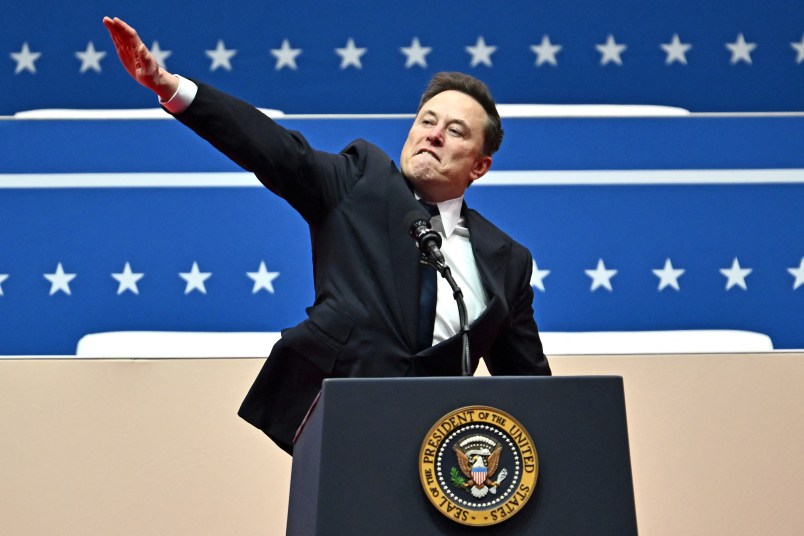
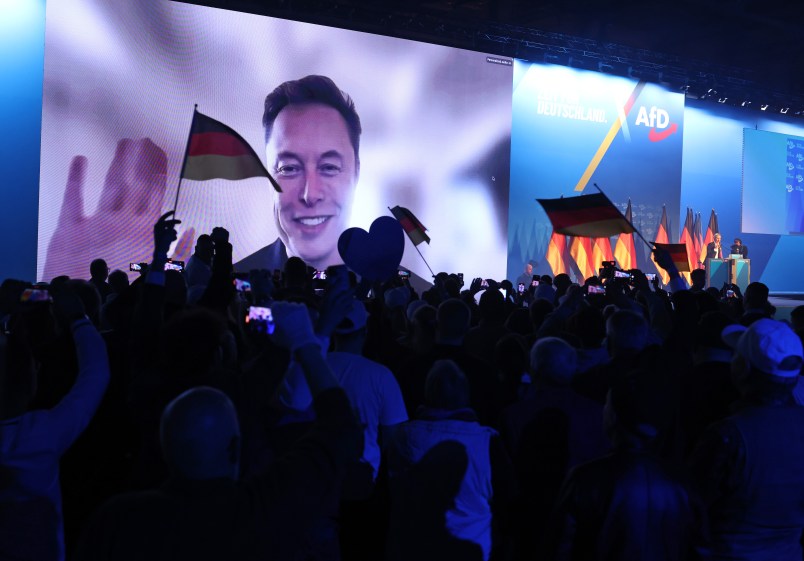
  • NYT on Elon Musk: “In the final weeks of the presidential campaign, the richest man in the world has involved himself in the U.S. election in a manner unparalleled in modern history.”
  • NYT: A Stern Obama Tells Black Men to Drop ‘Excuses’ and Support Harris

Good Read

WSJ: When the Hurricane-Relief Worker Turns Out To Be a Neo-Nazi

Ethel Kennedy, 1928-2024

WASHINGTON – MARCH 27: (AFP OUT) Ethel Kennedy attends the ceremonial installation for U.S. Attorney General Eric Holder at George Washington University March 27, 2009 in Washington, DC. Holder has been serving as the 82nd attorney general since he was confirmed by the Senate in February of this year. (Photo by Chip Somodevilla/Getty Images)

Ethel Kennedy, the activist, advocate, and widow of Robert F. Kennedy, has died at 96.

Do you like Morning Memo? Let us know!

People Who Actually Live In Ohio Reject Trump/Vance’s Racist Dog-Eating Bait

While VP candidate JD Vance’s racist efforts to dehumanize legal immigrants from Haiti who are living in his state might still be playing out favorably among groypers, white supremacist bros and QAnon-adjacent online conspiracy mongers, the people who actually live in the state he represents in the Senate are, en masse, not buying the anti-immigrant propaganda.

Continue reading “People Who Actually Live In Ohio Reject Trump/Vance’s Racist Dog-Eating Bait”

Voting Rights Groups Fight Youngkin’s Sweeping Last Minute Non-Citizen Voter Purge

A group of Virginia voting rights groups filed a federal lawsuit this week against GOP Virginia Governor Glenn Youngkin’s recent efforts to purge supposed non-citizens from the voter rolls just before the election, using what plaintiffs argue is unreliable information from the Department of Motor Vehicles. 

Continue reading “Voting Rights Groups Fight Youngkin’s Sweeping Last Minute Non-Citizen Voter Purge”