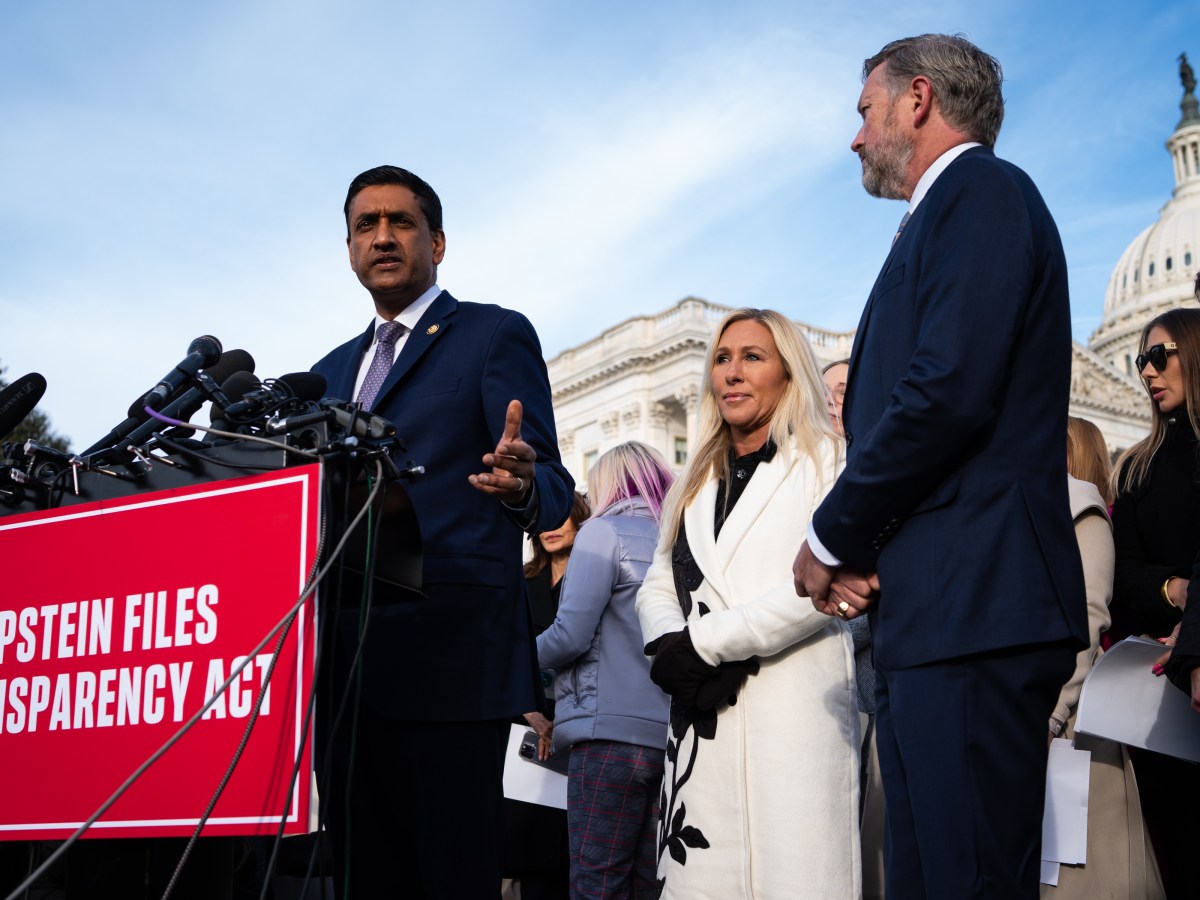
When Congress passed the Epstein Files law, the common and undoubtedly correct assumption was that the Trump DOJ would simply weed out the Trump stuff. And as we’ve seen, they’ve gone to town releasing everything about … say, Bill Clinton but in many cases obviously filtered out Trump stuff. So this basic part of the story is predicted, unsurprising and confirmed. But there’s a more complex if no less corrupt story coming into focus.
A few pretty damaging things have come out. I’m not sure for instance whether that purported jailhouse Epstein letter is real. But it’s pretty clear the White House/DOJ doesn’t have any evidence or hasn’t yet found any evidence that it’s fake. If they did, they’d release it. The best discussion of the authenticity question I’ve seen is this short piece in New York Magazine’s Intelligencer. The gist is that, based on what we know in the public record, there’s no clear evidence pointing either to its authenticity or fraudulence. There are a couple potential red flags. But these have relativity straightforward explanations based on how the prison mail system works. They could be evidence of fakery but not necessarily. A handwriting analysis was done and that could at least point in one or the other clear direction. But we haven’t seen that report.
I got a host of very interesting responses to yesterday’s post about the tech platforms force-feeding the mass consumer market AI. I learned a lot from your responses, which included both direct personal experiences and expert perspectives on different dimensions of the topic. What is important to me about this moment is distinguishing two or three different very real things happening at once.
The first is a genuine critical mass in the development of LLM-based machine learning. This is a much better description than “AI” to my thinking, since the latter contains a vast range of meanings from simple and accurate to triumphalist and grandiose. But machine learning is real, and in recent years it’s developed real capabilities that are at least transformative in various areas of work and technology. I’m skeptical of what we’ve developed beyond this at this point but really don’t know. It could be a lot. And it will increase. I think this is the best way to understand the technology itself at this moment now.
GREENBELT, MD — For the first time since he was unlawfully deported to El Salvador in March, Kilmar Abrego Garcia appeared in person this afternoon in front of U.S. District Judge Paula Xinis of Maryland. He is no longer detained by El Salvador, the Justice Department, or Immigration and Customs Enforcement. But as his lawyer pointed out he remains in a “literal double bind,” with a bracelet on one ankle from his criminal case in Tennessee and an ICE bracelet on the other ankle from his immigration case in Maryland.
I just got a new iPhone. I didn’t need a newer version. But my old one was broken in a way that wasn’t easily fixed. So I submitted myself to the hard wheel of planned obsolescence. I’m always happy for ever-improved image quality. Otherwise, for me, it was just a need for a new, undamaged phone. But this is one of the models which Apple tells you very frequently has their AI bundled into the device. Which I’m told is awesome. Or that’s what they’re telling me. A lot. And my sense generally is that Apple is the least over-the-top of the big techs in this regard.
As I’ve been using the new phone, I’ve noticed that the Apple texting app now takes suggested phrases and completing your words to the next level — as in kind of an absurd level.
It was pretty obvious that White House chief of staff Susie Wiles’ admission to Vanity Fair that President Trump was engaged in “score settling” was going to make it into a legal filing sooner or later. Now it has.
In a filing overnight, Kilmar Abrego Garcia’s attorneys cited the Wiles interview as part of their bid to dismiss the indictment against him on vindictive prosecution grounds: