

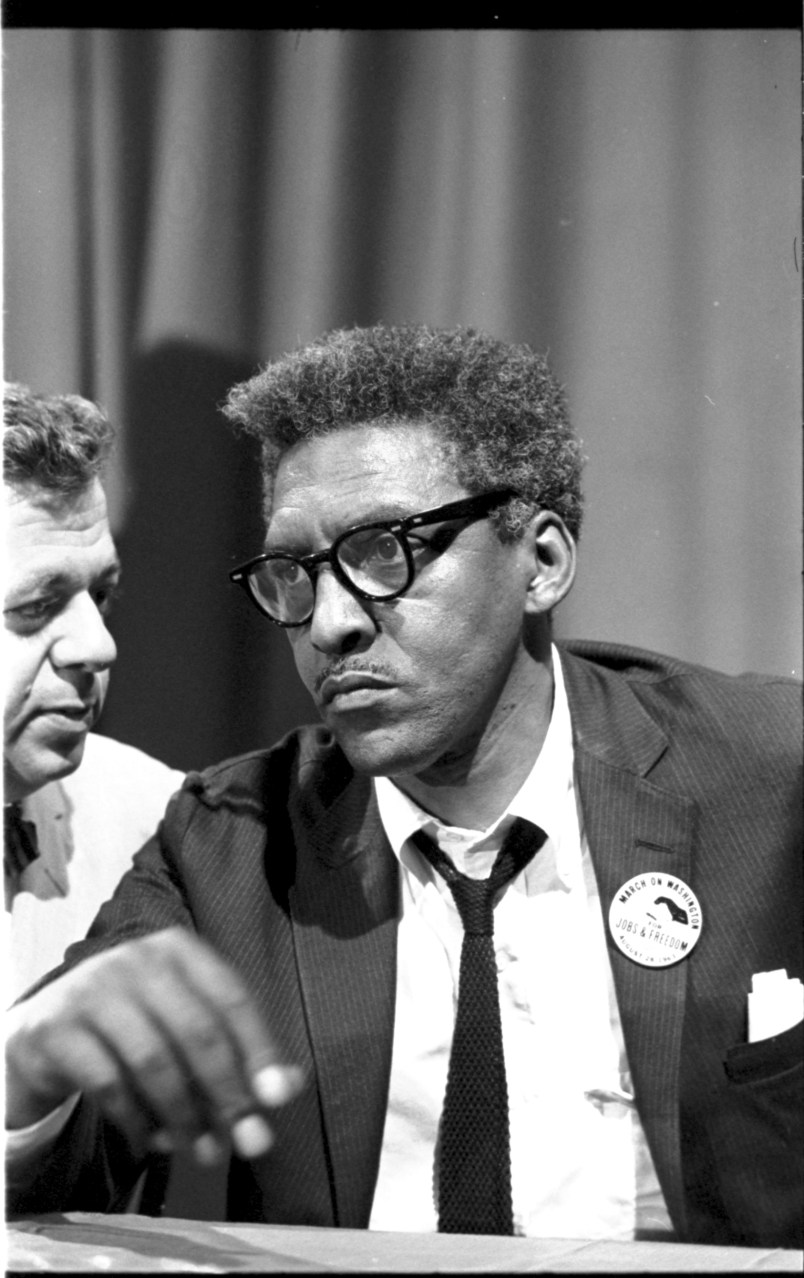
Bayard Rustin at news briefing on the Civil Rights March on Washington in the Statler Hotel. August 27, 1963.
Continue the discussion at forums.talkingpointsmemo.com



LATEST

Where Things Stand
Dems Block Data Center Bill Designed to Boost Husted’s Campaign: ‘A Proxy for Corruption’
09.30.26 | 5:07 pm
News
New IRS Citizenship Question Could Make It Easier for Census Bureau to Shift Political Power
09.30.26 | 4:40 pm
News
Ron Johnson Greenlights White House Plot to Seize Congress’ Power of the Purse
09.30.26 | 2:44 pm
Morning Memo
Appeals Courts Slowly Awaken to Trump II Threat
09.30.26 | 11:31 am
I’m resistant to the Great Man theory of history, but reading Branch’s “Parting the Waters: America in the King Years, 1954-63”, I have no idea how the civil rights movement ever would have had the success it had without Bayard Rustin. He was a great man, a genius, and a truly unsung hero.
Oh, just a small sample of the man’s work:
"Rustin traveled to California to help protect the property of Japanese Americans who had been imprisoned in internment camps. Impressed with Rustin’s organizational skills, Muste appointed him as FOR’s secretary for student and general affairs.
Rustin was also a pioneer in the movement to desegregate interstate bus travel. In 1942, he boarded a bus in Louisville, bound for Nashville, and sat in the second row. A number of drivers asked him to move to the back, but Rustin refused. The bus was stopped by police 13 miles north of Nashville and Rustin was arrested. He was beaten and taken to the police station, but was released uncharged…As declared pacifists who refused induction into the military, Rustin, Houser, and other members of FOR and CORE were convicted of violating the Selective Service Act. From 1944 to 1946, Rustin was imprisoned in Lewisburg Federal Penitentiary, where he organized protests against segregated dining facilities. During his incarceration, Rustin also organized FOR’s Free India Committee. After his release from prison, he was frequently arrested for protesting against British colonial rule in India and Africa."
Bayard Rustin’s pivotal role in the Civil Rights Movement is largely “unsung” because he was unapologetically gay. Imagine how much farther the movement could have progressed had he not been marginalized by the very leaders in the SCLC who had relied on him for their successes.