


A few days ago I got in a back and forth with someone on Facebook about the Jeffrey Epstein story. This person insisted it’s a non-story and criticized the Times — that’s what was important to him — for devoting so much time to it. It was a “pseudo-story” as the journalism argot has it, a kind of pent-up story with no substance or consequence or even existence beyond journalists pretending it’s real. I said that this was a category error. As journalists, our job is to cover and explain what is actually happening, not to act as gatekeepers deciding what’s up to our standards of substance or policy-seriousness or whatever else.
Now, it’s very true that “what’s actually happening” is carrying a lot of weight here. Lots of things are happening all the time. The Kardashians are happening. Reality TV shows are happening (a complicated topic we’ll return to). Fad diets are happening. But in political news when we say that “something is happening,” I mean chains of events which are driving public opinion, changing the dynamics of political power, shifting policy in ways that affects people’s lives, etc. When a sitting president is facing a significant rebellion in his political coalition, having his presidency consumed by efforts to contain the cause of that rebellion and so forth that is a major story. The fact that the essence of what is happening — the beliefs, conspiracy theories, etc. — are, in many ways, absurd does not change that fact. Indeed, if you can’t wrestle with the heavy amount of absurd at the heart of our political moment you will simply be lost or be having an irrelevant conversation with other gatekeepers.
I’ve argued at various points that TPM was ahead of the curve roughly during the Obama years because we paid a lot of attention to what was then sometimes called The Crazy — the subterranean world of GOP and far-right politics; the colorful, weird and almost-always super racist congressmen (and sometimes women) from obscure rural districts. That was portrayed as a sort of moving circus, cheap laughs, click-bait — not real politics. We were often criticized for giving it so much attention. I never thought that was right. And unfortunately the Trump presidency itself vindicated our read of that era. The Crazy was the reality of Republican politics. It was the John Boehners and Paul Ryans who were a kind of respectable veneer placed over its true engine of power and motive force. From the outside, it appeared that these leaders had to run the GOP while wrangling the far-right Freedom Caucus. In fact it was the Freedom Caucus that ran the GOP through a tacit collaboration with presentable and ultimately tractable figures like Boehner and Ryan. Trump’s intuitive political genius was to see that you could ditch the front man and run the GOP directly from the Freedom Caucus, which has been the story of the Trump Era.
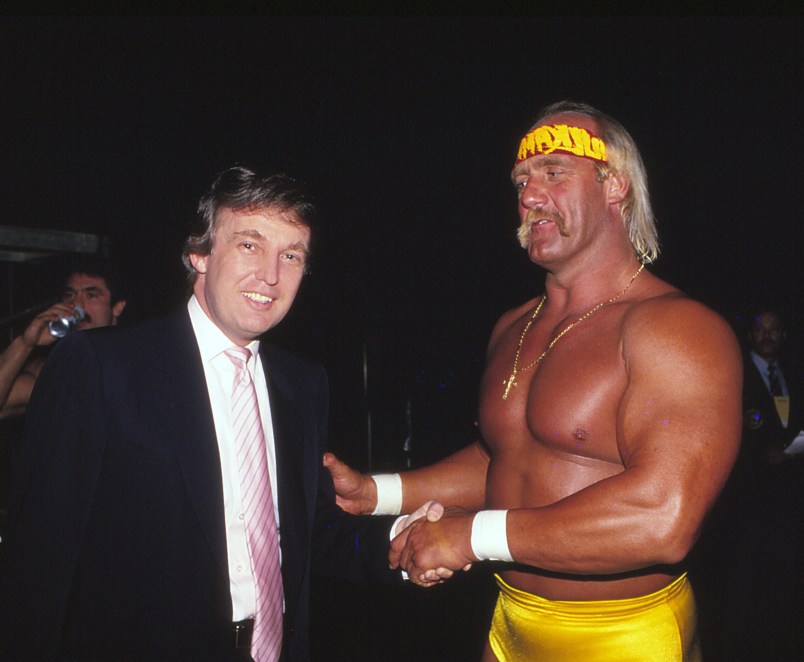
I note all this by way of getting to the death of Hulk Hogan. A lot of commentary has wrestled between fun-loving pro-wrestling freak vs super racist, union-busting, pro-Trump asshole. A sideline on this conversation is guys over 35 trying to reconcile their childhood impressions with the reality of Hogan’s career. I never got pro-wrestling. So I don’t have anything to add to that. I want to zero in on a critical part of Hogan’s legacy, in my mind the most important: his lawsuit against Gawker, a seminal event prefiguring and laying the groundwork for much of what has happened in the last decade.
First the basic facts. Hogan was a tabloid celebrity and Gawker acquired a sex tape of him having sex with a woman who wasn’t his wife. The woman was the wife of one of Hogan’s friends, who actually recorded the tape. The precise ins and outs and details have always been a tad blurry to me. The whole story was bathed in intrigue, backstabbing and celebrity weirdness. Hogan sued Gawker not for defamation but invasion of privacy. Hogan’s supporters asked, not unreasonably, what possible newsworthiness Hogan’s sex tape could possibly have.
Back around this time I was at TPM’s New York office one day when we had a then-Gawker staffer visiting. This was in the build-up to the Gawker trial by which time it was clear that this wasn’t an ordinary lawsuit. The company’s existence might be in jeopardy. Our guest told me that the First Amendment itself was at stake. He explained that Gawker’s lawyers were almost certain they’d lose the case at trial. It was a Florida judge and a Florida jury in a particularly bad county to get sued in. But they were confident they’d win on appeal. The problem was that they’d have to come up with what ended up being a $140 million judgement to get to the appeal process. But Nick Denton, Gawker’s owner, had made a deal with some Russian oligarch to float that money while they were appealing the verdict.
That’s what our friend told us.
I said some nice and encouraging things to our guest but in my head it was hard to take seriously that this was a righteous fight for the First Amendment. I was certainly on Gawker’s side. I was hoping for the best. But publishing someone’s sex tape struck me as reckless, difficult to justify in journalistic terms and frankly hard to defend.
As you probably know, Gawker lost the case. Hogan got a $140 million judgement. Somehow the thing with the Russian guy (if I’m remembering what our friend told us) didn’t pan out. Without $140 million, Gawker couldn’t appeal. The company and its owner, Denton, were forced into bankruptcy. And that was the end of Gawker and its stable of sites. Some of those — Jezebel, Gizmodo, Deadspin, even the Gawker site proper (Gawker Inc. was the company that owned all these sites) have had post-bankruptcy zombie existences. But basically that was it.
As it turns out, I was completely wrong.
That lawsuit was a critical event of our time, and Gawker’s destruction was a body blow to the First Amendment. Hogan’s lawyer, Charles Harder, wasn’t just any libel lawyer. He had whole new ways of going about it. After Harder’s victory for Hogan, his new approaches to attacking media companies were quickly folded into the Trump political movement, not just the strategies but Harder’s firm itself. You see them again and again in numerous Trump and MAGA world lawsuits.
It turned out that Hogan himself was the cat’s paw of Peter Thiel who funded the entire litigation. Hogan himself must have been a wealthy man but the bills of a major libel suit is a very iffy investment. Denton had suspected that someone was footing the bill behind the scenes — perhaps even Thiel. Money seemed like no object in how the lawsuit proceeded. Thiel took all those worries and risks away. Thiel held a grudge over Gawker’s past negative coverage of him and had been plotting its destruction behind the scenes. Thiel’s use of Hogan presaged the current world of billionaire lawsuits in which limitless money can overcome the weakness of meritless litigation. (See the recent Times story on how Elon Musk and MAGA attorneys general have brought Media Matters to its knees.) The rich have always put their wealth on the scales of justice. But Thiel’s actions opened new terrain, as did the explosion of billionaire wealth taking shape at the same time.
But as much as anything it was the example it set. Gawker wasn’t damaged. It was destroyed. It ceased to exist. For what was essentially pocket change, Thiel got his revenge. In that one suit, you can see the evil vapors of Trumpism and its oligarchic billionaire milieu congealing into solid matter for everything that was to come. In so doing, Harder and Thiel radically raised the stakes for all journalism in the United States. The combination of billionaire money, novel legal theories, venue shopping and quirks of civil litigation at the state level (the fact that Gawker was prevented from appealing a judgement that never would have survived appeal) changed everything that goes through a publisher’s mind when they click the publish button.
Of course, none of this makes the original story itself righteous. I’ve been in countless lawyer calls vetting stories and assessing risk. This thing was a cannon fire of red flags. I could even see an argument that a painful $500,000 judgment might even have been merited. (I’m not saying I support that, mind you; I would not. I’m just saying that I could see a non-crazy argument.) Perhaps it was fated that Gawker would end as it did. Its recklessness and effrontery were contained in the same DNA as its perverse greatness. Many people — certainly many of its targets — dismissed and still dismiss the whole enterprise as trash. Was it even journalism? Denton himself was acidic and tetchily transgressive enough never to come down clearly on either side of that question. I remember him being quoted once taking half-mock affront at anyone accusing Gawker of practicing journalism.
But you judge the tree by its fruit. Judge Gawker by its alums. Journalism today, long-form and short, the critical essay, the deep investigative piece. All these areas of writerly endeavor are filled with Gawker alums. That’s where they learned. That’s where they had the freedom to experiment and do crazy things. That to me is Gawker’s most important epitaph. What it was, how it was good or bad or anything is a whole other post. I’m not even sure where I’d come down on it. But that, the alums, is the most important epitaph.
And Hogan and Gawker’s demise changed journalism and America forever — and all for the worse.