


Back in June I asked you to tell me about your favorite TPM posts. I read through your responses at the time. But the project I was investigating was soon overtaken by the rush of campaign events, particularly the aftermath of the Trump-Biden presidential debate at the end of the month. I was finally able to go through them more systematically this weekend. First, thank you for the attention and thought so many of you put into those contributions. They were gratifying and illuminating to read. My aim with this exercise was to pull together a list of posts for something kind of but not precisely like an anthology.
Part of the magic but also the frustration of this style of writing is that you write quite a lot, put together a lot of ideas, often ahead of others. But the great majority of what you write is momentary and ephemeral. It may be valuable. But it’s hard to catch that value in any one thing you can go back and read again. It’s sort of like a rolling conversation which you can learn from but is hard to go back and capture after the fact. A small percentage of posts are more like fully formed essays. Those are the ones that tend to stick with people. But often even those memorable ones are more like themes that are worked up over a number of posts, in many cases over a significant stretch of time. For all these reasons an anthology doesn’t quite make sense. But what interested me was pulling together the best or most influential posts and refining and expanding on them with the perspective of time and also the luxury of a bit more time to refine the ideas.
So what were your favorites?
They run the gamut. A number of you mentioned history posts, with the most frequently mentioned being a 2018 post I wrote about Ulysses S. Grant and his personal memoirs, a post which is really about how to write and how to think. There were personal posts, one about the death of my mother and another about the death of my father, one about building a sailboat. There’s one about Leslie Nielsen and the magic of new beginnings which one reader told me inspired him to change careers at age 50. The most referenced post was a single paragraph in November 2016 post about optimism being not a set of predictions but an ethic and way of approaching life. There’s a whole range of topics. But when I read through all your emails and did a rough tally of your favorite posts, they were overwhelmingly about power, domination and the performative nature of modern politics.
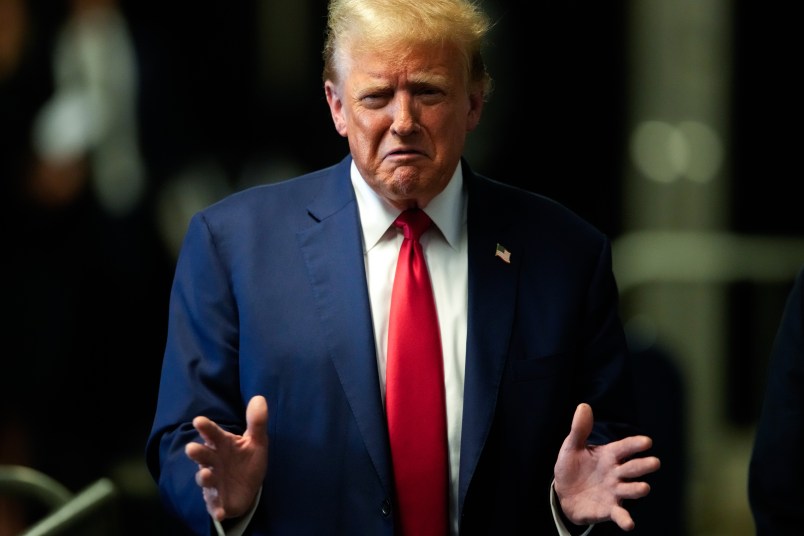
Many of these center on the person of Donald Trump and are from the past decade — posts on domination and humiliation, dignity wraiths, Trump’s Razor, the dominating and the dominated. But the most cited goes back twenty years to August 2004, a post on what I then termed “bitch slap” politics and later renamed “dominance politics.” The Editors’ Blog has been about a lot of things, often very disparate. But here really is the central thread, the most enduring and recurring one over the quarter century I’ve been writing the Editors’ Blog. In fact, it shows up in the very first post in November 2000 in a kind of inchoate way in the politics of bluff. It’s an expanding analysis, but also a chronicle of the expanding role of performative domination in our politics.
For a long time I thought that TPM had a bead on Trump early because of something that many of our colleagues criticized us for: focus on what in the Obama years we called ‘The Crazy,’ basically the far-right milieu which eventually took shape in electoral politics as the “Freedom Caucus.” We were very focused on these guys and the wider political universe they existed in. The criticism was that this was just fringe nonsense. Real politics was Paul Ryan and John Boehner. That was never our take. You could see that in the collapse of comprehensive immigration reform in 2013 and the proof came in late 2015 when Donald Trump — who everyone treated as a joke — rapidly and systematically bulldozed the desiccated husk of ‘establishment’ Republican politics. ‘The Crazy’ was the real motive force of the GOP, and was in a complementary relationship with the public face of the party which essentially governed on its behalf. Trump’s great intuitive insight was that it was no longer necessary to do this. You could ditch all of that and run the GOP with Freedom Caucus politics and tactics. Openly.
This sounds like a different part of the story. But it’s just a different dimension of it.
In any case, your recollections and thoughts have allowed me to sharpen my understanding of this and see the big thematic theme around which not, so much a retrospective look at these old posts but an updating of them, could be interesting and worthwhile.