


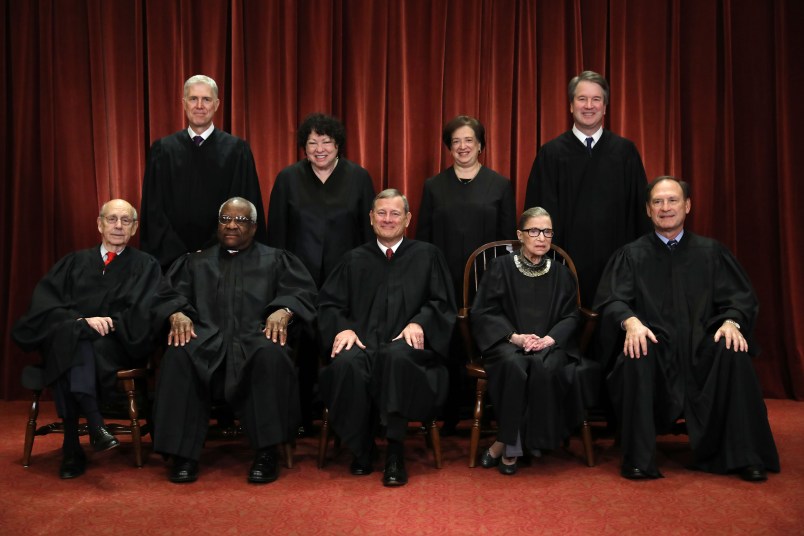
I’ve written again and again that reforming the Supreme Court — neutralizing the corruption represented by the current rogue majority — is the sine qua non of any good future for the American republic. I want to give you another example of this centrality.
Recently I was talking to someone very versed in federal employment law, the framework that undergirds the employment of the people who make the federal government run. There’s a neverending stream of proposed regulations and rules. We were discussing some new news on this front, how it might play out in the future, etc. When I have these kinds of conversations with knowledgable people, I’ll generally ask what they are hearing about groups emerging in their area for the purpose of creating Project 2029-like lists of reforms to undo the damage we are seeing today. It’s not just turning things back to the status quo ante, as we’ve discussed. We’re in an era in which it’s critical to make major structural changes when the opportunity arises and build new structures that are more durable than the ones which have fallen so quickly over the last decade and specifically the last year. So you need smart people putting time into this work during the next three years, really thinking it through and having that list of reforms ready, support built them, etc. You get the idea. We’ve discussed this before.
Join TPM to get full-access to our reporting, newsletters, and other member-only features.