



Over the last couple days I’ve argued both that the denouement of the shutdown standoff was a flub and an embarrassment and also that the overall situation is going reasonably well. This isn’t defending the members of the Democratic caucus. I don’t need to defend or attack them because I’m mostly indifferent to them. I’m looking to a half-dozen year or more time horizon in which almost all the current senators need to be convinced to take a dramatically different approach to politics or purged from the ranks of elected office. Let’s call it Change or Purge. To me, from March to now was a big step forward. The way of operating during this shutdown was very different from what happened in March. And the way it ended — here I know many disagree with me — doesn’t negate what happened during the last five weeks, either in terms of the changed behavior or what was accomplished. This is a multi-course treatment. The results of the first course were encouraging. So, on to the remaining nine.
Since I’ve focused on this Change or Purge framework in this post I’d like to flesh out some of what that means. Of course a lot of this is either characterological or a way of using power. That can be hard to capture in bullet points or outside the context of a specific political situation. But there are a series of things senators support or don’t support that gives a clear indication of whether they are serious about confronting the challenge of the moment or battling back from Trumpism.
Join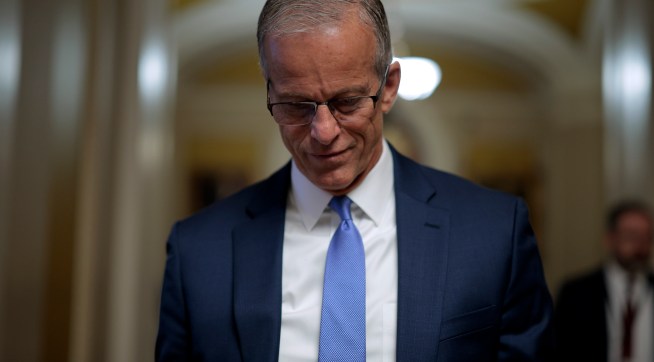
I wrote last night’s post fresh off the news that at least eight Democrats had voted to take John Thune’s deal and vote for a continuing resolution, which got essentially none of the demands that had started this fight over. I stand by everything. If anything I feel surer of my impression of this.
There’s a key distinction I was trying to draw in what I wrote. And that is there’s a difference between the deal itself and where the deal leaves Democrats and the broader anti-Trump opposition. This deal shows us that Democrats still don’t have the caucus they need for this fight that will be going on at least through this decade. But the shutdown also accomplished a lot. And not withstanding the WTF fumble at the 10-yard line, it’s still a dramatically different caucus than we had in March. To me it’s a proof of concept that worked. Democratic voters need to keep demanding more, keep up the pressure and keep purging the Senate caucus of senators who are not up to the new reality.
In other words, it’s not defending anything. I’m certainly not happy with how this ended or endorsing anything this caucus did. I’m feeling good about what Democratic voters accomplished in forcing change on the caucus from March until November. So it’s not that Democrats demanded more and this deal isn’t that bad. It’s Democrats already got their representatives to shift a lot, and they need to keep ratcheting up the pressure, purging and reshaping how Democratic elected officials approach the question of power. And another continuing resolution cliff is just around the corner in January. If you haven’t already read my piece from last night, I encourage you to do so.
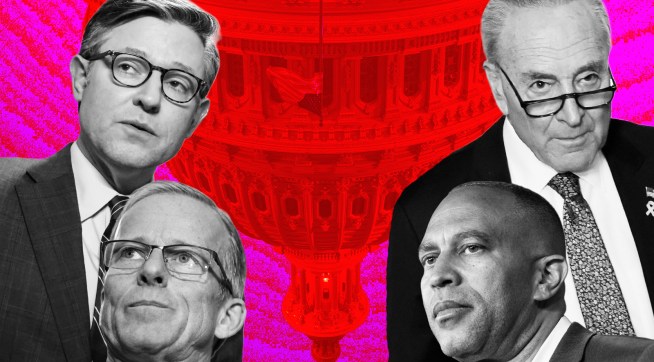
I have what I suspect is a somewhat counterintuitive take on the deal Senate Democrats’ Team Cave made with the Republican Senate caucus tonight. This is an embarrassing deal, a deal to basically settle for nothing. It’s particularly galling since it comes only days after Democrats crushed Republicans in races across the country. Election Day not only showed that Democrats had paid no price for the shutdown. It also confirmed the already abundant evidence that it has been deeply damaging for Donald Trump. But even with all this, I think the overall situation and outcome is basically fine. Rather than tonight’s events being some terrible disaster, a replay of March, I see it as the glass basically being two-thirds or maybe even three-quarters full.
JoinI’m now seeing press reports confirming the chatter I’d heard through the afternoon, which is that Senate Democrats have offered to vote for a continuing resolution in exchange for a one-year extension of Obama subsidies and creating some kind of bipartisan kumbaya health-care negotiating group. There appears to be other budgetary stuff in there. It’s not clear to me whether there’s anything on rescissions. But the topline is the headline. Shutdown ends in exchange for a one-year extension of the Obamacare funding. I had heard that Senate Majority Leader John Thune’s answer was no. But Axios says the Senate caucus is meeting this afternoon to discuss the offer.
Read More

I want to thank everyone who came out for our TPM 25th Anniversary show in Manhattan last night. Kate Riga and I did a live version of our podcast (it should be in your feeds soon). But before that we had a panel/oral history of TPM featuring three members of our current team — John Light, Nicole LaFond and David Kurtz — and three alums — Paul Kiel, Evan McMorris-Santoro and Katie Thompson. I loved this discussion. I’m not sure precisely what my expectations were, but whatever they were, it exceeded them.
Before this panel, we did a Q&A with a small group of readers and then after I was doing the podcast with Kate. Those were the things I needed to be on for. I decided in advance that I wanted to be as invisible as possible for the panel/oral history. I had some idea of wearing a hat and sunglasses. But it turns out I don’t own a pair of sunglasses. So I settled on a beanie and sitting as far back as I could. I wanted to watch as much as I could as an observer, not being in any kind of eye contact with the people on the stage and as far to the back of the venue as I could get so as few people as possible were aware of me being there. It’s hard for me to get outside of TPM, to get some distance to see it from the outside, and TPM probably has similar feelings about me.
Join
One of the most important things to understand about politics is the danger of literalism, assuming the straightforward meanings are the important ones. You can be following the libretto but the real action is in the score. Closely related to this is the danger of assuming that politics operates by a kind of Newtonian cause and effect. Object A moves when it’s hit by Object B. That’s logical and straightforward. But that’s often not how things work. You can see some of this this morning in the DC insider sheets that distill conventional wisdom.
This morning’s Punchbowl newsletter runs with the headline “Political winds whip the MAGA movement.” The movement is rocked by an argument about antisemitism, good or bad? Trump’s tariffs, his central policy, are on the rocks. Trump’s out of sync with the congressional Republicans on the shutdown. Republicans are losing the shutdown. He’s unpopular. Their policies are unpopular. Costs continue to rise. It all sounds pretty bad, and the Punchbowl editors add in the bad election night too. What’s notable though is how much of this was the case before Wednesday morning, before which they were generally saying that things were going great for Trump and the GOP.
Join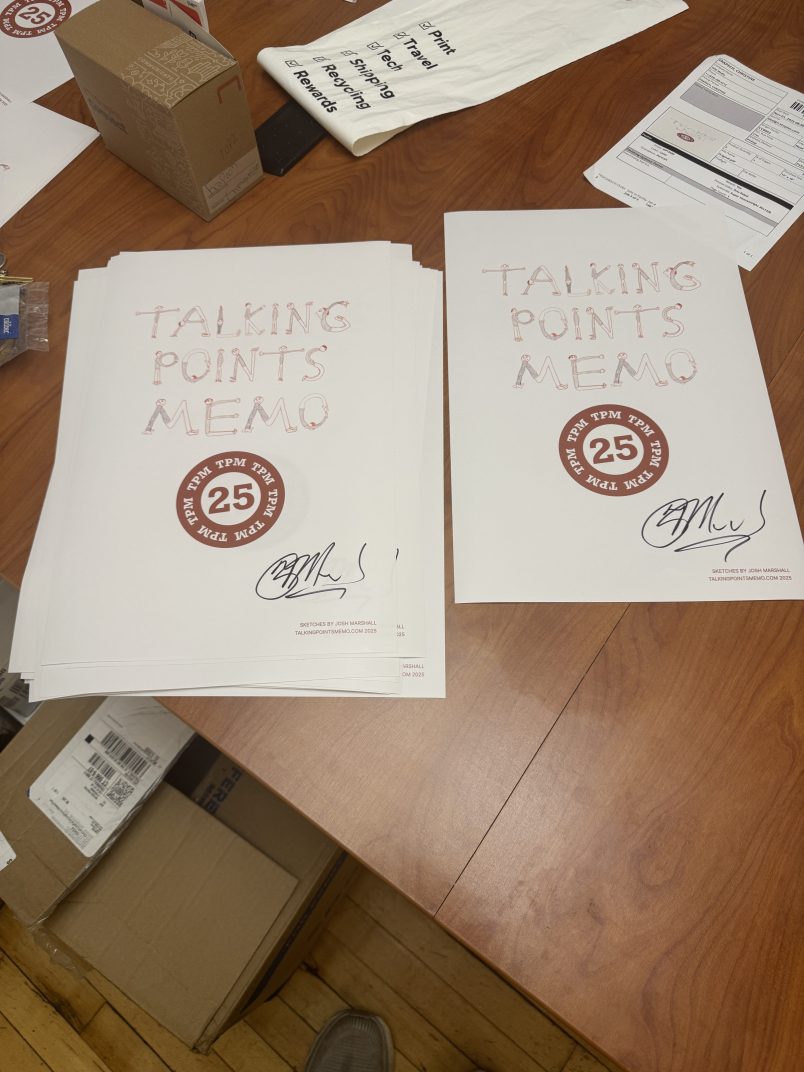

I was excited by Zohran Mamdani’s candidacy, which brought many young and minority voters, who had been turned off by the Biden-Harris years, back into the fold. I have been a democratic socialist since the late 1960s, so I also welcomed his attempt to run as one. That said, I wasn’t crazy about his victory speech.
Read More
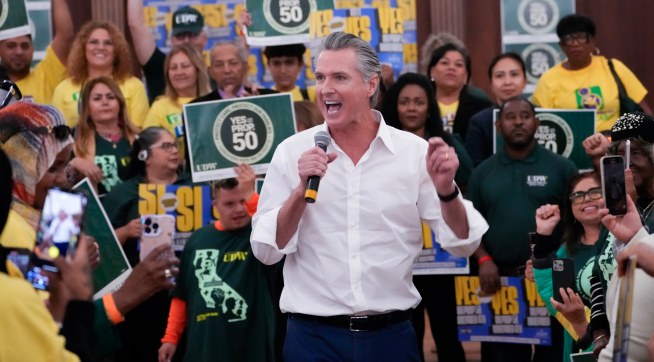
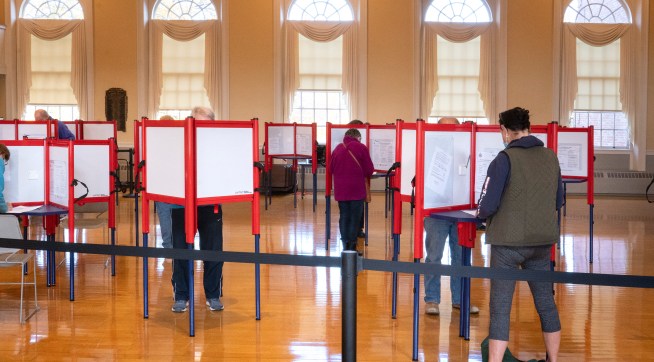
The clearest read of what happened last night is that, as far as I can tell, Democrats won every race that was in meaningful contention anywhere in the country. That’s not just high-profile races in New York, New Jersey and Virginia or the redistricting proposition in California. It goes way down into races only obsessives or local observers were watching in Pennsylvania, Georgia, Mississippi and a bunch of other places. Democrats won everywhere, and just about everywhere they won by larger margins than even optimists were expecting.
As I noted last night, some of these were surprises against low expectations which were not realistic. But Democrats did well against realistic expectations too.
Join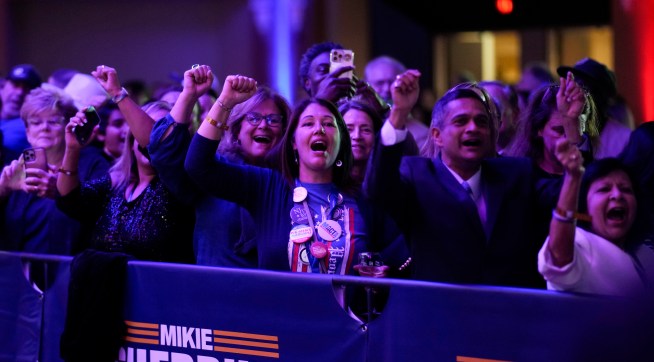
Elections are hard to predict. But even with that, some of the notional “surprises” we’re seeing tonight are less surprises than a measure of GOP dominance over current press narratives. People were looking for an upset in New Jersey. Nate Silver’s Silver Bulletin speculated that New Jersey might be moving toward becoming the next swing state. In fact, Rep. Mikie Sherrill (D) currently appears on track to crush Republican Jack Ciattarelli. A similar failure of conventional wisdom appears to be unfolding in the Virginia Attorney General’s race. A lot of D.C. insiders had convinced themselves that a controversy over some intemperate texts (not nothing but fairly close to it) had doomed his campaign. As recently as a couple days ago, betting markets (which are proxies for conventional wisdom) gave his opponent Jason Miyares 3-to-1 odds of victory. Jones now appears on his way to a clear though not resounding victory with a 3-to-4 percentage point margin.
Read More