



Last night I got an email from TPM reader LE. She started by explaining that she’s been reading TPM for at least a couple decades, going back to earlier early adulthood phases of her life, and is now a state legislator in a midwestern state. So the idea that state governments are central to the current moment is of great interest and resonated with her. (A side note: this introduction warmed my heart on many levels.) But she asked, more as a rhetorical question, than as a question to me: what specifically? Yes, state power is clearly critical but just what elements of state power should we be focusing on, where are the specific resistance points?
I had perhaps an over-convenient answer: I’m focused on the big picture. The small picture, well, good question …
But it did make me start thinking: If the concept is right, operationally what’s first? If state officials are saying what should we be doing, what should people advise?
This got me to thinking and I thought of various ideas and various ways of answering the question. So let me share a few of those, not in any comprehensive way but as a way of starting a conversation.
Join
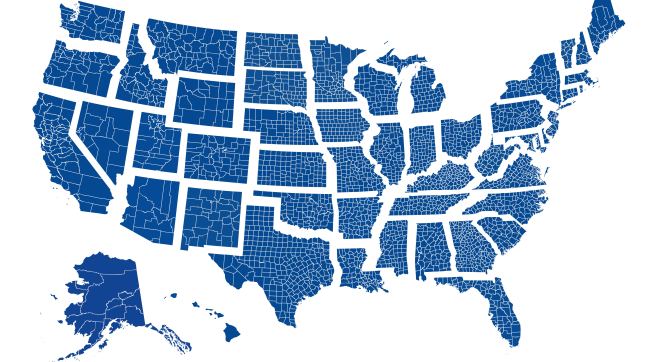
Yesterday (in this post which didn’t go up as a BackChannel) I discussed the idea of “strategic depth” as a way of thinking about the sovereignty of the states in the battle against Trumpism. I want to expand on that. Because it’s become pretty central to my thinking about how the United States is going to survive the next three and a half years and begin the process of battling back. “Strategic depth” is primarily a concept for military studies. It refers to the shape and arrangement of the physical territory a country controls and how close its borders, which may be vulnerable to military attack, are to its concentrations of population, political and industrial centers. If all a country’s key stuff is right near a vulnerable border that’s a big problem. But in addition to where its key stuff is, does it have a lot of territory to fall back on if it suffers early defeats?
Join
President Trump has a new post up on Truth Social today in which he claims that states only run elections and count ballots as agents acting at his direction as president of the United States. The key lines are “the States are merely an ‘agent’ for the Federal Government in counting and tabulating the votes. They must do what the Federal Government, as represented by the President of the United States, tell them …” He claims he’s going to issue an executive order to ban voting by mail and any voting machines he doesn’t like.
Put simply, this is total bullshit.
Read More
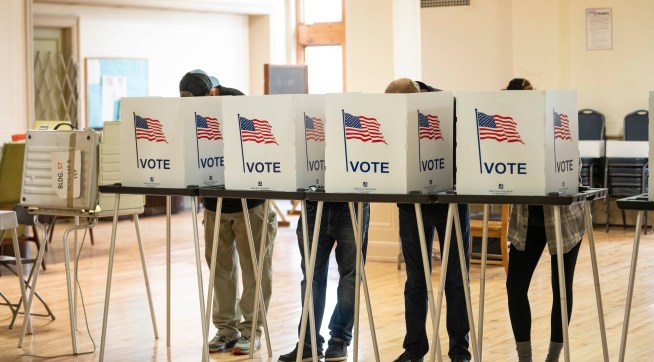
There’s a long way to go before November 2026. The pace of malign events just keeps increasing. But even with all that I want to mention some significant shifts on the 2026 Senate recruiting front. It’s an article of faith for very good reasons that regaining control of Senate is an almost impossible hill for Democrats to climb given the map in play. Democrats have two challenging holds in Georgia and Michigan. Their best pickup opportunities are in states that have repeatedly eluded them, Maine and North Carolina. Beyond that it’s all reliably red states. All that, alas, remains basically the same. But there are a series of shifts that make Democrats taking over the Senate look more plausible even though the odds remain against it.
Let’s run through some details.
Join

I just belatedly read this piece by TPM alum and all around reasonably good fellow Brian Beutler wrote on the question of resistance to the Trump administration. Voting, organizing, protesting — those are all pretty straightforward. But what about when those aren’t enough? He starts from that saying we hear a lot now: No one’s going to save us. We’re going to have to save ourselves. Well, what does that mean exactly, Brian asks. How do people protect themselves from manifestly illegal, tyrannical government actions or the violent paramilitaries they are working to cultivate? When does opposition and resistance need to move into extra-constitutional or extra-legal actions? These are harrowing, frightening and perhaps quite literally perilous questions to ask.
Brian starts by discussing whether DC should loosen its fairly tight gun laws. He’s quite conflicted about it. He also discusses the possibility and difficulties tied to blue states withholding taxes from the federal government. Very much by design, the federal government collects taxes directly from individuals. But he suggests some creative ways to square that circle that are floating around. Read Brian’s piece if you can.
JoinThis is far from a novel thought. But it’s a timely one. We’re used to people who seem to think the 2nd Amendment is the whole Constitution. Others put the overriding focus on the 1st Amendment. But the one that deserves that focus is the 14th Amendment, the amendment which along with the groundbreaking but more straightforward 13th and 15th Amendments remakes the entire constitutional order. I remember in the late 1980s, I believe it was timed to the bicentennial of the federal constitution, then-Justice Thurgood Marshall gave a speech in which he argued that the original, pre-Civil War Constitution was a defective and even shameful instrument. It had, he argued, no claim on our respect or veneration. It’s only with the new founding in the post-Civil War settlement that we have a founding document that has a claim on our allegiance.
Read More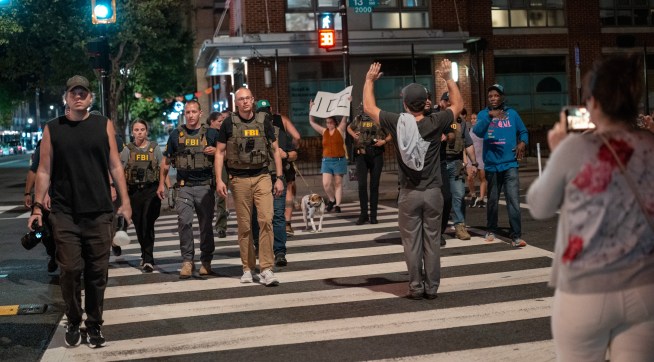
I had an interesting exchange with a TPM reader this week about President Trump’s takeover of the DC Metro Police Department and his conjoined decision to deploy National Guard troops to the nation’s capital. This reader’s argument was that it was a mistake to make a big deal of the DC decision, casting it as a dramatic and consequential abuse of power, because in fact Trump was acting within the statute that gives DC home rule. He said that what happened in Los Angeles this summer was different precisely because Trump had no legal right to do any of it. The reality — and this is true — is that DC is different. It’s not a state and it is in fact the domain of the federal government. Congress runs it. Congress decided to delegate that authority half a century ago to a local self-government. But the president can do these things. It’s right there in the Home Rule law. His justifications may be specious. But his actions in this case are likely unreviewable.
It was an interesting point and we went back and forth over it a few times. The opposition should save its mobilization and outrage, the reader argued, for when Trump crosses a line as he did in LA. DC is different.
Read MoreA reminder: The Josh Marshall Podcast featuring Kate Riga is back next Wednesday, August 20th, and back to our normal weekly schedule going forward.
As you can see we hit our goal of raising $500,000 during this year’s drive. The drive will continue until later in the month. So if you didn’t get a chance to contribute, by all means the door remains very wide open. We can always put more dollars to good use. But $500,000 was the goal because that’s the number we need/needed to make good on our plans. So we’ll ramp back the reminders and pleas and so forth. We hit the finish line we needed to hit. We’re all set.
I’m writing this to thank you. One of our challenges running TPM is not treating things as routine even as they become in some sense factually routine. Our audience, you, just contributed half a million dollars in four weeks simply because we asked and said we would put it to good use. That’s amazing. And you’ve had our back, caught us in this organizational trust fall every time we’ve done this, which now goes back five years. It’s a testament to the trust you put in our team and the quality you see in their work. I’m thankful to them for doing that work. I’m thankful to you for recognizing it, for valuing it. This organization, this community has an extraordinary commerce in dedication and trust, passing those back and forth between the people who write the articles and those who read them. It’s a pleasure and an honor to be associated with all of it. Truly.
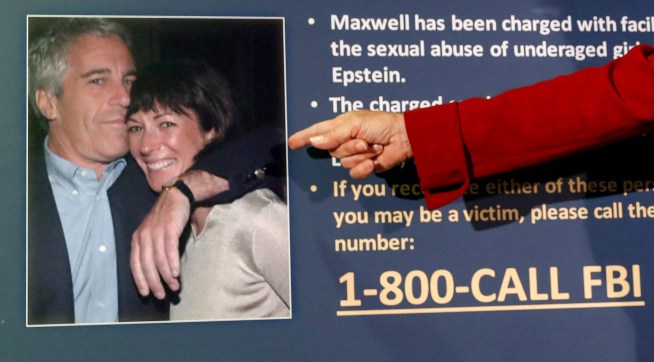
I’m mildly fascinated by this piece in New York Magazine’s Intelligencer section. It’s the review of a new biography of Andrew, Duke of York, by a guy named Andrew Lownie. (The piece appears to be free for a limited time.) What sparked my interest is the major if not central role of Ghislaine Maxwell and thus Jeffrey Epstein. In fact, the upshot of the whole thing is to make Maxwell much more central and dominating figure in the Epstein story than perhaps even Epstein himself, certainly in Andrew’s life and perhaps in Epstein’s as well.
At one level I could not care less about any of these people. As I’ve noted in my other Epstein posts, I’m interested in the story because of the way other people are interested in it — lots of people — and how that interest both intersects with our politics and in some material ways explains our politics.
Join