


I want to focus your attention on this new piece by Josh Kovensky on the DOJ appearing to open the door to denaturalizing citizens based on political activity or belief. I doubt I need to convince anyone reading this that this is a bad thing. But I want to underscore what is implicit in what is bad about it but needs to be as front and center as possible. The only cases in which denaturalization should ever be used are in the most extremes cases of egregious acts which, had they been disclosed prior to naturalization, would have barred citizenship in the first place. Even in most of those cases, the downsides usually outweigh the upsides. Because outside of the most extreme and unusual cases denaturalization is a stark threat to the equality of all American citizens.
I was born in the United States. Depending on what I do, the state can send me to war, imprison me, even execute me. But I can never stop being an American citizen unless I affirmatively renounce that citizenship. As long as that threat exists in any meaningful sense, no naturalized citizen is really my equal. Their membership in the club is contingent, contingent on behavior, which is to say not equal at all.
Join
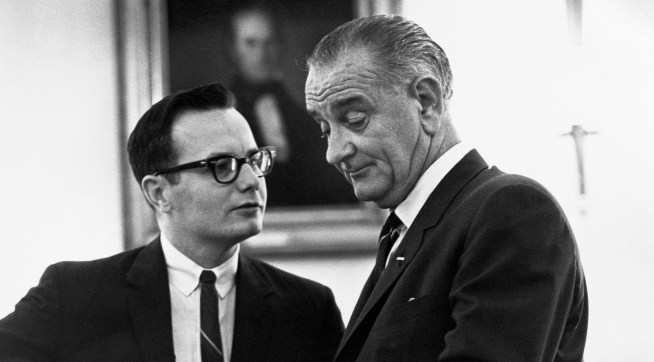
Bill Moyers died last week at the age of 91. TPM Executive Editor John Light worked for Bill for a number of years and has written this remembrance of him which I recommend to you. I wanted to share some additional thoughts about Bill and how his life affected my own and the life of this site.
The first thing I want to mention is two documentaries Bill produced in the late 80s. Joseph Campbell and the Power of Myth is a series of six one-hour interviews with Campbell, who died shortly after the interviews were completed. The second is Amazing Grace, his documentary about the history and life of this song, so embedded into the cultural and spiritual life of the Anglophone world. College is a time of promise, adventure and challenge for many people. And I encountered the first of these at a moment of particular challenge in the summer of 1988. Amazing Grace debuted in 1990. I haven’t watched either in many years, though I own a copy of Amazing Grace. They explore common themes from very different directions. Both showcased Bill’s ability to bring fascinating, human issues to life in ways that are both sophisticated and accessible to a mass audience.
Join
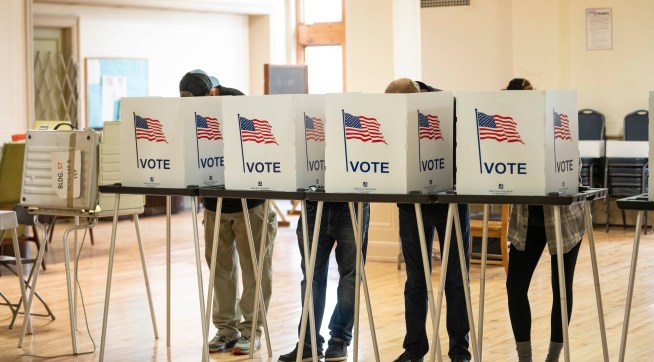
Last week, I read an article about the special primary election to replace the late Rep. Gerry Connolly (D-VA). The Post said the race was “animated by growing frustrations with the party establishment” and called the race “an early test of antiestablishment sentiment at the ballot box as the Democratic Party is caught in a tailspin over its approach to Trump.” (Emphasis added.) As it happens, I hadn’t known this primary was being held last weekend. (No excuses, just so much else going on and it was run as a so-called “firehouse primary” on an expedited basis.) The first I heard about it was from a handful of TPM Readers who wrote in to tell me about the surprising levels of energy and turnout they’d seen when they showed up to vote. This contrast caught my attention because it’s one that keeps showing up, paradoxically unremarked upon in almost all the election coverage we see.
On the one hand, the Democratic Party is “floundering,” “directionless,” “lost.” It’s approval numbers are bleak. And then, often in the same articles, you have all this evidence of voter intensity. Turnout. New activism. Lots of new people running for office. What seems like an apparent contradiction resolves itself if you get your terms right. I don’t think the Democratic Party is in a tailspin or floundering at all. In many cases, the elected leadership of the party is. But the elected leadership is not the Democratic Party. The Democratic Party is its voters. Especially it’s primary voters. This is just a signal understanding of what a party is and what constitutes its health or disfunction. I saw a headline a few days ago that was roughly, The Dems’ Latest Nightmare: Primaries As Far As The Eye Can See.
JoinIn addition to Sen. Tom Tillis (NC), Rep. Don Bacon (NE) also announced he’s retiring yesterday. There’s a lot of commentary about “centrists” and “moderates” and “institutionalists” out there and how they’re a dying breed. Whatever. This strikes me as something more straightforward. They’re both endangered incumbents. And they see that this bill, certainly now on the way to passage, is a record that basically dooms them to defeat. So they’re out. They can read the winds.
Read MoreClassic Trump-era chain of events. North Carolina Sen. Tom Tillis said he’d vote against the “Big Beautiful Bill.” Trump announced he’d choose one of the Tillis’ primary opponents to support. Only hours later, Tillis announced he’s retiring. This is pretty big news for the midterms. Tillis retiring almost certainly makes a North Carolina Senate pick up more likely for Democrats, especially if former governor Roy Cooper runs, which now seems increasingly likely though still not certain.
Read MoreI’m sharing a post a friend of mine, Victoria Cook, wrote on Facebook about the New York City mayor’s election and Jews and Israel. That whole thing. It’s not a TPM Reader email but I’m posting it in the same vein. This is her piece, not mine. So, in the nature of things, I wouldn’t write everything in the same way or agree with every individual point. But, for me. she wrote with great subtlety about how some Jews experience this bundle of issues. She also captured something that is quite salient to me, which is that this conversation often gets clogged up on the very binary question of whether some thing or some person is antisemitic. Obviously, some people really want it to land there or insist that it not land there for their own reasons. But on these issues, for me and I guess for Victoria too, that’s often kind of beside the point.
In any case, some of this is very internal to the Jewish experience and a specific variant of Jewish experience. And TPM isn’t a site about Judaism. So if you’ve already heard enough on this topic, I get it. But, as always, I share what is interesting to me in the hope and expectation some readers may find it interesting as well. For me this helped illuminate some of my own thoughts and feelings about this that I hadn’t been able to tease apart on my own.
Read MoreA TPM Reader pointed out to me that the “Big Beautiful Bill” budgets fully $40 million dollars through what’s left of the National Endowment for the Humanities to the President “for the procurement of statues” for the President’s “Garden of Heroes.”

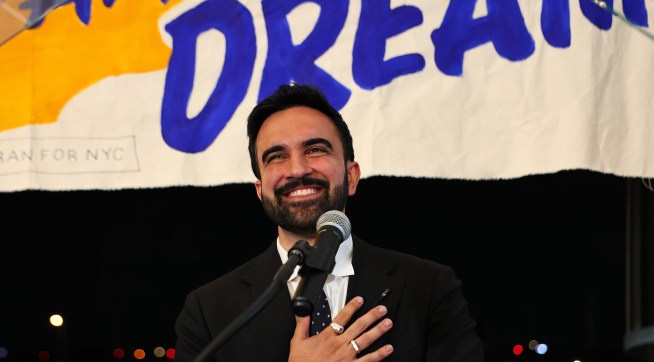
Since I haven’t written about this here, I wanted to share a few thoughts about Zohran Mamdani’s big Democratic mayoral primary win in New York. If you’ve been saturated by coverage of this race, these won’t strike you as terribly original points. I’m just sharing my perspective.
First, I see three reasons why Mamdani won.
The first is the simple fact that Democratic voters are angry and dissatisfied with the incumbent Democratic political class. We see this everywhere. It’s much less about ideology than it is often portrayed. We live in an angry, distrustful, populist age. Since the greatest expression of this mood has come from the right, Democrats have often been in the uncomfortable position of leveraging against this tendency, holding the line for institutional continuity, preservation over destruction and many other situationally understandable impulses. But the twin effects of Trump’s comeback victory and the often fractured and feeble response to it by the Democratic leadership in Washington has washed all of that away.
JoinFrom Politico …
On the federal employee pension plan: In order to pay for the megabill, Senate Republicans are considering substantially hiking “federal employees’ retirement contributions to 15.6 percent of their salary — compared with the 9.4 percent required in the initial version of the bill — while carving out an exemption for members of Congress and their staff,” POLITICO’s Lawrence Ukenye reports.
I think “substantially” manages to understate the hike here.
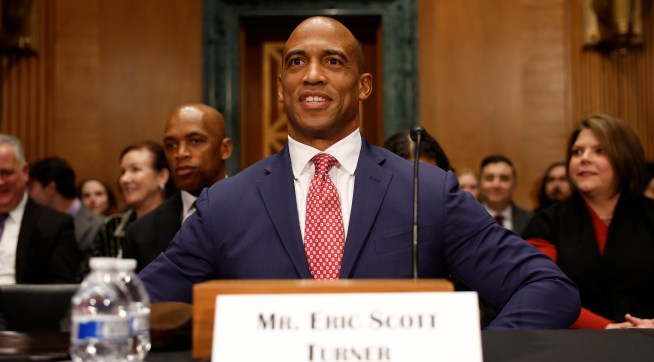
I wanted to update you on the story I flagged yesterday in which the Secretary of Housing and Urban Development (HUD), Scott Turner, decided to bogart the offices of the Trump-beleaguered National Science Foundation (NSF) at least in part to build a Sky Mansion for himself on the building’s top floors. Stories like this have always had a special fascination for me. You can’t say it’s a bigger story than the US going to war with Iran or the US military low-fi occupying a major American city. But in addition to its immediate impact on three or four thousand people — the employees of HUD and NSF — it captures so much of what 2025 Trump-era Washington is about. As probably goes without saying, there appears to have been no formal process behind this at all. There’s a very Sopranos feel to the whole caper: ‘Nice place you got here. It’s mine now.’
Join