


I wrote this post back in July. But it’s more relevant now than it was then. The headline is that Thomas Jefferson very clearly didn’t agree with John Roberts about presidential immunity. Jefferson didn’t write the Constitution, of course. He wasn’t even there. He was in France at the time. But his argument about this question has been rattling around my head ever since I happened upon this particular letter of his written in 1810, a couple years after he left the presidency. In short, Jefferson’s argument was that there are some occasions in which it would not only be permissible for a president to break the law or act outside the Constitution — he might in fact be obligated to do so. The key was that the president must submit himself for judgment, or as he put it, “throw himself on the justice of his country and the rectitude of his motives.” In other words, a president would be obligated to act and then, in essence, turn himself in. Far from having any immunity for his actions, it is precisely the responsibility of such high office to take on the risk of punishment. Again, as he put it: “The officer who is called to act on this superior ground, does indeed risk himself on the justice of the controlling powers of the Constitution, and his station makes it his duty to incur the risk.”
It is an additional signifier in Jefferson’s mind that he speaks here of the president as the chief “officer” of the state. In other words, the President isn’t a king. He is at the end of the day simply the most senior officer of the state, the chief executive, shall we say. We are far, far at the moment from the theoretical possibility of Donald Trump facing justice for the crimes he is now authorizing or committing himself. But it’s highly relevant to remember that the President is just another citizen, authorized by the constitution to perform certain duties for the American people. He’s not above the law, no matter what the corrupt Court says. Here’s the post.
As I have for 25 years, I welcome your responses to every Editor’s Blog post. That’s why there are no comments on Editors’ Blog posts. I want to hear from you by email. You can send those to talk (at) talkingpointsmemo dot com. If you’re a government worker or anyone else who has sensitive or confidential information to share about what’s happening inside the federal government you can reach me via encrypted mail at joshtpm (at) protonmail dot com or via Signal at joshtpm dot 99. Please only use these encrypted channels for confidential communication.
If you are interested in reaching out by encrypted email, which you can do at that protonmail address, I recommend creating your own protonmail account. It’s free for a basic account and just as easy as spinning up a gmail account. Just google protonmail. But you don’t have end-to-end encryption, which is what you want, unless you’re using encrypted email on both ends.
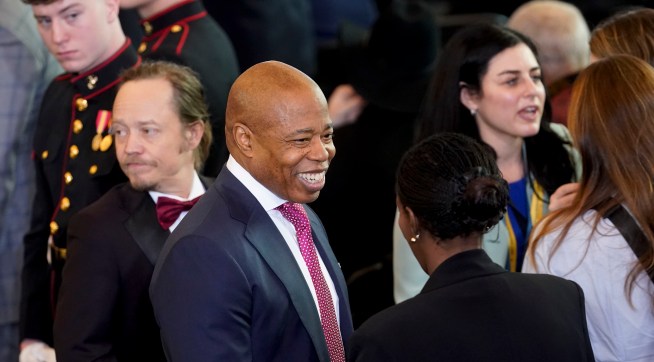
The Trump DOJ’s decision to drop charges against New York City Mayor Eric Adams may not be the most serious act of prosecutorial corruption in decades but it’s almost certainly the most brazen. The stated reasons for dropping the charges were absurd on their face and, while everyone deserves their day in court, Adams appears to be guilty as sin. But there’s an aspect of this corrupt spectacle which, while certainly no secret, has been far too underplayed in most press accounts. As the words are normally understood, the government didn’t drop the charges (indeed, so far it’s not clear that the Trump DOJ has found anyone in the New York office to actually do the deed; there’s still no motion to drop the charges). It would be more accurate, as to common understanding, to say they suspended them — because the directive from DC was to drop the charges without prejudice. The letter from Acting Deputy Attorney General Emil Bove states explicitly that DOJ will review the matter again after the November mayoral election and decide whether to reinstate the charges.
Read MoreI’m told firings have started at TTS (Technology Transformation Services), basically an in-house tech consultancy serving the federal government. It’s housed within GSA. For now it’s hitting probationers — staff brought on in the last year — who have fewer civil service protections. Disproportionately women and minority staffers. So I’d imagine that’s a fringe benefit of the move for Trump appointees. I don’t have exact numbers of those affected. But it seems to be in the dozens who found out this afternoon.

I wanted to direct your attention to the news today that House Republicans have introduced a budget outline. This is a big, big deal. It may seem like ordinary budget politics is moving on a separate path from the ongoing constitutional crisis. But they are deeply intertwined. Framing everything is the fact that House Republicans have only the tiniest of margins in the House — 1 to 3 votes, depending on a few different factors. It’s seemed highly doubtful that they can get everything they want to do or need to do in a single bill — Trump tax cuts, the massive spending cuts to pay for those tax cuts and also what the Freedom Caucus demands, a debt-ceiling hike, border spending, more. This is why the House and the Senate have been going back and forth on one massive bill or two bills.
JoinI want to return to a subject that has been pushed a bit out of the headlines over the last few days: the DOGE story at the Treasury’s Bureau of Fiscal Service (BFS). Late yesterday afternoon the government filed a series of declarations from Treasury Department civil servants providing details to a federal judge in New York about what happened. The biggest news turns on USAID payments.
We’d heard from the Times a few days ago that what was motivating this whole effort at Treasury was that they wanted to block USAID payments. We’d first heard almost two weeks ago that a senior Treasury civil servant, David A. Lebryk, had resigned rather than assist in blocking payments. But everything we’d heard to date is that intentions notwithstanding, no blocking or interfering had actually happened. But according to these new documents that’s not true. The declaration of Treasury civil servant Vona S. Robinson says that in fact multiple payments were temporarily put on hold before being reviewed at the State Department and eventually cleared for payment and one was rejected altogether (see Robinson, paragraphs 13 and 14).
Read More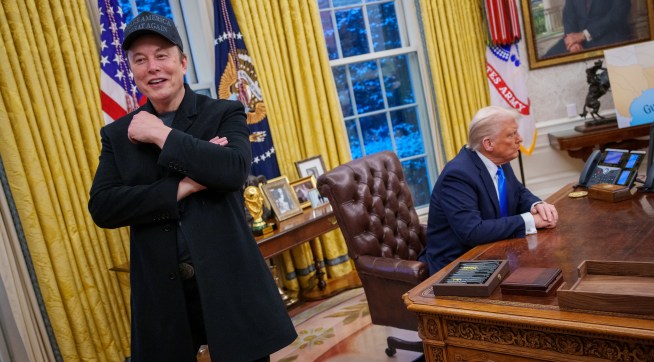
These are wild times at TPM because they’re wild times in the American government. It’s hard to keep up with everything happening from one moment to the next. I had not had a chance to look at the new DOGE executive order the President signed this afternoon with Elon Musk standing beside him. I don’t think it’s too much to say that it puts Musk functionally in control of the U.S. government. I know that sounds pretty wild. And that may not apply to high-profile policy — two budget bills or one on Capitol Hill, plans for Gaza. But let me explain what it does.
Read More
I want to take a moment to address a few questions I’ve gotten about a potential standoff between congressional Democrats and President Trump over the DOGE wilding gangs he’s allowing to run free through the executive branch. The most frequent and very reasonable question is: Let’s say Trump agrees to a deal of some sort. How do you enforce the agreement? More specifically, after Democrats help pass either a continuing resolution or a debt ceiling hike, what prevents Trump from reneging on the deal a week later after the Democrats have ceded their leverage?
Let me answer this on two levels, the first attitudinal and the second concrete. If I were in such a negotiation and the person on the other side of the table absolutely needed what only I can give I’d say, you figure that out. You need me. I don’t need you. So you come up with something binding, some mechanism that doesn’t require me to trust you. If it seems meaningfully binding to me, cool. Then we can talk. Otherwise find your own votes. I’ve never been involved in a negotiation beyond the finances of a tiny perpetually cash strapped small business. But those were always hugely important negotiations to me. And this is always the position I’ve taken when the person on the other side needed or wanted something more than we did. The fundamental issue in any negotiation, especially adversarial negotiations, is properly assigning whose problem it is.
So how do you make sure Trump doesn’t renege on the deal? His problem to figure that out because he’s the one who wants the deal. Never get fooled into taking on a problem that isn’t yours.
Read More
Yesterday the Bulwark posted a very interesting article which showed that while basically every Republican is bowing down to the High Lord Elon in Washington, they’re singing at least a slightly different tune in letters to constituents in their states and districts. The Bulwark rightly notes that this suggests a nascent discomfort with the headlines Musk’s operation is creating, enough that even some pretty stalwart Republicans are reacting to it. The Bulwark received letters which readers had sent in from twelve different members of Congress and published four of them — from Sen. John R. Curtis of Utah, Rep. Daniel Webster of Florida, Rep. Mike Flood of Nebraska, and Sen. Deb Fischer of Nebraska. The members are certainly not turning on Musk. But it’s not the standard DC “sucks to be you” discourse we’re seeing in Washington. The letters say they’re monitoring the situation closely to make sure there are no conflicts of interest. They’re particularly sensitive to reports of people’s private information being compromised. A number of them say clearly that Musk is only making recommendations and that Congress will have the final say about spending.
Join
I’ve written clearly a few times that Democrats have one key leverage point with a plausible shot of ending the spree of criminal and unconstitutional conduct Trump has unleashed through the federal government. That comes with the expiration of the current “continuing resolution” which funds the government along with the need to again raise the debt ceiling. I’ve argued that Democrats’ position needs to be this: no discussions, no negotiations until the law breaking stops. After that, if there is an after that, they can negotiate on actual budgetary issues, but not before.
Today Sen. Schumer sent out a “Dear Colleague” letter to his caucus setting forth Senate Democrats’ position. Congressional leaders put these out as a combination of advice and guidance to members as well as public messaging. Politico and I assume others are interpreting the letter as taking that budgetary cudgel off the table. They have good reason to interpret it that way. Schumer makes no mention of the condition I note above. He says: “Democrats stand ready to support legislation that will prevent a government shutdown. Congressional Republicans, despite their bluster, know full well that governing requires bipartisan negotiation and cooperation.”
Read More