


As you may know we’re in the midst of an burgeoning era of email newsletters. We have two new or upgraded ones ourselves: The Franchise (on voting rights and democracy) and The Weekender. (You can sign up for both here.) There’s also Substack, a newsletter platform which now hosts a substantial number of established journalists (and newcomers) who are striking out on their own as one-man/-woman shops with revenue from recurring subscriptions. There’s even been some controversy in the case of Substack because they have basically fronted a year of guaranteed revenue to a number of journalists with established followings. Substack thinks it will make money on those advances and does so because it wants as many proofs of concept on the platform as possible. Nothing surprising or controversial there, though some think otherwise.
A key part of the newsletter revival is the subscription model, one which I’ve discussed at great length as a key to TPM’s survival and current vitality. That is a key part of their attractiveness. The greatest financial challenge to journalism today is the dominating role occupied by platform monopolies which take from publications their longstanding role as gatekeepers and profit centers for commercial speech. Direct relationships with readers via subscriptions cuts right through that existential challenge.
But it’s not the business model of newsletters that brings me to write about them today. It’s the more intangible or elusive qualities that makes them attractive to readers. The apparently viable business model makes them attractive to independent journalists and publications. But none of it would work if there wasn’t demonstrable demand. And that demand very clearly exists.
Read Gregory Downs’ history of Juneteenth, originally published in 2015.
Last week I noted that even if Sen. Joe Manchin (D-WV) is watering down the For the People Act, his somewhat diminished version is still very much worth fighting for. Part of my argument is that the ban on partisan gerrymandering is likely the most important part of the legislation. And Manchin appears to be saying that he supports that part of the bill.
Now, a number of you have written in to ask how excited we can be about that given the GOP majority (yes, intentional usage) Supreme Court which is often inclined to use the most facially absurd arguments if they advance conservative ideology or the present interests of the Republican party (yes, this is definitely still true). Or to put it more directly, how likely are those provisions to withstand the scrutiny of this Supreme Court?
I teased it yesterday, and now it’s live. Josh Kovensky peels back the layers of “ItalyGate” (not familiar? Josh will explain). Along the way, he finds a surprising cameo by a longtime TPM fixture, threads into Iceland and Somalia (no, really), and a cast of characters that will leave you scratching your head. It’s rollicking good fun, but remember this is the crap Trump’s White House chief of staff was pushing the Justice Department to look into. It’s a classic TPM story.
We have a Josh Kovensky must-read coming Saturday. You won’t want to miss it, even on a holiday weekend. Trust me: it’s a lot of fun.
We’re off to a solid start to our second annual drive for The TPM Journalism Fund. It’s super important for TPM (more details here) and it’s a critical way to keep TPM thriving and focused on original reporting. If you haven’t yet, please consider clicking here to contribute to The TPM Journalism Fund.

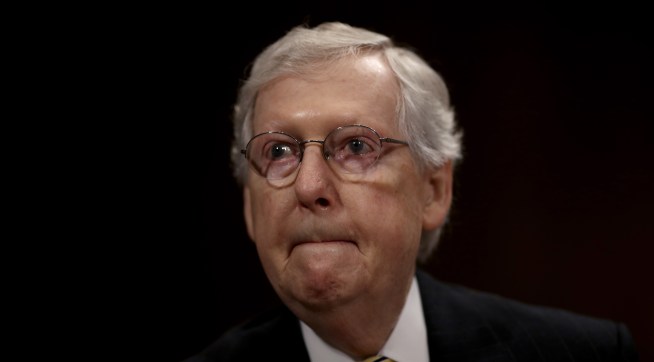
The Senate minority leader is showing a bit more of his cards than usual.
Join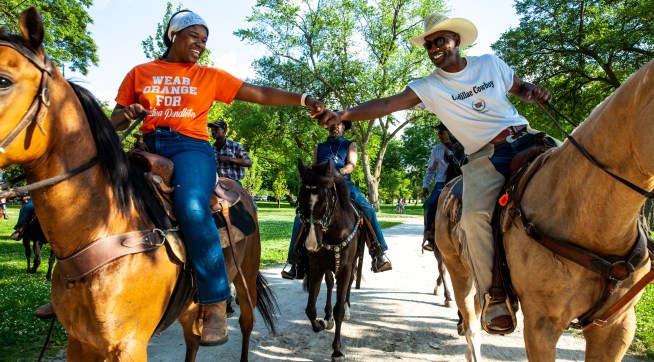
As I noted below, my first reaction to the news that Juneteenth was becoming a federal holiday was shock. Given all the rightwing freak-outs we’ve seen about BLM, CRT, the 1619 Project and all the rest I was shocked, albeit very pleasantly, by the fact that congressional Republicans voted overwhelmingly in favor of making the day a federal holiday. In his new newsletter (The Uprising), TPM Alum Hunter Walker looks at the fourteen members of the House who voted against the holiday and their various excuses for doing so. There he notes right wing activist Charlie Kirk tweeting that Juneteenth is a kind of effort to cancel July 4th.
“America only has one Independence Day and it’s on July 4th, 1776. If you’re a conservative who is okay with the ‘Juneteenth National Independence Day Act,’ you’re not paying attention to what the left is truly trying to accomplish.”
Please see my short note below on the first federal Juneteenth celebrated today. Before that, thank you for getting us off to a great start in our annual TPM Journalism Fund drive. If you’ve planned on contributing but haven’t found the opportune moment, please just click here and make today the day. It’s super important for TPM and your money will be well spent.
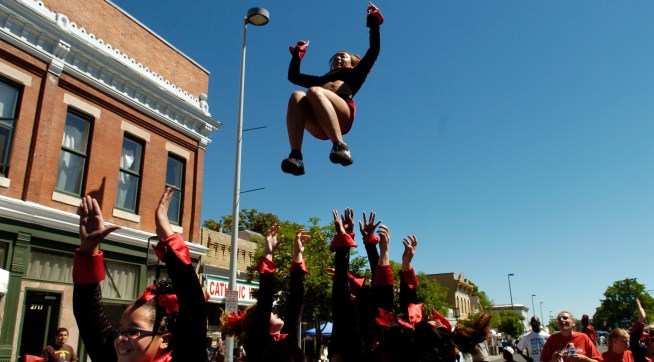
Yesterday President Biden signed the bill making Juneteenth a national holiday. Today it is being celebrated officially for the first time. Yes, today, June 18th. There are many, many things that can and should be said about this. But here’s one that I’ll focus on today.
Juneteenth will be the second federal holiday focused on the historical role and experience of African-Americans in the American Republic – the other being the celebration of the birthday of Dr. Martin Luther King. It is also the second federal holiday tied in some way to the American Civil War. But in this case it is only barely so. Memorial Day began as a commemoration of the dead of the Civil War, in both the North and the South. (The precise origins are disputed.) But Memorial Day is connected to the Civil War only as a point of origin for a tradition. The holiday explicitly honors the sacrifices of all who died in the service of the armed forces of the United States in every war and conflict. To the extent Memorial Day is tied to the Civil War it is focused on military sacrifice, which is in key respects apolitical. It honors military sacrifice in the service of the American Republic irrespective of the nature of the specific conflicts which made the sacrifice necessary.