


Benjamin Netanyahu’s dozen years as Israel’s Prime Minister are most likely coming to an end. The new government should be sworn in sometime next week. But it’s still not a done deal because Netanyahu and many of his supporters view his removal from office – even by a unity government led by one of his former proteges – as existential. I’ve mentioned several times the January 6th analogy. But every political system has different mechanisms and every country has a unique political culture. So how could Netanyahu manage to remain in power either by norm-busting but still technically legitimate means or by extra-legal and extra-constitutional means?
Let’s start with the central fact: For the moment the new government is only a proposed government. To come formally into power it must be approved by a vote of 61 members of the Knesset, the country’s parliament. The coalition has to keep everyone on board for several days so they cast those 61 votes.
JoinWild details here about the situation in Mar-a-Lago. Ex-President Trump apparently spends his days channel surfing looking for any new news about the Arizona “audit”. He will appear at a rally next week in which he’ll be introduced as the “real president”.

By rights, it’s over and in effect it probably is over. Last night Israel’s opposition finalized and formally agreed to create a coalition government that will remove Benjamin Netanyahu from power. The coalition stretches from the right to the left and includes an Arab Israeli Islamist party. The architect of the new government is opposition leader Yair Lapid, whose deftness, patience and self-abnegation in this effort is really hard to capture or overstate. He has the signed document, which will make the right-wing Naftali Bennett Prime Minister for the government’s first two years, and he’s brought that to the country’s President. In the Israeli system, that’s it, all but the formality of the parties who just agreed to the deal voting it into power in the Knesset, Israel’s parliament.
But Netanyahu isn’t letting go.
Join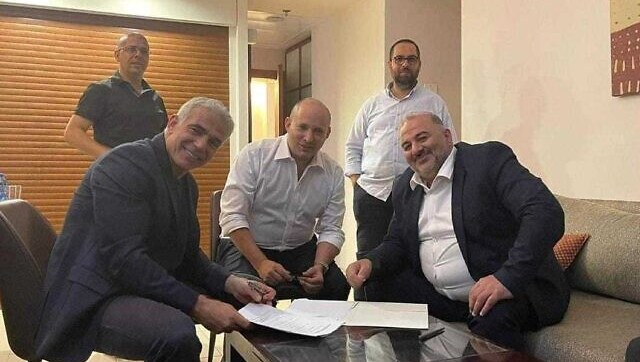
Literally in the final hour, members of the so-called ‘change coalition’ have finalized an agreement to form a coalition government and presented it to the President. Caretaker Prime Minister Netanyahu has one more card to play but it’s hope and against hope and veering increasingly into Jan 6th territory. A Netanyahu ally, Yariv Levin, is the Speaker of the Knesset. And he and Netanyahu’s supporters have said he will simply refuse to hold the vote that confirms the new government. That is not really a thing. It’s pretty close to the Israeli system’s version of refusing to accept the electoral college ballots. It’s not clear how long he can he do that legally. Some have said he could conceivably delay for as long as a week. To what end? The coalition is so fragile that the hope is that a few more days might break it apart. Then Netanyahu gets to remain perpetual Prime Minister.
Really, though, this almost certainly means Netanyahu is through. Or at least through as the incumbent Prime Minister. The reality of the situation may lead to them jettisoning that plan.
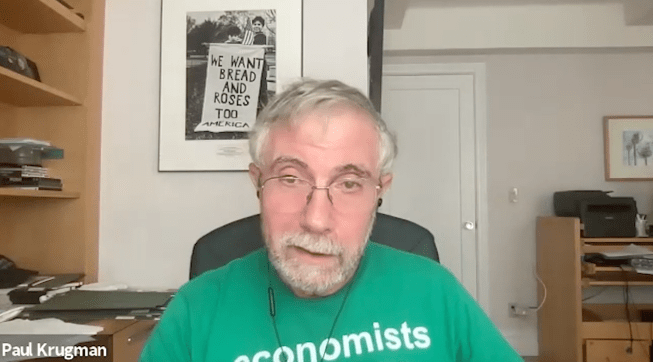
Yesterday we held an Inside Briefing with Paul Krugman in which we discussed pretty much all the economic policy questions (and the political debates growing out of them) of the early Biden presidency. We talk about the Biden infrastructure plan, inflation, chronic under-investment, Larry Summers, whether deficits matter and more.
If you’re a member, you can watch our discussion after the jump. I think you’ll enjoy it.
Join

By now you’ve likely seen new reporting from the New York Times’ Maggie Haberman: Former President Trump is telling people that he expects he will be “reinstated” to the presidency in August.
JoinRemarkable. Ex-President Trump appears to have had a tantrum and shut down his blog. This appears to come after news reports that it was receiving only a tiny amount of traffic. It ran for about 30 days. Sad.
According to Maggie Haberman and Byron York, ex-President Trump is telling associates he expects to be reinstalled in the White House in a coup some time this summer. This is best seen as an open invitation and encouragement of more January 6th style political violence focused on the late summer of 2021.

With Texas Democrats refusing to attend a state legislative session in an effort to block the state’s election crackdown law it reminded TPM Reader MR of a similar instance 18 years ago. It was a story I covered closely at TPM, and MR dropped me a note this morning reminding me. It’s more than just a trip down memory lane. What happened in 2003 in Texas was a preview, prologue to almost everything that would happen over the subsequent two decades. It presaged the debt ceiling hostage taking; it presaged Merrick Garland; and it presaged Donald Trump.
As we know from looking forward to the 2022 midterm, once a decade there’s a federal Census, a reapportionment of congressional seats and redistricting in every state that has more than one representative. It happened in 2010, setting the ground work for Republicans storming back into the majority in the House. Democrats rightly fear something similar will happen next year.
JoinWe had an Inside Briefing this afternoon with Paul Krugman where we talked about Biden’s agenda, inflation, under-investment, deficits, infrastructure, the fed and a lot more. I was really looking forward to this discussion because … well, we’re on totally different policy and economic terrain than we were two years ago. And I’ve been trying to get my head around new debates about inflation, distinguishing between nonsense and scare talk on the one hand and concerns which may be overblown but are also reasonable. We also talked about Paul’s concern that Biden’s medium to long term spending policies may not be aggressive enough.
Anyway, fascinating conversation, I think. If you’re a member, we’ll be posting it tomorrow here in the Editor’s Blog.
Also, for podcast listeners, this week’s episode will be dropping Thursday rather than Wednesday this week.