


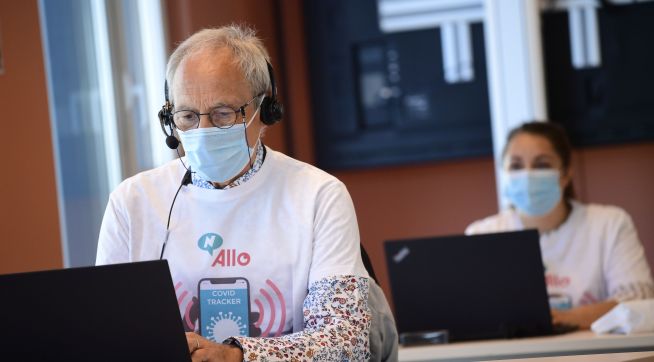
As we discussed yesterday, the issue of mask wearing has become both politically charged in the US partisan political climate and a matter or real controversy among public health experts. There have also been hints, inferences from different countries’ mitigation strategies and some initial studies suggesting that mask wearing is not only effective but possibly more effective than even some advocates of their use anticipated.
Let me try to walk through some of the ins and outs of this debate.
Imperial College London has a new report out looking at the COVID19 outlook in the United States and broken down by states. The main focus is on reopening and increased mobility and how this affects transmission rates. They are also clear that they don’t account for other behavioral modifications like mask wearing. So their predictions should be considered “pessimistic”.
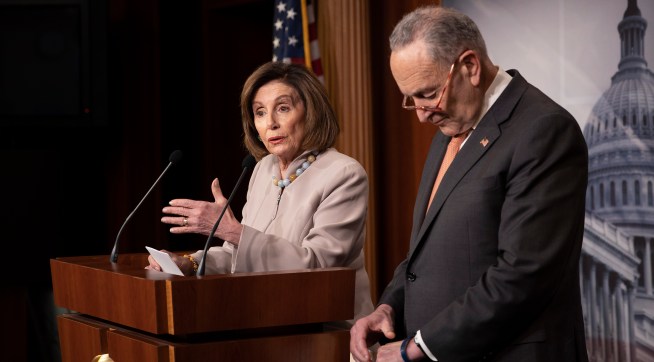
We shouldn’t have to plan how to mourn this much loss.
Very early in the crisis I was working on a post about masks before the US made its big shift in favor of masking. This was partly based on my own observations but I was also reading the commentary of the Turkish-American sociologist Zeynep Tufekci. The story seemed to be one of American but also really Western complacency and arrogance. The general wisdom seemed to be: ‘yes, they wear masks in Asia. It’s a good system of social signaling, demonstrating that you take the epidemic seriously. And certainly there’s no harm but masks don’t actually work.’
Then we decided masking does work.
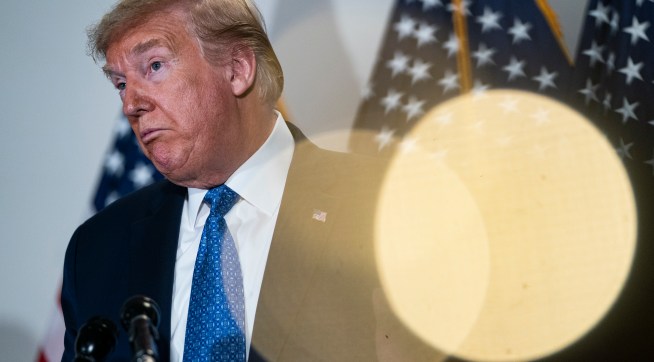
President Trump and many of his top officials all vote-by-mail.
But as we reported earlier this month, there’s a reason you would never know that.

Let me run through a few miscellaneous news items and updates from the COVID19 Crisis.
Mike Flynn is trying to get the judge removed from his case, among other new developments in what is shaping up as a major test of the judiciary’s ability not to get coopted in Trump’s politicization of the Barr Justice Department.
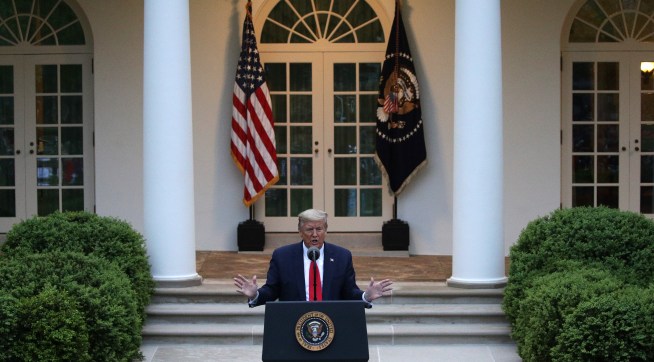
The World Health Organization just unanimously agreed it would conduct a “comprehensive evaluation” of its own response to the coronavirus pandemic that’s rocked the globe. The Associated Press reported that the vote was taken after a resolution was brought forward by European Union members and African nations. But you’d be remiss to assume that Trump’s latest Twitter tangent and funding threats didn’t have something to do with this decision.
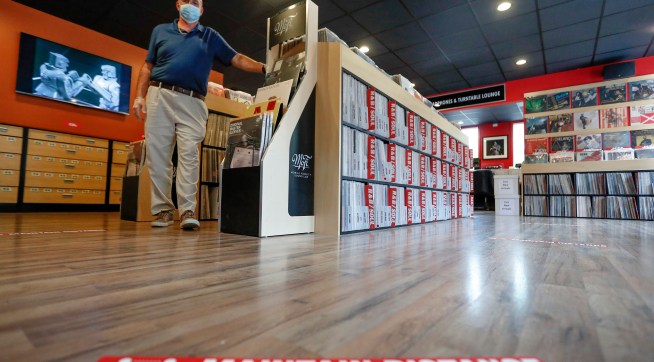
If you’re trying to make sense of the ‘re-opening’ debate, here’s one resource that is worth looking at: Google’s COVID-19 Mobility Reports. This is just a slice of the oceans of data Google has at its corporate fingertips. Mainly it’s from geo-tracking data tied to your cellphones. In another conversation we can discuss the pros and cons of Google having access to this data and access to it as its own property. For now, it’s a valuable and fascinating resource for government officials and public health planners because it uses anonymized cellphone tracking data to produce very reliable and granular data on social and economic activity. As I said, Google has always had this and related data and it’s one of their core business assets. But they’ve made an edition of it available for the COVID19 Crisis.
But it probably won’t.
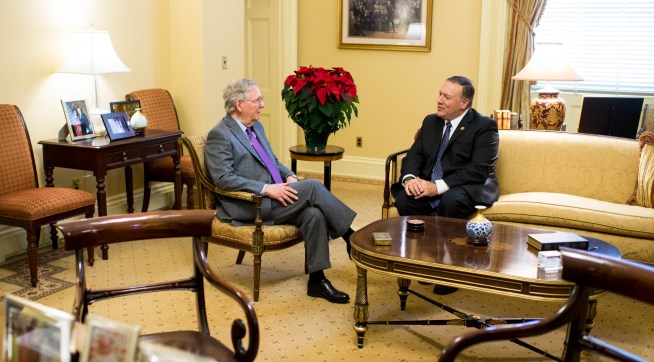
I wrote last week about my fascination with Senate Majority Leader Mitch McConnell’s months-long crusade to use the media to pressure the secretary of state to run for Senate in Kansas. McConnell views Mike Pompeo as the ideal candidate: He has enough establishment support to unite the party in the key state that’s about to dive into a messy GOP primary over the open seat, where a top contender is polarizing, even in Republican circles.