


TPM Reader PK follows up on reopening …
I was struck by reader JL’s comments and your statement that, “We shouldn’t assume that the states that are in the process of opening up will quickly see dramatic resurgences or outbreaks. There’s a lot of complexity under the hood distinguishing one state’s plan from another.”
I think that’s exactly right and it is why I was so disturbed by a NYTimes opinion piece that ran this weekend from Brown University President Christina Paxson. It offered a bold plan to reopen college campuses around the country by the fall, talking about changes ranging from keeping large classes online to wearing masks and minimizing large gatherings.
In a widely-read column in The New York Post the Chair of Emergency Medicine at St Barnabas Hospital in the Bronx says it’s time to reopen the city. Though I disagree with him, as someone who has worked in an emergency room through the crisis and contracted COVID19 himself, Daniel Murphy has plenty of standing to share his opinion. I note the piece for a more particular reason though. Murphy says that 43% of Bronx residents have been infected with COVID19. He doesn’t say where he gets that number and he doesn’t say explicitly that he’s talking about antibodies testing. But context makes the latter point pretty clear and he must be drawing this from the serology testing the state has been doing over the last two weeks.
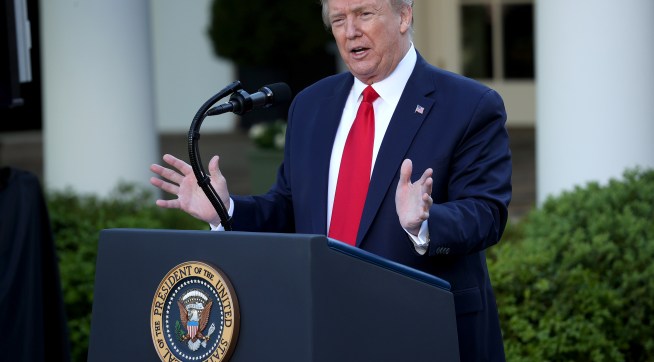
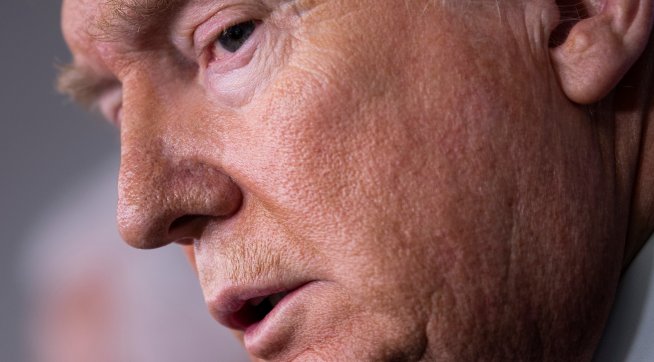
A few days ago I mentioned that if you took an observer from 2016 and showed her President Trump’s tweets today they’d think something had gone seriously wrong with the man. Yes, he was all the bad things in 2016. Almost everything that has happened connected to him was predictable. Much of it was in fact predicted. But the affect, the garbled speech, the dipping into vocabulary of Internet hate speech groups, it’s all much wilder and antic than the version we saw four years ago. But as I wrote this I noticed something different.
These points from TPM Reader JL are all, I think, well-taken. We shouldn’t assume that the states that are in the process of opening up will quickly see dramatic resurgences or outbreaks. There’s a lot of complexity under the hood distinguishing one state’s plan from another. And in many cases, the real restraint isn’t public orders as public fear and resistance to going back to normal.
I heard a news report of states planning substantial reopens in first week of May, and with the caution that unnamed and uncharacterized ‘public health officials’ were worried about it. (Another example, IMHO, of the BS corporate ‘information product’ slop we flatter as news reporting in the US)
The selection of states mentioned included CO, MN, MT, FL, GA, TN. And it occurred to me that is a collection of good, bad and ugly state political leadership.
So, I hope TPM keeps an eye on the whole range of ‘early reopen’ states and reports out the range of outcomes from a comprehensive representation of the good, the bad, and the ugly.
New serology/antibodies data from New York State is out today. This is the second round of serology testing. Gov. Cuomo said the state has now tested 7,500 people. Presumably that’s a rough count and I assume it is inclusive of the previous number, which was 3,000 tests. This second round had 14.9% positive statewide, up from 13.9%. In New York City, the number is 24.7%, up from 21.2%.
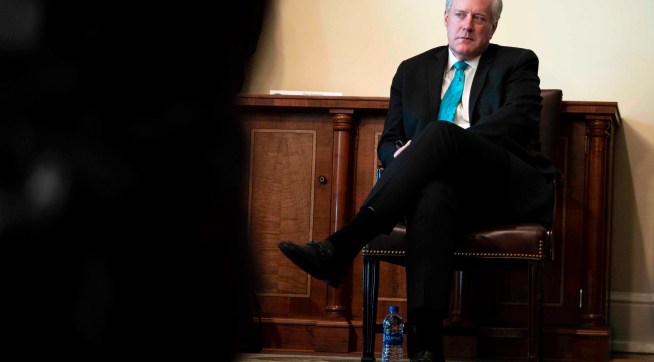
In what appears to be an attempt to contradict a recent report in the New York Times — that President Trump spends his days eating french fries and obsessing over the TV — newly minted chief-of-staff Mark Meadows told the New York Post this weekend that his “biggest concern” as a top White House official is making sure Trump eats lunch.
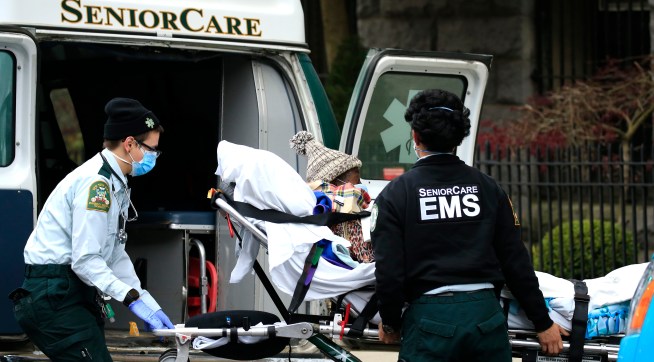
One of the most fascinating and ominous things about COVID19 is that as clinicians and researchers have learned more about it that knowledge has not simply filled out the details of a broadly understood story. Rather, more knowledge has confirmed how little we knew and still know about the disease. For lay people like most of us the original story was that COVID19 was a viral respiratory tract infection. It was more deadly, less predictable in its course and had no known therapies to treat it. But broadly speaking a disease that attack the lungs, leads in severe cases to pneumonia and from there a cascading series of failures that can lead to death. Doctors had a more sophisticated but broadly comparable understanding. Four months plus into the history of the disease they know that COVI19 can attack most of the body’s major organs – heart, liver, kidneys, brain, et al. It’s far more insidious and copious in its range of potential attacks on the human body than they realized only six weeks ago.
A new emerging issue is how COVID19 attacks or disrupts a patient’s blood – specifically the delicate and critical balance of regulating when to flow and when to clot. When I first read articles about this I assumed these clotting issues were just part and parcel of the failure or near failure of the various organ systems. COVID19 attacks your liver or kidneys and clotting issues are just a manifestation of injury. But that does not seem to be the case. It seems to be a distinct way COVID19 attacks the body.
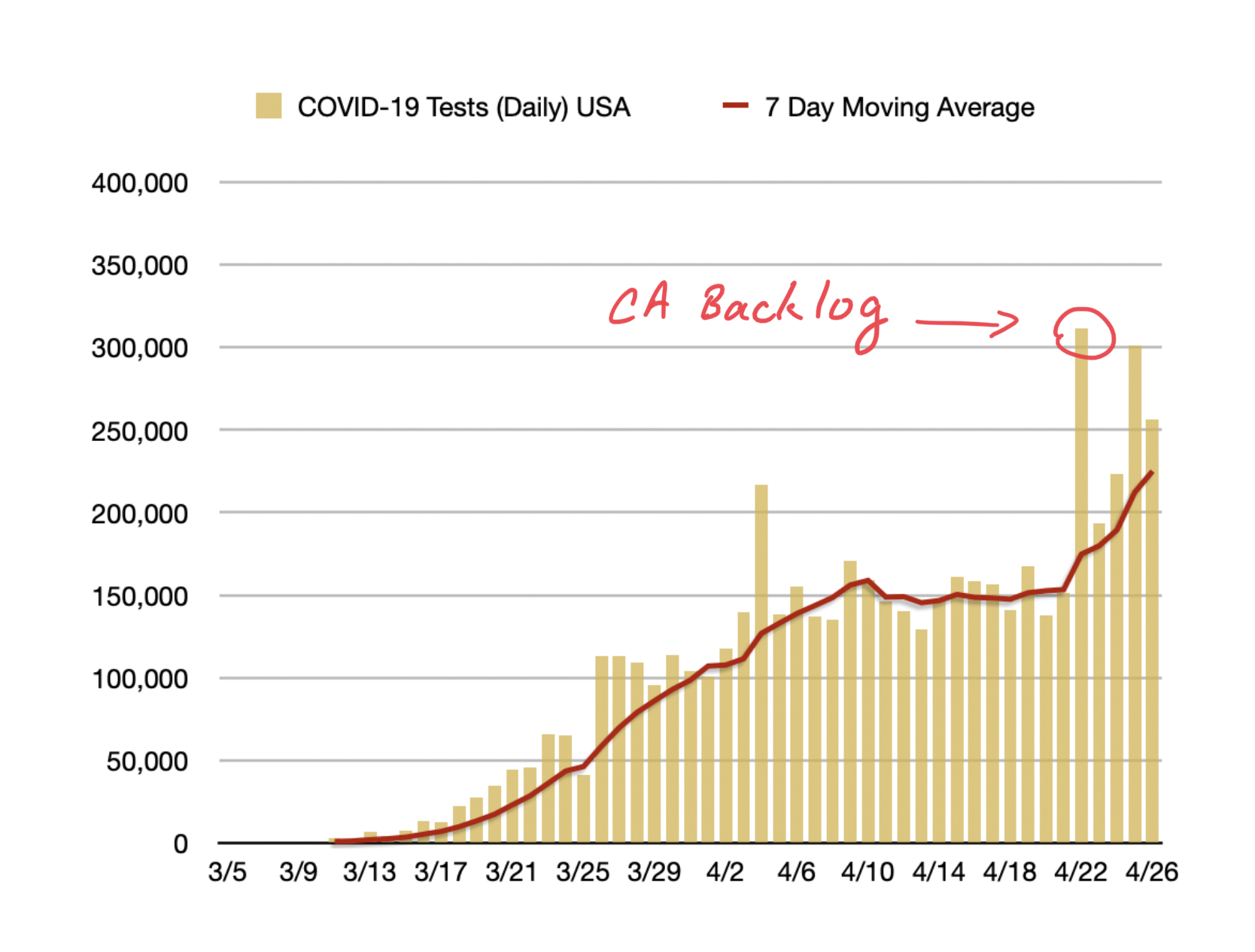
Good news has been hard to come by in the COVID19 Crisis. But testing capacity across the country did appear to grow substantially over the last week. Here is daily COVID19 tests across the country along with a 7 day moving average.
Today researchers at the University of Miami released the preliminary results of serology (antibodies) testing in Miami-Dade County. They estimate that 6% of the population – or 165,000 residents – have been exposed to the disease. According to this write-up: “The researchers say they are 95% certain that the true amount of infection lies between 4.4% and 7.9% of the population, with 6% representing the best estimate.” The methodology for the sample appears to have been more robust than that applied in the Stanford group’s studies in California. Researchers say they used data from electrical utility Florida Power and Light to generate phone numbers in targeted demographic areas who were then contacted asked to voluntarily provide samples. Read More