


Yesterday I corresponded with a TPM Reader who referenced the theory that the cataclysmic economic data we are now seeing predicted on quarterly GDP, unemployment and more are categorically different because they are being created deliberately to accomplish a specific purpose. We don’t have a bad economy. We deliberately shut the economy down to save lives and prevent a specific sort of economic and societal chaos caused by mass mortality. There are significant ways in which this is true. But I wanted to explain key ways it is not.
We have intentionally placed what amounts to a pause on broad portions of the national economy. It’s not a mystery why we’re heading into a period of mass unemployment. We specifically told tens of millions of people not to go to work. But this is something like placing a pause on blood flow through your body. When the blood stops flowing it’s not just a matter of starting it up again. When the blood stops flowing a lot of things start to break and they don’t unbreak when the flow resumes. The analogy between the physical body and economic life is a strong one.
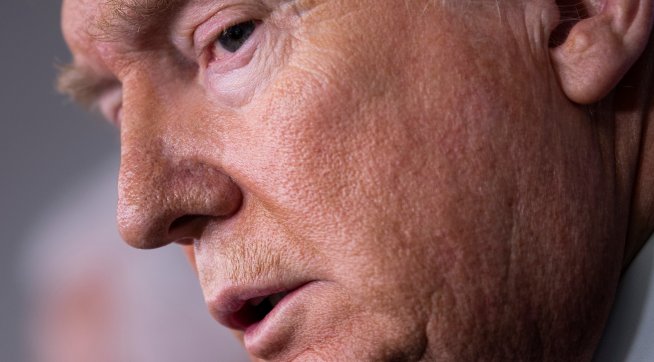
While President Trump was moved on Sunday by the grim data experts showed him on death projections sans tight social distancing measures, there was another set of numbers that reportedly pushed Trump to abandon his Easter pipe dream.
Here’s new data just released from the COVID-19 Tracking Project.
First, here’s the latest data for daily new cases and fatalities across the United States.
A new estimate from economists at the St. Louis Fed project total COVID-19 Crisis employment reductions at 47 million people. That would translate into a 32.1% unemployment rate. To give some perspective that is significantly higher than the peak unemployment during the Great Depression (24.9%) and wildly higher than anything seen during the Great Recession (10%).
Here is an interesting data source projecting the scope and duration of the epidemic across the United States and within each individual state. I cannot speak to the accuracy or methodology. I am pointing it out to you because it’s the work of the Institute for Health Metrics and Evaluation, a research center attached to the University of Washington School of Medicine. In other words, these are credentialed, serious people. Whether they’re correct I cannot say. And I pass it on on that basis.
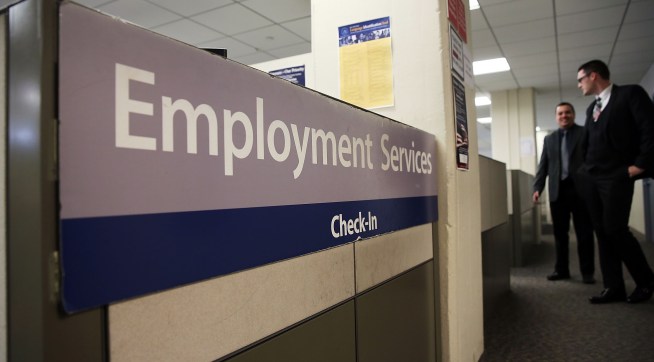
In times of crisis, the kind of economic data that is ordinarily only of interest to economists and finance pros draws more attention from the rest of us as we look for signs of what is going on, and what is to come. Last week’s jobless claims number, the highest in United States history, was a sobering look at what is in store economically.
This week we’ll get another round of jobless claims numbers, along with looks at manufacturing and service jobs that will help us understand the velocity and depth of the economic crisis we are facing.
Let me note one of the known unknowns we should be thinking about as we roll into the coming brutal weeks. We are looking at national statistics – infections, tests, fatalities, hospitalizations. But these are likely illusory. There really is no national outbreak. There’s a big New York outbreak which still dominates the national statistics and will have its own discrete dynamics. It seems very likely you will have a series of other regional and metropolitan area outbreaks unfolding across the country in the coming weeks. So the national numbers will be misleading. In epidemiological terms the US is more like Europe as a whole, rather than any individual country, especially when states are playing such an outsized role combating the disease because of a significantly distracted federal response.
So where is this headed? What is the endgame?
Nobody is talking about it.
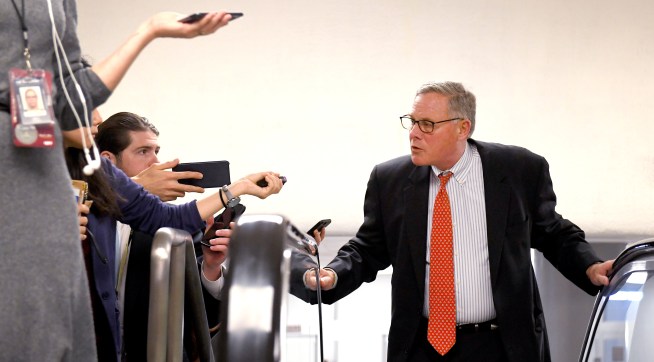
While it’s in the preliminary stages of it’s investigation, the Justice Department is now looking into sketchy stock market transactions that at least two lawmakers made after receiving private briefings on the COVID-19 outbreak.
Like many of you I’ve struggled to make sense of the so many ways our world has changed, been upended over the last month. Beyond the personal, the emotional and the professional, a key question is how our society gets through the coming months. I don’t mainly mean the clinical or public health dimensions of the crisis. That’s largely the domain of science and public health. I mean the broader question of how our society maintains itself while we are grappling with that public health crisis.
American society has been addicted for decades to the metaphor of war to address various public problems – the war on crime, the war on drugs, the war on this or that disease. The metaphor has most often abetted all manner of bad policy and brutalizations of our society. But here I mean something more specific and I believe more grounded in concrete and important policy needs.