


Today’s White House press conference with the President and other members of the COVID-19 team just concluded. It seems like someone had a serious talk with the President or perhaps he had a serious talk with himself. Because his affect seemed significantly different from what we’ve seen in other appearances. More orderly, less stupid, more candid. For the first time he shifted to the message that we’re not focused right now on the stock market – which lost 12% of its market today on the S&P. Once we’re through the health crisis the market will rebound, he said. Whether that’s true or not, it’s at least the right message.
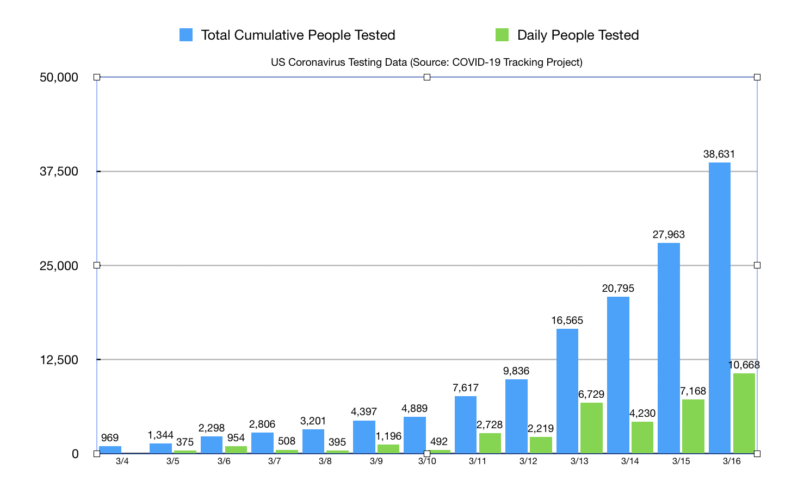
We’ve all learned the critical role of testing capacity for the current national crisis and how far behind we are. There is some tentative good news on this front. The number of tests being conducted is rising rapidly. They are moving into the ballpark of daily testing numbers in South Korea, though of course the US has a population roughly six times greater than South Korea. Here are the very latest numbers compiled by the COVID-19 Tracking Project.

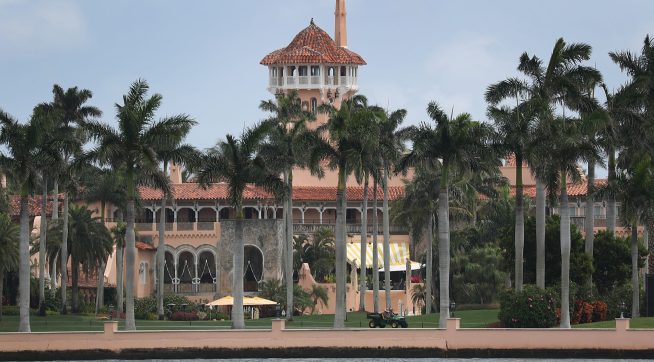
While it’s not quite 1600 Pennsylvania Avenue, this is still a big deal.
Join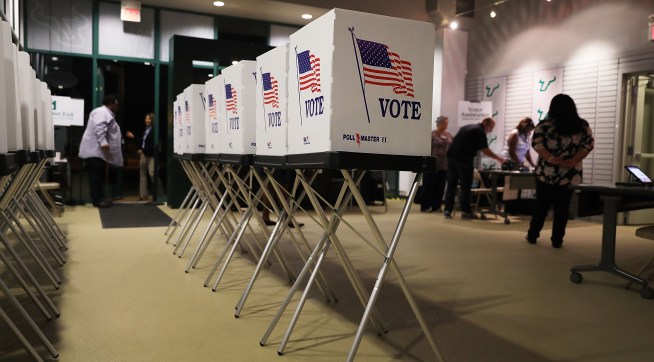
A few states in the West already have mail in voting that appears perfectly suited to a possible pandemic era election. States around the country, while managing the crisis response to the outbreak itself need to be into discussing, planning and implementing new plans for the November elections. Under normal circumstances this wouldn’t be nearly enough time. Obviously these are far from normal circumstances. And seven-plus months is just enough time to make major changes. The country is already in the midst of a profound public health crisis and heading into a deep and likely protracted economic crisis. We must now guard against a crisis of political legitimacy which would not only be a disaster in itself but dramatically compound the difficulty of dealing with the public health and economic crises.
The largest city in the U.S. is closing up restaurants and bars, restricting them to serving take-out only.
We’ve seen similar moves this weekend by the governors of Washington, Massachusetts, California, Illinois and Ohio.
The Governor of New York and Mayor of New York City have announced the city’s schools are closing down. It appears they are still figuring out plans to leave some facilities open for meals, children of critical workers, etc.
You’ve likely seen this referenced in a number of emails I’ve posted. But I wanted to draw it together in a single post because to me it is a significant piece of information.
The decision to close schools involves a complex social and epidemiological calculus. But the act of closing schools itself seems to play a decisive role in public messaging. Populations don’t move into a true crisis footing until they hear that school systems are closing. Then they do.
The Times just pushed this article reporting that the US is definitely not running out of food. That is news that is very important to amplify. We should also use common sense. Our supply lines are not remotely equipped to produce the amount of hand sanitizer that is currently being used. Food is different. People will not be eating more food. People will panic buy and some limited, responsible stocking up may be warranted to help with general social distancing. But Americans are not and will not be eating more food. This is a critical and when you think about it obvious difference from goods that are currently running low like hand sanitizer and medical supplies.
From TPM Reader BC …
I live in a rural area [in Michigan]. But, though rural, I’m close to a road that serves as a minor spoke connecting a few small towns. Typically, lots of people use this road to avoid larger traffic flows. The State of MI closed schools on Friday. The general storyline was hunker down and avoid social gatherings. So, this weekend, just about the only sounds around my house have been spring birds, a few dogs barking now and then, and an overarching silence. Virtually zero traffic on the roads around. Only thing that has ever come close to this was 9/11.
From TPM Reader XX, an emergency room doctor in the Bay Area. The email is from yesterday. The note contains a lot of sobering, scary information. I urge you to read it as one person’s rapid fire report in a chaotic situation and put it in the context of other news reports from other sources. I share it with you mainly to highlight the decisions, sacrifices and experiences of health care workers who are knowingly putting themselves in danger because it is what their professional commitments require and what they choose in a moment of crisis. I have removed a few brief asides to preserve XX’s anonymity.
From XX …
I’m a long time reader, but have rarely (if ever?) taken the time to write in. I’m an emergency physician at a hospital in the Bay Area … Perhaps this is all common knowledge and not informative – but I find the disconnect between what I see at work and in the news disconcerting so figured I’d add my two cents.
Everyone I work with seems resigned to a sense of impending doom, and an expectation that we will all be infected in the weeks ahead, and that we have no alternative course of action without abandoning our patients.