


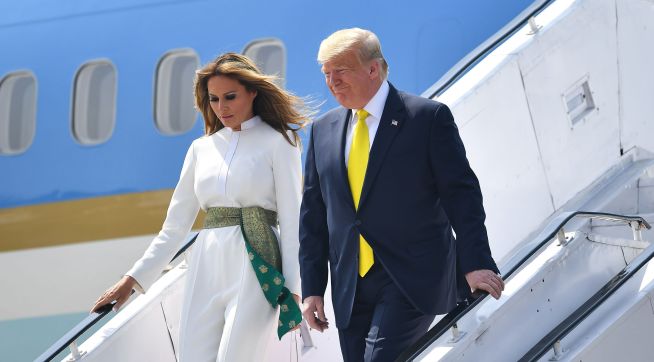
While overseas in India, President Trump not only confirmed reports of his disloyalty purge, he claimed it was good for the country.
Join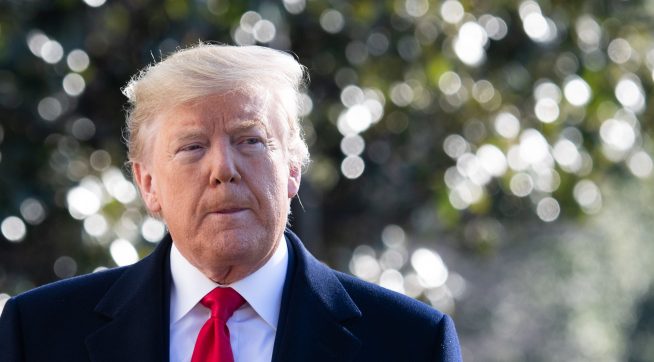
We woke up this morning to the news that President Trump is calling his purge of supposed disloyalists within the government good for America AND demanding that Supreme Court Justices Sonia Sotomayor and Ruth Bader Ginsburg recuse from any cases involving Trump.
It recalls the brilliant long-running episodic Slate series: “If It Happened There”
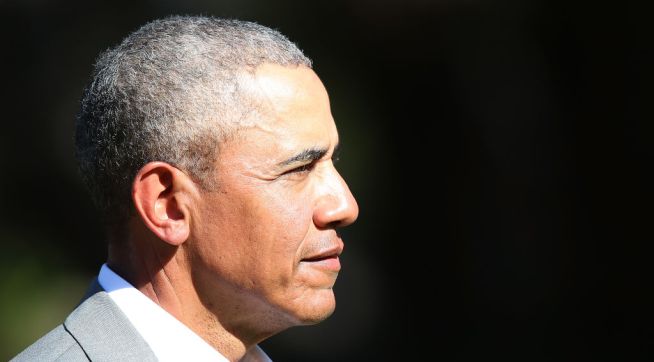
There’s one point I want to reiterate or clarify about the posts from earlier today. We’ve gotten a lot of great emails agreeing and disagreeing with my basic points – I’ll be publishing several of them this evening. But some of those who on balance agree with me have asides like, ‘but here’s a case where I think we can criticize Obama.’
Let me be clear: this really isn’t about defending Obama.
Join
TPM Reader JB on the road to Trumpism …
JoinInteresting exchange of views among you and your readers on this subject. A couple of thoughts, for what they’re worth.
It’s probably useful for us to distinguish between things Obama did as President and events that took place while he was in office. The Great Recession was chief among the latter; it had a massive economic and political impact we are still trying to process over a decade later.
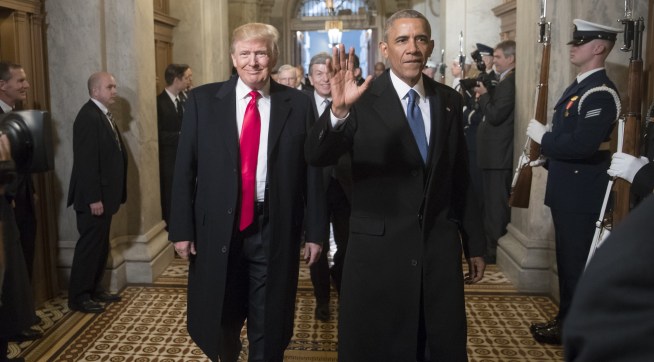
Soon after I published the post below about Obama and Trumpism, I got a note from my friend Josh Green, asking me to reread this 2018 piece and let him know what I thought. Here’s the link. I recommend it. As Josh describes it, it’s basically “the opposite of your headline stating Obama didn’t lead to Trump.”
This is a welcome interchange. Because it allows me to elaborate on, and hopefully refine, my thinking.
Join
I want to respond to a point TPM Reader MR made below. He makes a few points. But there’s one in particular I want to drill in on because it’s deeply embedded in his argument and is widespread enough to constitute something like a conventional wisdom or even a truism for many. I’d summarize the argument as this: it’s not enough to turn the clock back to 2016 or go back to some pre-Trump ‘good old days’ because ‘that’s what got us Trump’.
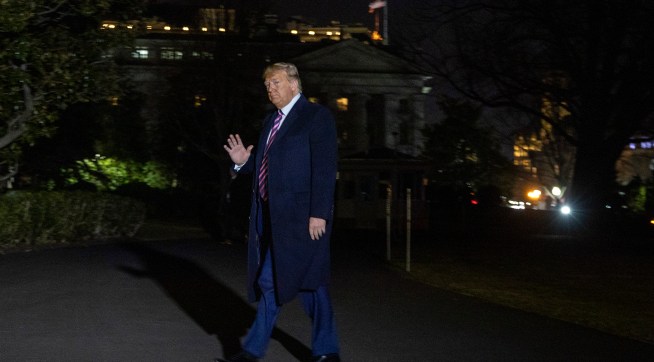
Since his Senate acquittal, President Trump has become increasingly paranoid about just how deep the “deep state” goes.
Join
TPM Reader CR takes a simple approach ..
JoinI see this election in fairly straightforward terms:
Trump has basically had his average approval rating written in stone at about 43%, and his disapproval rating in the 52-54% range. Since, by virtually every survey, this looks to be a huge turnout election and not a “base” election, those percentages should be more accurate than if it was a base election.
TPM Reader MR says it’s not all about the presidential horse race …
JoinI’d like to expand on an important disagreement I have with a portion of your recent Editor’s Blog post “Don’t go overboard with this”. It’s a disagreement that I have with you that spans several of your posts, and I think it’s summed up nicely here.
You wrote, “Given the enormous stakes, you don’t just want someone who has a shot. You want to be sure it’s the candidate with the best shot, to the extent you can ascertain that.“ I disagree with this statement vehemently. I suppose this is the liberal version of the old “Buckley Standard”. It’s something that I felt was cynical when he laid it out, and I find defeatist and shortsighted in this context.
While I was away I had a lot of time to reflect and pull together my thoughts on the Democratic primary race. As I’ve stated in the past I think there are major downside risks for the Democrats if they nominate Bernie Sanders. At the same time, I see a lot of pundits and not a few Democrats saying that Sanders is “unelectable”.