


The Israeli daily Haaretz published a big and consequential exposé today alleging that weeks before the October 7, 2023 massacres in southern Israel the head of the UAE, Mohamed bin Zayed, warned Prime Minister Netanyahu in a direct phone call lasting some 45 minutes that something big was coming from Hamas. For additional context, Israel holds elections on October 27 of this year. And as it has for the last three years, Netanyahu’s degree of responsibility for what happened remains a central question in the election. So while it’s not explicitly noted in the article, the electoral implications are clear. The investigation itself appears to be essentially an excerpt from a soon-to-be released book. So it’s not precisely a Haaretz story, more one that they’re publishing, though that’s fine print. The article is long and detailed and I think quite credible. But it’s paywalled. So I wanted to walk you through the key details and provide some general analysis.
It’s best to think of this piece as three separate revelations. The first is that — all according to this article — Israel and Hamas in 2023 were pretty close to finalizing a semi-normalization of the situation in Gaza in a longterm truce, or “hudna,” between Hamas and Israel. The details of this aren’t fully sketched out but basically an end to the blockade, freer commerce and travel through Israel and Egypt, etc. Second is the warning from MBZ in the weeks before the attack. Then, finally, it claims that in the immediate aftermath of the attacks Hamas, was willing to free most or all of the hostages, probably excluding military-aged men in or out of uniform, with few if any conditions.
Read More
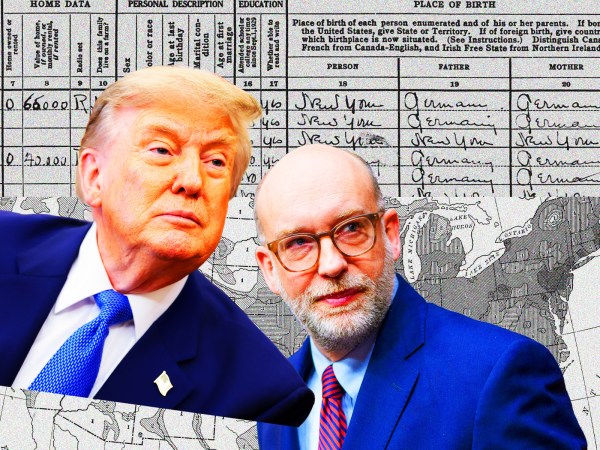

As part of their overarching plan to reduce the power of blue states and promote myths about noncitizen voting, the Trump administration is pushing all types of changes to how the census operates. TPM reporter Layla Jones will talk to publisher Joe Ragazzo and executive editor John Light about what these schemes involve and what’s at stake.
Join them live at 2 p.m. ET on YouTube Live.
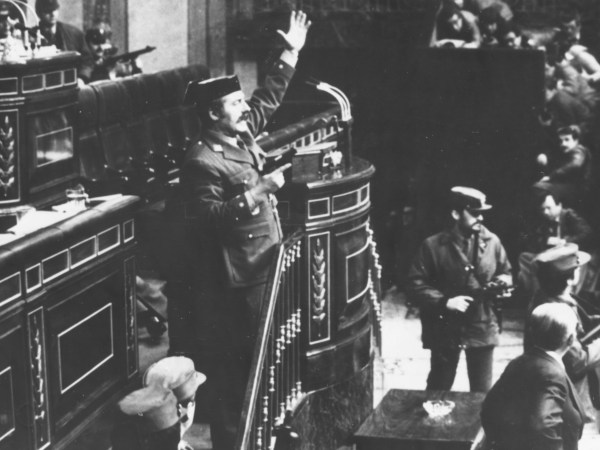

Yesterday I was kind of randomly rereading some details about Spain’s transition to democracy after the death of Francisco Franco in 1975, as one does. And I noticed that Spain had finally released the last classified documents tied to the attempted coup of 1981. The non-disclosure of these documents had helped maintain various conspiracy theories and counter-narratives about whether King Juan Carlos played quite the heroic role history has assigned him. In brief, Franco groomed Juan Carlos to succeed him believing he would maintain the Franco-ist dictatorship. But Juan Carlos quickly set about putting Spain on a path to democracy and when Francoist dead-enders in the army mounted a coup in 1981, Juan Carlos famously went on television, denounced the coup, thus leading to its total collapse. The counter-argument or claim is that Juan Carlos knew about the coup or perhaps even supported it and only pulled the plug when it looked like it was failing.
The release of the documents was just this last February. And they basically confirmed the established story, that there was no reason to believe Juan Carlos knew about the coup in advance and acted decisively to undermine and bring it to an end. But it was a small note in the Times article I read about this that got my attention: one of the reasons for the release, overseen by Spain’s current center-left government, was to combat historical revisionism and growing nostalgia for Franco among young men.



Over the last day or so, a number of the big inside DC sheets have run pieces striking a skeptical note about the GOP’s 2025-26 redistricting — Axios and Politico, for examples. It’s not just that they maybe aren’t strong enough to withstand a Democratic wave (no gerrymanders are impregnable) but that they are fundamentally based on the assumption that the 2026 electorate would look basically like the 2024 electorate, as Axios put it. That’s not quite the same as saying “as popular as.” It’s more the shape of the electorate. And that’s why it’s not quite as silly as it might sound, though not wholly unsilly. And one example of this is that Republicans made a bet that things like the big Hispanic shift toward the GOP, especially in places like Texas and the Southwest, represented a kind of realignment as opposed to just a really bad year for Democrats.