


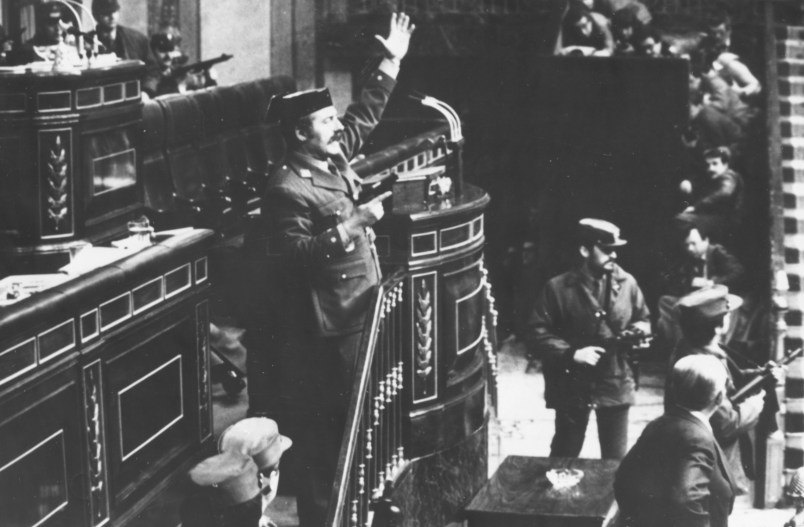
Yesterday I was kind of randomly rereading some details about Spain’s transition to democracy after the death of Francisco Franco in 1975, as one does. And I noticed that Spain had finally released the last classified documents tied to the attempted coup of 1981. The non-disclosure of these documents had helped maintain various conspiracy theories and counter-narratives about whether King Juan Carlos played quite the heroic role history has assigned him. In brief, Franco groomed Juan Carlos to succeed him believing he would maintain the Franco-ist dictatorship. But Juan Carlos quickly set about putting Spain on a path to democracy and when Francoist dead-enders in the army mounted a coup in 1981, Juan Carlos famously went on television, denounced the coup, thus leading to its total collapse. The counter-argument or claim is that Juan Carlos knew about the coup or perhaps even supported it and only pulled the plug when it looked like it was failing.
The release of the documents was just this last February. And they basically confirmed the established story, that there was no reason to believe Juan Carlos knew about the coup in advance and acted decisively to undermine and bring it to an end. But it was a small note in the Times article I read about this that got my attention: one of the reasons for the release, overseen by Spain’s current center-left government, was to combat historical revisionism and growing nostalgia for Franco among young men.
Join TPM to get full-access to our reporting, newsletters, and other member-only features.