

Sort of a minor point of interest. But still notable. The Italian government of Giorgia Meloni has now become the longest lasting government in the country since World War II at 1,413 days. Since the Italian Republic began at the end of World War II — specifically in a June 1946 national referendum on whether to maintain the monarchy or become a republic — it’s the longest lasting government in the 80 year history of the Italian Republic. Silvio Berlusconi is still the longest-serving prime minister. But he did that non-consecutively and over four separate governments. The average length of a government since World War II is about 13 months — a somewhat notorious parliamentary, if not political, instability for which the Italian Republic has long been known.
Read More

Don’t miss Layla A. Jones’ piece this morning, which details a kind of census corollary to Trump’s 2020 big lie. Republicans and assorted social media influencers are claiming bureaucrats used the 2020 census to hand seats in Congress to Democrats. That is, of course, not true. The conspiracy theory is nonetheless important, because it is now making its way into Census Bureau policy. Layla looks at where it came from, and how it is animating the administration’s war on the census.
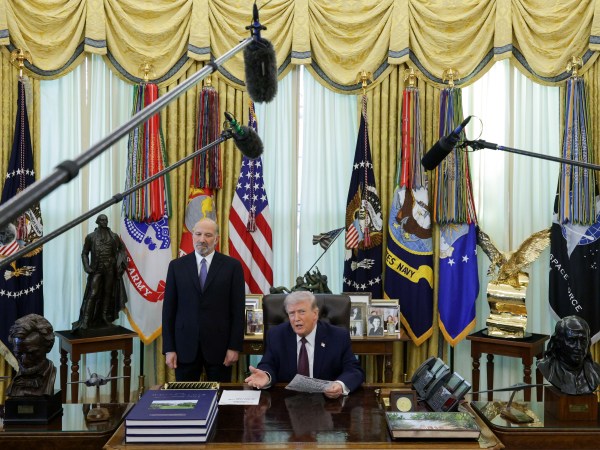










Longtime election analyst Charlie Cook has a piece up on his Substack looking at the fast-approaching midterms. It’s an interesting piece, an artifact of the moment, not simply because of what it predicts but because of the nature of the writing in which Cook seems to be grasping for metaphors about just how bad a situation Republicans face — a bit more stream of consciousness and performance art than one is used to in election analysis.
Let’s start with the lede …
With 64 days before Election Day (although the first mail-in ballots will go out in a matter of days), Republicans should brace themselves: The three most plausible outcomes are that it will be bad, really bad, or truly horrible.
A few sentences later he describes what he considers the most likely scenario.
Let’s start with the most likely scenario: that this is a “really bad” election for Republicans, losing between 26 and 35 seats in the House, and either four or five seats in the Senate.
He then describes a less drastic and merely “bad” scenario in which aggressive gerrymandering on both sides keeps House losses in the 15 to 25 range. But he thinks that this scenario still nets Democrats four to five Senate seats. He calls the GOP’s worst-case scenario the same 26 to 35 House seats lost but “at least six” Senate seats gone too.