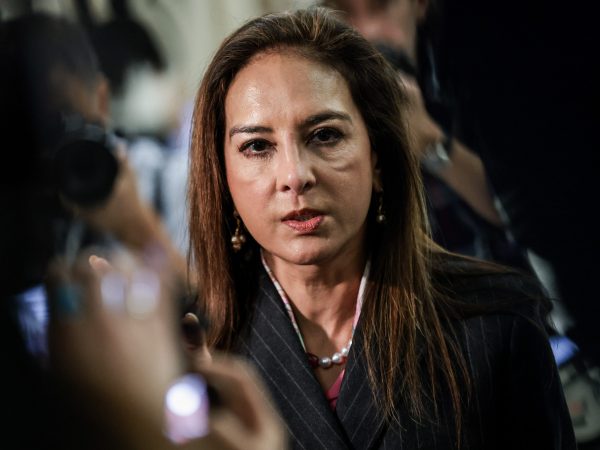
I note Michigan Senate candidate Abdul El-Sayed in the title of this headline mostly because controversies tied to his campaign are the immediate space in which we’re again seeing arguments about Israel, Zionism, American Jews and the Democratic party. This has cropped up again because of streamer Hasan Piker’s comments about how Jews need to ditch Israel or Zionism or whatever. My own sense is that El-Sayed is well on his way to defusing the wariness or opposition of many in Michigan’s Jewish community. (As I’ve written elsewhere, to the extent it matters for someone outside of Michigan, I’ve supported him from the moment he won the primary.) But there’s something that’s become more and more clear to me in recent weeks as I’ve had various conversations and arguments about this issue. One is that I increasingly hear from left-leaning non-Jews is a fairly confident declaration that Zionism doesn’t have anything to do with or isn’t the same as the “Jewish faith.” This is at best a rather total statement about a much more complicated reality — especially when stated by people outside the community in question. But it’s not only that side of the equation.
Read More

At the end of today’s Morning Memo, I tucked in a remembrance of Wendell Berry, who has died at 92. If you know, you know. If you don’t, you should.





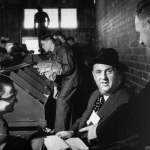

Last week, after the death of Dolly Parton, I wrote about how Parton had aggressively and carefully preserved her various royalty rights through her life and how that was the foundation of her fortune, much of which she gave to charity. I also noted a story which figured prominently in many obituaries and commentaries: how Parton had refused to hand over a chunk of her royalties in exchange for Elvis Presley recording “I Will Always Love You” — a song which Parton herself had had a country number one hit with in 1974 and would later become a global mega-hit for Whitney Houston in 1992.
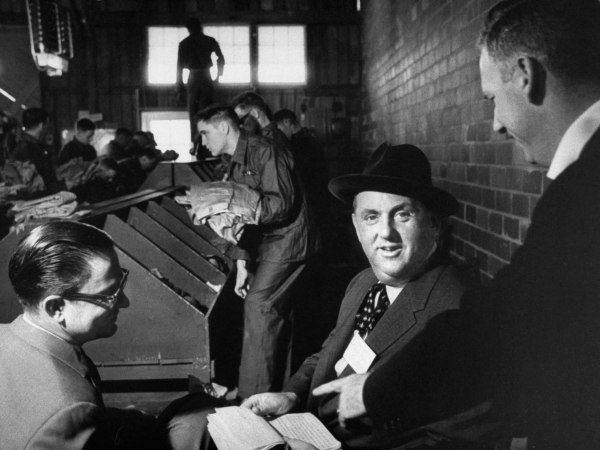
This reminded me of something I’ve wondered about for a long time, because it was tied to a bundle of interrelated minor interests of mine. To set the stage, the guy who actually put the squeeze on Dolly was a guy named Colonel Tom Parker. And yes, “Colonel” could easily have been mistaken for his first name. Parker was technically Presley’s manager. But that greatly understated the nature of the relationship, along with his role in Presley’s rise to fame and arguably his slow downfall. Parker was a kind of cigar-chomping, hard-charging good ole boy, someone out of central casting or perhaps a comic book. Maybe one part Albert Grossman, Bob Dylan’s early manager, and one part Boss Hogg — one of a long line of impresarios who both have some claim to making their charges into stars, but also then cocooning them, cheating them and cutting them off from other channels of advice, contact and more. And he wasn’t really one in a line — he was arguably the archetype, at least in the post-war era and in the history of Rock ‘n Roll and late 20th century popular music.