

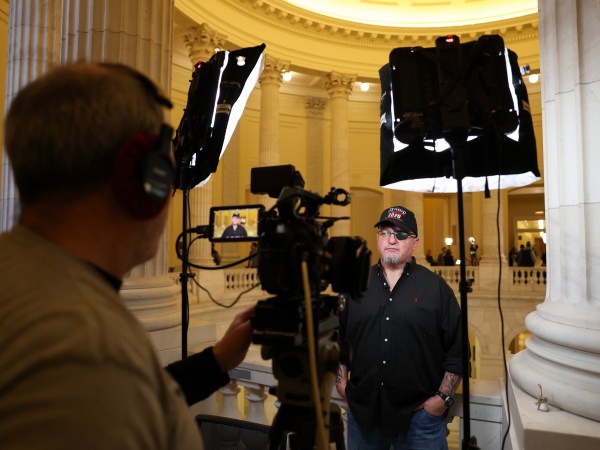

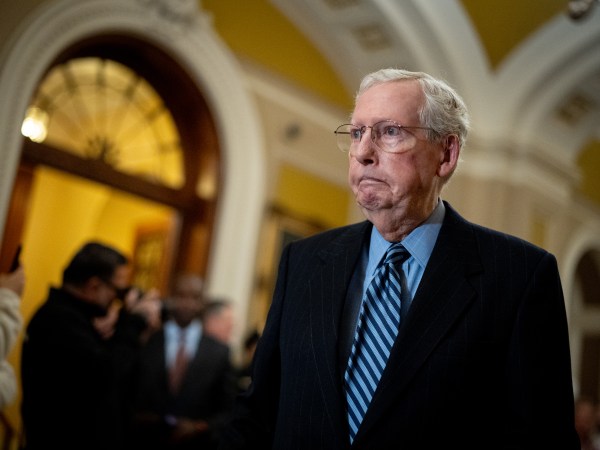




Here’s a simple but inarguable point: Trump’s decision to pardon (and/or commute release of) all the January 6th insurrectionists is deeply unpopular. Your best evidence for that is the responses of Republicans who are asked to react to or justify it. They’re doing the most practical thing: dodge the questions and wait for those questions to subside. Wait for it to become old news, something that happened in the past. Democrats’ job is to prolong the period of questions for as long as possible. There are many ways to do it, as I explained yesterday. The job of a political opposition is to spend every day illustrating for the public what’s bad about the current government being in power. That’s not tawdry or institutionally selfish or unhelpful. It’s a functional, essential feature of our political system. To the extent you’re not able to do that, the folks in power must be doing a fairly good job. And that’s a good thing to know, even if it’s an unpleasant reality for the opposition. It’s quite literally what you’re supposed to do for the broader framework of government to function.
Read MoreA new episode of The Josh Marshall Podcast is live! This week, Kate and Josh break down the beginning of the second Trump administration.
You can listen to the new episode of The Josh Marshall Podcast here.
This is a quick follow up to yesterday’s post about the “pause” on funding for essentially all medical research in the United States. This is a big, big deal and our team, notwithstanding its very small size, is very much on it. And if you’re in that community your tips are very important.
Read More

One more point to keep an eye on. You’ve likely seen that the White House is doing a series of executive orders and sending letters to employees demanding “DEI” be rooted out of agencies. News organizations have mostly used this terminology. But whatever you think about DEI, this is deeply and intentionally misleading. This gives the impression that they’re clawing back various #MeToo and post-George Floyd government policies. But they’re actually repealing a host of executive orders and departmental policies going all the way back to the Johnson administration. A lot of it is very basic employment non-discrimination rules and contracting non-discrimination rules.
For the purposes of this post I’m not trying to get into what “DEI” is or whether it’s good or bad. I’m focused on this more general point that under the pretext of a DEI rollback they’re basically stripping out non-discrimination policies across the government.
It’s still uncertain precisely how long the duration will be, but we’re getting fast emerging information that there appears to be an indefinite halt on the various meetings, review panels and so forth that keep the pipeline of medical research funding going in the U.S. This article in Science gives a broad overview. Put simply this just turns off the spigot of funding for a huge amount of cancer research as well as research across various other health fields and diseases. The article makes clear that there have been brief pauses before when a new administration takes office. But all signs suggest this is far more thorough-going and draconian. This comes after a similar halt to the weekly MMWR report which CDC sends to hospitals and doctors every week with information on flu, COVID and other infectious diseases.
I think we’re at the point in this where you can’t yet categorically say that this is being done for RFK Jr.-adjacent anti-research nuttery, but basically all signs point in that direction. And there is at least a temporary and disruptive halt to how health research gets funded in this country.
Meanwhile, on a totally different front, Jessica Valenti says that in the last two days Instagram has begun blocking the account of an organization focused on helping women find access to abortion medication.
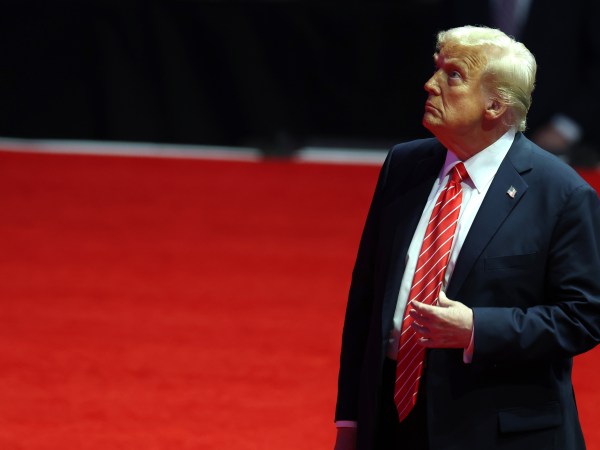

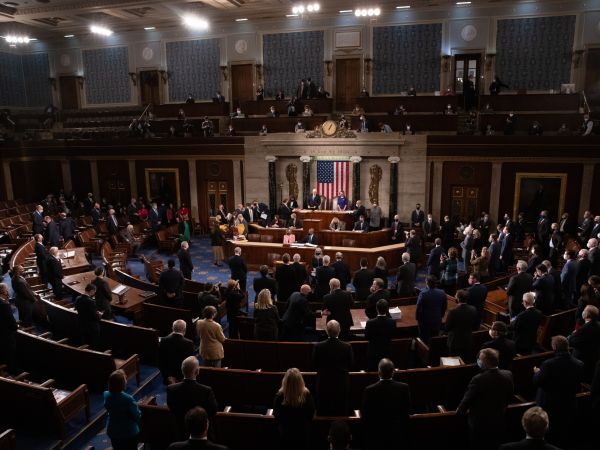
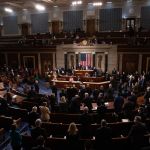
Yesterday my colleague Kate Riga noted a trap Senate Democrats keep falling into: in an effort to court Republican defectors they temper their criticism of the various Trump nominees. But since there are and will be no defectors they lose on both sides of the equation, gaining no defectors and making their critiques tepid and forgettable. This is unquestionably true. But we can go a step further still. Far from courting potential defectors, they should be attacking them.
Potential defectors are almost always those from marginal states, and some are senators from marginal states who face voters at the next election. 2026 doesn’t have a lot of great prospects. But there are some. So Susan Collins, Thom Tillis, possibly Joni Ernst and new Florida senator Ashley Moody. The criticisms of the bad nominees should be as intense as possible and all focused on the support of these senators. No one does you a favor in these settings for being nice: senators defect when they think they may pay a price at the ballot box. That is the only way to have messaging that takes the initiative and stays on the attack. If things get too hot and the senator pulls their support, great. If not, that just lays the groundwork for beating that senator in the next election. Those two possibilities are the only outcomes of any consequence and the same game plan advances both goals. It’s simple. When they’re upset or hiding you’ll know you’re doing it right. One more point: no one cares about press releases. Getting on camera or activity on social media matter.
Read More