

We’re now more than two weeks into Donald Trump publicly insisting that the January 6th insurrection was a righteous act and that the federal government must free and/or drop charges against everyone involved. He also continues to demand retribution against the Capitol Police officer who shot Ashli Babbitt while defending Congress was the attack. To date, none of the journalists with access have pressed any congressional Republicans to respond to these demands from the leader of their political party.
Getting or recording responses is a major priority for us this week. If you see any examples in print or electronic media please contact us with details.
The Republican plan in the Senate for months has been to cause delay and create uncertainty. As Democrats got behind a global reconciliation outline last week, Republicans insisted they needed more time to finalize the bipartisan mini-bill. Now Chuck Schumer says it’s got to come to a vote this week. No more delays. We’re live-blogging that story is it unfolds on Capitol Hill.
There’s no longer any question. We’re in the midst of a wave of new COVID infections, driven largely by the highly contagious Delta variant. Little more than a month ago Israel’s daily case count was in the single digits. It’s now crested over 1,000 a day. Great Britain has seen a similar trajectory and cases counts are rising rapidly in almost every US state. And these are only the parts of the world that have the luxury of widely available vaccines. But in those highly vaccinated countries, the chained relationship between infection, hospitalization and mortality has also clearly been broken. So are we heading back to something like we saw in the Spring of 2020 or the winter of 2020-21 or are reacting to infection numbers in a way that is simply outdated in the context of widespread vaccination?
Many public health experts and officials will tell you that this is the point of vaccines: to prevent death and serious illness, not notional infections which may cause no symptoms at all. Indeed, there’s a real debate about what constitutes infection or cases of COIVD. COVID can briefly take hold and reproduce in a person’s nasal cavity and upper respiratory system before being knocked down by effective vaccines. That will produce a positive result on a PCR COVID test. But it’s an open question whether we should be treating that as an infection or a case of COVID for the purposes of setting public policy or judging our success in emerging from the pandemic.






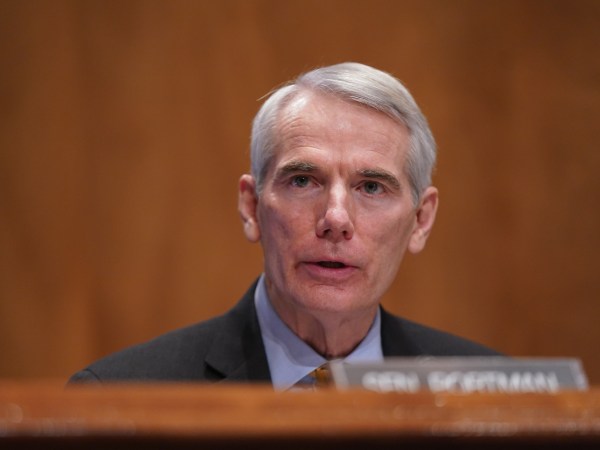







I’ve written repeatedly over recent months about the politics of opacity in the Biden era. The debates that are in public are largely performative. The consequential conversations are among Senate Democrats and between Senate Democrats and the Biden White House. They are necessarily confidential and private. People who follow politics closely and feel deeply invested in the outcomes find themselves asked to take things on faith. Why didn’t they get to Wednesday’s milestone in April rather than the middle of summer? Why are Democrats still trying to find bipartisan ‘deals’ Republicans will always renege on.
I wanted to have a conversation with someone up there who can walk us through, at least in general terms, just how all this stuff is working and why it works that way. So yesterday we hosted an Inside Briefing with Sen. Brian Schatz (D) of Hawaii. We talked about all these questions and it provided a lot of helpful context to understand why these work as they do even if you don’t think it’s a good way for them to work. I learned a lot from it and I think you will too.
If you’re a member, you can watch our discussion after the jump.