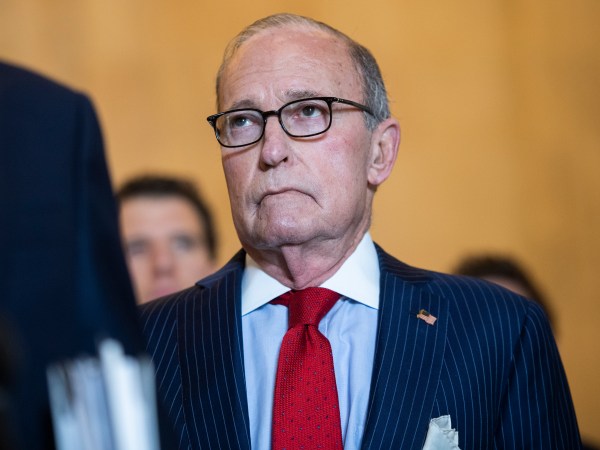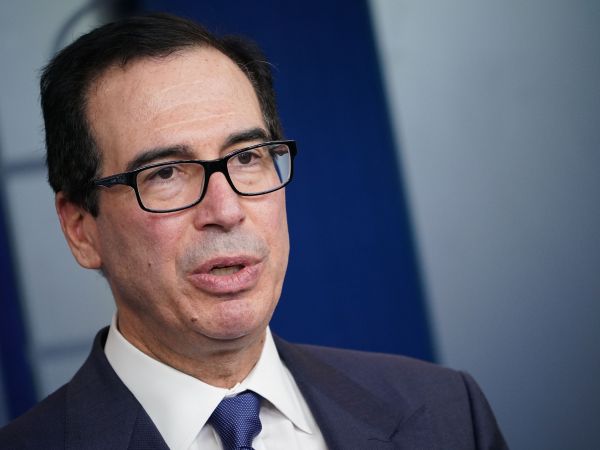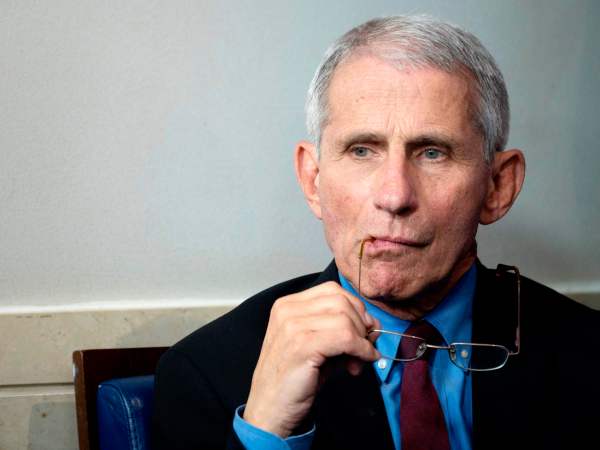

If you didn’t watch this afternoon’s Trump press conference, the one significant piece of news is that the President is extending his “15 Days to Slow the Spread” guidelines until the end of April. This essentially means he’s dropping the idea of ‘reopening the country’ any time soon. That this was even a question is appalling. And the President doesn’t even have this power. But it’s good that he’s dropped the idea, at least for now because at a minimum these fantasies confuse people about the reality of the danger. It appears that his public health advisors shared with him modeling which suggests that a final death toll in the range of 100,000 to 200,000 is now the optimistic scenario with a death toll ranging to one or two million is possible without aggressive social distancing and lockdown strategies.
British PM Boris Johnson, who tested positive for coronavirus last week, has short video here, praising the UK population’s coronavirus response, exhorting them to help protect the NHS and thanking some 20,000 health-care workers for returning to serve in the NHS during the crisis. But there’s an interesting little coda toward the end — something probably British viewers will catch more than Americans. He does a kind of anti-shout out to Margaret Thatcher, saying that what Britons’ response to the crisis has “already proved, is that there really is such a thing as society.”
Thanks to everyone who has been staying at home.
By delaying the spread of the disease we can reduce the pressure on our NHS, and that's how we hope to save many thousands of lives.#StayHomeSaveLives pic.twitter.com/kxdqItMYSE
— Boris Johnson #StayHomeSaveLives (@BorisJohnson) March 29, 2020
This is certainly a reference to Thatcher’s claim — an encapsulation of her worldview — that “there’s no such thing as society. There are individual men and women and there are families.”


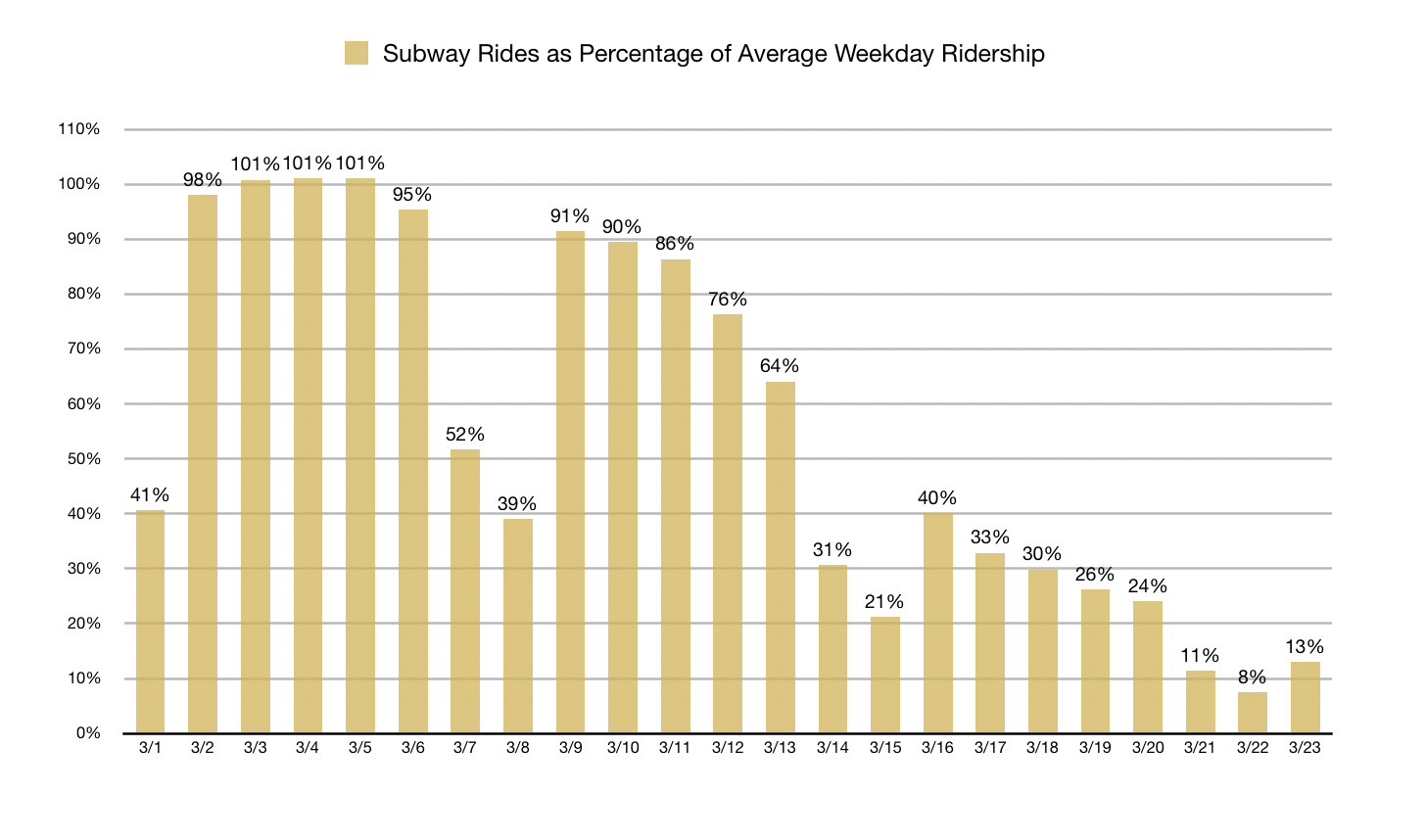
Let me return to an issue I discussed a few days ago. When did New York City shut down? It’s more than an academic exercise. It gives us a window into understanding when we can expect the spread of the virus in the city to peak or at least stabilize. That gives other cities a view into what they might in turn expect. A key way to do that is to look at the city’s subway system, which is both a key vector for the spread of the contagion and perhaps the best metric for measuring the city’s activity and mobility.