


Hello, and welcome back to The Franchise!
Yes, the redistricting battle rages on across the South, but, FINALLY, some positive news on this front.
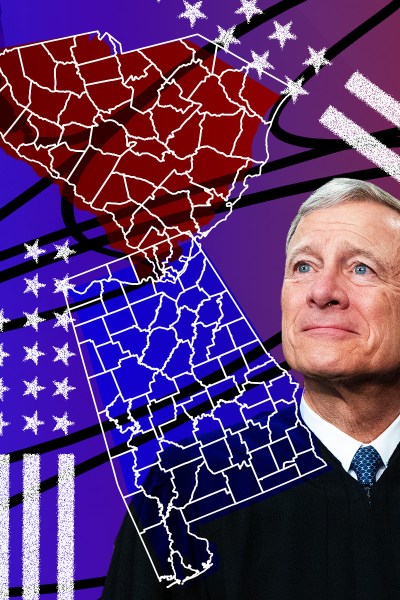
In South Carolina, the GOP-controlled Senate voted against a proposal that would’ve targeted Rep. Jim Clyburn’s (D-SC) district, and was expected to give Republicans all seven congressional seats in the U.S. House.
And, in another blow to Republicans, a federal district court on Tuesday temporarily blocked Alabama from using a 2023 congressional map for the midterm elections. The panel of three judges said the map, which includes just a single majority-Black district, is racially discriminatory.
Of course, it’s 2026 and any positive development comes with a distressing caveat.
While a handful of South Carolina Senate Republicans worked with Dems to temporarily keep Clyburn’s seat intact until the midterms, they may ultimately cave to pressure and move to redistrict before 2028. As my colleague Kate Riga noted in her coverage of the vote this week, the whole state Senate will be up for reelection next cycle, which could change dynamics for the resistant Republicans.
And in Alabama, Republicans on Wednesday filed an emergency appeal with the Supreme Court to lift this lower court ruling and to allow the state to use the 2023 map for the upcoming midterm elections. In other words, the high court may still overturn the lower court ruling and clear the way for Alabama Republicans to use their map with just one Black-majority district in the 2026 midterms.
Some less good news in Florida, where a Second Judicial Circuit judge this week allowed the state’s gerrymandered map to remain in place, while further legal challenges continue to play out. The new map could give Republicans four additional congressional seats, but voting rights advocates have challenged the maps in court arguing that it violates a state ban on gerrymandering that Florida voters approved in 2010.
“The primary is less than three months away, and the general less than six months,” Circuit Judge Joshua Hawkes, who is an appointee of Florida’s Republican Gov. Ron DeSantis, said in his ruling this week. “The public interest weighs more in favor of certainty than a haphazard judicial mandate of discarded maps.”
The plaintiffs have appealed this decision to the state court of appeals.
As always, there’s a lot to cover. Let’s dive in.
DOJ Rewrites History of Jan. 6
In the latest example of the Trump administration’s blatant corruption, the DOJ has decided to purge its website of all official January 6 investigation-related news releases, calling it “political propaganda” — and completely rewriting history.
“We are proud to reverse the DOJ’s weaponization under the Biden administration,” the DOJ wrote on X last week. “We will do everything in our power to make whole those who were persecuted for political purposes. This includes stripping DOJ’s website of partisan propaganda.”
Among the many records that magically disappeared are the press releases on seditious conspiracy convictions against the members of the far-right extremist groups, the Oath Keeper and the Proud Boys.
In another depraved episode that my colleague David Kurtz unpacks here, the Trump administration also announced the creation of a $1.776 billion “anti weaponization” fund, which will compensate those who claim they were unfairly targeted by President Biden’s DOJ, which is expected to include pardoned Jan 6 rioters, potentially, including those who assaulted police officers. It’s corruption at a level that has reportedly even riled up some Republicans in Congress who want to put guardrails on who can receive payouts from the slush fund, at the very least.
“This is pure fraud and highway robbery. No one can be both plaintiff and defendant in the same case,” House Judiciary Committee Ranking Member Jamie Raskin (D-MD), said in a statement after news broke about the slush fund. “And no president can concoct a fake case for $10 billion in damages against the government so he can be plaintiff and defendant and then ‘settle’ his bogus case against himself as a judge.”
Tina Peters is Doubling Down on the Conspiracy Theories
As you have probably heard by now, earlier this month Democratic Colorado Gov. Jared Polis caved to pressure from Trump and commuted the sentence of Tina Peters.
Peters was the elections administrator of Mesa County, Colorado who was convicted for breaching her office’s voting equipment in her quest to find non-existent evidence of election fraud during the 2020 election. Peters has been serving a nine year prison sentence, but is now eligible for parole on June 1.
Colorado Democrats voted last week to censure Polis in response. Peters is now railing against Democrats for censuring the Colorado governor, calling the decision on X a “travesty,” and, remarkably — for a woman who is literally responsible for a voter data breach in her own county — is also pleading for “fair” elections.
“Governor Jared Polis commuted 9 sentences and pardoned 35 people. But the outrage from Colorado Democrats is aimed at Governor Polis and me. They are attacking the governor for showing mercy, and they have put a bullseye on a 70-year-old, nonviolent, first-time offender,” she wrote on X.
And then for some reason, Peters also decided to double down on the conspiracy theories that landed her in prison in the first place?
“It should be obvious to Democrats and Republicans alike that they have something to hide,” she continued. “It is so obvious that they are willing to continue destroying people’s lives to cover it up.”
“The real victims are the people of Colorado,” she added. “The real victims are every voter who deserves honest, fair and transparent elections.”
Dhillon Escalates Trump’s Threat to Go After Maryland
Assistant Attorney General Harmeet Dhillon has jumped on Trump’s call to investigate mail-in voting in Maryland after reports of a vendor error related to some mail-in ballots in the state caused Trump to have a Truth Social meltdown.
Last week, Trump accused Maryland of being tied up in an elaborate election fraud scheme simply because some voters were mailed the wrong ballot by mistake.
The Maryland State Board of Election acknowledged that there was an “error by our mail-in ballot vendor resulting in some voters receiving the wrong party ballot for the Gubernatorial Primary Election.”
The board corrected the error and announced that it would send out new ballots to all of the voters who were impacted. Even though this was an error that was both acknowledged and corrected, Trump wasted no time last week seizing on this moment as an opportunity to accuse the state of fraud conducted by, in his words, “Corrupt Governor of the State, Wes Moore” and to call on the DOJ to initiate an investigation.
So, Dhillon took the hint. On May 22 she sent a letter to Maryland State Administrator of Elections Jared DeMarinis, requesting that he “preserve true and correct copies of all ballots, mailing records, other auditable records, and all corrective actions taken for Maryland’s June 3 primary election.”
“Please forward this request to any and all individuals, including election officers in charge of local boards of elections, and vendors that may be in possession of records responsive to this preservation request,” she said.
More Losses in the DOJ’s Floundering Campaign to Seize Voter Data
Federal judges last week dismissed the DOJ’s lawsuits in an attempt to compel both Maine and Wisconsin to hand over sensitive voter data information to the administration.
For months now, the DOJ has been trying to access data — including drivers licenses and Social Security numbers — from at least 44 states and Washington D.C. The DOJ has sued 31 states and has lost every single case that has gone to court. As it stands now, the DOJ has faced 8 losses and no wins.
The DOJ has attempted to rely on provisions in the Help America Vote Act (HAVA), the National Voter Registration Act (NVRA) and the Civil Rights Act of 1960 (CRA) to justify its demands, neither of which give them the authority to access sensitive voter information, courts have found.
In the case of Maine, U.S. District Judge Lance Walker, who is a Trump appointee, wrote that using the CRA to justify this request would “take a sledgehammer to the balance Congress struck when it required states to create and maintain computerized lists of registered voters in the first place.”
And similarly, in Wisconsin, U.S. District Judge James Peterson, wrote in his ruling that “the government’s arguments to the contrary are not persuasive.”
In Other Election News:
AP: Federal judge refuses to block Trump order to create federal voter list and limit mail voting
Democracy Docket: CBC blocks SCORE Act vote on college athlete pay in response to GOP’s southern redistricting wave
CNN: The Justice Department wants to interview 2020 election workers




They did so only because they see a blue wave coming and thinning out red districts even more to remove the last remaining district representing POC could render some red districts purple.
No point in imputing integrity or honoring oath of office where it almost certainly does not exist; all patina gone, Republicans are now their most essential selves.
“Conservatism consists of exactly one proposition, to wit: There must be in-groups whom the law protects but does not bind, alongside out-groups whom the law binds but does not protect.” â Frank Wilhoit
The notion that “money is speech” and should be protected is (and was) a ruling that is (and was) a virulent cancer on the American body politic.
At last a bunch of Republicans who are not willing to walk off a cliff for Trump. I am hoping the GoP is right in a lot of other gerrymandered states.
The rectal polyp of the political food chain.
Good on the CO Dems for voting to censure their Gov.
Trump is poisonous, do not swallow poison, it’s bad for you.