


I’ve written a number of times over the years about the fact that Americans mostly believe that the post-World War II world order is the normal state of things. Of course, it is not. The last 80 years are unparalleled in global history for their general prosperity, lack of great power wars, a fairly predictable system of global rules. One has to say the obligatory caveats about all the ways the United States honored its values and rules in the breach, the slow run of proxy conflicts it participated in or fomented around the world. But these caveats only serve to illustrate the larger point in a paradoxical way. Things can always get worse and getting worse — conflict, instability, mass death — are the normal order of things in world history. Even a thin appraisal of the American ascendency shows its close to uniqueness in this regard.
Read More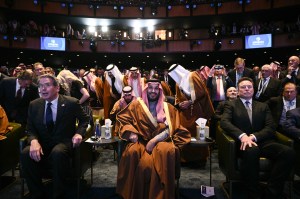
A friend of mine ran an analogy by me which really resonated. Perhaps others have drawn the comparison. I don’t know.
In the late 18th century what would later evolve into the British Raj was coalescing into full British domination of the Indian subcontinent — especially after two key battles in 1757 and 1764 waged not by Britain but a private company called the British East India Company. That made it possible for what were often British men of relatively modest origins to build almost unimaginably large fortunes. Life in India was a matter of extremes for British operatives of the East India Company, a joint stock company which owned what were in effect or sorta Britain’s Indian colonies. Countless young Brits went out to India and died in short order. But if they could avoid dying in a relatively few years they could build these unimaginable fortunes. None of them wanted to stay. Virtually no Britons died of old age in India at the time. The whole point was to make as much money as possible in as little time as possible and get back to Great Britain while they were still alive. Then they would pour that money into an estate and land.
They were called “nabobs,” a corruption of “nawab,” a title in the Mughal Empire which originally referred to a provincial governor but evolved into something more like a hereditary lord as Mughal rule disintegrated.
Read More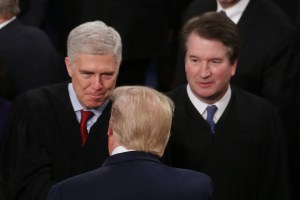
I’ve noted many times the central role of Supreme Court reform to any civic democratic future. If you’re a regular reader, you know my arguments. So I won’t recapitulate them here. I’ve also noted how very few Democratic officials seem at all ready for this and a huge amount of work is required to get them here. Luckily there’s time: The first chance to do anything like this is 2029. But there’s another, even more critical, underlying need. A lot of the Democratic public still sees the idea as disconcerting or extreme. And we shouldn’t run away from this perception. Because it is extreme. It is a remedy only justified and really necessitated by a basically unprecedented development in American history which is robbing the public of its right to self-government. (The question is whether there is any precedent is complicated. There are arguably two similar instances in American history. But we can return to that later.) The point is that there is a lot of work to do. Inherently resistant Democratic politicians certainly aren’t going to be brought along if a substantial number of their own voters, perhaps a majority of them, are spooked by the idea.
So this requires a substantial campaign of public education — activist/political groups dedicated specifically and focusedly to the issue, ones that are political activist in nature, ones that draw from the elite legal world. An entire language of explanation is required.
Read More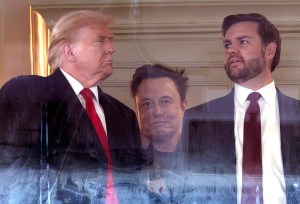
I got a fascinating array of responses to my Tuesday post about the 21st century nabobs, striding over politics and society with their unheard of wealth and indifference to the rules we once imagined bound us. One of the big questions was, What happened to the original nabobs? Were they brought to heel? And several of you asked, Okay, so what are we going to do about this? I wanted to discuss these and other topics.
Read More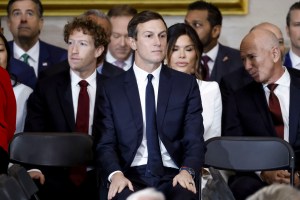
Today, I want to share some additional thoughts with you on this ranging topic of tech lords and predators, the conquistadors and pirates in our midst. It’s a point that is perhaps the most visible part of the current moment, but because of that, paradoxically, hardest to see clearly. It’s been more than a century since the men at the highest pinnacles of the American economy so visibly and directly intervened in the country’s politics. An element of that is the highly personalist nature of the big tech monopolies. Mark Zuckerberg isn’t just a CEO or plurality owner. He is Facebook. He’s the founder, the driving mind since the beginning. I believe that voting rights are structured in such a way at Meta that in terms of control as opposed to equity stakes he is in total control. Meta cannot be taken away from him. Whether or not voting rights are precisely the same, a similar story prevails at Amazon, Google, certainly X and all of Musk’s companies. We haven’t seen anything like that since the Gilded Age and the Robber Barons, when big names like Carnegie, Vanderbilt, Morgan and Rockefeller similarly owned, drove and personified the great corporate behemoths and monopolies of the day.
For many decades, certainly since the Second World War, even the more politically- and ideologically-minded corporations kept their political spending and their exertions in the background. Perhaps they gave most of their money to Republicans but they’d give to Democrats too just to keep them mostly on side.
What we began to see in the late Biden administration and then to an almost mind-boggling degree through 2025 is not just the big tech titans cozying up to Trump and doing so visibly, but making themselves what we might call main characters in the American Political Cinematic Universe. There’s really nothing like it in our history. I know many friends who are into MMA and the UFC. My sons are into it. Not my thing. But great if it’s yours. But if you’re Mark Zuckerberg and you take ringside seats at a UFC match with Trump friend and UFC CEO Dana White, you’re sending a very clear and specific message and you’re sending it far outside the channels where most traditional political messaging takes place. Even more if you put White on your board. And the same applies to going on Joe Rogan’s show and talking about a rights movement for “high testosterone males.” Yes, Zuckerberg got into MMA before the so-called “vibe shift.” But not in this politics-inflected way. We’ve seen countless examples of this in so many different contexts, starting with that unforgettable inauguration image where the seats of greatest distinction were reserved for the centi-billionaire tech titans. Government of, by and for them.
Read More
I’ve been under the weather. That partly explains missing two days of posts. But another reason is a feeling of repetition. Everything I see in our politics right now — or at least at the pinnacle where Donald Trump dominates all the visuals and attention — has a feeling of drift, spectacle and fragmentation. Trump’s ballroom epitomizes it — crass, stupid, vulgar, unacceptable and yet ultimately meaningless. It’s the full-size version of having his stacked Kennedy Center board, of which he is the chairman, rename the institution after him. That was, I believe, Wednesday, though the days run together. Then there’s his new hall of presidents, a sick-burn tweet storm embedded on a wall of what remains of the White House. These all have the feeling of a man who is bored, tapped out, losing coherence and energy and who others are trying to keep distracted.
Read More