



California Governor Gavin Newsom is plowing ahead with plans to gerrymander California’s congressional map to match the partisan gerrymander speeding to passage in Texas. He’s also been on a nonstop crusade going back a couple weeks — one half elaborate parody, one half frontal assault — using memes, all-caps, and boffo trash talk to attack Donald Trump. Not everyone likes Gavin Newsom. Personally, I’ve never been strongly in the fan or hater camp. But Newsom is doing exactly what we should be expecting of every Democratic politician today, especially those in executive office at the state level and especially those looking for promotions or to remain in office.
Read More
I’m sure you’ve noticed that we’re getting set to celebrate the 25th anniversary of TPM, what with all the site signage and so forth. I’m not going to get into the precise details because they’re still being ironed out. And our team is putting a lot of time into what we have planned and I don’t want to get ahead of their formal roll out. But we’ve got some fun things in the works for later in the year. There are two parts of it that I wanted to mention to you. First, this fall we’re going to host a two-day celebration of TPM’s anniversary in New York City. It won’t quite be a New Yorker Festival type thing, but it will be a lot more than a panel discussion or a live podcast. Think of it as maybe a micro-festival. The TPM 25th Anniversary micro-festival. So that’s coming up. As I said, details will be announced in the not-too-distant future, including how to by tickets and so forth.
There’s another part of it that I’m really excited about. As part of the 25th Anniversary celebration we’ve commissioned 25 essays on a range of topics tied to the evolution of digital news media since the year 2000, which is mostly, but not all, the history of the digital news. I’ve seen the list of contributors and it’s a really cool group of people, people who’ve been involved in that story in different ways over the years in all different parts of it. When I recently saw the finalized list, I was going through the names and topics and, with almost every one, I’d think, “wow, so cool we got that person to write a piece.”
Read More
Last night I got an email from TPM reader LE. She started by explaining that she’s been reading TPM for at least a couple decades, going back to earlier early adulthood phases of her life, and is now a state legislator in a midwestern state. So the idea that state governments are central to the current moment is of great interest and resonated with her. (A side note: this introduction warmed my heart on many levels.) But she asked, more as a rhetorical question, than as a question to me: what specifically? Yes, state power is clearly critical but just what elements of state power should we be focusing on, where are the specific resistance points?
I had perhaps an over-convenient answer: I’m focused on the big picture. The small picture, well, good question …
But it did make me start thinking: If the concept is right, operationally what’s first? If state officials are saying what should we be doing, what should people advise?
This got me to thinking and I thought of various ideas and various ways of answering the question. So let me share a few of those, not in any comprehensive way but as a way of starting a conversation.
Read More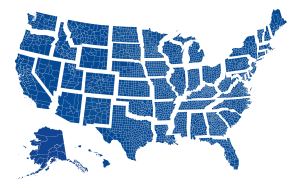
Yesterday (in this post which didn’t go up as a BackChannel) I discussed the idea of “strategic depth” as a way of thinking about the sovereignty of the states in the battle against Trumpism. I want to expand on that. Because it’s become pretty central to my thinking about how the United States is going to survive the next three and a half years and begin the process of battling back. “Strategic depth” is primarily a concept for military studies. It refers to the shape and arrangement of the physical territory a country controls and how close its borders, which may be vulnerable to military attack, are to its concentrations of population, political and industrial centers. If all a country’s key stuff is right near a vulnerable border that’s a big problem. But in addition to where its key stuff is, does it have a lot of territory to fall back on if it suffers early defeats?
Read More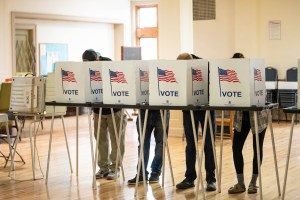
There’s a long way to go before November 2026. The pace of malign events just keeps increasing. But even with all that I want to mention some significant shifts on the 2026 Senate recruiting front. It’s an article of faith for very good reasons that regaining control of Senate is an almost impossible hill for Democrats to climb given the map in play. Democrats have two challenging holds in Georgia and Michigan. Their best pickup opportunities are in states that have repeatedly eluded them, Maine and North Carolina. Beyond that it’s all reliably red states. All that, alas, remains basically the same. But there are a series of shifts that make Democrats taking over the Senate look more plausible even though the odds remain against it.
Let’s run through some details.
Read More
I just belatedly read this piece by TPM alum and all around reasonably good fellow Brian Beutler wrote on the question of resistance to the Trump administration. Voting, organizing, protesting — those are all pretty straightforward. But what about when those aren’t enough? He starts from that saying we hear a lot now: No one’s going to save us. We’re going to have to save ourselves. Well, what does that mean exactly, Brian asks. How do people protect themselves from manifestly illegal, tyrannical government actions or the violent paramilitaries they are working to cultivate? When does opposition and resistance need to move into extra-constitutional or extra-legal actions? These are harrowing, frightening and perhaps quite literally perilous questions to ask.
Brian starts by discussing whether DC should loosen its fairly tight gun laws. He’s quite conflicted about it. He also discusses the possibility and difficulties tied to blue states withholding taxes from the federal government. Very much by design, the federal government collects taxes directly from individuals. But he suggests some creative ways to square that circle that are floating around. Read Brian’s piece if you can.
Read More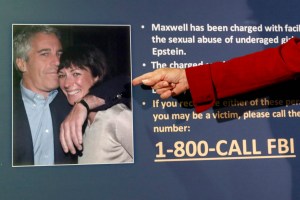
I’m mildly fascinated by this piece in New York Magazine’s Intelligencer section. It’s the review of a new biography of Andrew, Duke of York, by a guy named Andrew Lownie. (The piece appears to be free for a limited time.) What sparked my interest is the major if not central role of Ghislaine Maxwell and thus Jeffrey Epstein. In fact, the upshot of the whole thing is to make Maxwell much more central and dominating figure in the Epstein story than perhaps even Epstein himself, certainly in Andrew’s life and perhaps in Epstein’s as well.
At one level I could not care less about any of these people. As I’ve noted in my other Epstein posts, I’m interested in the story because of the way other people are interested in it — lots of people — and how that interest both intersects with our politics and in some material ways explains our politics.
Read More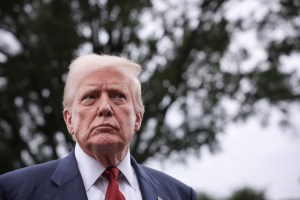
After Friday and Monday’s Backchannels, full of the ominous progress of the Trump White House, we can see again today the dual nature of Trumpism, both predatory and absurd, methodical and feckless. The key to grappling with Trumpism is recognizing that both are simultaneously true and neither reality invalidates the other. Trump’s federalization of the DC Metro police is a case in point. The President can take control of the DC police for up to 48 hours. With notification of relevant committees of Congress, the president can maintain that control for an additional 30 days. After that he requires Congress’s authorization to continue to control the DC police.
Can Trump clean up the DC crime hellscape in 32 days? It seems unlikely. Will Congress allow him to continue past 32 days? Possibly. But by no means certainly. Trump’s margins remain razor thin and it’s the kind of issue where at least a few Republicans might refuse. Will the President remained focused on becoming the DC police chief and mayor or will the whole effort go by the wayside? Was any of it more than an excuse for a news-cycle-driving press conference?
Read More
President Trump’s decision today to federalize the DC police and deploy National Guard troops to the city is a good reminder of the importance of what we discussed Friday: the necessity for the political opposition to narrate Trump’s abuses of power and the contents of the U.S. Constitution, to be crystal clear on what will be reversed when Democrats are back in control of the government and how they’ll provide civil and criminal accountability for those who have broken the law. It makes it even more relevant to review and remember the critical importance of the consent of the governed.
It’s part of American civic culture to marvel at the process of the peaceful transfer of power. We hold an election under a specific set of rules. The winners of those elections inherit a vast array of powers. The president gains control of the military and a vast federal bureaucracy. The president has a huge array of prerogative powers. What he or she says goes, in specific realms. Legislators make new laws. Judges make rulings on imprisonment, people’s redress of harms, etc. etc. The marvel is that a whole population of more than 340 million people freely accede to this power. We have ordinary criminal conduct which is policed and punished. But focus in on the fact of that free compliance. The vast majority of us never come into real contact with the coercive power of the state. And yet virtually everyone, even the most diehard opponents of this administration, recognize that this president has a whole bundle of legitimate powers and we will comply with them.
Why is this?
Read More
I’ve told you a few times of my difficulty launching the DOJ-in-exile project. Such is life. But there’s another set of actions, much easier to do, not requiring any organization or concerted action, which is just as important. We hear a lot of Trump administration actions decried, denounced and so forth, as they should be. What I would like to hear more clearly is that with this or that criminal or unconstitutional action, the next time Democrats control the government the actions will be reversed and those who acted criminally will be prosecuted. This also applies to bad policy. So, for instance, with the absurd expansion of Immigration and Customs Enforcement, Democrats should be saying clearly that once they are back in power, that whole expansion is going to be reversed. People signing up for all those new jobs should know that now. Democrats couldn’t reverse those things as long as Trump’s in power and has a veto pen. But they might be able to deny more funding as soon as 2027.
Read More