

Over the weekend I noticed an example of one of the most significant features of the last decade-plus in American politics, though it’s one that still remains too little remarked upon. Lauren Egan writes a newsletter covering the Democratic Party for The Bulwark. Sunday night’s edition was about pundit and political analyst Stuart Rothenberg, “He Was a Legendary Independent Pundit. Then Trump Arrived.” Basically, How did Stuart Rothenberg come down with, as MAGA puts it, Trump Derangement Syndrome? Toward the end of the piece, Egan gets at what I think is the underlying issue here and some of the commonality I’m about to note.
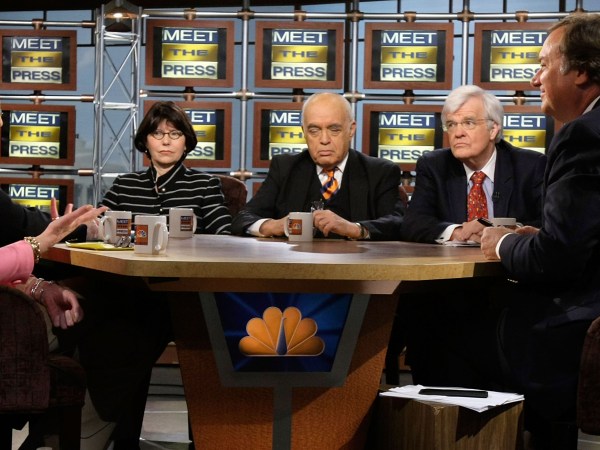
Let’s start this story in the late ’80s and early ’90s. At the time, there were a handful of men — pretty much all men, as I recall — who played a very specific role in the political-journalistic ecosystem. They were rigorously, perhaps obsessively, non-partisan and were go-to people on basic questions of politics. They’d appear on shows, be on call for quotes for journalists at the big papers. Rothenberg and Charlie Cook played that role in the electoral analysis and predictions space. Larry Sabato also occupied that space, though he also played in the political analysis one. In the latter space were Norm Ornstein (AEI) and Thomas Mann (Brookings). I think they were on PBS Newshour for a long time as a pair. Their analysis was on the mechanics of governing, less the explicitly political stuff and generally not electoral stuff.


The U.S. is approaching a newly dangerous phase of its war against Iran. The administration is signaling that it will likely soon commence ground operations in Iran that will yet stop short of a full-scale invasion. Obviously, certainly to many TPM readers, this whole situation and war of choice are very bad things. But I want to point your attention to something specific.

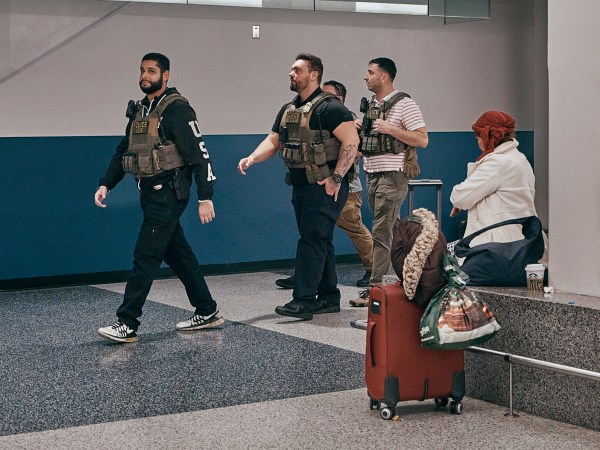

In recent weeks there’s been a recurring story, albeit with different players. This or that DHS or White House official gets asked about sending ICE to the polls in November. Will they disavow it, promise it won’t happen? The general answer has been no comment, no answer. It’s Tom Homan, or Kristi Noem or Stephen Miller. Yesterday, it was Todd Blanche at DOJ. There’s a general mood of a drip, drip, drip story, with all the vibes of looming danger and the hammer-fall of that danger being in the other guy’s hands. This is all a mistake. It’s a Trumpian sort of conditioning that is being perpetuated even though Trump himself, as far as I can tell, hasn’t addressed this particular question in some time. It’s a kind of watchful waiting in which all the power is being ceded to the hands of the White House when that is not necessary at all.
Being in a reactive mode, having the other guy holding the cards and waiting to know what they’re going to do and reacting when they do it is enervating, demoralizing, even paralyzing. And that’s always Trump’s personal angle: ‘I 100% can do it. Everyone agrees I can do it. But we’ll see what I decide,’ is more or less what he’s said about countless future crimes he’s dangled in front of an often-cowering opposition over the last decade.

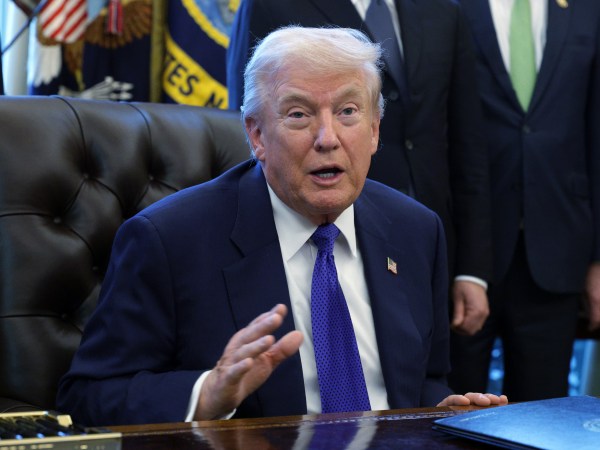
I had a moment of insight or perhaps revelation early in this war when the blockage of the Strait of Hormuz first became central in the news and President Trump was publicly debating whether he would use the U.S. Navy to escort ships through it. Would he, won’t he? Will it happen tomorrow? What will he decide. Then I was watching a YouTube show about maritime shipping. In passing the host, Sal Mercogliano, noted that, at that time at least, there weren’t any U.S. naval vessels in the Persian Gulf at all. And the kind of ships you need, in the numbers you’d need, were hundreds of even thousands of miles away. That made perfect sense since for the kind of war the U.S. is currently fighting we don’t need naval vessels anywhere near that close to the combat zone, and when they are that close they become much more vulnerable to attack. But the point is that the whole debate about whether Trump was about to do that any time in the near future was entirely contained within Trump’s Truth Social world. It wasn’t connected to any of the hard realities of whether any of that was even possible.
Kate and Josh talk airports in crisis, Trump’s bewildering political calculus and, believe it or not, an optimistic vision of what a post-Trump world could look like.
Read More