Top results for "brittle grip"
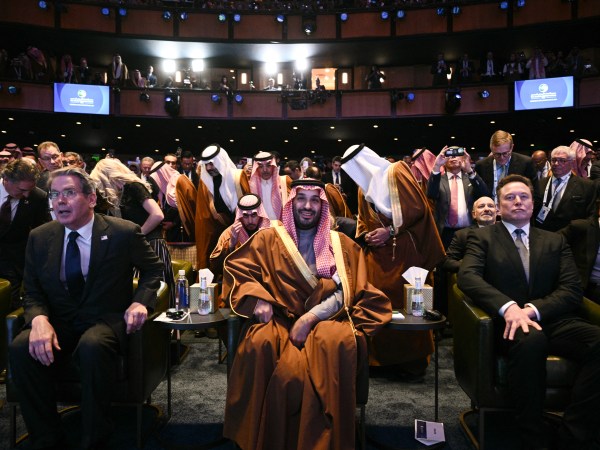


Just before I began writing this post, I saw this article from The Washington Post about the rise of billionaires in American politics. Given Bezos’s ownership and the recent shift in its editorial policies I’m mildly surprised they published it. The key points aren’t terribly surprising. But it brings them together in one place — the vast growth in billionaire giving over the first quarter of this century, the rapid trend from a relatively even partisan split to overwhelming giving to Republicans. It is among other things the story of billionaires becoming increasingly class conscious. It’s always been true that money buys influence in American politics. In some ways, it was even greater and more brazen in the past since there wasn’t even the pretense of limits on giving or disclosure.
But the role of billionaire ownership of the political process has not only grown rapidly in recent years. Public recognition of that fact has, too, which has — perhaps paradoxically or perhaps not — spurred the drive for even tighter ownership. It’s no exaggeration to say that the deca-billionaire or even centi-billionaire class — setting aside those who might command a mere few billion dollars — act now as a kind of post-modern nobility, a class which does not rule exclusively but interacts with politics in a fundamentally different way from the rest of society.

I got a host of very interesting responses to yesterday’s post about the tech platforms force-feeding the mass consumer market AI. I learned a lot from your responses, which included both direct personal experiences and expert perspectives on different dimensions of the topic. What is important to me about this moment is distinguishing two or three different very real things happening at once.
The first is a genuine critical mass in the development of LLM-based machine learning. This is a much better description than “AI” to my thinking, since the latter contains a vast range of meanings from simple and accurate to triumphalist and grandiose. But machine learning is real, and in recent years it’s developed real capabilities that are at least transformative in various areas of work and technology. I’m skeptical of what we’ve developed beyond this at this point but really don’t know. It could be a lot. And it will increase. I think this is the best way to understand the technology itself at this moment now.


Masks have become the central symbol of the Immigration and Customs Enforcement wilding sprees across America in 2025. They are emblems of a secret police. Their gaiters and balaclavas convey menace. But their central justification is the idea that the agents themselves are endangered by their work, that their identities must be kept secret because they are endangered by the very public they menace while at least notionally working to serve and protect. The general argument is that ICE and Customs and Border Protection agents risk being “doxxed,” being identified and having their private information and home addresses made public. But the word has been the subject to an absurd expansion. Earlier this week I heard an anecdote about a group of ICE agents who were eating at a Minneapolis restaurant. A right-wing account said the agents were then “doxxed,” which in this case meant that activists saw them and sent out word to other activists who then started protesting outside the restaurant.
It’s remarkable how accepted this purported need for anonymity has become. Retiring Sen. Thom Tillis (R-NC) has become increasingly outspoken about ICE and called for DHS Secretary Kristi Noem to lose her job. But he still thinks ICE agents should remain masked because of this fear of “doxxing.” A bunch of the country seems to have forgotten that even the most abusive of metropolitan departments require their officers to show their faces and wear name tags as a matter of course.
In this post I want to dig more into that rationale: that the people who are entrusted with the power to wield legitimate violence to serve the public need special protection, special rights to privacy and anonymity in order to do so. What is implicit in this claim is that ICE needs to do its work in a highly abusive manner, or perhaps even that its work is to be as abusive as possible. Why else do they need to be more anonymous than your average beat cop? If they’re going to get a lot of people mad, it just follows that they need some additional protection from the consequences of generating that kind of anger.
Needless to say this argument treads a pretty slippery slope.

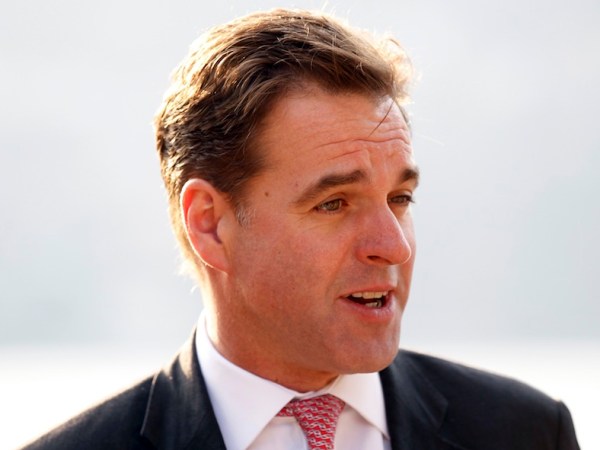

I first encountered Niall Ferguson in a real way when I was writing a review essay for The New Yorker at the end of 2003. The editors had sent me a small stack of books about what we might call the “neo-imperial” moment that took hold of Washington, D.C. in the aftermath of the 9/11 attacks. One of these books was by Ferguson, a fairly rousing and unabashed celebration of the British Empire. If anything it was among the more indirect and implicit versions of the story told by the various authors, celebrating the glories of empire and leaving it to the reader to draw the conclusion it was time to bring them back. As I’ve read columns of his here and there over the last couple decades, the historianness has receded as the tendentious provocateur has moved to the front. But something different struck me about the piece he published in The Free Press earlier this week (subscription required) about Trump’s Gaza peace plan: that was how much it matched in key outlines the piece I wrote on the same topic last week. If you recall, I wrote that the Trump plan was actually a fairly big deal and one that for a variety of reasons only Trump was in a position to pull off. The basis of the agreement is the common authoritarianism and corruption that now knits together Washington, Riyadh, Abu Dhabi and other regional capitals through the personal relationships binding together Trump family and the princely families of the Gulf.


As this election blurred forward I was taking notes for more editions of our “Brittle Grip” Series, the phenomenon of the super powerful and super rich feeling increasingly insecure in their power and wealth even as both wax. One of the key features of this new Gilded Age is the ultra-wealthy and ultra-powerful arguing that their ultra-wealth and ultra-power opens them up to criticism and animosity which entitles them to unique and greater rights and powers to protect themselves. I was forced ahead of schedule this morning by news out of St. Louis from the McCloskeys, the husband and wife sixty-something lawyers who entered the campaign drama when they came out of their house brandishing firearms and threatening to murder protestors who happened to be walking by their house. The couple has filed a lawsuit in federal court against the photographer who took those iconic pictures of them with their guns.
At TPM, we have certain terms we use over and over. Dignity wraiths. The brittle grip. A new one in recent months: Schrodinger’s DHS secretary. You can find a (very) partial list of these terms — Josh Marshallisms, largely — here.
For our 20th anniversary celebration next month, we’re putting together a master list. It’s quite an undertaking: Twenty years of proprietary terms. But we think it will serve as a useful guide to some of the key themes of the last two decades. Also, we think it will be funny.
However: 20 years is a long time, and we need the help of our dedicated readers to remember some of these terms.
So, if you remember one that we’re missing, shoot us an email.
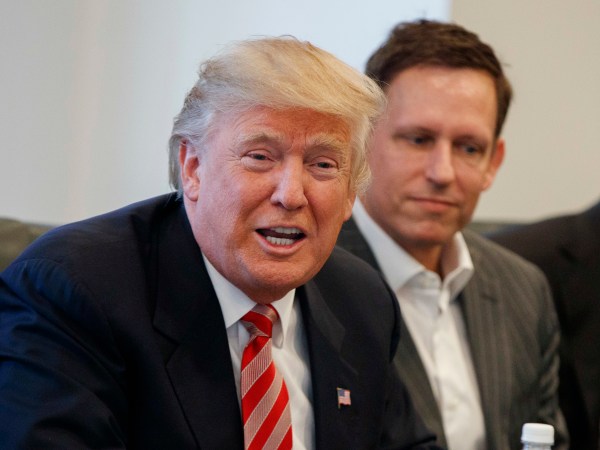

I just started reading this Buzzfeed article about Facebook board member and Trump backer Peter Thiel’s relationship with racist fringe groups. Thiel seems like an outlier in Silicon Valley because of his high profile support for Trump. But he is actually part of a rising tide of neo-authoritarian thought in the tech world which argues that democracy has failed and must be replaced. This reminded me of something I’ve been coming back to again and again with greater clarity and understanding its greater significance as the years have gone by.
At some point in 2015 I was sitting at my desk in TPM’s New York office’s talking with a good friend who worked at Gawker. The Hulk Hogan lawsuit had been on the horizon for a long time before it actually came to trial. In preparation Gawker founder and owner Nick Denton had recently cut some deal with a Russian oligarch to give Gawker deep enough pockets to withstand an adverse judgment which they anticipated and hoped could be reversed on appeal. My friend was walking me through all of these developments. He was very much preaching the Hulk Hogan lawsuit gospel. The future of freedom of the press, he told me, was on the line with Gawker’s fate.
I nodded in agreement with each point. As a publisher and strong supporter of press freedom, I supported Gawker’s position publicly and privately. And yet tucked away in my head part of me was saying, “C’mon. You published a sex tape.” Publishers see every libel suit and think there but for the grace of God. In this case, I knew to a certainty that this particular libel situation was not one TPM ever would have found itself in.