Barr Applauds Durham For Pushing MAGA Narrative After Probe Flames Out

A lot of things happened. Here are some of the things. This is TPM’s Morning Memo.

Aaaaand Scene!

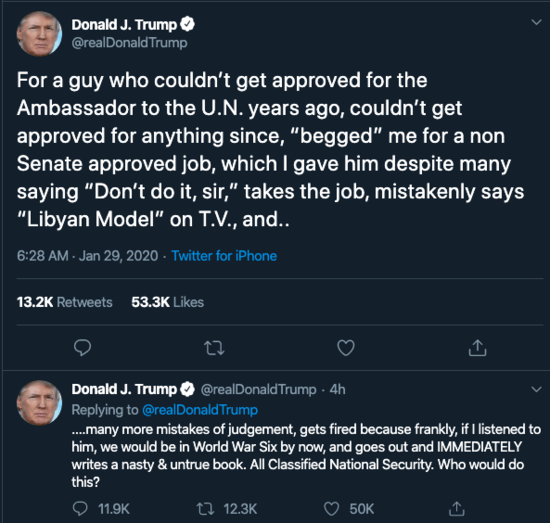
Ex-Attorney General Bill Barr baldly confirmed on Wednesday what we all knew: The John Durham investigation, which ended up being a total bust, into the origins of the FBI’s Trump-Russia probe was nothing more than political theater–and Barr is “very proud” of Durham’s performance despite the case ending in a speedy acquittal. After all, the former Trump crony got what he wanted.

  • Durham “accomplished something far more important” than a conviction; he “brought out the truth,” Barr told Fox News.
  • Barr openly praised Durham for using the investigation to peddle MAGAland’s conspiracy theories. Durham, the ex-attorney general said, “crystallized the central role played by the Hillary [Clinton] campaign in launching as a dirty trick the whole Russiagate collusion narrative.”
  • Not all Republicans are as happy as Barr, though. They’re pretty mad that nobody got convicted.

Uvalde School District Police Chief Dodges CNN Reporter

Uvalde School District Police chief Pete Arredondo, the officer who’s under scrutiny for leading the local police’s botched response to the elementary school shooting last week, refused to answer a CNN reporter’s questions on Wednesday:

Four Dead After Shooting At Tulsa Hospital Complex

A gunman killed four people after opening fire at the Natalie Medical Building on the campus of St. Francis Hospital in Tulsa, Oklahoma on Wednesday, according to local authorities. The police said the shooter was found dead inside the building with self-inflicted wounds.

Hit-And-Run Attorney General Not Running For Reelection

South Dakota Attorney General Jason Ravnsborg (R), who was impeached for fatally crashing into a pedestrian without reporting it until later, won’t run for reelection regardless of how the state Senate’s impeachment trial ends up for him, according to local outlet KOTA.

  • Ravnsborg’s impeachment trial is scheduled for June 21-22. The GOP-controlled South Dakota House impeached the attorney general, who had pleaded no contest to a few traffic misdemeanors in the case, in April.
  • South Dakota Gov. Kristi Noem (R) and other Republicans have been calling on Ravnsborg to resign over the incident, and those calls only intensified after the investigation revealed damning details of the crash–including the victim’s glasses being found inside Ravnsborg’s car. 

Judiciary Committee GOPers Take Ghoulish Victory Lap Over Depp/Heard Trial

The Twitter account for House Judiciary Committee Republicans posted this shortly after a jury sided with actor Johnny Depp in his defamation suit against Amber Heard, who had referenced her allegations of abuse against Depp without mentioning his name in a 2018 Washington Post op-ed, on Tuesday after an ugly trial:

  • The jury found that Depp and Heard had defamed each other: The jury awarded Depp $15 million in compensatory and punitive damages combined, and Heard $2 million in compensatory damages her countersuit against her ex-husband.

Must Read

“I survived Columbine 23 years ago. Is America finally tired of all this death?” – Craig Nason for NBC News THINK

State Senator Loses Primary By One (1) Vote

Alabama Sen. Tom Whatley (R) was defeated by GOP primary challenger Auburn City Councilman Jay Hovey by a single vote.

Santa’s Running For Congress

There’s a guy whose legal name is Santa Claus who’s running in the special election for late Rep. Don Young’s (R-AK) seat against ex-GOP vice presidential candidate Sarah Palin and dozens of other people. He also couldn’t look more like Santa if he tried (though I’m pretty sure he does).

  • Santa Claus is a councilman in North Pole, Alaska (I swear I’m not making that up) and he had his name legally changed to Santa Claus in 2005. His pre-Santa name was Thomas Patrick O’Connor.
  • He’s running as a democratic socialist whose platform aligns with that of Sen. Bernie Sanders (I-VT), according to his campaign site.

Cat Pushes The Gay Agenda

Do you like Morning Memo? Let us know!

Buffalo Shooting Suspect Indicted On Hate Crime And Domestic Terrorism Charges

The white man accused of fatally shooting 10 Black people at a Buffalo supermarket last month was indicted by a grand jury on 25 counts on Wednesday, which includes state domestic terrorism and hate crime charges.

Continue reading “Buffalo Shooting Suspect Indicted On Hate Crime And Domestic Terrorism Charges”

Where Things Stand: The ‘Investigate The Investigators’ Conspiracy Theorist Lines Of Attack Are Falling, One Day At A Time

Just yesterday a federal jury essentially toppled ex-President Trump’s victimhood-laced line of attack against the Russia probe when it acquitted DNC-connected lawyer Michael Sussmann.

The acquittal was a significant swing and a miss, not just for special counsel John Durham, who was handpicked by then-Attorney General Bill Barr to look into the origins of the Trump-Russia probe, but for Trumpers everywhere who have built a brand off of the long-unsubstantiated belief that the Mueller probe was nothing more than a politically motivated conspiracy of the elites to undermine Trump’s legitimacy as president.

Continue reading “Where Things Stand: The ‘Investigate The Investigators’ Conspiracy Theorist Lines Of Attack Are Falling, One Day At A Time”

Why Do We Even Have A Justice System If Durham Can’t Convict Sussmann? GOP Wonders

Following Tuesday’s lightning-fast acquittal in John Durham’s case against DNC lawyer Michael Sussmann, some conservatives are starting to profess deep doubt about the foundations of the country’s legal system.

Continue reading “Why Do We Even Have A Justice System If Durham Can’t Convict Sussmann? GOP Wonders”

Right-Wing Activists Are Poised To Turn Election Jobs Into Propaganda

In a podcast last year, the conservative election lawyer and former Trump legal advisor Cleta Mitchell recalled meeting with an activist group and drawing a bullseye to illustrate where they would be most effective: Sure, they could be volunteers criticizing the system from the outside, but the best place to be on Election Day, Mitchell said, was “inside and counting.”

Continue reading “Right-Wing Activists Are Poised To Turn Election Jobs Into Propaganda”

To Trust Election Results, We Must Trust The People Administering Them

This article is part of TPM Cafe, TPM’s home for opinion and news analysis. 

Amid growing concern about the prospects for a free and fair election in 2024, last week brought a rare piece of good news: Georgia Secretary of State Brad Raffensperger, who famously stared down President Donald Trump’s bid to strong-arm him into reversing the state’s 2020 election results, overcame a Republican primary challenge from Rep. Jody Hice, a vocal denier of the 2020 presidential outcome. Had Hice won the nomination and prevailed in November to become Georgia’s top election official, he would have been in a position to subvert the will of voters in a key presidential swing state. 

But let’s not celebrate too much. It’s worth noting that to re-establish his GOP bona fides after angering Trump, Raffensperger was forced to run on a platform designed for the base. His need to appeal to his party is just one example of partisanship influencing leaders in election administration. This tension between doing the right thing for voters versus appealing to a partisan political platform puts secretaries of states in an untenable position. 

It isn’t only in Georgia that our nation faces these challenges. Every state’s top election official, as well as at least 60 percent of their local counterparts, enters office with ties to a political party — making the U.S. an outlier among advanced democracies. Canada, Great Britain and Australia, for example, pick equivalents of secretaries of state by appointment based on qualifications and without regard to political party.

There might once have been a time when, despite their partisan affiliations, we could nonetheless count on election officials to act impartially. But in today’s hyper-polarized era, it’s clear we no longer can. Today, 19 states have seen candidates for secretary of state who either dispute the 2020 election results, express a willingness to overturn the results of a legitimate election, or both. Partisans are also mobilizing to take administrative positions at the local level. It’s perhaps no wonder that as many as 56 percent of Americans have little or no confidence that U.S. elections reflect the will of the people.

Partisanship in election administration crops up across the country. From notorious moments in history like Secretary of State Katherine Harris co-chairing President Bush’s 2000 presidential campaign in Florida, to low-key statements of support at political party events, many state and local election officials don’t hesitate to endorse candidates they favor. Partisanship also creeps up when elections officials themselves run for new posts, using the secretary of state positions as a political step stool for another office. Some 40 percent of secretaries of state serving since 2000 ran for higher offices while still administering elections, and almost none recused themselves from oversight of their own races. On the financial front, election officials at state and local levels actively fundraise for candidates in races they oversee. Even involvement with Political Action Committees (PACs) or super PACs isn’t off limits — and it should be. 

When election officials take any of these partisan actions, they undermine the public’s ability to see them as neutral arbiters of election results. If we want fair election administration in which all voters can have confidence, we need much stronger rules to ensure that the people running our elections set aside their party loyalties. 

The situation is not hopeless. Policy options include: 1) Selecting election officials using impartial appointment models; 2) Electing these officials in nonpartisan races that remove all party affiliations from the ballot; or 3) Requiring election experience for people running for the posts. 

These smart options have merit and should be considered on a state-by-state basis. However, all states should require statutory ethics codes for election officials that prohibit the most egregious activities: fundraising for other candidates; endorsing or opposing candidates; and failing to recuse themselves from oversight of decisions in their own races. Model legislation prepared by the nonpartisan Election Reformers Network with support from Campaign Legal Center aims to do just that. 

Many election officials support such reforms. Secretaries of state have told us that a law prohibiting political endorsements would help them say no to such requests. County clerks in states like Washington support reforms to make election administration nonpartisan. And local election officials, including in Virginia, are raising alarms over the increasingly partisan role of party-selected county election boards.

To be clear, our nation is blessed with many election officials who serve tirelessly. We absolutely must protect them from harm or coercion. At the same time, we must insist that election officials’ integrity remain beyond reproach. States must, at minimum, pass ethics codes for elected officials requiring political and financial neutrality, and they must do it right away. 

To return to this week’s events in Georgia: Integrity prevailed and voters rewarded a political official who defended democracy in 2020 and did the right thing. But, that path was not easy for Secretary Raffensperger and he had to navigate the tumultuous environment with GOP voters created by conspiracies about the 2020 election. That’s why much more work is needed. Americans deserve election officials who, in all aspects of the job, act as unbiased public servants, not partisans, who simply serve the voting public.

Editors note: This post was initially published with a non-final draft version of this essay. The text has been updated.

Amber McReynolds, a leading expert on election administration, is a consultant on various nonpartisan election reform projects and was appointed by the President to serve as a governor for the United States Postal Service.

Heather Balas is vice president of the Election Reformers Network and a recognized leader on state-based election reforms.

Jan. 6 Committee Rejects Jim Jordan’s Demands As He Drags His Feet On Subpoena

The Jan. 6 Select Committee on Tuesday dismissed Rep. Jim Jordan (R-OH)’s list of demands as it issued a stern warning to comply with its subpoena by the end of next week.

Continue reading “Jan. 6 Committee Rejects Jim Jordan’s Demands As He Drags His Feet On Subpoena”

McCormick Pushes For Hand Recount In Senate Race Nailbiter

GOP Pennsylvania Senate hopeful David McCormick plans to request a hand recount of some of the ballots in his virtually neck-and-neck race against Trump-endorsed rival Dr. Mehmet Oz, who has a lead of less than 1,000 votes.

Continue reading “McCormick Pushes For Hand Recount In Senate Race Nailbiter”

How The US Has Struggled To Stop The Growth Of A Shadowy Russian Private Army

This article first appeared at ProPublica. ProPublica is a Pulitzer Prize-winning investigative newsroom. Sign up for The Big Story newsletter to receive stories like this one in your inbox.

For nearly a decade, U.S. officials watched with alarm as a shadowy network of Russian mercenaries connected to the Kremlin wreaked havoc in Africa, the Middle East and most recently Ukraine.

A number of them now say they wish the U.S. government had done more.

President Vladimir Putin has increasingly relied on the Wagner Group as a private and unaccountable army that enables Russia to pursue its foreign policy objectives at low cost and without the political backlash that can come from foreign military intervention, U.S. officials and national security experts said.

In recent years, governments in the Middle East and Africa hired the fighters to crush insurgencies, protect natural resources and provide security — committing grave human rights abuses in the process, according to U.S. officials and international watchdogs.

In Syria, Wagner fighters were filmed gleefully beating a Syrian army deserter with a sledgehammer before cutting off his head. In the Central African Republic, United Nations investigators received reports that the mercenaries raped, tortured and murdered civilians. In Libya, Wagner allegedly booby-trapped civilian homes with explosives attached to toilet seats and teddy bears. Last month, German intelligence officials linked Wagner mercenaries to indiscriminate killings in Ukraine.

The U.S. was slow to respond to the danger, and it now finds itself struggling to restrain the use of the mercenaries across the globe, according to interviews with more than 15 current and former diplomatic, military and intelligence officials. Unilateral sanctions have done little to deter the group. Diplomacy has stumbled.

“There was no unified or systematic U.S. policy toward the group,” said Tibor Nagy, who served the State Department for nearly three decades, most recently as the assistant secretary of state for African affairs until 2021.

The Kremlin officially denies any connection with the activities of Russian mercenaries abroad, and much about Wagner’s structure and leadership remains unclear. But experts say that Wagner’s top officers have participated in meetings between foreign leaders and top Russian officials. They also say the Russian air force has transported Wagner fighters to launch the group’s international missions.

Wagner has spread around the world, particularly in Africa, because it presents an enticing package to leaders of embattled nations, experts said. It offers to quash terrorism and rebel threats with brutal military crackdowns, while rallying public support for their government clients through disinformation campaigns.

U.S. officials said they have felt underequipped in trying to curtail the mercenaries’ incursions, in part because American diplomacy in Africa has been gradually stripped of resources over the past three decades. Some also said the U.S. was slow to appreciate the severity of the Wagner threat before it became a formidable weapon in the Kremlin’s arsenal.

In Africa, American efforts to persuade governments not to work with Wagner have generally been late and ineffectual, the officials said. U.S. diplomats have been surprised when Wagner arrives in a faltering country, leaving them scrambling to counter the group’s influence with limited tools and incentives.

During the Cold War, America’s policy of containing the spread of Soviet communism led to a substantial investment in courting African leaders, offering developmental aid, university exchange programs, even concerts. But when the Berlin Wall fell, so too did the U.S. government’s interest in the African continent, the officials told ProPublica. Embassy staffs shrank; programs shriveled.

“America’s soft power is unbeatable, but it needs to be deployed,” Nagy told ProPublica. “The quiver is empty.”

Nagy and other current and former high-level State Department officials said embassies in Africa tend to employ few public diplomacy officers, with barebones staff that must juggle everything from routine visa issues to terrorist threats.

“That doesn’t leave a lot of time for a thin staff to develop the expertise or the relationships necessary to have or pursue a robust engagement strategy,” one senior State Department official said about efforts to steer foreign officials away from Wagner. “The ability of a fairly junior diplomatic officer to build a relationship with the Cabinet member who’s going to be making the decision — that is just not realistic in most cases.”

The State Department declined to comment. The Pentagon and the Kremlin did not respond to questions for this story.

The most visible U.S. effort to keep Wagner out of a specific country transpired in Mali, where the mercenaries arrived last December to fight jihadists rampaging in the north. Malian President Assimi Goïta had recently come to power in the latest of a series of coups that prompted international sanctions.

Before Wagner landed, Gen. Stephen Townsend, the head of the U.S. military’s Africa Command, traveled to Mali to meet with Goïta. “I explained that I thought it was a bad idea to invite Wagner,” Townsend told Congress in March. “Wagner obeys no rules. They won’t follow the direction of the government.”

But the entreaties from Townsend and other U.S. officials were unsuccessful. Former diplomats say the effort was part of a troubling pattern where American officials parachute into complex situations equipped with little more than talking points. Africa Command declined to comment.

The Americans were telling the Malians not to work with the Wagner group but offering no meaningful alternatives, said J. Peter Pham, who served as the first-ever U.S. special envoy to the Sahel region until last year and maintains close contact with Malian and other African officials.

“You either have concrete programs of assistance, or you have personal relationships and diplomatic capital built up over the years that you can call upon,” Pham said. “Many American officials, often of middling rank, are often dispatched with neither.”

In March, the French newspaper Le Monde reported that Wagner mercenaries had participated in the torture of civilians, including by electrocution, while working with Malian soldiers. Last month, Human Rights Watch issued a detailed report accusing Russian fighters of participating in a massacre of roughly 300 civilians during a military operation. The killing began at a crowded cattle market on March 27 and continued for several days. In a statement, State Department spokesman Ned Price said, “We are concerned that many reports suggest that the perpetrators were unaccountable forces from the Kremlin-backed Wagner Group.”

The Malian government has said that the Russians are helping their military as formal instructors, and that their army killed 203 “terrorists” and arrested 51 more during the operation. The Malian Embassy in the U.S. did not respond to requests for comment.

The Wagner group first attracted public notice in 2014, during the Russian invasion of eastern Ukraine. Its mercenaries fought alongside Russian federation forces, attacking Ukrainian forces in the still-contested Donbas region.

Gary Motsek, then a U.S. deputy assistant secretary of defense, was alarmed by the emergence of what seemed to be a new breed of Russian mercenary.

For years, the Pentagon had been aware of Russian military contractors disregarding international law, Motsek said in an interview with ProPublica. But the contractors had mostly been consigned to securing oil tankers and other Russian assets. Now the Wagner Group was in combat, like a private army.

“Looking at the growth of the Wagner Group, it was clearly a missed opportunity” from roughly 2008 to 2010, Motsek said. “We should have made it a priority.”

At the time, Motsek led a Pentagon office that helped create international standards for private military contractors. He said the office focused on voluntary compliance and companies active in American warzones. When the Russians chose not to sign on to the standards, he was not aware of any effort to rein them in.

“It was probably my fault, more than anyone else, because I was the only one working on this on an almost daily basis,” Motsek told ProPublica. “We never went and said, ‘Let’s control these guys.’ I didn’t have the mandate to do that. And I guess I didn’t have the vision.”

American officials say Wagner operates through a web of shell companies controlled by the Russian oligarch Yevgeny Prigozhin, a food industry magnate with close ties to Putin, sardonically referred to as “Putin’s Chef.” Prigozhin has vehemently denied his involvement in the group, supposedly named after the German composer — a favorite of one of the mercenaries’ alleged commanders. Efforts to reach Prigozhin were not successful.

The U.S. sanctioned Prigozhin in 2016 and the Wagner Group in 2017 in response to their role in the Ukrainian conflict. Prigozhin was subsequently indicted for his alleged involvement in meddling with the 2016 U.S. presidential election through the troll farm known as the Internet Research Agency.

Experts say the Wagner Group appears to be paid in proceeds from natural resources like oil, gold and diamonds in countries where they are fighting. The Kremlin has used them as a cheap alternative to Russian armed forces.

“Russia has opened up military operations in two continents, for the first time since the 1980s,” said Sean McFate, a professor at the National Defense University. “The tip of the spear is the Wagner Group.”

In 2015, Russia sent its military to fight in the Syrian civil war on behalf of the dictator Bashar al-Assad. It was the Kremlin’s first armed intervention outside former Soviet territories since the end of the Cold War. Soon, Russian Federation forces and fighters from Wagner and other mercenary groups helped tilt the war in Assad’s favor.

On Feb. 7, 2018, Wagner mercenaries and Syrian soldiers carried out an assault on a U.S. special forces outpost near the town of Khasham, hammering the American position with artillery rounds as the Russians and Syrians advanced. Americans responded with airstrikes in a four-hour battle, killing an estimated 200 combatants. No Americans died.

Joseph Votel, a retired four-star general, was then the head of U.S. Central Command. In an interview, he told ProPublica that he believes the assault was financially motivated, and that Wagner sought control of an oil field near an ongoing U.S.-led counterterror operation.

But Votel said U.S. commanders regarded the fight as an isolated incident rather than a significant development in souring relations between the two nations.

“I didn’t particularly dwell on it,” Votel said. “I wasn’t pressed on it. What happened, happened.”

Joseph Siegle, director of research at the Africa Center for Strategic Studies, said Russian military successes in the Syrian conflict represented an “inflection point for Russia.”

“They saw how quickly they could gain influence in a region where they’d had relatively little influence,” Siegle said.

In 2019, Wagner began to fight in the Libyan civil war, supporting a campaign by the warlord Khalifa Haftar to overthrow the country’s internationally recognized government. Haftar had appeared to be faltering, but, together, Wagner and rebel fighters launched a new offensive that brought their combined forces to the outskirts of Tripoli.

At the top levels of American foreign policy agencies, alarm bells were beginning to sound.

“We were watching it change the course of the war,” David Schenker, then assistant secretary of state for Near Eastern affairs, said in an interview with ProPublica. “This was the beachhead. Wagner was the landing party.” Haftar’s attempt to retake Tripoli ultimately stalled after Turkey intervened on the opposing side. But if Haftar had succeeded, Schenker worried, Russia could have been rewarded with “a base on NATO’s southern flank.”

Schenker said he believed the most immediate potential countermeasure was to push the European Union to impose sanctions on Wagner and crack down on its finances. But he said many of his colleagues in the U.S. government and in Europe didn’t view that as realistic.

“I really pressed hard for a designation from the E.U. What’s complicated is that Russia routinely goes and assassinates dissidents in foreign countries,” he said. “People weren’t interested in angering Putin. Putin for these guys is like Voldemort.”

The E.U. did not impose sanctions on Wagner until December 2021.

In response to questions for this story, E.U. spokesperson Nabila Massrali said the E.U. aggressively sanctioned Russia in response to the invasion of Ukraine and sanctioned Wagner “to take tangible action against those threatening international peace and security and breaching international law,” noting that all sanctions require unanimity among member countries.

As the Ukrainian conflict drags on and the Kremlin becomes further isolated from the global economy, experts say that Wagner is likely to play an increasingly important role in Russian foreign policy. The Wagner Group’s expansion could help Russia evade the impact of sanctions, entice governments to support it in the U.N. General Assembly and secure strategic positions in its fight against the NATO alliance.

Economically, Russia pales in comparison to superpowers like China and the United States. But in the Wagner group, officials said, Russia has found a cheap and novel foreign policy tool that America has yet to find a way to address. Client governments appear to absorb most of the cost.

“The Russians don’t have a blank checkbook,” said Nagy, the former top U.S. diplomat for Africa. “They are playing a fairly weak hand extremely, extremely well.”

ProPublica will continue to report on the Wagner group and the power struggle between the U.S. and Russia as it plays out around the globe. We are especially interested in relationships between Western companies and Russian mercenaries.

If you know about these issues, please contact reporters Joaquin Sapien at joaquin.sapien@propublica.org or Joshua Kaplan at joshua.kaplan@propublica.org. We take your privacy seriously and will contact you if we wish to publish any part of your story.