This article is part of TPM Cafe, TPM’s home for opinion and news analysis. It was originally published at The Conversation.
The “great replacement theory,” whose origins date back to the late 19th century, argues that Jews and some Western elites are conspiring to replace white Americans and Europeans with people of non-European descent, particularly Asians and Africans.
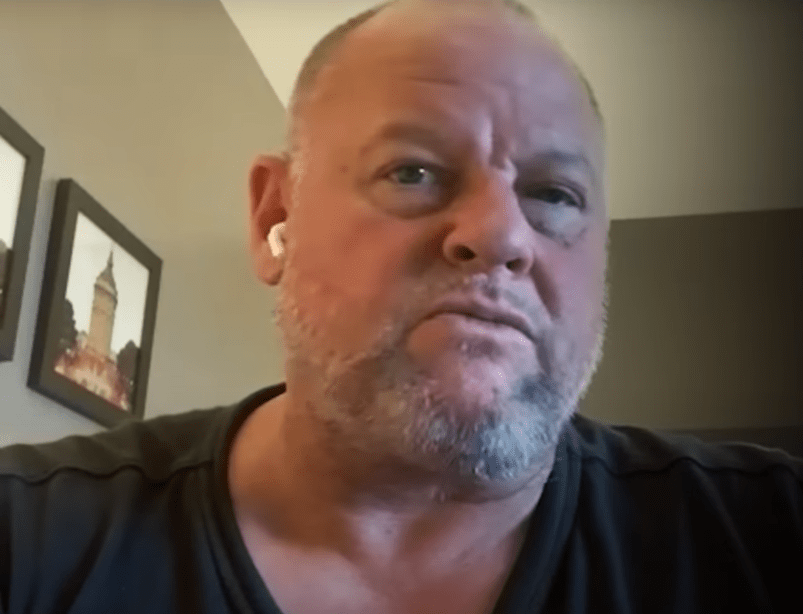
As Republicans in Congress have attacked President Biden’s handling of the southern border, some of them have turned to a far-right media figure with a decidedly extreme perspective. Online, Michael Yon has dubbed himself “just a simple war correspondent and cannibal hunter.” The latter part of his job description refers to his work tracking migrants and his fears they are part of “a planet of the apes style invasion” that is targeting the white race for “genocide and cannibalism.” This shockingly racist paranoia — including referring to migrants as “apes” and “Congo-Cannibals” — has not stopped Yon from collaborating with multiple Republican members of Congress who have turned to him to participate in inflammatory documentaries and junkets to Latin America.
After receiving a request for comment on this story, Yon posted the message on his social media rather than responding. TPM engaged in an extensive back and forth with Yon over email to obtain comment from him for the story. As of publication, he had not provided a response.
Yon, a Special Forces veteran, gained notoriety as an independent blogger who spent extensive time on the front during the Iraq War. A 2008 profile in the New York Times said Yon spent three years in Iraq where he wrote reader-funded dispatches while “racking up more time embedded with combat units than any other journalist, according to the United States military.” The newspaper noted Yon had “an agenda” and described him as firmly believing the American mission in that country was “succeeding and must continue.” Since then, Yon has turned his attention to immigration — and his agenda has become far more strident and extreme.
Michael Yon appearing in “Alien Invasion.” (Photo: Youtube.com/@RepAndyBiggsAZ05)
In September 2022, Rep. Andy Biggs (R-AZ) put together an approximately 30-minute video called “Alien Invasion” that he dubbed “a documentary on the Biden border crisis.” The video coincided with Bigg’s push to impeach Homeland Security Secretary Alejandro Mayorkas. It premiered at the Heritage Foundation and is still, as of this writing, featured on Biggs’ website. According to the credits, “Alien Invasion” was “presented by” Biggs, who served as a narrator and produced by two of his staffers. It features an interview with Yon about the conditions in the Darien Gap, a treacherous, dense jungle between Panama and Colombia that is traversed by immigrants who attempt to make the journey by land from South America to the United States. Yon, who was billed as a guest star of the documentary, has spent time in the region and was credited by Biggs’ team with providing some of the footage used for the “documentary.”
“Darien Gap is very dangerous. It’s one of the most dangerous places on earth,” Yon said during his appearance in the video, adding, “It’s just wild jungle including the indians who live out there, who kill migrants pretty much every day. It’s literally the law of the jungle, so if the jungle doesn’t get you often the indians do.”
Biggs and his communications director Matthew Tragesser, who is one of the staffers that produced the documentary, did not respond to a request for comment. The other staffer involved in making the video, Paul Windsor, became the creative director for Sen. Ted Cruz (R-TX) last December. Cruz’s office did not respond to a request for comment.
Rep. Andy Biggs (R-AZ) appearing in his “Alien Invasion” video. (Photo: youtube.com/@RepAndyBiggsAZ05)
Yon’s collaboration with Biggs is typical of how some on the right have used the specter of dangerous conditions south of the border to criticize Biden and to advocate for more restrictive immigration policies. This fearmongering reached an absurd peak with the GOP response to the president’s State of the Union that Sen. Katie Britt (R-AL) delivered earlier this month where she falsely implied that a dramatic incident of sex trafficking which occurred roughly two decades ago in Mexico had taken place in this county and on Biden’s watch. Yon’s work also shows how, along with highlighting the real dangers faced by migrants in their home countries and on the border crossings, some on the right believe the immigrants themselves are a direct threat.
In multipleposts he wrote in 2021 on the site formerly known as Twitter, prior to the release of Biggs’ documentary, Yon described foreigners as cannibals. On twooccasions this month, he used the sci-fi movie “Planet of the Apes” to describe the effects of immigration. This included a March 13 post after Biden’s State of the Union where the president announced plans to build a pier in the Gaza Strip to deliver aid to starving Palestinians.
“That port will be to facilitate the ex-vasion from Gaza into Florida, etc,” Yon wrote. “And boy will all the people in SouthEast Florida be surprised when the Haitians and Gazans all arrive in a planet of the apes style invasion.”
Along with criticizing foreigners, Yon has disparaged American minorities on social media. In February 2021, he wrote about his frustration with “black men murdering white people.” Later that year, he urged his followers not to go to Washington D.C. and said it is “too dangerous there. Especially for white folks”
“The Beast is setting conditions for famine and war that will include justification for genocide and cannibalism of selected targets. Specifically, the new Jews, the new Kulaks: white people,” Yon wrote.
None of this has stopped Yon from gaining traction in right-wing circles. He has amassed a six-figure social media following and crowdfunded nearly $70,000 for his work. Yon has also appeared on the “War Room” show with former Trump adviser Steve Bannon and been interviewed by the prominent podcaster and author Jordan Peterson. Along with these more fringe figures, Yon has engaged with congressional Republicans. In addition to his work with Biggs, Yon accompanied Rep. Tom Tiffany (R-WI)on a trip to the Darien Gap region in 2021. That junket included another member of Congress who initially declined to be identified. Yon and others subsequently named Rep. Burgess Owens (R-UT) as the other participant on the trip. Both Owens and Tiffany, who was also featured in Biggs’ documentary, did not respond to requests for comment.
Along with working alongside Republican members of Congress, Yon made at least one trip to Capitol Hill — on Jan. 6, 2021.
Shortly after Biden’s inauguration, Yon made clear his version of frontline correspondence is a decidedly unconventional one. “I’ve never claimed to be unbiased, or a reporter,” Yon wrote.
With so many weighty issues pressing upon us for attention I was surprised by a new story yesterday evening which sparked some joy.
Let’s go to Ohio where three Republicans are vying for the opportunity to unseat three-term Senator Sherrod Brown, a highly effective politician who nonetheless now faces reelection in an increasingly Republican state. State Sen Matt Dolan, son of the owner of the Cleveland Guardians, is the GOP normie candidate — we’ll be normal if you just give us your tax cuts. Another candidate, Ohio Secretary of State Frank LaRose, latched himself to the desperate Hindenberg of an effort to defeat Ohio’s abortion rights referendum. And then there’s Bernie Moreno, a businessman and full-on Trumper (though also, as is often the case, a one-time Trump critic). Basically LaRose and Moreno both pushed hard for the Trump vote and endorsement. But Moreno won that fight. He got J.D. Vance to endorse him almost a year ago. And then Vance seemed to play an important role in getting a lot of key MAGA luminaries, eventually including Trump himself, to get behind Moreno.
If you had already given up hope that the criminal justice system would manage to hold Donald Trump to account before the election, yesterday’s developments only confirmed your pessimism.
The day’s big shocker was that the one trial that seemed certain to take place before Election Day – the Stormy Daniels hush money case in Manhattan – is very likely to be delayed for at least a month. The reasons for that remain inexplicable. The U.S. Attorney’s Office in the Southern District of New York isn’t saying why it delayed responding to a Trump subpoena and then started producing tens of thousands of responsive documents just days before trial. It forced Manhattan District Attorney Alvin Bragg’s hand, and he agreed yesterday to a delay in the start of the trial of at least a month. Trump wants a 90-day delay. A judge has yet to rule.
Meanwhile, down in Florida, U.S. District Judge Aileen Cannon seems no closer to setting a trial date, and the case continues to bob along aimlessly while she complicates it needlessly. Cannon did issue one ruling yesterday, after a day-long hearing on two of Trump’s motions to dismiss, but it was confused, tortured and not a clean shot. She ruled that it was premature to dismiss the case for unconstitutional vagueness, but left open the possibility of dismissing the case during trial. This is typically a legal question that a judge would dispense with unequivocally by now. Not so with Cannon. She didn’t yet rule on the second Trump motion to dismiss based on his preposterous claim that the Presidential Records Act controls here and overrides laws on the handling of classified information.
Combined with the stalled Jan. 6 case and Fani Willis’ RICO case going on a Dukes of Hazard-style detour through the backwoods of Georgia, the prospect of Trump being tried before November is not eliminated but is at its lowest ebb yet.
It will take a collective sense of urgency to rid ourselves of the Trump threat. I’m not talking about voters. I’m referring to elites. Nearly a decade into it, the political, legal and business sectors are still slow-walking through the Trump era. It’s a collective failure. And Trump continues to exploit it.
BREAKING …
State Judge Scott McAfee just issued his ruling on the motion by Trump and his codefendants to disqualify Atlanta District Attorney Fani Willis from prosecuting the RICO election interference case. It’s a mixed bag. More to come at TPM today.
Susan Glasser: I Listened to Trump’s Rambling, Unhinged, Vituperative Georgia Rally—and So Should You
2024 Ephemera
NJ-Sen: Indicted Sen. Bob Menendez (D-NJ) is considering running for re-election in November as an independent, NBC News reports.
WV-Sen: Retiring Sen. Joe Manchin (D-WV) is resisting entreaties from Senate Majority Leader Chuck Schumer (D-NY) to make a last-ditch bid to hold on to his Senate seat by running as an independent.
OH-Sen: The AP dug up evidence tying Trump-backed Bernie Moreno (R) to a 2008 online profile seeking “Men for 1-on-1 sex” on Adult Friend Finder. Moreno lawyer Charles Harder, whose previous clients include Hulk Hogan in the case that took down Gawker and Donald Trump in a defamation lawsuit by Stormy Daniels, provided the AP with a statement from a former Moreno intern who claims to have set up the profile as a prank. Moreno’s views on on LGBT rights have, shall we say, evolved from supportive before he entered politics, to hardcore against since launching his first Senate bid in 2021.
A woman who claims Rep. Matt Gaetz (R-FL) had sex with her when she was still a minor has subpoenaed him to sit for a deposition in a defamation case brought against her by a longtime friend of Gaetz. For his part, Gaetz has denied any wrongdoing.
The father of the Oxford, Michigan high school shooter was convicted on four counts of involuntary manslaughter, just as the shooter’s mother was last month. They will be sentenced together April 9.
Cry A Little Harder
Senate Minority Leader Mitch McConnell et al. are loudly bemoaning the end of judge-shopping as we’ve known it, going so far as to send a letter to chief judges around the country urging them to ignore the Judicial Conference policy change to fix the judge-shopping problem.
Palm, Meet Forehead
Brett Kavanaugh accuser Christine Blasey Ford has published a memoir, which includes this anecdote, as described by the WaPo:
After Kavanaugh was confirmed, Ford’s legal team approached her with a delicate question: Is it possible that her dad sent a letter to Kavanaugh’s father — they belonged to the same golf club — saying that he was glad Kavanaugh had been confirmed? Ford couldn’t believe this was true, and when she asked her dad, he assured her no letter was written. It’s not until a later conversation that he backtracked: He didn’t write a letter, but he did send an email. “Just gentleman to gentleman,” he explained awkwardly. “I should have just said, ‘I’m glad this is over.’ That’s what I meant.”
Oddly, Ford did know what he meant, and in the context of her father’s Washington, it makes sense: He was an old-school Republican for whom manners and decorum supersede everything — a trade-school graduate who was proud to propel his family into a country club lifestyle and who wanted to make sure they would still be welcomed in that lifestyle even after all this tricky business with his daughter. But her father’s actions were utterly devastating in the new political climate, in which every word could be weaponized and every text or email was a gotcha. The pair’s relationship hasn’t fully recovered by the end of the book, and it’s hard to imagine it ever will.
The Sign Of The Fox
Sarah Wildman with a poignant essay on the one-year anniversary of the death of her 14-year-old daughter Orli from liver cancer.
Fulton County District Attorney Fani Willis can stay on the Trump RICO case if the prosecutor with whom she had a relationship removes himself from it, the judge in the case ordered on Friday.
The Associated Press published a story last night headlined: Kemp signs Georgia law reviving prosecutor sanctions panel. Democrats fear it’s aimed at Fani Willis. The piece announces the news that Georgia Gov. Brian Kemp (R) signed a new law Wednesday that will allow the state’s Prosecuting Attorneys Qualifications Commission to begin disciplining and even ousting local prosecutors it deems to have gone “rogue.”
Federal prosecutors have started to produce tens of thousands of documents in response to a subpoena from Donald Trump in the New York state hush money case, threatening to delay the start of that trial by weeks.
I wanted to give you a heads up that we will soon be kicking off our annual membership drive. It actually wasn’t by design that I published that article a few days ago on the ad market. But it’s kind of fortuitous. You have a sense of why your memberships are so, so critically important. So please keep an eye out for that. If you’re not a member or you’re a former member, consider joining. If you are a member, spread the word to friends and whoever you might think needs a nudge or maybe doesn’t know about TPM. More on this soon. And if you have any questions, let me know at the regular email.
A new episode of The Josh Marshall Podcast is live! This week, Kate and Josh discuss the State of the Union aftermath, Trump’s Social Security slip-up and Republican Ken Buck’s unceremonious departure from the House.
You can listen to the new episode of The Josh Marshall Podcast here.
Senate Minority Leader Mitch McConnell (R-KY), joined by a conservative law professor and judges, complained Thursday about the Judicial Conference’s announcement of a new policy to crack down on the judge-shopping that has been so beneficial to right-wing litigants.