

Let me expand a bit on today’s Backchannel about that Times-Siena poll and polling issues more generally. I mentioned keeping an eye out for the delta between Likely Voter screens and Registered Voter ones. As we’ve noted a few times, this has become a consistent pattern in this presidential race: Joe Biden does substantially better in likely voter polls. And this isn’t an arbitrary difference. It’s not like saying Trump does better in the NYT-Siena poll than he does in the ABC-Ipsos one, so I prefer the latter. A Likely Voter screen is the pollster’s attempt to poll the actual voting electorate as opposed to the population of registered voters. So that distinction is very key. And if they diverge you really want to be doing better with Likely Voters, as Biden is.
Continue reading “NYT-Siena Obsessing Addendum”Trump Enlists Deputy To Thank Peter Navarro For His Service In Prison
While the former president couldn’t be bothered to make the trek amid a campaign schedule that has to be juggled with in-person appearances at his criminal trial in New York, Donald Trump sent a deputy in his stead to make sure Peter Navarro felt appreciated for his Trump family loyalty, as he does time for refusing to comply with a congressional investigation.
Continue reading “Trump Enlists Deputy To Thank Peter Navarro For His Service In Prison”Michael Cohen Casts Himself As An Appendage Of Trump In Marathon Day Of Testimony
NEW YORK — Michael Cohen wanted two things during his time working for Donald Trump: “credit” and “control.”
Continue reading “Michael Cohen Casts Himself As An Appendage Of Trump In Marathon Day Of Testimony”Far-Right Group Recruits Followers To Overwhelm Election Offices With Voter Roll Challenges
True the Vote is enlisting private citizens to help it overwhelm under-staffed and under-resourced election offices with voter roll challenges ahead of election day.
Continue reading “Far-Right Group Recruits Followers To Overwhelm Election Offices With Voter Roll Challenges”The Dismal (Polling) Science
If you’re continuing to rise and fall with the latest polls, you know that the NYT/Siena poll came out today with pretty unwelcome news for the Biden campaign. Biden is close to tied or just behind in the key midwestern states of Wisconsin, Michigan and Pennsylvania, but he is far back in the sunbelt states of Arizona, Nevada and Georgia. Possible preview: if Biden won the first three and lost the second three he would win the Electoral College with 270 electoral votes to Trump’s 268. These are bad numbers. There’s no arguing that. The NYT/Siena poll hasn’t been friendly to Biden, but it’s also a quality poll. I would recommend focusing on the averages which suggest a slightly, though not dramatically, different picture. Also, pay close attention to Likely Voter screens as opposed to Registered Voter screens.
I won’t lie to you. I don’t like the look of this poll. But the overall picture continues to be one in which the polls have continued to tighten, albeit not as quickly as I’d like, since around the beginning of March.
But I want to flag a different point: Congress.
Continue reading “The Dismal (Polling) Science”Back to the UCLA Overnight Attack
Remember a week ago I was trying to find out more information or really just any information about who the assailants were when a group of “pro-Israel” rioters raided the pro-Palestine encampment at UCLA on April 30th. I’ve mentioned a few times hearing pervasive rumors (“common knowledge,” the origin of which is unclear) which I wasn’t publishing because I couldn’t verify them. But on Friday The Guardian published a story confirming that a far-right Armenian-American man named Narek Palyan had been photographed both at one of the daytime counterprotests and then on the evening of April 30th, but still hours before the overnight assault.
Continue reading “Back to the UCLA Overnight Attack”It’s Showtime! Star Witness Michael Cohen To Testify Against Trump
A lot of things happened. Here are some of the things. This is TPM’s Morning Memo. Sign up for the email version.
All Michael Cohen All Day
The lines were long this morning to get into the Manhattan courthouse where longtime Trump fixer Michael Cohen, the star witness in the Trump hush money case, will testify against his old boss.
TPM’s Josh Kovensky made it in despite the limited access and heavy demand for seats. His liveblog is already up and running this morning. I’d put it up against anyone’s live coverage, including the bigs and their teams of reporters. Check it out.
Key Trial Developments Since Last We Checked In
- The prosecution is speeding along in making its case and could rest as early as this week.
- Late Friday after trial testimony concluded, the judge considered whether incarcerated former Trump Org CFO Allen Weisselberg should testify, setting up another potential dramatic moment this week.
- Josh Kovensky captured an interesting dynamic among the Trump employees testifying, as best exemplified by former executive assistant Madeleine Westerhout.
The OTHER Trial This Week
The second public corruption trial in the last decade of Sen. Bob Menendez (D-NJ) gets underway today (the first ended in a hung jury). Politico has a nice little introductory package to the trial:
- Gold bars and Google searches: The damning evidence in Bob Menendez’s corruption trial
- Bob Menendez corruption trial, round 2: Prosecutors have ‘compelling’ narrative
- Meet Bob Menendez and his co-defendants
Steve Bannon May Be Headed To Jail Soon
The former Trump campaign strategist and White House adviser lost his appeal of his contempt of Congress conviction for stiffing the Jan. 6 committee. He was sentenced to four months in prison, but was allowed to remain free while he appealed.
The Trials And Tribulations Of Rudy Giuliani
- WABC radio on Friday suspended Rudy Giuliani and canceled his radio show because he persisted in making bogus Big Lie claims about the 2020 election.
- Georgia election workers Ruby Freeman and Shaye Moss are asking the judge in Giuliani’s bankruptcy case to permanently enjoin him from continuing to defame them. As you’ll no doubt recall, Giuliani was forced into bankruptcy when Freeman and Moss won a $148 million defamation lawsuit against him.
Looking Ahead
Just Security: What Happens After Supreme Court Rejects Trump’s Absolute Immunity–Mapping 3 Scenarios
Sorting Through The Rubble Of the MAL Case
Joyce Vance: “There was little doubt before last week that federal Judge Aileen Cannon was determined to delay Trump’s criminal case in front of her—the Mar-a-Lago classified documents case—until after the election. Now, there is none.”
Ya Don’t Say?
ProPublica/NYT: IRS Audit of Trump Could Cost Former President More Than $100 Million
Cry Me A River
The same week that ProPublica won the Pulitzer Prize for public service for its examination of the cozy financial relation between Justice Clarence Thomas and billionaire GOP donor Harlan Crows, Thomas decried “the nastiness and the lies” in an appearance at the U.S. Court of Appeals for the 11th Circuit Judicial Conference.
Going Backwards
The school board in Shenandoah County, Virginia, voted to restore the names of three Confederates to schools in the district which had previously been renamed in the wake of the 2020 George Floyd protests.
Manafort Is Out
Within hours of the WaPo reporting on former Trump campaign manager Paul Manafort’s business dealings since he was pardoned by Trump, Manafort withdrew from his volunteer role advising the Trump campaign on the 2024 RNC convention.
2024 Ephemera
- WaPo: GOP escalates fight with Secret Service over convention protesters
- NYT poll: Democrats Hold Leads in 4 Crucial Races That Could Decide Senate Control
- The conservative advocacy group One Nation is dropping $70 million on ad buys in five Senate battleground states.
- Inside the tension between national Democrats’ pegging their 2024 campaigns to abortion rights and abortion rights advocates trying to appeal to non-Democratic voters.
Just Gonna Leave This Here …
Roger Corman, 1926-2024
The great Roger Corman died May 9 in Santa Monica. His influence on film as we know it is almost immeasurable, but the obituary writers took a stab at it here, here, and here.
But I go back to this poignant moment when Jack Nicholson is brought to tears while reflecting on Corman’s contributions to his own career:
An Amazing Light Show
The aurora borealis, kicked up Friday night by the most intense solar storm to hit Earth in 20 years, was visible in once-in-many-lifetimes places like the Gulf Coast and southern California. It created riveting photos of palm trees and Joshua trees framed against the Northern Lights, but I was drawn to the work of the professional and dedicated amateur photographers who seized the opportunity, such as these:
Do you like Morning Memo? Let us know!
Tragedy and Folly
It gets lost in the myriad headlines at the moment about Rafah, weapons cut offs, Biden, horrific civilian loss of life, etc. But there’s a short piece in the Times of Israel this afternoon that captures a dimension of what’s happening right now in Israel that is mostly off the radar in the U.S. The piece is about a reported blow up between Netanyahu and IDF Chief of Staff Herzi Halevi. Specifically, it has the latter telling Netanyahu that because he refuses to make diplomatic arrangements for the post-war government of Gaza, the IDF is having to go back to fight again in areas it already took over. In some cases they’re having to go back and fight for the same ground a third time!
(Here’s another article in Haaretz on how the IDF is now going back into northern Gaza, which they conquered back in the fall. Privately the IDF says Hamas has reestablished control there because there’s no day-after plan, which is a diplomatic to-do item. If you blow it up and leave why wouldn’t they just go back?)
Netanyahu refuses to do that because there’s really no way to plan for the future without blowing up his governing coalition. But without some plan, the Israeli army is reduced to doing something like pushing water up a hill with its hands. The article is replete with examples of heads of the army or intelligence services trying to get someone to give them a strategy, or actually more than a strategy, just a goal. And it has Netanyahu getting mad because they’re going to the defense minister, himself a former high-level IDF general. It’s not even a question of disagreeing on strategy really — that’s for the political leadership to decide. It’s refusing to come up with any strategy at all.
Continue reading “Tragedy and Folly”IRS Audit of Trump Could Cost Former President More Than $100 Million
This story first appeared at ProPublica and The New York Times and is reprinted here under a Creative Commons license. ProPublica is a Pulitzer Prize-winning investigative newsroom. Sign up for The Big Story newsletter to receive stories like this one in your inbox.
Former President Donald Trump used a dubious accounting maneuver to claim improper tax breaks from his troubled Chicago tower, according to an IRS inquiry uncovered by ProPublica and The New York Times. Losing a yearslong audit battle over the claim could mean a tax bill of more than $100 million.
The 92-story, glass-sheathed skyscraper along the Chicago River is the tallest and, at least for now, the last major construction project by Trump. Through a combination of cost overruns and the bad luck of opening in the teeth of the Great Recession, it was also a vast money loser.
But when Trump sought to reap tax benefits from his losses, the IRS has argued, he went too far and in effect wrote off the same losses twice.
The first write-off came on Trump’s tax return for 2008. With sales lagging far behind projections, he claimed that his investment in the condo-hotel tower met the tax code definition of “worthless,” because his debt on the project meant he would never see a profit. That move resulted in Trump reporting losses as high as $651 million for the year, ProPublica and the Times found.
There is no indication the IRS challenged that initial claim, though that lack of scrutiny surprised tax experts consulted for this article. But in 2010, Trump and his tax advisers sought to extract further benefits from the Chicago project, executing a maneuver that would draw years of inquiry from the IRS. First, he shifted the company that owned the tower into a new partnership. Because he controlled both companies, it was like moving coins from one pocket to another. Then he used the shift as justification to declare $168 million in additional losses over the next decade.
The issues around Trump’s case were novel enough that, during his presidency, the IRS undertook a high-level legal review before pursuing it. ProPublica and the Times, in consultation with tax experts, calculated that the revision sought by the IRS would create a new tax bill of more than $100 million, plus interest and potential penalties.
Trump’s tax records have been a matter of intense speculation since the 2016 presidential campaign, when he defied decades of precedent and refused to release his returns, citing a long-running audit. A first, partial revelation of the substance of the audit came in 2020, when the Times reported that the IRS was disputing a $72.9 million tax refund that Trump had claimed starting in 2010. That refund, which appeared to be based on Trump’s reporting of vast losses from his long-failing casinos, equaled every dollar of federal income tax he had paid during his first flush of television riches, from 2005 through 2008, plus interest.
The reporting by ProPublica and the Times about the Chicago tower reveals a second component of Trump’s quarrel with the IRS. This account was pieced together from a collection of public documents, including filings from the New York attorney general’s suit against Trump in 2022, a passing reference to the audit in a congressional report that same year and an obscure 2019 IRS memorandum that explored the legitimacy of the accounting maneuver. The memorandum did not identify Trump, but the documents, along with tax records previously obtained by the Times and additional reporting, indicated that the former president was the focus of the inquiry.
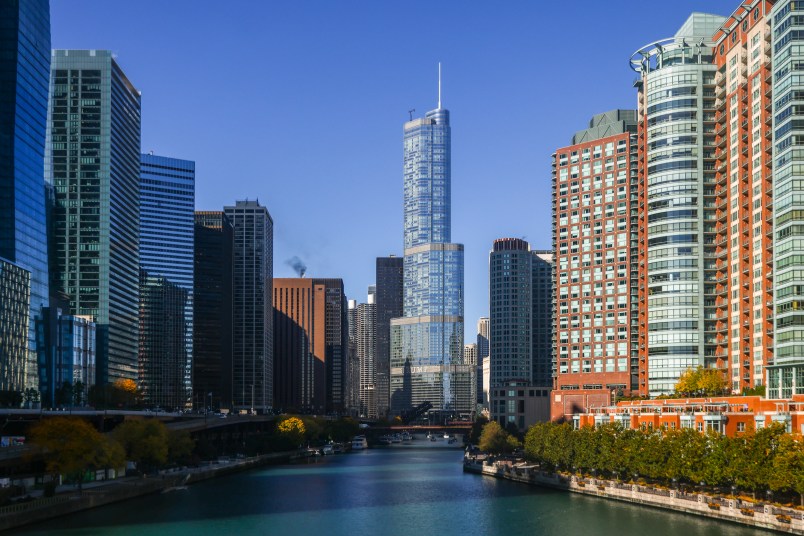
It is unclear how the audit battle has progressed since December 2022, when it was mentioned in the congressional report. Audits often drag on for years, and taxpayers have a right to appeal the IRS’ conclusions. The case would typically become public only if Trump chose to challenge a ruling in court.
In response to questions for this article, Trump’s son Eric, executive vice president of the Trump Organization, said: “This matter was settled years ago, only to be brought back to life once my father ran for office. We are confident in our position, which is supported by opinion letters from various tax experts, including the former general counsel of the IRS.”
An IRS spokesperson said federal law prohibited the agency from discussing private taxpayer information.
The outcome of Trump’s dispute could set a precedent for wealthy people seeking tax benefits from the laws governing partnerships. Those laws are notoriously complex, riddled with uncertainty and under constant assault by lawyers pushing boundaries for their clients. The IRS has inadvertently further invited aggressive positions by rarely auditing partnership tax returns.
The audit represents yet another potential financial threat — albeit a more distant one — for Trump, the Republicans’ presumptive 2024 presidential nominee. In recent months, he has been ordered to pay $83.3 million in a defamation case and an additional $454 million in a civil fraud case brought by the New York attorney general, Letitia James. Trump has appealed both judgments. (He is also in the midst of a criminal trial in Manhattan, where he is accused of covering up a hush-money payment to a porn star in the weeks before the 2016 election.)
Beyond the two episodes under audit, reporting by the Times in recent years has found that, across his business career, Trump has often used what experts described as highly aggressive — and at times, legally suspect — accounting maneuvers to avoid paying taxes. To the six tax experts consulted for this article, Trump’s Chicago accounting maneuvers appeared to be questionable and unlikely to withstand scrutiny.
“I think he ripped off the tax system,” said Walter Schwidetzky, a law professor at the University of Baltimore and an expert on partnership taxation.
Trump struck a deal in 2001 to acquire land and a building that was then home to the Chicago Sun-Times newspaper. Two years later, after publicly toying with the idea of constructing the world’s tallest building there, he unveiled plans for a more modest tower, with 486 residences and 339 “hotel condominiums” that buyers could use for short stays and allow Trump’s company to rent out. He initially estimated that construction would last until 2007 and cost $650 million.
Trump placed the project at the center of the first season of “The Apprentice” in 2004, offering the winner a top job there under his tutelage. “It’ll be a mind-boggling job to manage,” Trump said during the season finale. “When it’s finished in 2007, the Trump International Hotel and Tower, Chicago, could have a value of $1.2 billion and will raise the standards of architectural excellence throughout the world.”
As his cost estimates increased, Trump arranged to borrow as much as $770 million for the project — $640 million from Deutsche Bank and $130 million from Fortress Investment Group, a hedge fund and private equity company. He personally guaranteed $40 million of the Deutsche loan. Both Deutsche and Fortress then sold off pieces of the loans to other institutions, spreading the risk and potential gain.
Trump planned to sell enough of the 825 units to pay off his loans when they came due in May 2008. But when that date came, he had sold only 133. At that point, he projected that construction would not be completed until mid-2009, at a revised cost of $859 million.
He asked his lenders for a six-month extension. A briefing document prepared for the lenders, obtained by the Times and ProPublica, said Trump would contribute $89 million of his own money, $25 million more than his initial plan. The lenders agreed.
But sales did not pick up that summer, with the nation plunged into the financial crisis that would become the Great Recession. When Trump asked for another extension in September, his lenders refused.
Two months later, Trump defaulted on his loans and sued his lenders, characterizing the financial crisis as the kind of catastrophe, like a flood or hurricane, covered by the “force majeure” clause of his loan agreement with Deutsche Bank. That, he said, entitled him to an indefinite delay in repaying his loans. Trump went so far as to blame the bank and its peers for “creating the current financial crisis.” He demanded $3 billion in damages.
At the time, Trump had paid down his loans with $99 million in sales but still needed more money to complete construction. At some point that year, he concluded that his investment in the tower was worthless, at least as the term is defined in partnership tax law.
Trump’s worthlessness claim meant only that his stake in 401 Mezz Venture, the LLC that held the tower, was without value because he expected that sales would never produce enough cash to pay off the mortgages, let alone turn a profit.
When he filed his 2008 tax return, he declared business losses of $697 million. Tax records do not fully show which businesses generated that figure. But working with tax experts, ProPublica and the Times calculated that the Chicago worthlessness deduction could have been as high as $651 million, the value of Trump’s stake in the partnership — about $94 million he had invested and the $557 million loan balance reported on his tax returns that year.
When business owners report losses greater than their income in any given year, they can retain the leftover negative amount as a credit to reduce their taxable income in future years. As it turned out, that tax-reducing power would be of increasing value to Trump. While many of his businesses continued to lose money, income from “The Apprentice” and licensing and endorsement agreements poured in: $33.3 million in 2009, $44.6 million in 2010 and $51.3 million in 2011.
Trump’s advisers girded for a potential audit of the worthlessness deduction from the moment they claimed it, according to the filings from the New York attorney general’s lawsuit. Starting in 2009 Trump’s team excluded the Chicago tower from the frothy annual “statements of financial condition” that Trump used to boast of his wealth, out of concern that assigning value to the building would conflict with its declared worthlessness, according to the attorney general’s filing. (Those omissions came even as Trump fraudulently inflated his net worth to qualify for low-interest loans, according to the ruling in the attorney general’s lawsuit.)
Trump had good reason to fear an audit of the deduction, according to the tax experts consulted for this article. They believe that Trump’s tax advisers pushed beyond what was defensible.
The worthlessness deduction serves as a way for a taxpayer to benefit from an expected total loss on an investment long before the final results are known. It occupies a fuzzy and counterintuitive slice of tax law. Three decades ago, a federal appeals court ruled that the judgment of a company’s worthlessness could be based in part on the opinion of its owner. After taking the deduction, the owner can keep the “worthless” company and its assets. Subsequent court decisions have only partly clarified the rules. Absent prescribed parameters, tax lawyers have been left to handicap the chances that a worthlessness deduction will withstand an IRS challenge.
There are several categories, with a declining likelihood of success, of money taxpayers can claim to have lost.
The tax experts consulted for this article universally assigned the highest level of certainty to cash spent to acquire an asset. The roughly $94 million that Trump’s tax returns show he invested in Chicago fell into this category.
Some gave a lower, though still probable, chance of a taxpayer prevailing in declaring a loss based on loans that a lender agreed to forgive. That’s because forgiven debt generally must be declared as income, which can offset that portion of the worthlessness deduction in the same year. A large portion of Trump’s worthlessness deduction fell in this category, though he did not begin reporting forgiven debt income until two years later, a delay that would have further reduced his chances of prevailing in an audit.
The tax experts gave the weakest chance of surviving a challenge for a worthlessness deduction based on borrowed money for which the outcome was not clear. It reflects a doubly irrational claim — that the taxpayer deserves a tax benefit for losing someone else’s money even before the money has been lost, and that those anticipated future losses can be used to offset real income from other sources. Most of the debt included in Trump’s worthlessness deduction was based on that risky position.
Including that debt in the deduction was “just not right,” said Monte Jackel, a veteran of the IRS and major accounting firms who often publishes analyses of partnership tax issues.
Trump continued to sell units at the Chicago tower, but still below his costs. Had he done nothing, his 2008 worthlessness deduction would have prevented him from claiming that shortfall as losses again. But in 2010, his lawyers attempted an end-run by merging the entity through which he owned the Chicago tower into another partnership, DJT Holdings LLC. In the following years, they piled other businesses, including several of his golf courses, into DJT Holdings.
Those changes had no apparent business purpose. But Trump’s tax advisers took the position that pooling the Chicago tower’s finances with other businesses entitled him to declare even more tax-reducing losses from his Chicago investment.
His financial problems there continued. More than 100 of the hotel condominiums never sold. Sales of all units totaled only $727 million, far below Trump’s budgeted costs of $859 million. And some 70,000 square feet of retail space remained vacant because it had been designed without access to foot or vehicle traffic. From 2011 through 2020, Trump reported $168 million in additional losses from the project.
Those additional write-offs helped Trump avoid tax liability for his continuing entertainment riches, as well as his unpaid debt from the tower. Starting in 2010, his lenders agreed to forgive about $270 million of those debts. But he was able to delay declaring that income until 2014 and spread it out over five years of tax returns, thanks to a provision in the Obama administration’s stimulus bill responding to the Great Recession. In 2018, Trump reported positive income for the first time in 11 years. But his income tax bill still amounted to only $1.9 million, even as he reported a $25 million gain from the sale of his late father’s assets.
It’s unclear when the IRS began to question the 2010 merger transaction, but the conflict escalated during Trump’s presidency.
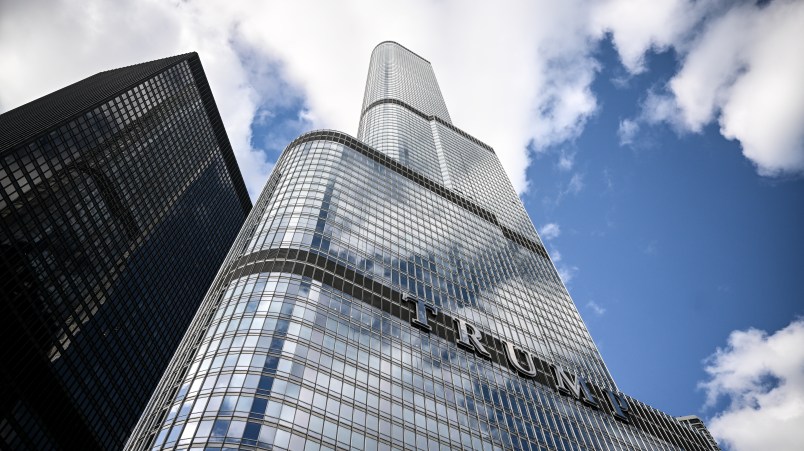
The IRS explained its position in a Technical Advice Memorandum, released in 2019, that identified Trump only as “A.” Such memos, reserved for cases where the law is unclear, are rare and involve extensive review by senior IRS lawyers. The agency produced only two other such memos that year.
The memos are required to be publicly released with the taxpayer’s information removed, and this one was more heavily redacted than usual. Some partnership specialists wrote papers exploring its meaning and importance to other taxpayers, but none identified taxpayer “A” as the then-sitting president of the United States. ProPublica and the Times matched the facts of the memo to information from Trump’s tax returns and elsewhere.
The 20-page document is dense with footnotes, calculations and references to various statutes, but the core of the IRS’ position is that Trump’s 2010 merger violated a law meant to prevent double dipping on tax-reducing losses. If done properly, the merger would have accounted for the fact that Trump had already written off the full cost of the tower’s construction with his worthlessness deduction.
In the IRS memo, Trump’s lawyers vigorously disagreed with the agency’s conclusions, saying he had followed the law.
If the IRS prevails, Trump’s tax returns would look very different, especially those from 2011 to 2017. During those years, he reported $184 million in income from “The Apprentice” and agreements to license his name, along with $219 million from canceled debts. But he paid only $643,431 in income taxes thanks to huge losses on his businesses, including the Chicago tower. The revisions sought by the IRS would require amending his tax returns to remove $146 million in losses and add as much as $218 million in income from condominium sales. That shift of up to $364 million could swing those years out of the red and well into positive territory, creating a tax bill that could easily exceed $100 million.
The only public sign of the Chicago audit came in December 2022, when a congressional Joint Committee on Taxation report on IRS efforts to audit Trump made an unexplained reference to the section of tax law at issue in the Chicago case. It confirmed that the audit was still underway and could affect Trump’s tax returns from several years.
That the IRS did not initiate an audit of the 2008 worthlessness deduction puzzled the experts in partnership taxation. Many assumed the understaffed IRS simply had not realized what Trump had done until the deadline to investigate it had passed.
“I think the government recognized that they screwed up,” and then audited the merger transaction to make up for it, Jackel said.
The agency’s difficulty in keeping up with Trump’s maneuvers, experts said, showed that this gray area of tax law was too easy to exploit.
“Congress needs to radically change the rules for the worthlessness deduction,” Schwidetzky said.
Satellite-Disruption Bliss
Hello, it’s the weekend. This is The Weekender ☕
I hope this note finds you lucky enough to be one of the TPM readers in the path of aurora borealis visibility this weekend. If it doesn’t find you, I wish you geomagnetic storm satellite-disruption bliss.
If anyone is craving a few moments of peace brought by the potentially impending phone and data service disturbance, it’s the loyal TPM readers who have been following our coverage of the Trump trial this week. Humiliated Rep. Marjorie Taylor Greene (R-GA) may be a close second.
Continue reading “Satellite-Disruption Bliss”