

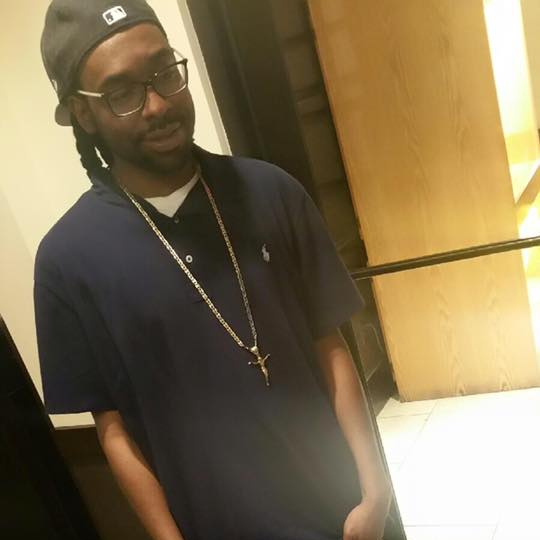
ST. PAUL, Minn. (AP) — A Minnesota police officer has been charged with second-degree manslaughter in the killing of a black man in a St. Paul suburb, prosecutors announced Wednesday.
St. Anthony police officer Jeronimo Yanez fatally shot Philando Castile, 32, during a July 6 traffic stop in Falcon Heights. The shooting’s gruesome aftermath was streamed live on Facebook by Castile’s girlfriend, who was with him in the car along with her young daughter. The woman said Castile was shot several times while reaching for his ID after telling Yanez he had a gun permit and was armed.
Yanez’s attorney, Tom Kelly, has said Yanez, who is Latino, was reacting to the presence of a gun, and that one reason Yanez pulled Castile over was because he thought he looked like a possible match for an armed robbery suspect.
But family members claimed Castile, an elementary school cafeteria worker, was racially profiled.
Ramsey County Attorney John Choi got the case from investigators in late September and began reviewing the evidence for possible charges. Choi resisted pressure immediately after the shooting to turn the case over to a special prosecutor, but added one to his team to get an outside perspective. He also enlisted the help of national use-of-force consultants.
Choi’s office has said a key question in his review was determining whether Yanez was justified in believing deadly force was necessary.
In Minnesota, second-degree manslaughter, or involuntary manslaughter, carries a maximum prison sentence of 10 years.
The shooting prompted numerous protests, including a weekslong demonstration outside the governor’s mansion and one protest that shut down Interstate 94 in St. Paul for hours. The interstate protest resulted in about 50 arrests and injuries to more than 20 officers, after police said they were hit with cement chunks, bottles, rocks and other objects.
The shooting also exposed a disproportionate number of arrests of African-Americans in St. Anthony, Lauderdale and Falcon Heights, which are all patrolled by the St. Anthony Police Department. The Associated Press reported in July that an analysis of police data showed black people made up nearly half of all arrests made by St. Anthony officers in 2016. Census data shows that just 7 percent of residents in the three cities are black.
The fatal shootings of black men and boys by police officers have come under heightened scrutiny since the 2014 death of Michael Brown in Ferguson, Missouri, and led to calls nationwide for officers to be held criminally responsible.
No charges were filed in the death of 18-year-old Brown, who was unarmed, after a grand jury found officer Darren Wilson acted in self-defense. The white officer had said Brown tried to grab his gun during a struggle through the window of the police vehicle and then came toward him threateningly after briefly running away.
Other police shooting deaths also did not result in charges, including the killings of 12-year-old Tamir Rice in 2014 in Cleveland and 24-year-old Jamar Clark last year in Minneapolis. A grand jury determined the white officer who shot Tamir had no way of knowing whether the boy, who was drawing a pellet gun from his waistband, was trying to hand it over or show them it wasn’t real.
In the Clark case, prosecutors said the two white officers involved in the shooting feared for their lives when Clark tried to grab an officer’s weapon during a struggle.
Officers have been charged in other cases, though. Michael Slager, a white officer in North Charleston, South Carolina, who has since been fired, is currently on trial for murder in the 2015 death of 50-year-old Walter Scott, an unarmed black man who was shot while running from a traffic stop. More recently, Betty Jo Shelby, a white Tulsa, Oklahoma, police officer was charged with first-degree manslaughter in the Sept. 16 shooting of Terence Crutcher, a 40-year-old unarmed black man whose car was stopped in the middle of the road.
When looking at whether to file charges, authorities must determine if the officer believed he or she, or fellow officers, were in danger in the moment the decision is made to shoot. If the fear of danger is deemed reasonable, charges are typically not filed. To prove a serious charge such as murder, prosecutors must also show that the officer was not just reckless, but had ill intentions.
___
Forliti reported from Minneapolis.
Copyright 2016 The Associated Press. All rights reserved. This material may not be published, broadcast, rewritten or redistributed.



Over the years, I’ve been pulled over by police a number of times for traffic violations. I’m white and as best I can recall, I was always guilty of the traffic violation (mostly speeding and rolling a few stop signs).
Never, not once, did any police officer ever ask any passenger in my car to show their ID.
Article could have been written better:
A grand jury determined the white officer who shot Tamir had no way of knowing whether the boy, who was drawing a pellet gun from his waistband, was trying to hand it over or show them it wasn’t real.
It was never determined that the boy was “drawing a pellet gun from his waistband”. Even the police said he was reaching into his waistband, not pulling something out, and that assumes the cop was truthful, and he has a bad reputation to start.
Also:
No charges were filed in the death of 18-year-old Brown, who was unarmed, after a grand jury found officer Darren Wilson acted in self-defense. The white officer had said Brown tried to grab his gun during a struggle through the window of the police vehicle and then came toward him threateningly after briefly running away.
It’s not just what the white officer said, it’s what every credible witness said, and it was backed up by all forensic evidence. And is was not just that the grand jury found it was self defense, it was the DOJ and a bunch of FBI agents who did a thorough investigation and issued a lengthy detailed report that determined without a doubt it was self defense. There was no ambiguity, and that is part of the problem of why Trump got elected. Focus on REAL unjustified shootings like Rice, Crutcher and Scott. Michael Brown’s death was tragic, but he left the cop no choice. Backing Brown proved to be a major mistake by activists, it made a legit agenda look like total BS. C’mon man, Wilson was backing up telling Brown to stop while Brown kept charging at him, after Brown had already tried to take his gun. It was self defense.
As to this case, definitely warranted charges. Castile should not have reached for the glove box, but the cop needs to see him try to grab a gun before shooting, or should yell “freeze” when he reaches for the glove box. And if he matched the description of an armed robbery suspect, you would actually stay back behind the door of the police car and yell for him to get out with his hands up. Approaching a potentially armed suspect they way they did made no sense.