Six former Census Bureau directors who served under presidents of both parties signed onto a letter urging the Department of Commerce to abandon its proposal to dramatically alter how usual residence is recorded on the 10-year census.
“For more than two centuries, the usual residence concept has adapted to a changing nation while keeping its central purpose: count every person once, only once, and in the right place,” the former directors wrote. “The proposed rule dramatically complicates the collection of complete, accurate data, and puts the 2030 Decennial at risk.”
The proposal is one of several put forward by Trump’s second term Census Bureau that, experts tell TPM, would have the effect of shifting power toward Republicans.
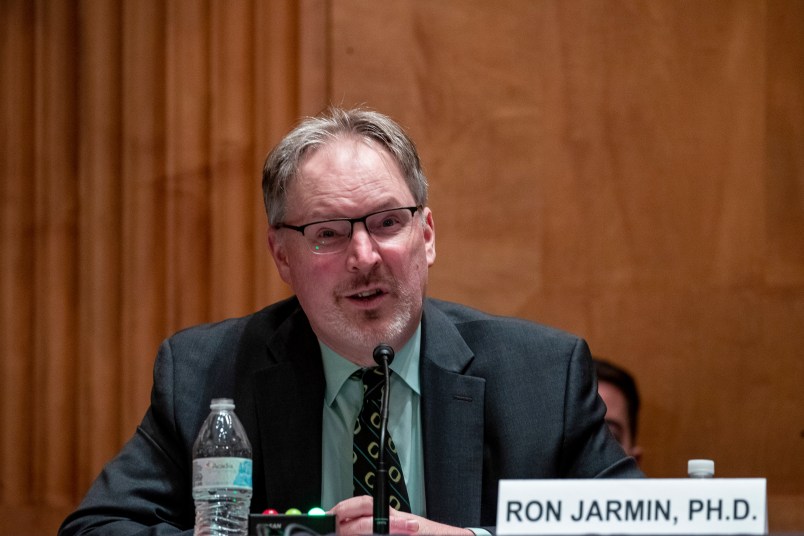
The list of former Census Bureau directors who signed on to the letter led the agency from as early as 1994 through 2025. They are Ron Jarmin, Robert L. Santos, Thomas Mesenbourg, Jr., Robert Groves, James F. Holmes, and Marty Farnsworth Riche. Some were confirmed by the Senate, others served in an acting capacity.
“As former directors of the U.S. Census Bureau, serving under administrations of both parties, we are concerned that this approach is likely to make the count less accurate, not more,” the wrote.
The Department of Commerce proposed in September a rule that the former Census directors argued could “complicate” the population count by relying on tax records to establish a person’s usual residence. It would also establish a novel, so-called “census enumeration period” stretching between January 3 to April 1 that experts have told TPM risks disproportionately benefiting red states by counting snowbirds — people who spend winters in warmer, southern, red states — at their winter homes rather than the homes where they spend most of their time.
If finalized, the rule would also stop the Bureau from collecting data on race, ethnicity, and gender-related identifiers. It would exclude most immigrants regardless of legal status from the population count used to determine state congressional representation.
Each proposal is designed to diminish populations in more immigrant-friendly blue states and add more congressional power and Electoral College votes to Republican states, experts have told TPM, though it remains unclear what impact the proposed rules will actually have.
The six former Bureau directors drafted their letter on Wednesday and submitted it for public comment on the federal register listing for the Commerce Department’s proposed rule. The comment period for the rule closes on Nov. 2.
Experts have repeatedly flagged a number of issues with the Commerce Department’s proposal to use administrative tax records for usual residence. A draft document obtained by TPM shows Commerce Department officials overrode Treasury officials’ concerns about the plan to use tax records for residence.
“At first, I thought it was a mistake because it seemed like such a bad idea,” Barry Johnson, former director of the IRS Statistics of Income Division, told TPM at the time.
Addresses on tax filings could end up providing misleading information to the Census Bureau, the letter said. These addresses aren’t always homes, for instance, and can be P.O. boxes, businesses or a tax preparer’s office, the former Bureau directors note. Tax records don’t always reflect if a person has moved. And there are millions of people who legally are not required to file federal tax returns.
“Tax records are designed to administer the tax system,” the former Census Bureau directors wrote, “not to determine a person’s usual residence.”